Study explains 'cocktail party effect' in hearing impairment

Plenty of people struggle to make sense of a multitude of converging voices in a crowded room. Commonly known as the “cocktail party effect,” people with hearing loss find it’s especially difficult to understand speech in a noisy environment.
New research suggests that, for some listeners, this may have less to do with actually discerning sounds. Instead, it may be a processing problem in which two ears blend different sounds together — a condition known as binaural pitch fusion.
The research, co-authored by scientists at Oregon Health & Science University and VA Portland Health Care System, was published today in the Journal of the Association for Research in Otolaryngology.
The study’s lead author attributes these difficulties to abnormally broad binaural pitch fusion in people with hearing impairment. The new study suggests that, for people with hearing impairment, fusing of different sounds from both ears leads to sound blending together in a way that is often unintelligible.
“This differs from what people with normal hearing experience in what is known as the ‘cocktail party effect,'” said Lina Reiss, Ph.D., associate professor of otolaryngology/head and neck surgery in the OHSU School of Medicine. “People with normal hearing can separate and understand the multiple voices, but they just get confused about which voice is saying what.”
Reiss, who has hearing impairment herself and is part of the Oregon Hearing Research Center at OHSU, previously co-authored research in 2018 that first demonstrated broad binaural pitch fusion in hearing impairment. Together with another study showing blending of the fused pitches, the research suggested the possibility that similar fusion and blending could occur with sounds in speech.

Read more →

Why climate change is driving some to skip having kids

When deciding whether to have children, there are many factors to consider: finances, support systems, personal values. For a growing number of people, climate change is also being added to the list of considerations, says a University of Arizona researcher.
Sabrina Helm, an associate professor in the Norton School of Family and Consumer Sciences in the College of Agriculture and Life Sciences, is lead author of a new peer-reviewed study that looks at how climate change is affecting people’s decisions about whether to have children.
“For many people, the question of whether to have children or not is one of the biggest they will face in their lives,” Helm said. “If you are worried about what the future will look like because of climate change, obviously it will impact how you view this very important decision in your life.”
Helm and her collaborators wanted to better understand the specific climate change-related reasons people have for not wanting to have children. They started by analyzing online comments posted in response to news articles written about the growing trend of people forgoing having children due to climate change concerns.
They then sought out adults ages 18 to 35 who said climate change plays an important role in their reproductive decision-making. They interviewed 24 participants about their concerns.
The researchers’ findings, published in the journal Population and Environment, identify three major themes that emerged in both the online comments and the interviews.

Read more →

Mechanical engineers develop new high-performance artificial muscle technology

In the field of robotics, researchers are continually looking for the fastest, strongest, most efficient and lowest-cost ways to actuate, or enable, robots to make the movements needed to carry out their intended functions.
The quest for new and better actuation technologies and ‘soft’ robotics is often based on principles of biomimetics, in which machine components are designed to mimic the movement of human muscles — and ideally, to outperform them. Despite the performance of actuators like electric motors and hydraulic pistons, their rigid form limits how they can be deployed. As robots transition to more biological forms and as people ask for more biomimetic prostheses, actuators need to evolve.
Associate professor (and alum) Michael Shafer and professor Heidi Feigenbaum of Northern Arizona University’s Department of Mechanical Engineering, along with graduate student researcher Diego Higueras-Ruiz, published a paper in Science Robotics presenting a new, high-performance artificial muscle technology they developed in NAU’s Dynamic Active Systems Laboratory. The paper, titled “Cavatappi artificial muscles from drawing, twisting, and coiling polymer tubes,” details how the new technology enables more human-like motion due to its flexibility and adaptability, but outperforms human skeletal muscle in several metrics.
“We call these new linear actuators cavatappi artificial muscles based on their resemblance to the Italian pasta,” Shafer said.
Because of their coiled, or helical, structure, the actuators can generate more power, making them an ideal technology for bioengineering and robotics applications. In the team’s initial work, they demonstrated that cavatappi artificial muscles exhibit specific work and power metrics ten and five times higher than human skeletal muscles, respectively, and as they continue development, they expect to produce even higher levels of performance.
“The cavatappi artificial muscles are based on twisted polymer actuators (TPAs), which were pretty revolutionary when they first came out because they were powerful, lightweight and cheap. But they were very inefficient and slow to actuate because you had to heat and cool them. Additionally, their efficiency is only about two percent,” Shafer said. “For the cavatappi, we get around this by using pressurized fluid to actuate, so we think these devices are far more likely to be adopted. These devices respond about as fast as we can pump the fluid. The big advantage is their efficiency. We have demonstrated contractile efficiency of up to about 45 percent, which is a very high number in the field of soft actuation.”
The engineers think this technology could be used in soft robotics applications, conventional robotic actuators (for example, for walking robots), or even potentially in assistive technologies like exoskeletons or prostheses.
“We expect that future work will include the use of cavatappi artificial muscles in many applications due to their simplicity, low-cost, lightweight, flexibility, efficiency and strain energy recovery properties, among other benefits,” Shafer said.
Technology is available for licensing, partnering opportunities.
Working with the NAU Innovations team, the inventors have taken steps to protect their intellectual property. The technology has entered the protection and early commercialization stage and is available for licensing and partnering opportunities. For more information, please contact NAU Innovations.
Shafer joined NAU in 2013. His other research interests are related to energy harvesting, wildlife telemetry systems and unmanned aerial systems. Feigenbaum joined NAU in 2007, and her other research interest include ratcheting in metals and smart materials. The graduate student on this project, Diego Higueras-Ruiz, received his MS in Mechanical Engineering from NAU in 2018 and will be completing his PhD in Bioengineering in Fall 2021. This work has been supported through a grant from NAU’s Research and Development Preliminary Studies program.

Read more →

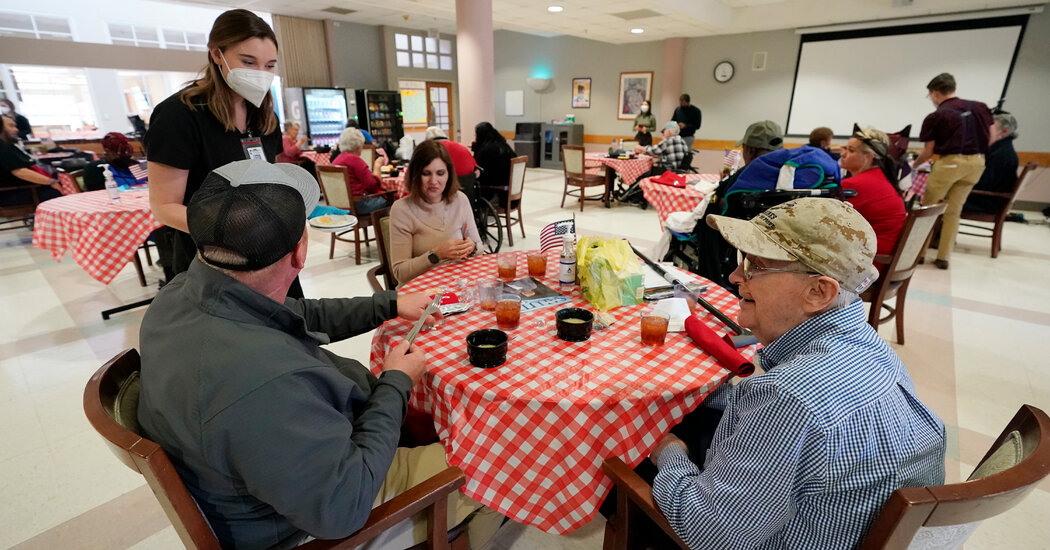
An unvaccinated worker set off an outbreak at a U.S. nursing home where most residents were immunized.

An unvaccinated health care worker set off a Covid-19 outbreak at a nursing home in Kentucky where the vast majority of residents had been vaccinated, leading to dozens of infections, including 22 cases among residents and employees who were already fully vaccinated, a new study reported Wednesday.Most of those who were infected with the coronavirus despite being vaccinated did not develop symptoms or require hospitalization, but one vaccinated individual, who was a resident of the nursing home, died, according to the study released by the Centers for Disease Control and Prevention.Altogether, 26 facility residents were infected, including 18 who had been vaccinated, and 20 health care personnel were infected, including four who had been vaccinated. Two unvaccinated residents also died.The report underscores the importance of vaccinating both nursing home residents and health care workers who go in and out of the sites, the authors said. While 90 percent of the 83 residents at the Kentucky nursing home had been vaccinated, only half of the 116 employees had been vaccinated when the outbreak was identified in March of this year.The study, released in tandem with one involving Chicago nursing homes, underscored the importance of maintaining measures like use of protective gear, infection control protocols and routine testing, no matter the level of vaccination rates. The rise of virus variants also has increased concerns.Resistance to vaccines has been steep among nursing home staffs nationwide, and the low acceptance rates of vaccination increase the likelihood of outbreaks in facilities, according to the authors, a team of investigators from the C.D.C. and Kentucky’s public health department.“To protect skilled nursing facility residents, it is imperative that health care providers, as well as skilled nursing facility residents, be vaccinated,” the authors of the Kentucky study wrote.The outbreak involved a variant of the virus that has multiple mutations in the spike protein, of the kind that make the vaccines less effective. Vaccinated residents and health care workers at the Kentucky facility were less likely to be infected than those who had not been vaccinated, and they were far less likely to develop symptoms. The study estimated that the vaccine, identified as Pfizer-BioNTech, showed effectiveness of 66 percent for residents and 75.9 percent for employees, and were 86 percent to 87 percent effective at protecting against symptomatic disease.In the Kentucky outbreak, the virus variant is not on the C.D.C.’s list of those considered variants of concern or interest. But, the study authors note, the variant does have several mutations of importance: D614G, which demonstrates evidence of increased transmissibility; E484K in the receptor-binding domain of the spike protein, which is also seen in B.1.351, the variant first recognized in South Africa, and P.1. of Brazil; and W152L, which might reduce effectiveness of neutralizing antibodies.In Chicago, meanwhile, routine screening of nursing home residents and staff members identified 627 coronavirus infections in 78 skilled nursing facilities in the city in February, but only 22 were found in individuals who were already fully vaccinated. Two-thirds of the cases in the vaccinated individuals were asymptomatic, the report found, but two residents were hospitalized, and one died.The authors of the Chicago study said their findings demonstrate that nursing homes should continue to follow recommended infection control practices, such as isolation and quarantine, use of personal protective equipment and doing routine testing, regardless of vaccination status.They also emphasized the importance of “maintaining high vaccination coverage among residents and staff members” in order to “reduce opportunities for transmission within facilities and exposure among persons who might not have achieved protective immunity after vaccination.”

Read more →

F.D.A. Cites Failures at Plant Where J.&J. Doses Ruined

Federal regulators on Wednesday issued highly critical findings from their inspection of a Baltimore plant that was forced to throw out up to 15 million doses of Johnson & Johnson’s coronavirus vaccine and ordered to temporarily stop all production.The Food and Drug Administration cited a series of shortcomings at the massive plant, which is operated by Emergent BioSolutions. The inspection was triggered by reports that Emergent workers had contaminated a batch of Johnson & Johnson doses with the harmless virus that is used to deliver AstraZeneca’s vaccine, which is also manufactured at the plant.The violations included failure to properly disinfect the factory and its equipment, as well as failure to institute and follow proper procedures designed to prevent contamination of doses and to ensure the strength and purity of the vaccine manufactured there. “There is no assurance that other batches have not been contaminated,” the inspectors wrote.Their 12-page report cited nine violations, ranging from the design of the building to improperly trained employees. The inspection was finished on Tuesday.In a statement, the F.D.A. noted that it has not authorized Emergent to distribute any doses of Johnson & Johnson vaccine, and that no vaccine manufactured at the plant has been released for use in the United States.AstraZeneca’s vaccine is not yet authorized for use in the United States, and all the Johnson & Johnson doses that have been administered in the country so far were manufactured overseas. At the agency’s request, all production at the factory has been halted.“We will not allow the release of any product until we feel confident that it meets our expectations for quality,” the statement from Dr. Janet Woodcock, the F.D.A.’s acting commissioner, and Dr. Peter Marks, the agency’s top vaccine regulator, said.The agency said it was working with Emergent to fix the problems.Emergent is a longtime government contractor that has spent much of the last two decades cornering a lucrative market in federal spending on biodefense. The company’s Baltimore plant is one of two federally designated “Centers for Innovation in Advanced Development and Manufacturing” that were supposed to be at the ready in the event of a pandemic.The New York Times reported earlier this month that the Trump administration awarded a $628 million contract to the company about ten months ago despite a history of performance problems. The contract mainly allowed the government to reserve manufacturing space in the plant for vaccine production. On Tuesday, the House Select Subcommittee on the Coronavirus Crisis, announced that it will investigate that contract award and other issues involving Emergent, saying the firm had a track record of failing to meet contract requirements.The inspectors castigated Emergent’s response to the discovery last month that Johnson & Johnson doses had been contaminated with the benign virus used to create AstraZeneca’s vaccine. The incident “has not been fully investigated,” they wrote.They said Emergent did not thoroughly review whether the cross-contamination was caused by one or more workers who move between AstraZeneca’s and Johnson & Johnson’s manufacturing zones or whether it could be related to how raw materials used in the production of both vaccines are handled.The inspectors found that workers frequently moved between the manufacturing zones without documenting that they had showered and changed their gowns as required. In one ten-day period in February, for instance, 13 employees moved from one zone to another on the same day, but only one documented having showered, they said. After the Johnson & Johnson doses were found to be contaminated, the report said, only routine cleaning was performed.Workers also failed to properly handle manufacturing waste, creating risks of contamination in the warehouse where raw materials are stored, the inspectors found. They also cited peeling paint, crowded equipment and other issues with the building. Overall, it “is not maintained in a clean and sanitary condition,” they wrote.Emergent said in a statement on Wednesday that “while we are never satisfied to see shortcomings in our manufacturing facilities or process, they are correctable and we will take swift action to remedy them.”In its own statement, Johnson & Johnson said it had already stepped up its oversight of Emergent, its subcontractor, and that it would “ensure that all of F.D.A.’s observations are addressed promptly and comprehensively.”One major change has already been made: AstraZeneca will no longer be manufactured at the plant, a move that federal officials insisted upon earlier this month to limit the chance of cross-contamination between two vaccines.Dr. Jose Romero, the Arkansas health secretary and chairman of the expert panel advising the Centers for Disease Control and Prevention on the future of the Johnson & Johnson vaccine, said in an interview that he was dismayed by the F.D.A.’s findings. The panel is meeting on Friday on whether to lift, modify or retain a pause in the administration of Johnson & Johnson’s vaccine that was instituted last week for an entirely different issue: the discovery that eight U.S. residents developed a rare but dangerous blood clotting disorder after they got shots.“I’m shocked” Dr. Romero said. “I can’t put it any other way. Inappropriate disinfection, the prevention of contamination — those are significant and serious violations, at least in my mind, and do of course need to be remedied.“I would not have expected that, given the stringency that we have in this country for good manufacturing practices in these vaccine plants,” he said.

Read more →

Wildfire smoke linked to skin disease

Wildfire smoke can trigger a host of respiratory and cardiovascular symptoms, ranging from runny nose and cough to a potentially life-threatening heart attack or stroke. A new study suggests that the dangers posed by wildfire smoke may also extend to the largest organ in the human body, and our first line of defense against outside threat: the skin.
During the two weeks in November 2018 when wildfire smoke from the Camp Fire choked the San Francisco Bay Area, health clinics in San Francisco saw an uptick in the number of patients visiting with concerns of eczema, also known as atopic dermatitis, and general itch, compared to the same time of the year in 2015 and 2016, the study found.
The findings suggest that even short-term exposure to hazardous air quality from wildfire smoke can be damaging to skin health. The report, carried out by physician researchers at the University of California, San Francisco, in collaboration with researchers at the University of California, Berkeley, appears on April 21 in the journal JAMA Dermatology.
“Existing research on air pollution and health outcomes has focused primarily on cardiac and respiratory health outcomes, and understandably so. But there is a gap in the research connecting air pollution and skin health,” said study lead author Raj Fadadu, a student in the UC Berkeley-UCSF Joint Medical Program. “Skin is the largest organ of the human body, and it’s in constant interaction with the external environment. So, it makes sense that changes in the external environment, such as increases or decreases in air pollution, could affect our skin health.”
Air Pollutants Can Slip through Skin Barriers
Air pollution from wildfires, which consists of fine particulate matter (PM2.5), polycyclic aromatic hydrocarbons (PAHs), and gases, can impact both normal and eczema-prone skin in a variety of ways. These pollutants often contain chemical compounds that act like keys, allowing them to slip past the skin’s outer barrier and penetrate into cells, where they can disrupt gene transcription, trigger oxidative stress or cause inflammation.

Read more →

Changing views on atherosclerosis

Peter Libby, MD, cardiovascular medicine specialist at Brigham and Women’s Hospital and the Mallinckrodt Professor of Medicine at Harvard Medical School; author of a new review paper published in Nature.
Atherosclerosis — hardening of the arteries — is now involved in the majority of deaths worldwide, and advances in our understanding of the biology of the disease are changing traditional views and opening up new avenues for treatment.
The picture of who may be at risk for a heart attack has evolved considerably in recent decades. At one time, a heart attack might have conjured up the image of a middle-aged white man with high cholesterol and high blood pressure who smoked cigarettes. Today, traditional concepts of what contributes to risk have changed. These updated views include new thinking around: Global disease burden: Atherosclerotic cardiovascular disease is now the leading cause of death worldwide. Clinical profile: Women, younger individuals, and people of diverse backgrounds bear an increasing burden of atherosclerotic cardiovascular disease. Role of “good cholesterol”: The protective role of HDL cholesterol (so-called “good cholesterol”) has been called into question and triglycerides have emerged as a promising target for reducing heart disease risk. Inflammation drives atherosclerosis: New data suggests that inflammation may be a critical link between traditional risk factors such as abnormal lipids, smoking, and diabetes and complications of atherosclerosis including heart attack and stroke.”Advances in our understanding of the biology of atherosclerosis have opened avenues to therapeutic interventions that promise to improve the prevention and treatment of now-ubiquitous atherosclerotic diseases,” writes Libby. “From a therapeutic perspective, we have reason for optimism in addressing the growing burden of atherosclerotic risk.”
Story Source:
Materials provided by Brigham and Women’s Hospital. Note: Content may be edited for style and length.

Read more →

SARS-CoV-2: Infection induces antibodies capable of killing infected cells regardless of disease severity

Drawing on epidemiological field studies and the FrenchCOVID hospital cohort coordinated by Inserm, teams from the Institut Pasteur, the CNRS and the Vaccine Research Institute (VRI, Inserm/University Paris-Est Créteil) studied the antibodies induced in individuals with asymptomatic or symptomatic SARS-CoV-2 infection. The scientists demonstrated that infection induces polyfunctional antibodies. Beyond neutralization, these antibodies can activate NK (natural killer) cells or the complement system, leading to the destruction of infected cells. Antibody levels are slightly lower in asymptomatic as opposed to symptomatic individuals, but polyfunctional antibodies were found in all individuals. These findings show that infection induces antibodies capable of killing infected cells regardless of the severity of the disease. The research was published in the journal Cell Reports Medicine on April 21, 2021.
Nearly half of those infected with SARS-CoV-2 do not develop symptoms. Yet, the immune response induced by asymptomatic forms of COVID-19 remains poorly characterized. The extent of the antiviral functions of SARS-CoV-2 antibodies is also poorly characterized. Antibodies are capable of both neutralizing the virus and activating “non-neutralizing” functions. The latter include antibody-dependent cellular cytotoxicity (ADCC) and complement activation, which are major components of the immune response and play a key role in the efficacy of some vaccines. ADCC is a two-stage process in which infected cells are first recognized by antibodies, then destroyed by NK cells. The complement system consists of a series of plasma proteins that also enable the elimination of cells targeted by antibodies. The ability of antibodies to activate these non-neutralizing functions has been little described for SARS-CoV-2 infection so far.
The teams from the Institut Pasteur, the CNRS and the VRI (Inserm/University Paris-Est Créteil) initially developed new assays to measure the various antibody functions. They produced assays to study cell death induced by NK cells or by complement in the presence of antibodies. By analyzing cultures in real time using video microscopy, the scientists showed that NK cells kill infected cells in the presence of antibodies, demonstrating new antiviral activity employed by SARS-CoV-2 antibodies.
The scientists then examined the serum of patients with symptomatic or asymptomatic forms of COVID-19 with their new assays. They also used methods previously developed at the Institut Pasteur, such as the S-Flow assay, to detect SARS-CoV-2 anti-spike antibodies, and the S-Fuse assay, to measure the neutralization capacity of these antibodies.
“This study demonstrated that individuals infected with SARS-CoV-2 have antibodies that are capable of attacking the virus in different ways, by preventing it from entering cells (neutralization) or by activating NK cells to kill infected cells (via ADCC). We therefore use the term polyfunctional antibodies,” explains Timothée Bruel, co-last author of the study and a scientist in the Institut Pasteur’s Virus & Immunity Unit and at the VRI.
By comparing different groups of patients, the scientists then showed that asymptomatic individuals also have polyfunctional antibodies and that their response is slightly weaker than those of patients with moderate forms of COVID-19.
“The study reveals new mechanisms of action of SARS-CoV-2 antibodies and suggests that the protection induced by an asymptomatic infection is very close to that observed after a symptomatic infection,” concludes Olivier Schwartz, co-last author of the study, head of the Virus & Immunity Unit and at the VRI.
Story Source:
Materials provided by Institut Pasteur. Note: Content may be edited for style and length.

Read more →

Prevalence of COVID-19 symptoms among high-risk children

Children with weakened immune systems have not shown a higher risk of developing severe COVID-19 infection despite commonly displaying symptoms, a new study suggests.
During a 16-week period which covered the first wave of the pandemic, researchers from Southampton carried out an observational study of nearly 1500 immunocompromised children — defined as requiring annual influenza vaccinations due to underlying conditions or medication. The children, their parents or guardians completed weekly questionnaires to provide information about any symptoms they had experienced, COVID-19 test results and the impact of the pandemic on their daily life.
The results, published in BMJ Open, showed that symptoms of COVID-19 infection were common in many of the children — with over two thirds of participants reporting at least one symptom and one third experiencing three or more symptoms simultaneously. One hundred and ten patients with symptoms undertook viral PCR tests, none of whom tested positive.
Dr Hans de Graaf from the University of Southampton who led the research said, “Whilst we cannot be certain of the prevalence of COVID-19 amongst the children who took part, because testing was only done when patients were admitted and these children were told to adhere to strict shielding measures, we can assume that any infections would have been mild cases since none of these high risk patients required hospital admissions.”
More than half of the patients or parents reported high levels of anxiety at the start of the study and despite the absence of severe symptoms, these scores remained consistently high throughout the study period.
The researchers believe that these results show that widespread symptom screening for early detection of COVID-19 in not going to be useful in these cases as the children may have frequent upper respiratory tract symptoms likely to be unrelated to COVID-19.
Dr de Graaf continued, “This study was the first to observe the impact of the pandemic on children with compromised immune systems. During the first wave of the pandemic, many may have been shielding so our results suggest that either the shielding measures were effective or that immunocompromised children are less affected by COVID-19 than adults, just like healthy children.”
The report also concludes that the continuous high level of anxiety among participants highlights the need to clearly define and communicate the risk of COVID-19 in children and young people, particularly as lockdown restrictions ease.
Story Source:
Materials provided by University of Southampton. Note: Content may be edited for style and length.

Read more →