Miscarriage rates 'over 40% higher' in black people
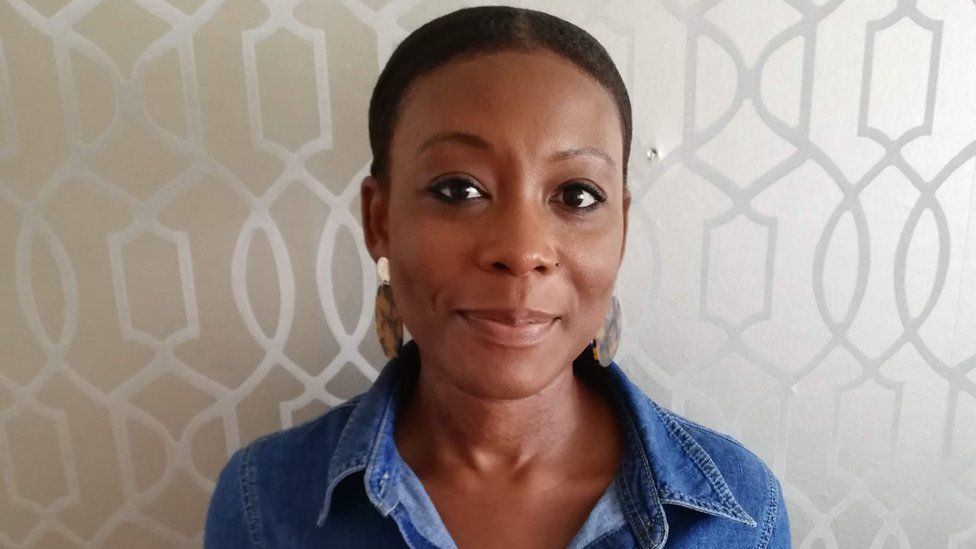
SharecloseShare pageCopy linkAbout sharingBlack people face a significantly higher risk of having a miscarriage than white, research suggests.The Lancet analysis of data on 4.6 million pregnancies in seven countries suggests being black increases miscarriage risk by 43%.It calls for people in the UK to be given support after their first pregnancy loss.Currently, referral to specialist clinics usually occurs after three consecutive losses only. Most countries, including the UK, do not collect statistics.But researchers estimate:15% of pregnancies end in loss1% of women will experience recurrent miscarriageSome estimates of miscarriage rate are higher, but this is due to differences in how countries define pregnancy loss, which can be from a positive pregnancy test or from a scan.The report also found that women who suffered miscarriage, from all ethnic backgrounds, are more vulnerable to long-term health problems, such as blood clots, heart disease and depression.Doreen Thompson-Addo and her husband Reggie experienced seven miscarriages.”When I got pregnant the first time, I was very excited,” Doreen said.”I told my friends and family, I started thinking of names for the baby and planning my baby shower.”But within two months of her positive pregnancy test, Doreen started bleeding and lost the pregnancy.”You hear about how common miscarriage is,” she said, “but you never think it’s going to happen to you.”Doreen, who had her daughter Arielle in 2017, was simply told to “try again” after her first miscarriage. After her third, she was referred to an NHS recurrent-miscarriage clinic but never found out why she had lost multiple pregnancies. What increases miscarriage risk?being under 20 or over 40a previous miscarriagebeing very underweight or overweightlong hours and night shiftsbeing blacksmokinghigh alcohol intakeWhat help can be offered?The research published in The Lancet suggests:pre-conception support so women are in the best possible condition for pregnancyregular early scans and support from the start of the pregnancypelvic ultrasounds to check the structure of the wombhormone treatment aspirin and heparin injections to reduce blood clot risk progesterone for some of those with bleeding in early pregnancytests and treatment for a weak cervix Most of the research was carried out in Sweden, Finland and Denmark, some of the few countries that gather statistics, though data from the US, UK, Canada and Norway was also used. “We know there’s an increased risk of dying in pregnancy for black women,” Tommy’s National Centre for Miscarriage Research deputy director Prof Siobhan Quenby, from the University of Warwick, who worked on the study said. “But I was very shocked to also find an increased risk of miscarriage.”Black people are at higher risk of developing type 2 diabetes and heart disease – and both conditions increase the risk of miscarriage. But Prof Quenby said scientists were also investigating whether the risk of other health issues, such as fibroid conditions and autoimmune disorders, could help explain the higher rate.Lifestyle changesAbout 75% of those who miscarry will go on to have a healthy pregnancy, which is partly why couples are usually encouraged to try for another baby without further investigations.But Prof Quenby – who also runs a recurrent-miscarriage clinic – said: “There are things we can do to prevent miscarriage. “It’s not a condition that’s hopeless.”Lifestyle changes could help – and about 30% of people referred to her clinic smoked, had uncontrolled diabetes, a high body-mass index or blood pressure.”That means the health services missed three opportunities to get them into a better state for their next pregnancy,” Prof Quenby said.A “graded response” was needed, she added, providing:targeted advice after one miscarriageadditional tests after twofurther investigations after threeIn an editorial accompanying the research, the Lancet says: For too long, miscarriage has been minimised and often dismissed. “The lack of medical progress should be shocking. “Instead, there is a pervasive acceptance.”The era of telling women to ‘just try again’ is over.”‘Fell apart’The research also suggests significantly increased risks of suicide, depression and anxiety for those who miscarry and says the impact on partners needs further investigation.After eight losses, Charlotte was expecting twins but at a scan discovered she had also lost that pregnancy.”I just fell apart,” she said. “My husband was trying to hold me together. “And I was just wailing and screaming. “I didn’t want to live anymore.”Post-traumatic stressInitially, Charlotte was just given a leaflet.Only when she started talked about ending her life was she offered additional support and, eventually, treatment for post-traumatic stress. She went on to have a healthy boy, Ansel, last year, and now feels able to speak openly about her experiences. “It’s a great joy to have my son,” she said.”I know how lucky I am to get there. “Not everyone does.”Follow @Tulip Mazumdar on Twitter.If you, or someone you know, have been affected by the issues covered in the story, the BBC Action Line has details of organisations offering help and support.Related Internet LinksThe Miscarriage AssociationTommy’sThe BBC is not responsible for the content of external sites.

Read more →
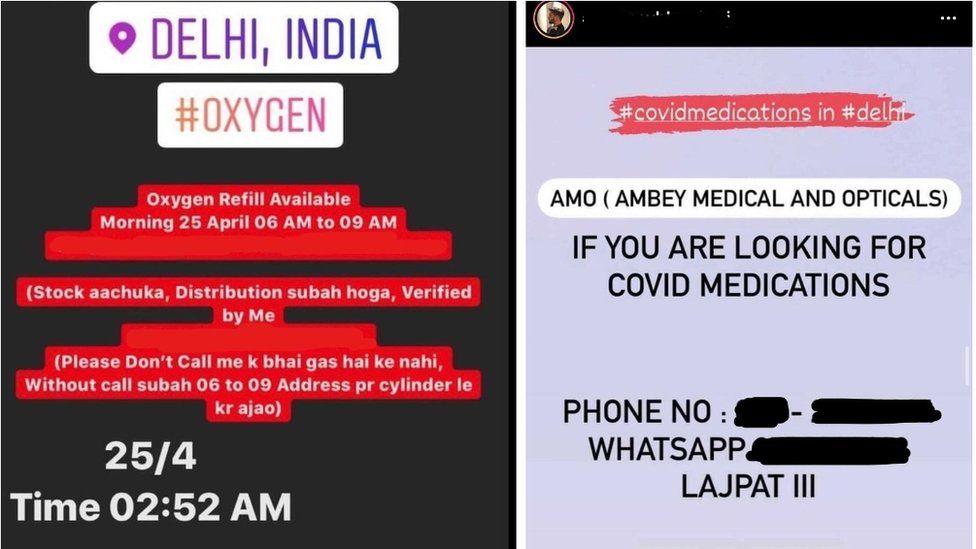
India Covid: The messages deciding between life and death

SharecloseShare pageCopy linkAbout sharingimage copyrightInstagramAs a second wave of coronavirus devastates India, with more than 350,000 cases reported daily, the families of the sick are desperately hunting on social media for help. From morning to night, they scour Instagram accounts, drop messages on WhatsApp groups and work through their phone books. They’re looking for hospitals beds, oxygen, the Covid drug Remdesivir and plasma.It’s chaotic and overwhelming. A WhatsApp message starts circulating: “Two ICU beds free.” Minutes later, they’re gone, to be occupied by whoever got there first. Another message: “Urgently needed oxygen concentrator. Please help.”As the health system buckles, it is community, self-help and luck standing between life and death. But demand is outstripping supply and the sick don’t have the luxury of time. When I started this piece on Friday, I spoke to one man looking for oxygen on WhatsApp for his 30-year-old cousin in Uttar Pradesh. By the time I finished it on Sunday, he had died.Others are exhausted and distressed after days of shouldering the weight of finding life-saving treatment for their loved ones.”It’s 6am in India and that’s when we start the calls. We find out my grandpa’s needs for the day – oxygen or injections – and we hit WhatsApp and we call everyone we know,” Avani Singh explains.image copyrightAvani SinghHer 94-year-old grandfather is extremely ill with Covid-19 in Delhi. From their home in the US, Avani and her mother, Amrita, describe a dizzying web of family, friends, relatives and professional contacts, sometimes many times removed, who helped when he fell ill and quickly deteriorated.”We were working every contact we know. I was looking on social media – there are pages I follow that say ‘so and so confirmed has ICU beds’ or ‘this place has oxygen’ – between us we tried around 200 places,” Avani explains.Eventually through a school friend they found a hospital with beds but discovered it had no oxygen. By now, Avani’s grandfather was unconscious. “Then I posted a plea on Facebook and a friend knew an emergency room with oxygen – because of that friend my dad survived the night,” Amrita explains.Read more of our coronavirus coverage:Why India’s second coronavirus wave is devastatingPatients suffer at home as Covid chokes hospitalsThe viral picture that defines India’s Covid distressWhy India is running out of oxygen againWhen we speak on Saturday, his outlook has improved but the task ahead for Avani and Amrita is to get hold of Remdesivir injections. They make the calls and Amrita’s brother in Delhi drives to the locations, clocking up to a 100 miles (160km) a day. “My grandad is my best friend. I can’t thank the people running the Instagram pages enough for everything they are doing,” Avani says.But information quickly goes out-of-date and they’re worried about fakes.”We heard one pharmacy had them, but by the time my cousin got there, there was none left. It opened at 8.30am and people had been queuing from midnight – only the first 100 got the injections.”Now they are selling medicine on the black market – it should be 1,200 rupees ($16) and they’re selling for 100,000 ($1,334) – and you can’t guarantee it’s real,” Amrita explains.And like in any system that relies on personal connections, not everyone has a fair shot. Money, family contacts and a higher social status all bring a greater chance of success, as does access to internet and mobile phones.Amid the chaos, individuals are pitching in to try to bring some order and centralise information, setting up community groups and using Instagram accounts to circulate contacts.Arpita Chowdhury, 20, and a group of students at her college in India’s capital, Delhi, are running an online database of information they gather and verify themselves. image copyrightArpita Chowdhury “It’s changing every hour and minute. Five minutes ago, I was told that there is a hospital with 10 beds available, but when I call there are no beds available,” she explains.With her colleagues, she calls contact numbers advertised on social media that offer oxygen, beds, plasma or medicine and publishes the verified information online. She then fields requests from relatives of Covid patients asking for help.”At the most basic level, it’s something we can do to help,” she says.On Friday, Aditya Gupta told me he was searching for an oxygen concentrator for his dangerously-ill cousin Saurabh Gupta in Gorakhpur, a town in the northern state of Uttar Pradesh, which has been reeling from a rising cases and deaths. image copyrightAditya GuptaSaurabh, a 30-year-old engineer, was his family’s pride and joy. His father ran a small shop and had saved up so he could get an education.”We visited almost all hospitals in Gorakhpur. The large hospitals were full and the rest told us: ‘If you can arrange oxygen on your own, than we can take the patient,” Aditya explained.Through WhatsApp, the family got hold of one oxygen cylinder but needed a concentrator to make it work. It was out-of-stock on Friday but they received assurances from a supplier that they could get one.But the desperately needed device never arrived and Saurabh was never admitted to hospital.On Sunday Aditya explained: “We lost him yesterday morning, he died in front of his parents.”

Read more →

AstraZeneca: US to share up to 60m vaccine doses

SharecloseShare pageCopy linkAbout sharingimage copyrightGetty ImagesThe US will share up to 60 million doses of its AstraZeneca vaccine with other countries as they become available, the White House has said.The doses will be able to be exported in the coming months after a federal safety review.The US has a stockpile of the vaccine even though its regulators have not yet authorised it for public use.Critics have accused the government of hoarding the vaccine, while other countries are in desperate need.India sets another Covid record as crisis deepensEU sues AstraZeneca over Covid vaccine delaysCovid map: Where are cases the highest?Last month President Joe Biden pledged to share about four million doses of the AstraZeneca vaccine with Mexico and Canada – both of which have approved the jab.The crisis in India has also piled pressure on the Biden administration to share US health resources.On Monday, the White House said it expected that about 10 million doses of the AstraZeneca vaccine could be released when the Food and Drug Administration (FDA) finishes its review in the coming weeks.It said that another 50 million doses were in various stages of production.At a news briefing, White House spokeswoman Jen Psaki said FDA officials would carry out quality checks on doses before they were exported. “Our team will share more details about our planning and who will be receiving offers from here, but we’re in the planning process at this point in time,” she added.The US has already announced that it will provide raw materials for Indian vaccine manufacturers as the country battles a devastating surge in cases.In a “warm and positive” phone call with Indian Prime Minister Narendra Modi on Monday, President Biden promised more emergency assistance “including oxygen-related supplies, vaccine materials and therapeutics”, a White House statement said.Washington is also looking at supplying oxygen, Covid tests, personal protective equipment (PPE) and the antiviral drug remdesivir to India’s health service.The FDA has so far authorised three vaccines against Covid- 19 – Pfizer BioNTech, Moderna and Johnson & Johnson (Janssen). Experts say it looks likely that these will provide all the country’s needs and the AstraZeneca jab may not be needed.According to the latest figures, more than 53% of adults have so far received at least one dose of vaccine.US seizes chance of ‘vaccine diplomacy’The US handling of the coronavirus pandemic has had plenty of shortcomings, but vaccine production isn’t one of them. The Biden administration has an abundance of jabs, and now it is sharing some of that bounty with other countries.The decision to ship as many as 60 million doses of the AstraZeneca vaccine – which have yet to be approved for use in the US – comes at a critical moment, with US neighbours Canada and Mexico continuing to struggle and India facing a devastating surge in cases.It gives the Biden administration the opportunity to engage in “vaccine diplomacy” – using the shipments to pressure other nations to follow suit and engender goodwill that might help advance other US foreign policy priorities. At the very least it inoculates Joe Biden from criticism that the US has turned its back on the world as it sat on millions of doses that weren’t needed – or wanted – when they could be saving lives. The domestic risk for the president seems minimal, as long as the US supply holds up. It signals the administration’s growing confidence that the domestic challenge ahead isn’t one of having enough jabs, but convincing all Americans to receive vaccinations that are already available.

Read more →

Coronavirus: Portugal records no daily deaths for first time since August

SharecloseShare pageCopy linkAbout sharingimage copyrightReutersPortugal has registered no coronavirus-related deaths for 24 hours for the second time since the pandemic began.The last time the country reported no daily deaths was in early August.The positive news on Monday follows a lengthy lockdown that has helped Portugal to slash the infection rate to a fraction of its level in late January, when it was experiencing the worst Covid surge in the world.The country has reported 16,965 deaths since the beginning of the pandemic. More than 834,000 cases have been registered.Covid map: Where are cases the highest?EU hints at summer return for US travellers What is happening with the EU vaccine rollout?At its peak in January, ambulances carrying Covid patients were queuing up outside hospitals.The lockdown, introduced that month, has been gradually eased, with pupils now back in schools and museums, hair salons and restaurant and cafe terraces reopened. The health authority says the country is in the “green zone” of risk, with the transmission rate just under one and recent new cases relative to the population size the lowest in the European Union.The vaccination programme was hampered by the same delays as in the rest of the EU, but officials say that the vast majority of people over the age of 80 have now been vaccinated. Diogo Serras Lopes, secretary of state for health, on Monday said the country could achieve herd immunity “towards the beginning rather than at the end of summer”, according to local media reports.You might be interested in watching:

Read more →

Hester Ford, Oldest American, Dies

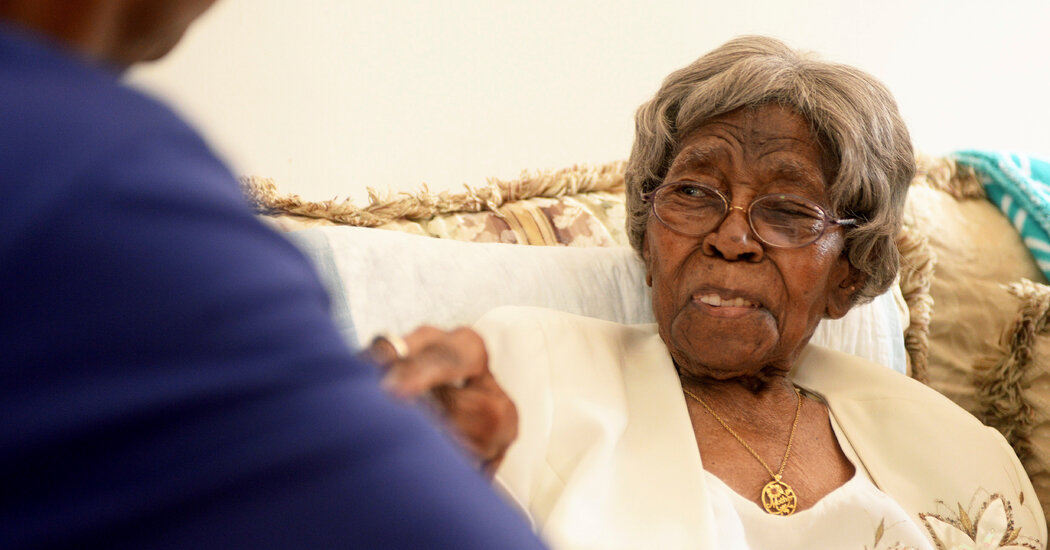
She was believed to be either 115 or 116. She experienced two pandemics and two world wars and lived under 21 presidents.Hester Ford, who was believed to have been the oldest American, living long enough to have experienced two pandemics, both world wars, Jim Crow discrimination, civil rights movements and the elections of 21 presidents, died on Saturday at her home in Charlotte, N.C.Census records show conflicting information for her year of birth, but she was either 115 or 116. The Gerontology Research Group, which tracks supercentenarians, or people over the age of 110, listed her age as 115 years and 245 days.Her death was confirmed by her family in a statement.“She was a pillar and stalwart to our family and provided much needed love, support and understanding to us all,” her great-granddaughter Tanisha Patterson-Powe said in the statement.Mrs. Ford was believed to have been born on Aug. 15, 1905 or 1904, on a farm in Lancaster County, S.C., where she grew up tilling fields and picking cotton. Theodore Roosevelt was president at the time.She married John Ford at 14 and gave birth to the first of her 12 children at age 15.The couple moved to Charlotte around 1960, and Mrs. Ford began working as a nanny. Mr. Ford died three years later, at 57. Mrs. Ford continued living in their home independently, until she was 108. Her family members insisted on moving in to help her after she fell in her bathtub and bruised her ribs.Her eight daughters and four sons gave her 68 grandchildren, 125 great-grandchildren, and at least 120 great-great-grandchildren.“She not only represented the advancement of our family, but of the Black African-American race and culture in our country,” Ms. Patterson-Powe said. “She was a reminder of how far we have come as people on this earth.”Mrs. Ford celebrated her final birthday last year during the coronavirus pandemic with a socially distanced drive-by parade of friends and family members, who honked and waved from the street.When asked what gifts she wanted, Mrs. Ford told the Charlotte television station WBTV, “Anything that anybody’ll give me.”The Gerontology Research Group lists the oldest living person in the world as Kane Tanaka in Japan. She is 118 years and 114 days old. The next oldest American is Thelma Sutcliffe, who is 114 years and 207 days old and lives in Nebraska.Mrs. Ford’s family said her daily routine involved a breakfast that always included half a banana, a trip outside for fresh air —  weather permitting — and sitting in her recliner looking at family albums, doing puzzles and listening to gospel music.When asked about the secret to her longevity, she told The Charlotte Observer, “I just live right, all I know.”The Associated Press contributed reporting.

Read more →

Florida Private School Bars Vaccinated Teachers From Student Contact

A private school in the fashionable Design District of Miami sent its faculty and staff a letter last week about getting vaccinated against Covid-19. But unlike institutions that have encouraged and even facilitated vaccination for teachers, the school, Centner Academy, did the opposite: One of its co-founders, Leila Centner, informed employees “with a very heavy heart” that if they chose to get a shot, they would have to stay away from students.In an example of how misinformation threatens the nation’s effort to vaccinate enough Americans to get the coronavirus under control, Ms. Centner, who has frequently shared anti-vaccine posts on Facebook, claimed in the letter that “reports have surfaced recently of non-vaccinated people being negatively impacted by interacting with people who have been vaccinated.”“Even among our own population, we have at least three women with menstrual cycles impacted after having spent time with a vaccinated person,” she wrote, repeating a false claim that vaccinated people can somehow pass the vaccine to others and thereby affect their reproductive systems. (They can do neither.)In the letter, Ms. Centner gave employees three options:Inform the school if they had already been vaccinated, so they could be kept physically distanced from students;Let the school know if they get the vaccine before the end of the school year, “as we cannot allow recently vaccinated people to be near our students until more information is known”;Wait until the school year is over to get vaccinated.Teachers who get the vaccine over the summer will not be allowed to return, the letter said, until clinical trials on the vaccine are completed, and then only “if a position is still available at that time” — effectively making teachers’ employment contingent on avoiding the vaccine.Leila Centner at an event in Miami in 2019.Romain Maurice/Getty Images for Haute LivingMs. Centner required the faculty and staff to fill out a “confidential” form revealing whether they had received a vaccine — and if so, which one and how many doses — or planned to get vaccinated. The form requires employees to “acknowledge the School will take legal measures needed to protect the students if it is determined that I have not answered these questions accurately.”Ms. Centner directed questions about the matter to her publicist, who said in a statement that the school’s top priority throughout the pandemic has been to keep students safe. The statement repeated false claims that vaccinated people “may be transmitting something from their bodies” leading to adverse reproductive issues among women.“We are not 100 percent sure the Covid injections are safe and there are too many unknown variables for us to feel comfortable at this current time,” the statement said.The Food and Drug Administration, the Centers for Disease Control and Prevention, the World Health Organization and many other authorities have concluded that the coronavirus vaccines now in emergency use in the United States are safe and effective.The Centner Academy opened in 2019 for students in prekindergarten through eighth grade, promoting itself as a “happiness school” focused on children’s mindfulness and emotional intelligence. The school prominently advertises on its website support for “medical freedom from mandated vaccines.”Ms. Centner founded the school with her husband, David Centner, a technology and electronic highway tolling entrepreneur. Each has donated heavily to the Republican Party and the Trump re-election campaign, while giving much smaller sums to local Democrats. In February, the Centners welcomed a special guest to speak to students: Robert F. Kennedy Jr., the prominent antivaccine activist. (Mr. Kennedy was suspended from Instagram a few days later for promoting Covid-19 vaccine misinformation.) This month, the school hosted a Zoom talk with Dr. Lawrence Palevsky, a New York pediatrician frequently cited by anti-vaccination activists.Kitty Bennett

Read more →

Fooling fusion fuel: How to discipline unruly plasma

The process designed to harvest on Earth the fusion energy that powers the sun and stars can sometimes be tricked. Researchers at the U.S. Department of Energy’s (DOE) Princeton Plasma Physics laboratory have derived and demonstrated a bit of slight-of-hand called “quasi-symmetry” that could accelerate the development of fusion energy as a safe, clean and virtually limitless source of power for generating electricity.
Fusion reactions combine light elements in the form of plasma — the hot, charged state of matter composed of free electrons and atomic nuclei that makes up 99 percent of the visible universe — to generate massive amounts of energy. Scientists around the world are seeking to reproduce the process in doughnut-shaped fusion facilities called tokamaks that heat the plasma to million-degree temperatures and confine it in symmetrical magnetic fields produced by coils to create fusion reactions.
Crucial issue
A crucial issue for these efforts is maintaining the fast rotation of the doughnut-shaped plasma that swirls within a tokamak. However, small magnetic field distortions, or ripples, caused by misalignment of the magnetic field coils can slow the plasma motion, making it more unstable. The coil misalignments and resulting field ripples are tiny, as small as 1 part in 10,000 parts of the field, but they can have a significant impact.
Maintaining stability in future tokamaks such as ITER, the international facility going up in France to demonstrate the feasibility of fusion energy, will be essential to harvesting the energy to generate electricity. One way to minimize the impact of the field ripples is to add additional magnets to cancel out, or heal, the effect of magnetic field errors. However, field ripples can never be completely cancelled and there has been no optimal method for mitigating their effects until now.
The newly discovered method calls for fooling the swirling plasma particles by canceling out the magnetic field errors along the path they travel. “A way to preserve rotation while providing stability is to change the shape of the magnetic field so that the particles are fooled into thinking that they are not moving in a rippled magnetic field,” said PPPL physicist Jong-Kyu Park, lead author of a paper in Physical Review Letters (PRL) that proposes a solution. “We need to make the 3D field inside the plasma quasi-symmetric to fool the particles into behaving as if they were not affected by the fields,” Park said.

Read more →

Researcher re-evaluates estimate of the world's high-altitude population

New findings detailing the world’s first-of-its-kind estimate of how many people live in high-altitude regions, will provide insight into future research of human physiology.
Dr. Joshua Tremblay, a postdoctoral fellow in UBC Okanagan’s School of Health and Exercise Sciences, has released updated population estimates of how many people in the world live at a high altitude.
Historically the estimated number of people living at these elevations has varied widely. That’s partially, he explains, because the definition of “high altitude” does not have a fixed cut-off.
Using novel techniques, Dr. Tremblay’s publication in the Proceedings of the National Academy of Sciences confirms there are about 81.6 million people who live 2,500 metres above sea level. From a physiological perspective, researchers typically use 2,500 metres as an altitude benchmark for their work.
Dr. Trembly says an important part of his study was presenting population data at 500-metre intervals. And while he says the 81 million is a staggering number, it is also important to note that by going to 1,500 metres that number jumps to more than 500 million.
“To understand the impact of life at high altitude on human physiology, adaption, health and disease, it is imperative to know how many people live at high altitude and where they live,” says Dr. Tremblay.

Read more →

Two novel biobanks offer investigatory targets for cocaine and oxycodone addiction

A major hurdle to developing new and effective treatments for drug addiction is better understanding how exactly it manifests itself before, during and after chronic use. In a paper published online in the April 21, 2021 issue of the journal eNeuro, an international team of researchers led by scientists at University of California San Diego School of Medicine describe the creation of two unique collections of more than 20,000 biological samples collected from laboratory rats before, during and after chronic use of cocaine and oxycodone.
Developed by the Preclinical Addiction Research Consortium, located in the Department of Psychiatry at UC San Diego School of Medicine and at Skaggs School of Pharmacy and Pharmaceutical Sciences, the new cocaine and oxycodone biobanks include samples from 20 different organs, plus urine, blood and feces.
“To create new treatments for drug addiction, we need to better identify the biomarkers of addiction and the biological targets of therapy,” said senior author Olivier George, PhD, associate professor in the Department of Psychiatry. “These biobanks using an animal model help serve that purpose, providing deeper insight — and potential therapeutic targets — regarding the paths and pathologies of cocaine and oxycodone addiction.”
Cocaine is among the world’s most commonly used illicit drugs. In 2016, the National Survey on Drug Use and Health estimated approximately 2 million people age 12 and older in the United States were current users — a bit less than 1 percent of the total U.S. population. Fatal cocaine overdoses (in combination with an opioid) are rising, from 3,822 in 1999 to 15,883 in 2019.
Oxycodone is an opioid, a class of highly addictive drugs that also includes heroin, morphine and fentanyl. Opioid abuse is a major, ongoing public health crisis. In 2019, almost 71,000 drug overdose deaths occurred in the U.S. — more than 70 percent involving an opioid, according to the Centers for Disease Control and Prevention.
Finding new ways to treat and reduce addiction requires well-validated, long-term models of how cocaine and oxycodone impact and impair biological systems and functions. Researchers used a heterogeneous rat model that reflects the genetic diversity of humans and have been characterized as vulnerable or resistant to cocaine and oxycodone behaviors.
Biological samples were collected before exposure to drugs, during intoxication, during acute withdrawal and after protracted abstinence. These samples were compared against age-matched control animals never exposed to the drugs.
Samples from more than 1,000 animals were taken, including tissue from brains, kidneys, livers, spleen, ovary, testes and adrenal glands, and preserved in methods that will allow researchers to conduct a variety of future assessments, including epigenomics, neuroanatomy, microbiomics and biomarker discovery. 
Story Source:
Materials provided by University of California – San Diego. Original written by Heather Buschman, PhD. Note: Content may be edited for style and length.

Read more →

Airline Bans Alaska State Senator Over Mask Policy Violation

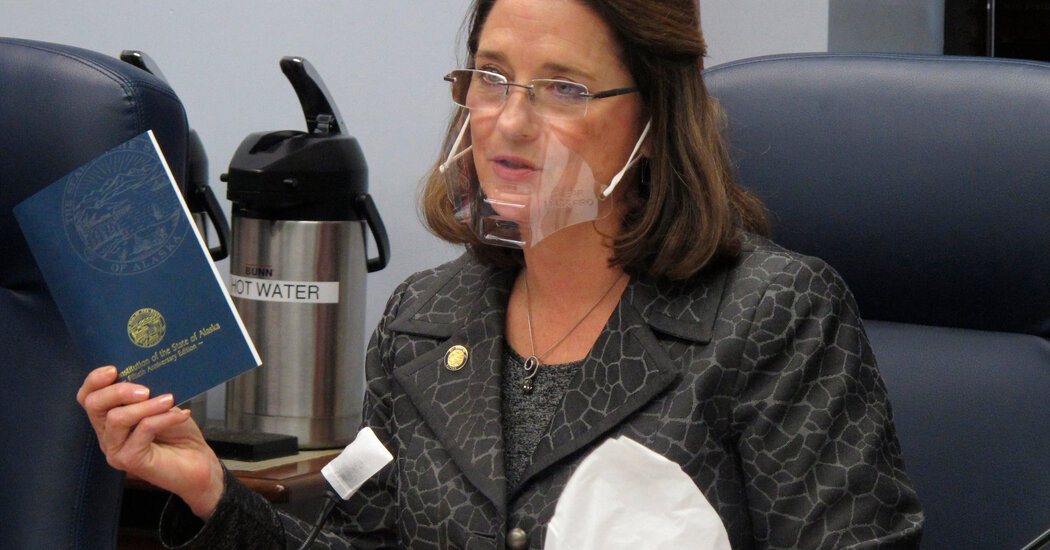
Alaska Airlines said it would not allow State Senator Lora Reinbold to fly because she refused to comply with its mask rules.Alaska Airlines has banned an Alaska state lawmaker from its flights for violating its mask policies, the company said.The lawmaker, Lora Reinbold, a Republican state senator, was captured on video arguing with employees at Juneau International Airport about the airline’s mask rules, according to footage posted on Twitter.“We need you to pull the mask up, or I’m not going to let you on the flight,” an airport employee is heard saying to Ms. Reinbold on the videos, which were posted on Thursday.“It is up,” Ms. Reinbold responds.“It is not,” an employee says. “It’s down below your nose. We can’t have it down.”It was not clear if she was permitted on the flight and one of the videos showed her leaving the boarding area. In the videos, Ms. Reinbold can be seen wearing a mask. It was not clear what prompted the confrontation at the airport or what happened immediately before the footage was taken.Ms. Reinbold said on Facebook she learned on Saturday that she was banned from flying with the airline.“We have notified Senator Lora Reinbold that she is not permitted to fly with us for her continued refusal to comply with employee instruction regarding the current mask policy,” the airline said, adding that the suspension is being reviewed.Ms. Reinbold said that she was suspended before getting a chance to speak to someone from the airline and that she did not get “a warning via a yellow card per their policy either,” according to a post on Facebook.“There was no due process before a temporary decision that is ‘under review’ was made public,” she wrote. “Alaska Airlines sent information, including my name, to the media without my knowledge nor permission. I do believe constitutional rights are at risk under corporate covid policies.”The clash over the company’s rule was the latest to surface in the country about masks during the pandemic. Mask mandates have become a rallying cry for some activists and a divisive political talking point. Disputes about the rules have sometimes led to angry confrontations.In an interview with Fox News last week, Senator Rand Paul, a Republican of Kentucky, suggested President Biden should “go on national TV, take his mask off and burn it” to motivate Americans to get vaccinated.A federal mandate issued in January requires travelers to wear masks on planes and at airports, as well as on other modes of public transportation, including trains.Under the federal mandate, the only travelers exempt from wearing a mask include children ages under 2, a person with a disability who cannot wear one or someone “for whom wearing a mask would create a risk to workplace health, safety,or job duty.”“I test negative weekly,” Ms. Reinbold wrote. “I hope people can hear the truth of my actual actions thru the media mischaracterization.”Ms. Reinbold’s office did not immediately respond to a request for comment on Monday.On Sunday, Ms. Reinbold posted on Facebook that she had traveled to Juneau, Alaska, by road and ferry. Without a flight, the trip from the Anchorage area to Juneau takes more than 19 hours.Last week’s episode is not the first confrontation that Ms. Reinbold has had with Alaska Airlines. She has previously complained about the company on Facebook.“Mask bullies in full force,” Ms. Reinbold said of a flight with Alaska Airlines. “Sadly Alaska airlines is part of mask tyranny and not providing proof required in law they help stop the spread (I can show they cause health problems).”In February, Gov. Mike Dunleavy of Alaska, a Republican, sent a letter to Ms. Reinbold asking her to stop sharing misinformation about the pandemic.“It is clear you have abdicated the tenets of your oath as a public servant,” Mr. Dunleavy wrote. “You impugned the motivations of unelected and nonpolitical employees working for the State of Alaska with baseless allegations that, on multiple occasions, were demonstrated to you to be false.”In March, Ms. Reinbold said on Facebook that she was asked to leave a committee hearing because she was not wearing an approved face shield. After that, Ms. Reinbold was banned from the State Capitol until she complied with health and safety protocols.“My actions are to protect my constitutional rights, including civil liberties and those who I represent, even under immense pressure and public scrutiny,” Ms. Reinbold said.Ms. Reinbold has since returned to the State Capitol in a clear face mask.

Read more →