Airline Bans Alaska State Senator Over Mask Policy Violation
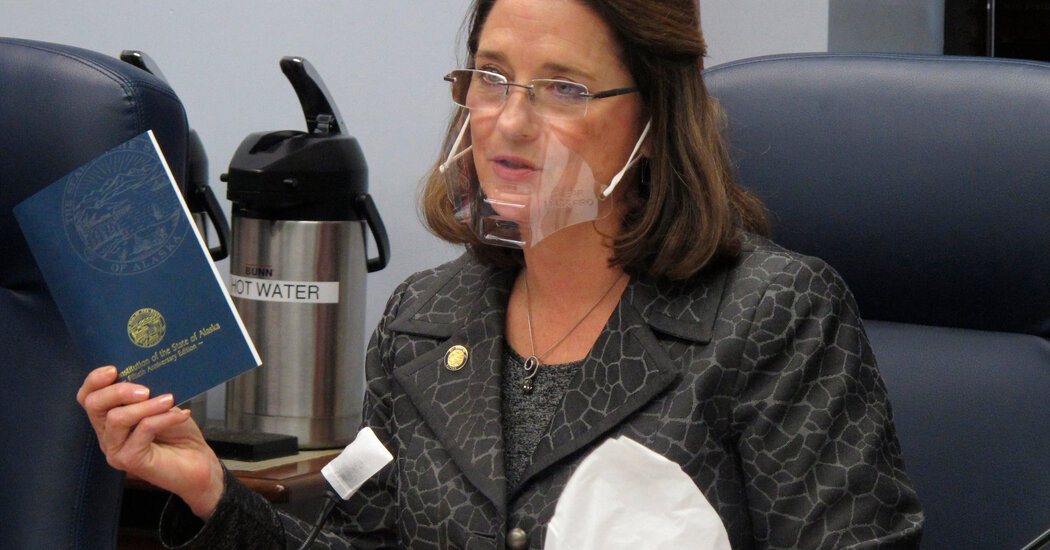
Alaska Airlines said it would not allow State Senator Lora Reinbold to fly because she refused to comply with its mask rules.Alaska Airlines has banned an Alaska state lawmaker from its flights for violating its mask policies, the company said.The lawmaker, Lora Reinbold, a Republican state senator, was captured on video arguing with employees at Juneau International Airport about the airline’s mask rules, according to footage posted on Twitter.“We need you to pull the mask up, or I’m not going to let you on the flight,” an airport employee is heard saying to Ms. Reinbold on the videos, which were posted on Thursday.“It is up,” Ms. Reinbold responds.“It is not,” an employee says. “It’s down below your nose. We can’t have it down.”It was not clear if she was permitted on the flight and one of the videos showed her leaving the boarding area. In the videos, Ms. Reinbold can be seen wearing a mask. It was not clear what prompted the confrontation at the airport or what happened immediately before the footage was taken.Ms. Reinbold said on Facebook she learned on Saturday that she was banned from flying with the airline.“We have notified Senator Lora Reinbold that she is not permitted to fly with us for her continued refusal to comply with employee instruction regarding the current mask policy,” the airline said, adding that the suspension is being reviewed.Ms. Reinbold said that she was suspended before getting a chance to speak to someone from the airline and that she did not get “a warning via a yellow card per their policy either,” according to a post on Facebook.“There was no due process before a temporary decision that is ‘under review’ was made public,” she wrote. “Alaska Airlines sent information, including my name, to the media without my knowledge nor permission. I do believe constitutional rights are at risk under corporate covid policies.”The clash over the company’s rule was the latest to surface in the country about masks during the pandemic. Mask mandates have become a rallying cry for some activists and a divisive political talking point. Disputes about the rules have sometimes led to angry confrontations.In an interview with Fox News last week, Senator Rand Paul, a Republican of Kentucky, suggested President Biden should “go on national TV, take his mask off and burn it” to motivate Americans to get vaccinated.A federal mandate issued in January requires travelers to wear masks on planes and at airports, as well as on other modes of public transportation, including trains.Under the federal mandate, the only travelers exempt from wearing a mask include children ages under 2, a person with a disability who cannot wear one or someone “for whom wearing a mask would create a risk to workplace health, safety,or job duty.”“I test negative weekly,” Ms. Reinbold wrote. “I hope people can hear the truth of my actual actions thru the media mischaracterization.”Ms. Reinbold’s office did not immediately respond to a request for comment on Monday.On Sunday, Ms. Reinbold posted on Facebook that she had traveled to Juneau, Alaska, by road and ferry. Without a flight, the trip from the Anchorage area to Juneau takes more than 19 hours.Last week’s episode is not the first confrontation that Ms. Reinbold has had with Alaska Airlines. She has previously complained about the company on Facebook.“Mask bullies in full force,” Ms. Reinbold said of a flight with Alaska Airlines. “Sadly Alaska airlines is part of mask tyranny and not providing proof required in law they help stop the spread (I can show they cause health problems).”In February, Gov. Mike Dunleavy of Alaska, a Republican, sent a letter to Ms. Reinbold asking her to stop sharing misinformation about the pandemic.“It is clear you have abdicated the tenets of your oath as a public servant,” Mr. Dunleavy wrote. “You impugned the motivations of unelected and nonpolitical employees working for the State of Alaska with baseless allegations that, on multiple occasions, were demonstrated to you to be false.”In March, Ms. Reinbold said on Facebook that she was asked to leave a committee hearing because she was not wearing an approved face shield. After that, Ms. Reinbold was banned from the State Capitol until she complied with health and safety protocols.“My actions are to protect my constitutional rights, including civil liberties and those who I represent, even under immense pressure and public scrutiny,” Ms. Reinbold said.Ms. Reinbold has since returned to the State Capitol in a clear face mask.

Read more →

The World Responds to India's Distress Call

Countries, companies and powerful members of the diaspora have all pledged to pitch in, but it likely won’t be enough to stop the unfolding catastrophe.NEW DELHI — Oxygen generators from Saudi Arabia and the United Arab Emirates. Raw material for coronavirus vaccines from the United States. Millions in cash from companies led by Indian-American businessmen.As a second wave of the pandemic rages in India, the world is coming to the rescue.But it is unlikely to plug enough holes in India’s sinking health care system to fully stop the deadly crisis that is underway, and the health emergency has global implications for new infections worldwide, as well as for countries relying on India for the AstraZeneca vaccine.“It’s a desperate situation out there,” said Dr. Ramanan Laxminarayan, the founder and director of the Center for Disease Dynamics, Economics & Policy, adding that donations will be welcome, but may only make a “limited dent on the problem.”In the early months of 2021, the government of Prime Minister Narendra Modi acted as if the coronavirus battle had been won, holding huge campaign rallies and permitting thousands to gather for a Hindu religious festival.Now, Mr. Modi is striking a far more sober tone. He said in a nationwide radio address on Sunday that India has been “shaken” by a “storm.”Patients are suffocating in the capital, New Delhi, and other cities because hospitals’ oxygen supplies have run out. Frantic relatives have appealed on social media for leads on intensive-care unit beds and experimental drugs. Funeral pyres have spilled over into parking lots and city parks.Now, Mr. Modi appears to be looking to the rest of the world to help India quell its seemingly unstoppable coronavirus wave.A global coronavirus surge, largely driven by the devastation in India, continues to break daily records and run rampant in much of the world, even as vaccinations steadily ramp up in wealthy countries. More than one billion shots have now been given globally.On Sunday, the world’s seven-day average of new cases hit 774,404, according to a New York Times database, higher than the peak average during the last global surge, in January. Despite the number of shots given around the world, far too few of the global population of nearly eight billion have been vaccinated to slow the virus’s steady spread.Vaccinations have been highly concentrated in wealthy nations: 82 percent of shots worldwide have been given in high- and upper-middle-income countries, according to data compiled by the Our World in Data project. Only 0.2 percent of doses have been administered in low-income countries.On Monday, India broke the world record for daily coronavirus infections for a fifth consecutive day, reporting nearly 353,000 new cases. And it added 2,812 deaths to its overall toll of more than 195,000, which experts say may be a vast undercount.Relatives of Covid-19 victims perform last rites in Delhi on Saturday.Atul Loke for The New York TimesEarlier this month, Adar Poonawalla, the chief executive of the Serum Institute of India, the world’s largest vaccine maker, made a direct appeal to President Biden on Twitter, asking him to “lift the embargo” on raw material used to make Covid-19 vaccines.Tim Manning, the White House Covid-19 supply coordinator, said that the U.S. Defense Production Act, which Mr. Biden invoked in March, did not equate to an embargo. “There are literally no export controls, export restrictions on vaccine inputs out of the United States,” Mr. Manning said.“The challenge,” he said, “what is actually happening globally, is that there is just a dramatically outstripped demand against the infrastructure for supply. And it’s really just that simple.”Facing increased pressure, the White House said Sunday that it had removed impediments to the export of raw materials for vaccines and would also supply India with therapeutics, test kits, ventilators and personal protective gear.“Just as India sent assistance to the United States as our hospitals were strained early in the pandemic, we are determined to help India in its time of need,” Mr. Biden said on Twitter.The Biden administration then said Monday that it would share up to 60 million AstraZeneca doses from its stockpile with other countries in the coming months, so long as they clear a safety review being conducted by the Food and Drug Administration.The U.S. surgeon general, Dr. Vivek Murthy, who announced the plan on Twitter, did not specify which countries would receive those doses.Members of Congress had lobbied Mr. Biden to donate the AstraZeneca vaccine to India, since there is no shortage for Americans who want to be vaccinated with the three vaccines that have been authorized for emergency use there.The extent of support the president offers India could lay the foundation for a Biden-Modi relationship at a time when the United States and China are both jockeying for influence with India and greater access to its enormous market.Mr. Biden’s response to India at its time of crisis has come under scrutiny, raising questions of how far the administration has actually moved away from former President Donald J. Trump’s “America First” foreign policies.The Serum Institute did not respond to questions about the White House’s announcement.Between bouts of the pandemic, when Mr. Modi’s government thought the worst was behind it, India enacted a policy of vaccine diplomacy, selling or donating 66.4 million doses.In late March as the domestic caseload began to creep upward, Mr. Modi suddenly stopped exports, crippling the vaccination campaigns of other countries reliant on made-in-India vaccine.The Indian government is now holding back nearly all of the 2.4 million doses produced daily by the Serum Institute, one of the world’s largest producers of the AstraZeneca vaccine. So far, only the U.S. has offered to fill some of the shortage.Still, vaccine shortages have hobbled India’s effort to protect its people. Only about 2 percent of the population has been fully inoculated.Signs indicating a shortage of vaccines in Mumbai last week.Francis Mascarenhas/ReutersSeveral other countries have also stepped up to offer support to India.Britain pledged medical equipment, including 495 oxygen concentrators (devices that can extract oxygen from ambient air and provide it to patients) and 140 ventilators. France and Australia are considering sending oxygen supplies. Even Pakistan, with which India has fought several wars and maintains chilly relations, has offered X-ray machines, ventilators and other aid, its foreign minister, Shah Mahmood Qureshi, said.Two Indian-American businessmen — the chief executive of Microsoft, Satya Nadella, and the Google chief, Sundar Pichai — have both said that their companies will provide financial assistance to India.“Devastated to see the worsening Covid crisis in India,” Mr. Pichai wrote on Twitter, pledging $18 million to aid groups working in the country.Indian officials have also been making direct requests of other countries. Subrahmanyam Jaishankar, India’s external affairs minister, tweeted last week about his meeting with Margrethe Vestager, the European Commission executive vice president who oversees digital policy. On Sunday, the European Union announced that it would provide oxygen and medicines.“The E.U. is pooling resources to respond rapidly to India’s request for assistance via the E.U. Civil Protection Mechanism,” Ursula von der Leyen, the president of the European Commission, said on Twitter.Mr. Jaishankar’s spokesman did not respond to a request for comment on the assistance promised to India, but experts said it could only do so much.Prime Minister Narendra Modi speaking in Ahmedabad in March.Amit Dave/ReutersIn many cases, India has lagged behind other countries with its preparedness measures and ability to scale up care, triaging resources like oxygen that reach patients just in time or not at all.“Early and aggressive investments were absolutely necessary,” said Krishna Udayakumar, an associate professor of global health and director of the Duke Global Health Innovation Center.Unlike the United States and Britain, which signed advance purchase agreements for millions of doses of the AstraZeneca vaccine beginning last May, India waited until January, and then only bought 15.5 million doses produced by Serum and the pharmaceutical company Bharat Biotech — a drop in the ocean for a country of nearly 1.4 billion people.India had indicated as early as last September, at the height of the first wave, that it would rely heavily on Russia’s Sputnik V vaccine, signing a deal to buy 100 million doses. But Sputnik won’t be available in India until next month at the earliest.If India were to dramatically ramp up its vaccine manufacturing capacity and give emergency authorization to other vaccine makers, it could potentially curb the worst effects of the second wave.“This is the only long-term solution,” Dr. Laxminarayan said. “India has the capability to do it, if the country puts its mind to it.”Rebecca Robbins contributed reporting.

Read more →

Spike in severe pediatric type 2 diabetes complication during COVID-19 pandemic

According to the Centers for Disease Control and Prevention (CDC), children generally appear to be less severely impacted by COVID-19 than adults. But a new study from Children’s Hospital Los Angeles shows that the pandemic could be affecting children’s health in unexpected ways. The study reveals a surge of patients presenting with diabetic ketoacidosis, a severe complication of type 2 diabetes. Published in Diabetes Care, these data offer additional insights into how the pandemic may be impacting the nation’s children.
Diabetic ketoacidosis, or DKA, is life-threatening. “DKA happens when insulin levels in the blood drop too low for too long,” says Lily Chao, MD, MS, Interim Medical Diabetes Director at CHLA. “Insulin helps the body utilize glucose. So when there’s not enough insulin, the body starts breaking down fat as a source of energy.”
This process, she says, causes dangerously high levels of acids in the blood. If untreated, this can lead to cerebral edema, coma, or even death. “Kids are coming in with dehydration and DKA. But DKA is preventable and reversible if we treat it early and appropriately,” says Dr. Chao, who is lead author on the paper.
Dr. Chao and her colleagues noticed back in March of 2020 that more and more patients were coming in with DKA and type 2 diabetes. “We used to see a few DKA cases in type 2 diabetes a year,” she says, “and all of a sudden we were seeing a spike, so we began keeping track. Now we have the numbers to confirm that there are more children with type 2 diabetes who present with this very serious complication of DKA.”
Yet the question remains: What is the cause of the increased incidence of Type 2 diabetes with DKA?
A year into the COVID-19 pandemic, many children are used to wearing masks and attending online classes. But other changes have affected them, too. Fewer children may be making it to the doctor’s office for their routine well-child exams, possibly due to the fear families may feel about exposure to SARS-CoV-2, the virus that causes COVID-19.

Read more →

Life science research result reporting set for boost under new system

A new guideline for reporting research results has been developed to improve reproducibility, replication, and transparency in life sciences.
The new Research Materials, Design, Analysis and Reporting (MDAR) Framework will harmonise the recording of outcomes across several major journals, its developers say.
Existing guidelines address specific parts of biomedical research, such as ARRIVE — which relates to animal research — and CONSORT, associated with clinical trial reporting.
The MDAR Framework — developed by a team from the University of Edinburgh, the Centre for Open Science and six major journal publishers — complements these by establishing basic minimum reporting requirements and best practice recommendations.
The Framework is outlined in a new publication in the Proceedings of National Academy of Sciences.
Experimentation with various guidelines has resulted in a fragmented landscape, which, even though it has improved reporting, has increased the burden on authors’ and editors’ time.

Read more →

A new way of rapidly counting and identifying viruses

A Lancaster University professor has introduced a new concept for rapidly analysing for the presence of a virus from colds to coronaviruses.
Based on analysing chemical elements the methodology, which has been adapted from an analytical technique used to identify metallic nanoparticles, is able to detect the presence of viruses within just 20 seconds.
Although the tests would need to be performed in a lab, it could be used to quickly identify whether people admitted to hospitals have been infected by a virus — enabling clinicians to decide treatments and also whether to admit patients into isolation wards.
The proposed technique, called ‘Single virus inductively coupled plasma mass spectroscopy’ (SV ICP-MS) analysis, can be used to quickly determine families of viruses. However, although the concept can identify that someone has a type of coronavirus for example, it would not be able to determine the type of coronavirus, or variants. Additional tests would still be required to find out the specific virus someone was infected with.
While SV ICP-MS is not an alternative for tests developed to specifically identify types of Covid-2 infections, it could be used to discriminate if viruses from one family, such as coronaviruses, are present or not. If a virus is found to be present, more specific testing would be needed.
The concept, developed by Professor Claude Degueldre, from Lancaster University’s Department of Engineering, uses diluted samples of fluids, such as nasal mucus or saliva, from patients. A plasma torch is used to atomise and ionise the virus particles. Measurements of intensities for selected masses of the elements from the viruses provide rapid results to show the presence of a virus or not. This process works on DNA and RNA virus types within seconds.
Complementary analysis such as existing sequencing techniques can be tested to complete the identification, though they can take up to two days.
Another key benefit is the ability to test a large number of samples quickly.
Professor Degueldre said: “What we are proposing here is not a new Covid test but is a new concept to rapidly find out if there are viruses present. This would be useful if people are ill but it is not known if they have a virus or another health condition that is making them sick. This concept would inform the clinical team whether or not there is a virus to inform early treatment actions and other measures such as the need for isolation. More detailed tests would still be required to discover the exact viral infection, but results from these take longer.
“Another application for the concept is to test water samples from sewage systems or down flow in rivers. The results would enable public health experts to identify areas of cities that have viral outbreaks.”
The concept is still at an early stage and further research and experiments are needed to further develop the process.
Story Source:
Materials provided by Lancaster University. Note: Content may be edited for style and length.

Read more →

Brain changes following traumatic brain injury share similarities with Alzheimer's disease

Brain changes in people with Alzheimer’s disease and in those with mild traumatic brain injuries (TBIs) have significant similarities, a new USC study shows, suggesting new ways to identify patients at high risk for Alzheimer’s. The findings appear this week in GeroScience.
TBIs, which affect over 1.7 million Americans every year, are often followed by changes in brain structure and function and by cognitive problems such as memory deficits, impaired social function and difficulty with decision-making. Although mild TBI — also known as concussion — is a known risk factor for Alzheimer’s disease, prior studies haven’t quantified the extent to which these conditions share patterns of neural degeneration in the brain.
USC researchers hypothesized that comparing these patterns could reveal not only how the degenerative trajectories of the two conditions are similar but also which features of brain atrophy could predict Alzheimer’s risk after TBI.
The study included 33 study participants with TBIs due to a fall, another 66 participants who had been diagnosed with Alzheimer’s disease and 81 healthy control participants without either TBI or Alzheimer’s. The researchers analyzed MRIs of the patients’ brains and created additional computer-generated models to compare dozens of different brain structures, ultimately mapping similarities and differences between the three different groups.
In multiple brain areas of both TBI and Alzheimer’s participants, the researchers found reduced cortical thickness when compared to the healthy controls. Cortical thickness is roughly correlated with brain age and its thinning is often associated with reductions in attention, memory and verbal fluency, as well as with decreased ability to make decisions, integrate new information and adapt one’s behavior to new situations, among other deficits.
“These findings are the first to suggest that cognitive impairment following a traumatic brain injury is useful for predicting the magnitude of Alzheimer’s-like brain degradation,” said study author Andrei Irimia, an assistant professor of gerontology, neuroscience and biomedical engineering at the USC Leonard Davis School of Gerontology and the USC Viterbi School of Engineering. “The results may help health professionals to identify TBI victims who are at greater risk for Alzheimer’s disease.”
Using MRIs, the study identified significant similarities between TBI and Alzheimer’s disease in how the brain’s gray and white matter degrade after injury. In gray matter — the part of the brain that contains neuron cell bodies and their short-range connections — the most extensive similarities were in areas involved in memory (temporal lobes) and decision-making (orbitofrontal cortices).

Read more →

Covid-19 Vaccine ‘Passports,’ Passes and Apps Around the Globe

A variety of digital and old-fashioned approaches are being used around the globe to confirm Covid-19 vaccination. But the world is still far from a universal standard of proof.It is the latest status symbol. Flash it at the people, and you can get access to concerts, sports arenas or long-forbidden restaurant tables. Some day, it may even help you cross a border without having to quarantine.The new platinum card of the Covid age is the vaccine certificate. It is a document that has existed for more than two centuries, but it has rarely promised to hold so much power over culture and commerce. Many versions of these certificates now come with a digital twist.“It’s been a long time since we’ve had a pandemic that has impacted every facet of society so thoroughly, and then a vaccine,” said Carmel Shachar, the executive director of the Petrie-Flom Center for Health Law Policy, Biotechnology and Bioethics at Harvard Law School. “There is no precedent since 1918, and we definitely didn’t have smartphones in 1918.”Ramesh Raskar, a professor at M.I.T. Media Lab, has been leading an effort to develop a solution that includes both a paper certificate that anyone can easily carry as well as a free digital pass that works even without cell service.We are going to emerge from the pandemic with a new “currency for health,” he said.Figuring out how these passes should be used and what they should look like is dividing lawmakers, business leaders, ethicists, designers and health officials.Paper certificates from Shanghai, São Paulo and Uttar Pradesh, India. Anil Kumar Shukla and Ernesto Londoño/The New York Times An Easy Pass Made of Flimsy PaperA Covid-19 vaccination card does not always convey the significance of the document. Nor are the cards typically designed to counter fraud. Most of the hundreds of millions of people worldwide who got at least one shot of a Covid-19 vaccine in the past few months received a flimsy piece of paper.Unlike the easily recognizable “yellow card” that international travelers have long used to document other kinds of immunizations, the designs for Covid-19 vaccination certificates vary from state to state and country to country. In São Paulo, the cards have a green border. In Shanghai, they are stamped in red. In parts of Mexico and Lebanon, they are the size of passports, with the handwriting of the person who filled it out.In India, the certificate is a fully typed printed page. Next to the pronouncement that reads “Together, India will defeat Covid-19” is a photo of the country’s prime minister, Narendra Modi, a rare flourish.In some parts of the world, vaccine proof has gotten people a range of goods: free popcorn and ice cream, and even discounted beers. But for the most part, they have just allowed people to post selfies or to reassure their acquaintance. Some governments are looking for more formal systems that work on phones and counter fraud. Here is a look at some early efforts.DenmarkA template of Denmark’s vaccine passport.Denmark Ministry of HealthName: Coronapas (Corona Passport)Could it get you an indoor table? Yes. In Denmark, restaurants have been open for just takeout since December and have reopened this month with the caveat that only those with a Coronapas can sit indoors, the ministry of health said.How about a concert or sports game? That, too. As part of the country’s reopening plans, the government sanctioned indoor seating for sports and other stadium events for pass holders.Anything else? On April 6, hair salons, tattoo businesses, massage parlors and driving schools opened exclusively to customers with Coronapas. The Danish government does not track each time the pass is used, the ministry said, but about 3.5 million people had visited the app or site in its first week. The app is also intended to be a way for travelers to show other countries that they have been vaccinated.How do you get one? You have to be fully vaccinated and have tested negative for the coronavirus within the past 72 hours or overcame an infection within the past 180 days. Danish citizens can download the app on their smartphone or visit a website to print the Coronapas, which exudes the somber vibe of an old-school train ticket.Isn’t the European Union also developing a system? Yes. On June 21, the E.U. is expected to introduce a certificate called a Digital Green Pass, with the aim of allowing people who have been vaccinated against the coronavirus to travel more freely. Under the proposed rules, each nation within the bloc could decide which travel restrictions, such as obligatory quarantine, to waive for Digital Green holders. But many countries, including Denmark, say they cannot afford to wait for the Digital Green Pass and are developing their own versions.IsraelIsrael’s Green Pass app features a gif of a family headed on a trip.Name of card: The Green PassCould it get you an indoor table? Yes.How about entry to a concert or sports game? That, too.Anything else? The pass allows you to enter many businesses, including swimming pools, gyms, theaters and wedding halls, as well as cultural events, such as concerts, sports games and religious gatherings. Having the pass may also mean that you may not have to quarantine for 10 to 14 days after international travel.How does it work? In late February, Israel’s ministry of health began offering the Green Pass to fully vaccinated residents and individuals who have recovered from Covid-19. When booking a table at a restaurant, many of the businesses began to ask, “Do you have a Green Pass?” Israelis can print their certificates containing a QR code, download the code onto their phones or flash the app itself.What’s with that family? The app and other Green Pass materials feature an animated illustration of a family of three. The man is wearing shorts, a backpack and a camera around his neck, suggesting he’s on vacation. His son and wife are wearing masks, but their postures are relaxed as they pull their suitcases.Aparna Nair, a professor of science history at the University of Oklahoma who maintains a collection of vaccination certificates going back to the 1820s, said that this detail was noteworthy: “They are using the design of the vaccine passport to form visual connections with life after the pandemic, essentially, the vaccine as a literal passport to the rest of the world.”Are there concerns about requiring it so widely? Absolutely. Seema Mohapatra, a law professor specializing in health care and bioethics, noted that many people in the West Bank and Gaza strip had not been vaccinated, raising equity concerns.EstoniaA template of Estonia’s vaccine app.GuardtimeName of card: VaccineGuardCould it get you an indoor table? Not yet.How about entry to a concert or sports game? Not that either. Some business owners and cultural event organizers have expressed the hope that the Estonian government will waive capacity limitations and other restrictions if they agree to check for the certificate at the door, said Dr. Ain Aaviksoo, the chief medical officer at Guardtime, the company that worked with the Estonian government and the W.H.O. to design the certificate. But this hasn’t happened yet.So what is it good for? As of April 30, it will be most useful for going to and from Finland and back on the ferry.Is that really such a high-demand journey? Yes. About 10 percent of the Estonian working population is employed in Finland, Dr. Aaviksoo said. For years, it has been common for Estonians to stay in Helsinki during the week and then take the two-hour ferry ride home to Tallinn for the weekend. That has not been possible during the pandemic. Finland also fuels Estonia’s summer tourism.How does it work? Estonia says it cannot afford to wait for the E.U.’s Digital Green Pass. Starting April 30, residents can download a vaccination certificate, containing a QR code.New YorkA template of New York State’s Excelsior Pass which shows proof of vaccineNew York StateName: Excelsior PassCould it get you an indoor table? Yes.How about entry to a concert or sports game? That, too.Anything else? The state has been requiring some government employees to use it. It’s up to businesses and private organizations to decide whether they want to require the pass for entry. So far, the system has been used at restaurants, weddings, Madison Square Garden, Barclays Center and Yankee Stadium, according to Eric Piscini, vice president of Emerging Business Networks at IBM Watson Health, which designed it.How does it work? New York began offering downloads of the app in March. It verifies whether someone is fully vaccinated or has recently tested negative. Around 400,000 people throughout the state have downloaded it so far, Mr. Piscini said. The pass generates a QR code that can be scanned to produce a green checkmark or a red X. Those without compatible phones can print out their codes, he said.Who scans green? A person could obtain green not only by being fully vaccinated more than 14 days ago, but also by getting a negative PCR test within three days or a negative antigen test — often referred to as a rapid Covid test — within the past six hours. One challenge: only people vaccinated or tested in New York State can use it. “If you live in New Jersey, you will have to get tested in New York to get added to the database and go to the stadium,” Mr. Piscini said. IBM is trying to figure out how to access data from other states. Some venues may also accept other forms of certification.Will there ever be a national app for the U.S.? No. All of the 138 million Americans who have completed their first shot should have received the same Covid-19 vaccine record card created by the Centers for Disease Control and Prevention. But it’s up to states, universities and businesses to decide whether they want to require these cards or offer a supplemental app. The White House said in March there were no plans for a universal federal vaccination database or a mandate for a single credential. While New York has promoted Excelsior as the way to safely and quickly reopen the state, lawmakers in at least a half-dozen states, including Texas, Florida and Arkansas, have moved to ban businesses from requiring vaccination, saying it is a privacy violation or will slow down reopening of commerce.What differentiates Excelsior visually? It is the only Covid-19 vaccine pass to produce a large illustration of the Statue of Liberty when it is scanned.Isabel Kershner contributed reporting from Jerusalem, Suhasini Raj from New Delhi and Ernesto Londoño from Rio de Janeiro

Read more →

Crohn’s Disease Is on the Rise

Many think the abdominal disorder starts in childhood, but it can occur at any age and is becoming more prevalent throughout the world.Shelley Martin, a Manhattan accountant, was in her mid-60s when she learned after a routine colonoscopy that she had Crohn’s disease, a chronic inflammatory disorder characterized by abdominal pain and diarrhea. She said when friends learned of her diagnosis, several said “How can that be? Crohn’s starts in childhood.”Actually, this often debilitating disease, which typically affects the area where the small intestine joins the colon, can occur at any age. “If you’re born with the right genetics, it can first appear in young kids to people in their 80s or 90s,” said Dr. Joseph D. Feuerstein, gastroenterologist at Beth Israel Deaconess Medical Center in Boston. “It’s rising in incidence and prevalence throughout the world,” he said, and gastroenterologists are still trying to figure out why it shows up when it does in different people.Crohn’s disease was first described in 1932 by Dr. Burrill B. Crohn and colleagues and is one of two chronic inflammatory bowel diseases (ulcerative colitis is the other) that have no specific cause. Together, they afflict about three million people in the United States. Crohn’s in adults starts on average at age 30, with peak incidence between ages 20 and 30 and a second peak around age 50. The disease tends to run in families, but the genetic risk is not large. One in 10 to one in four patients have a close family member who is affected, and only half of identical twin pairs get it.In decades past, Crohn’s was thought to primarily afflict people of Ashkenazi Jewish descent, but “we’re now seeing it everywhere — in Asia, Latin America, all over the world,” said Dr. Feuerstein.Experts speculate that its rise is somehow linked to industrialization and a Western-style diet rich in meats and processed foods. Some suggest a link to living in an overly hygienic environment that may prompt the immune system to attack the body’s healthy tissues instead of infectious organisms.And even though the bowel is the disease’s most prominent target, “it can also involve the eyes, joints, liver, skin,” said Dr. Gary R. Lichtenstein, gastroenterologist at the University of Pennsylvania School of Medicine. “It’s not one distinct disorder — over 200 genes have been identified as associated with Crohn’s. It results from a complex interaction between the environment and genetics” and can be initiated by an individual’s response to exposures ranging from infectious agents to medications.Two well-established instigators are the frequent use of nonsteroidal anti-inflammatory drugs (NSAIDs), like ibuprofen and naproxen, and cigarette smoking. Both can trigger onset of the disease or cause flare-ups in those who already have it, Dr. Lichtenstein said. In fact, he said, smoking not only creates a greater risk of developing Crohn’s, it can also result in a more virulent course of the disease.Unlike Ms. Martin, who had no inkling anything was wrong until her routine colon exam, most people with Crohn’s have unexplained symptoms for many months or even years before the correct cause is determined. Following the diagnosis, she said she developed “mild but annoying diarrhea,” but she considers herself relatively lucky given the potential complex of symptoms associated with Crohn’s.In addition to abdominal pain and diarrhea that can be bloody, possible signs and symptoms include unexplained weight loss, anemia, fever, fatigue, nausea and vomiting, loss of appetite, eye and joint pain and tender, red bumps on the skin. In children, the disease can result in a failure to grow.Prompt diagnosis and appropriate therapy to suppress inflammation in the digestive tract are extremely important because a delay can result in scar tissue and strictures that are not reversed by medication, Dr. Feuerstein said. Another possible serious complication is development of a fistula — an abnormal connection between different organs, like the colon and bladder, requiring surgical repair that, in turn, can cause further intestinal damage.Understandably, considerable stress, anxiety and depression can accompany the disease and may even cause a worsening of symptoms. Last summer, when Ms. Martin’s disease suddenly raged out of control after she was treated with a drug to keep breast cancer at bay, severe diarrhea kept her tied to the bathroom in her Manhattan apartment. Dr. Lichtenstein said the class of drugs Ms. Martin took, called checkpoint inhibitors, is especially challenging to Crohn’s patients who may have to choose between trying to prevent a recurrence of cancer and suppressing their intestinal disease because the cancer drugs can sometimes cause an inflamed colon.If severe inflammation and debilitating symptoms are present when Crohn’s is diagnosed, patients are usually treated with steroids to bring the disease under control before they are placed on medication specific for the condition. “Steroids,” Dr. Feuerstein said, “are a Band-Aid to arrest the inflammatory process, but then we have to do something to suppress the disease and allow the body to heal.”Sometimes before starting medication, patients are temporarily placed on a restricted liquid diet to rest the bowel and give it a chance to heal, said Dr. Lichtenstein, the lead author of the latest management guidelines for Crohn’s disease developed by the American College of Gastroenterology.There are now multiple drug options for treating Crohn’s, although keeping symptoms under control often involves trial and error. For example, following Ms. Martin’s diagnosis five years ago, the specialist she consulted told her there were four possible oral drugs to try in succession. Each worked for several months, but after the fourth drug no longer relieved her symptoms, she was given an infusion of a remedy called Entyvio, which she said “worked immediately like a miracle.”Entyvio, the trade name for vedolizumab, is what’s known as a biologic, a drug made from living cells that is typically given by infusion or injection, one of several such drugs now available for Crohn’s. It acts specifically on the gut to counter inflammation, and with her colon still inflamed, Ms. Martinneeds to be treated with the drug every four weeks. If this one stops working, she can try one of the others.Ms. Martin knows, however, that Crohn’s is not curable and most patients have to stay on medication indefinitely. That can create yet another stumbling block. The biologics are very costly, averaging over $100,000 a year, and although they are usually covered by insurance, there is a steep co-payment. To afford the therapy, many patients depend on co-pay assistance programs administered by the drug companies, Dr. Feuerstein said.However, as Ms. Martin recently learned, Medicare will cover the expense if she gets the infusion in a hospital or if her doctor can arrange for a nurse to come to her home to administer the drug.

Read more →

5 Takeaways From the New Food Allergy Law

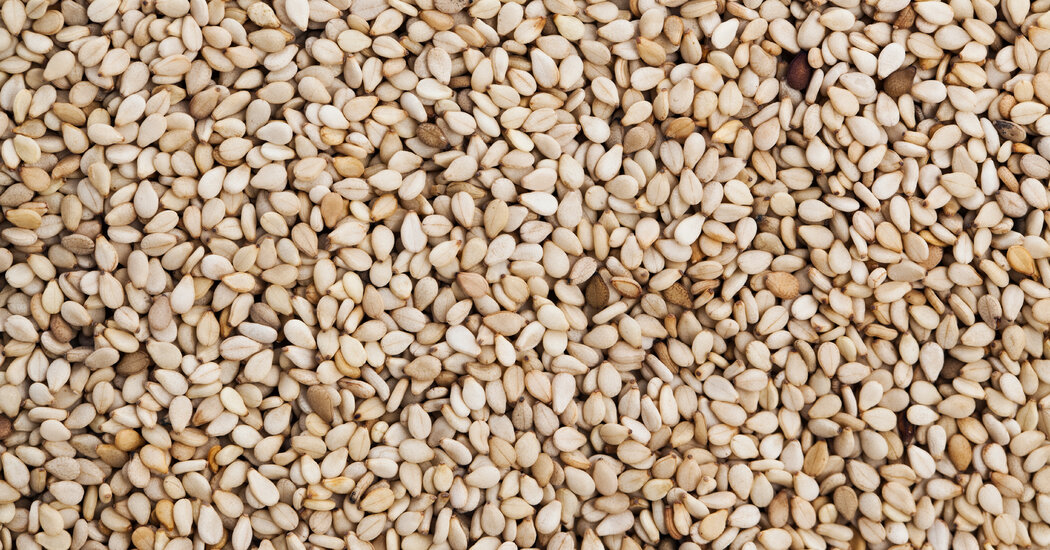
Sesame becomes a “major allergen,” joining milk, eggs, fish, shellfish, tree nuts, peanuts, wheat and soybeans.If you have a food allergy, or your child does, chances are you spend a lot of time reading labels to figure out whether something will trigger an allergic reaction.If you’re allergic to sesame, it’s more complicated. While federal law since 2004 has required companies to warn people when certain allergens are used to make a product, sesame has not been one of them. That has meant someone with an allergy to sesame couldn’t know for sure whether the foods they bought at the store were safe.That is changing. On Friday, President Biden signed into law the FASTER Act, which adds sesame to the list of foods that manufacturers must identify on prepackaged labels. Here are some key takeaways.Sesame becomes the ninth food to be considered a “major allergen.”The other eight foods — milk, eggs, fish, shellfish, tree nuts, peanuts, wheat and soybeans — were part of legislation that was signed into law in 2004. That law required manufacturers to indicate on labels when a product was made using any of those eight ingredients, describing them as “major food allergens” because they collectively accounted for “90 percent of food allergies.”If something is made using any of those eight products, you can be certain to find it on the label, either within the ingredients list or nearby with a special “contains” warning — “contains wheat,” for example.The legislation was a breakthrough for people with food allergies. The right words on a label can be the difference between an uneventful lunch and an allergic reaction — including an anaphylactic one, which can be fatal.But because sesame wasn’t part of the initial law 17 years ago, companies were not required to include it, making it hard to know for sure whether packaged food contains sesame. According to the Food and Drug Administration, in some cases, sesame is described on the label as “spices” or “natural flavors.”In the years since the 2004 law was passed, studies have found that sesame allergy is more common than was previously known in the United States. Although it’s much less prevalent than peanut allergy, it is comparable with certain tree nut allergies. Tree nuts were on the original list of major allergens.Now that the FASTER Act is the law, sesame will need to be included on labels, just like the other eight allergens.The ingredient must be listed on labels starting in 2023.It may be a while before you see the effects of the FASTER Act. The law gives manufacturers 20 months to make sure any products they’re making that include sesame reflect that on packaging.Starting on January 1, 2023, if food contains sesame, you should see it indicated on the label.In the meantime, if you or someone in your family is allergic, look for ingredients that could be sesame-based, like tahini, sesamol and gomasio, according to Food Allergy Research & Education, a nonprofit organization in McLean, Va. And continue to keep an eye out for “spices” and “natural flavors,” which could include sesame.It also helps to be aware of the types of foods that tend to include sesame, like falafel, hummus and certain rices. And sesame oil is a common ingredient in Asian cuisine. But keep in mind that sesame can also be found in chips, cereals, snack bars and a variety of other foods.The good news is that some companies, such as General Mills and Hershey’s, already include sesame on labels when it’s used as an ingredient.It’s welcome news for over a million Americans.The new law brings a sense of reassurance to people dealing with a sesame allergy. In the United States, that’s about 1.1 million children and adults, according to a 2019 study published in the journal JAMA Network Open. The study found that less than one quarter of 1 percent of children and adults were estimated to have sesame allergy.Still, Lauren E. Krigbaum is among the parents who is breathing a sigh of relief. Ms. Krigbaum’s 2-year-old daughter has five different food allergies, including sesame. But until now, sesame had been the only one of her daughter’s allergies that wasn’t part of the federal labeling law.“When you have a child with food allergies, your life kind of centers around food,” said Ms. Krigbaum, a financial aid counselor in Boise, Idaho. “So being able to take a stress out of that is going to be huge.”The law will also make grocery shopping easier for adults. The 2019 study, as well as previous studies in 2007 and 2008, found that most children don’t outgrow a sesame allergy. And like other allergies, you can develop it as an adult — about one in four adults who suffer from it developed it after childhood.The inbox of Lisa G. Gable has been “overwhelmed” with messages of relief. Ms. Gable is the chief executive of FARE, which has been pushing for sesame to be added to the list of allergens.“It was critically important to get this on the label and we’re excited to have it advancing so quickly with bipartisan support,” said Ms. Gable.Other allergens still remain off the government’s list.The new allergen law extends the federal government’s list of “major allergens” to nine foods. But other less common allergens can still go into foods without being printed on packaging.Other countries have longer lists of allergens required for labeling. Canada has a list of 11 foods, including mustard, required for packaging. Australia’s list comprises 10 foods, one of which is lupin, a type of legume. And the United Kingdom mandates that 14 allergens be declared on labels.When Nili M. Patel, of Raleigh, N.C., heard about the FASTER Act, she was relieved.“It was like, finally!” said Ms. Patel, whose 4-year-old daughter has multiple food allergies, including sesame. “The most frustrating allergen for me is sesame because it’s hidden.”Sesame allergies often appear alongside other food allergies, like peanut, tree nut and egg. Ms. Patel’s daughter is also allergic to certain types of legumes that aren’t part of the labeling law. She said she makes “99 percent” of meals from scratch, including bread, and will continue doing that out of caution.“I hope that maybe eventually other allergens will make their way into the labeling laws,” said Ms. Patel. “Maybe there’s some hope for that.”But the law opens the door for future food allergy research and policy.In addition to the sesame requirement, the new law also has broad implications for food allergies. It says that the Secretary of Health and Human Services must compile a wide-ranging report on food allergies within the next 18 months.The report should document any work the federal government does related to a spectrum of food allergy issues, including research into the prevalence of food allergies, treatment options and possible prevention methods.It also calls for “a regulatory process and framework” to determine a food as a “major food allergen,” which could open the door for other allergens to be added to the list.Dr. Ruchi S. Gupta, a professor of pediatrics at Northwestern Medicine in Chicago, said these sections of the FASTER Act put food allergies on a similar level with other health conditions because it centralizes efforts to monitor food allergies.“We need to do a deeper dive into what is 10, 11, 12” on the list of top allergens, said Dr. Gupta, a senior author of the 2019 study. “And what is potentially on the horizon to be a bigger problem than it is now.”

Read more →