Forensic memory detection tests less effective in older adults

New research led by the University of Kent’s School of Psychology has found that some brain activity methods used to detect incriminating memories do not work accurately in older adults.
Findings show that concealed information tests relying on electrical activity of the brain (electroencephalography [EEG]) are ineffective in older adults because of changes to recognition-related brain activity that occurs with aging.
EEG-based forensic memory detection is based on the logic that guilty suspects will hold incriminating knowledge about crimes they have committed, and therefore their brains will elicit a recognition response in the EEG when confronted with reminders of their crimes.
The team of researchers at Kent led by Dr Robin Hellerstedt and Dr Zara Bergström conducted the study with 30 participants under the age of 30 and 30 participants over the age of 65. All participants undertook a concealed information test to detect if they recognised details from a mock crime they had just committed, which would indicate criminal guilt. However, only young adults showed a strong EEG recognition response to reminders of the crime, with such responses being absent in the older group. This failure to detect memories with EEG brain activity occurred even though the older group had the same knowledge about the crime as the younger group, and had just as good general recognition memory ability.
The research published by Cortex therefore suggests that EEG-based forensic memory detection tests have limited practical applications with less validity in older adults than younger populations.
Dr Bergström said: ‘Our research demonstrates that EEG-based forensic memory detection in older age is impaired, even with methods that compensate for potential age differences in frequency, timing and location of brain responses.
‘Further investigation is needed to examine the ability of these tests to detect concealed memories of real crimes, and whether memory detection in older age is a reflection of permanent changes in brain functioning or is influenced by motivational processes that can vary across situations. Findings could have implications for processes within the criminal justice system, such as the use of polygraph techniques, which may be vulnerable to similar limitations.’
Story Source:
Materials provided by University of Kent. Original written by Olivia Miller. Note: Content may be edited for style and length.

Read more →

Newly identified antibody can be targeted by HIV vaccines

A newly identified group of antibodies that binds to a coating of sugars on the outer shell of HIV is effective in neutralizing the virus and points to a novel vaccine approach that could also potentially be used against SARS-CoV-2 and fungal pathogens, researchers at the Duke Human Vaccine Institute report.
In a study appearing online May 20 in the journal Cell, the researchers describe an immune cell found in both monkeys and humans that produces a unique type of anti-glycan antibody. This newly described antibody has the ability to attach to the outer layer of HIV at a patch of glycans — the chain-like structures of sugars that are on the surfaces of cells, including the outer shells of viruses.
“This represents a new form of host defense,” said senior author Barton Haynes, M.D., director of the Duke Human Vaccine Institute (DHVI). “These new antibodies have a special shape and could be effective against a variety of pathogens. It’s very exciting.”
Haynes and colleagues — including lead author Wilton Williams, Ph.D., director of the Viral Genetics Analysis Core at DHVI and co-author Priyamvada Acharya, Ph.D., director of the Division of Structural Biology at DHVI — found the antibody during a series of studies exploring whether there might be an immune response targeted to glycans that cover the outer surface of HIV.
More than 50% of the virus’s outer layer is composed of glycans. Haynes said it has long been a tempting approach to unleash anti-glycan antibodies to break down these sugar structures, triggering immune B-cell lymphocytes to produce antibodies to neutralize HIV.
“Of course, it’s not that simple,” Haynes said.

Read more →

The viruses in our genes: When activated, they damage brain development

Researchers have been able to prove for the first time that activation of distinct human endogenous retroviruses, which are part of our genome, impair brain development dramatically. This finding could help to advance research into therapies for neurodegenerative diseases. The study originated from an international collaboration led by Helmholtz Zentrum München.
Since our ancestors infected themselves with retroviruses millions of years ago, we have carried elements of these viruses in our genes — known as human endogenous retroviruses, or HERVs for short. These viral elements have lost their ability to replicate and infect during evolution, but are an integral part of our genetic makeup. In fact, humans possess five times more HERVs in non-coding parts than coding genes. So far, strong focus has been devoted to the correlation of HERVs and the onset or progression of diseases. This is why HERV expression has been studied in samples of pathological origin. Although important, these studies do not provide conclusions about whether HERVs are the cause or the consequence of such disease.
Today, new technologies enable scientists to receive a deeper insight into the mechanisms of HERVs and their function. Together with her colleagues, virologist Michelle Vincendeau* has now succeeded for the first time in demonstrating the negative effects of HERV activation on human brain development.
HERV activation impairs brain development
Using CRISPR technology, the researchers activated a specific group of human endogenous retroviruses** in human embryonic stem cells and generated nerve cells (neurons). These viral elements in turn activated specific genes, including classical developmental factors, involved in brain development. As a result, cortical neurons, meaning the nerve cells in our cerebral cortex, lost their function entirely. They developed very differently from healthy neurons in this brain region — with much a shorter axon (nerve cell extension) that were much less branched. Thus, activation of one specific HERV group impairs cortical neuron development and ultimately brain development.
Clinical relevance
Since neurodegenerative diseases are often associated with the activation of several HERV groups, the negative impact of HERV activation on cortical neuron development is an essential finding. It is already known that environmental factors such as viruses, bacteria, and UV light can activate distinct HERVs, thereby potentially contributing to disease onset. This knowledge, in turn, makes HERVs even more interesting for clinical application. Switching off distinct viral elements could open up a new field of research for the treatment of patients with neurodegenerative diseases. In a next step, the group at Helmholtz Zentrum München will study the impact of HERV deactivation in neurons in the context of disease.
New paths for basic research
In addition, the research findings provide important indications that epigenetic mechanisms keep viral elements under control in healthy brain development. Michelle Vincendeau even suspects a functional role for the controlled HERVs in normal brain development. “We have carried these elements for about 40 to 70 million years. We assume that their presence is relevant to our natural processes, otherwise we would not have retained them for so long during evolution,” Vincendeau says. Further basic research in this direction might reveal new functional roles for HERVs.
Notes:
* Michelle Vincendeau leads the research group for Human Endogenous Retroviruses at the Institute of Viorology at Helmholtz Zentrum München. Part of the data from the current study was generated in the context of her previous work at the Memorial Sloan Kettering Cancer Center in New York. For this paper, she also collaborated with researchers at the Technical University of Munich and the University of Saarland.
** HERV-K(HML-2)

Read more →

Giving Thanks to Everyone at NIH’s COVID-19 Vaccine Clinic

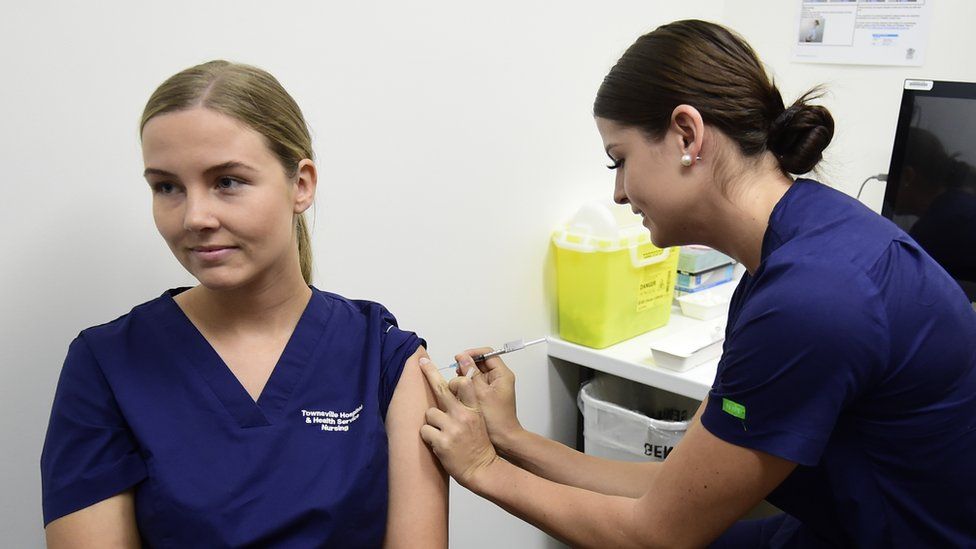
Sending out a big thanks to the NIH staff who have made the COVID-19 Vaccine Clinic such a success. They’ve now administered more than 30,000 vaccine doses, and, as shown here, I joined them on May 19 to express my extreme gratitude for a job well done. Keep up the good work! Credit: NIH

Post Link

Giving Thanks to Everyone at NIH’s COVID-19 Vaccine Clinic

NIH Blog Post Date

Thursday, May 20, 2021

Read more →

Covid: Australia's vaccine hesitancy worries medical experts

SharecloseShare pageCopy linkAbout sharingimage copyrightGetty ImagesAustralia’s troubled vaccine rollout has hit a potential new stumbling block – rising vaccine hesitancy. This week a survey suggested about one-third of Australians said they were unlikely to get vaccinated, reportedly up from previous months.The caution mostly centres around side effects and a lack of urgency given Australia’s low infection rates.But hesitancy threatens to frustrate plans to open its borders, which are slated to remain shut until mid-2022. The country of nearly 26 million people has managed to stave off major outbreaks through strict border and quarantine controls, and by periodically enforcing snap lockdowns.Australia is one of the few places in the world where there is no widespread community transmission of Covid. But it is also one of the slowest in the developed world to immunise its population. While the pace of the rollout has picked up in recent weeks – reaching daily records – concern about vaccine hesitancy in some pockets of the community has began to increase. Why are Australians hesitant? A combination of fear and complacency over the perceived risk posed by the virus has led to hesitancy among some Australians. The survey by the Sydney Morning Herald (SMH) newspaper and Resolve Strategic found those who had doubts over taking a vaccine were most worried about potential side effects, and did not feel they knew enough about the vaccines. Australia’s rollout was delayed after regulators advised limiting use of the AstraZeneca shot – the country’s main vaccine – following cases of rare blood clots linked to the jab.It now recommends that people aged under 50 get the Pfizer jab instead.What are my risks with the AstraZeneca jab?A separate survey released this month by the Australian National University (ANU) also found high levels of concern surrounding side effects. Tracking about 3,000 participants, the ANU found that while most people would get a safe and effective vaccine, eight in 10 Australians were worried about possible side effects. Professor Nicholas Biddle said just over 50% of people who said they wouldn’t take a vaccine “said their decision was based on recent news about the AstraZeneca vaccine and blood clotting.” Women, non-English speakers and people living outside of cities were most likely to be hesitant, the ANU found.Australia’s isolation is another factor steering some away from a Covid jab.The SMH survey found 21% of respondents felt a lack of urgency to get immunised while Australia’s borders stay shut. Disappointing to see such sentiments. Low vaccination coverage is the greatest risk to health in Australia today. https://t.co/Qnmr7IsdQl— Chief Health Officer, Victoria (@VictorianCHO) May 18, 2021
The BBC is not responsible for the content of external sites.View original tweet on TwitterOverall, the survey found nearly 30% of its respondents were not likely to get the vaccine in the coming months, which the newspaper reported was a stronger level of doubt than seen in polls conducted earlier in the year. How is the vaccine rollout going?The rollout has been beset by delays, with initial supply shortages and logistical problems among the factors slowing it down. What’s gone wrong with Australia’s vaccine rollout?More than 3.2 million doses have now been administered, far short of the government’s goals. The country is running a staged rollout which began in March with vulnerable people and elderly Australians. All over 50s are now eligible for a shot. What has the reaction been?Doctors want more to be done to encourage people to get vaccinated. Vice-president of the Australian Medical Association (AMA), Chris Moy, warned Australians are “sitting ducks” until more of the population get immunised. “Seeing for example what’s happening overseas where there’s a tsunami of Covid and also the development of variants, that we’re sitting ducks as a country and as individuals until we get a significant portion of the population vaccinated,” he told the Australian Broadcasting Corp (ABC). image copyrightGetty ImagesHealth Policy Consultant and Adjunct Professor at UNSW Bill Bowtell told radio station 3AW that clearer communication from the government is needed to boost vaccination rates.”The most important thing we can have as we go forward in this is trust, and trust is only built on the basis of truth,” Prof Bowtell said. “These are all things that ought to be addressed in a much better communications campaign than what we’ve had from the government.”The AMA has also called for more effective advertising campaigns. The government said it may put more money into information campaigns if needed. “Advertising plays a role and we’re always reviewing that to respond to the needs,” Health Minister Greg Hunt said on Wednesday.”The biggest source of confidence is Australians seeing other Australians have the vaccine. “That’s the single biggest source of confidence that any Australian can have looking at their friends and their family, their mum and their dad, their grandma and their grandpa being vaccinated,” Mr Hunt said.

Read more →

Long Covid: 'I'm feeling quite good after vaccine'

A study of more than 800 people with long Covid found most people who had the vaccine felt it had a positive impact on their condition.The research by LongCovidSOS gave “hope” to people with the condition, said Dr David Strain, who worked on the study.The BBC spoke to people with long Covid to see how it affected them. One, from Huntingdon, Cambridgeshire, said she “felt quite good” while another, from Cambridge, said it had helped her mental health.

Read more →

Walking in their shoes: Using virtual reality to elicit empathy in healthcare providers

Research has shown empathy gives healthcare workers the ability to provide appropriate supports and make fewer mistakes. This helps increase patient satisfaction and enhance patient outcomes, resulting in better overall care. In an upcoming issue of the Journal of Medical Imaging and Radiation Sciences, published by Elsevier, multidisciplinary clinicians and researchers from Dalhousie University performed an integrative review to synthesize the findings regarding virtual reality (VR) as a pedagogical tool for eliciting empathetic behavior in medical radiation technologists (MRTs).
Informally, empathy is often described as the capacity to put oneself in the shoes of another. Empathy is essential to patient-centered care and crucial to the development of therapeutic relationships between carers (healthcare providers, healthcare students, and informal caregivers such as parents, spouses, friends, family, clergy, social workers, and fellow patients) and care recipients. Currently, there is a need for the development of effective tools and approaches that are standardizable, low-risk, safe-to-fail, easily repeatable, and could assist in eliciting empathetic behavior.
This research synthesis looked at studies investigating VR experiences that ranged from a single eight-minute session to sessions lasting 20-25 minutes in duration delivered on two separate days, both in immersive VR environments where participants assumed the role of a care recipient, and non-immersive VR environments where the participants assumed the role of a care provider in a simulated care setting. The two types of studies helped researchers gain an understanding of what it is like to have a specific disease or need and to practice interacting with virtual care recipients.
“Although the studies we looked at don’t definitively show VR can help sustain empathy behaviors over time, there is a lot of promise for research and future applications in this area,” explained lead author Megan Brydon, MSc, BHSc, RTNM, IWK Health Centre, Halifax, Nova Scotia, Canada.
The authors conclude that VR may provide an effective and wide-ranging tool for the learning of care recipients’ perspectives and that future studies should seek to determine which VR experiences are the most effective in evoking empathetic behaviors. They recommend that these studies employ high order designs that are better able to control biases.
Story Source:
Materials provided by Elsevier. Note: Content may be edited for style and length.

Read more →

Campaigners react to PIP implant compensation win

Two of the more than 2,500 women who were victims of the PIP breast implant scandal have welcomed the decision of a French court that they should receive compensation.The court also upheld an earlier judgement which found German company TUV Rheinland negligent.Read more: PIP implant victims ‘elated’ by compensation win

Read more →

Can a Smartwatch Save Your Life?

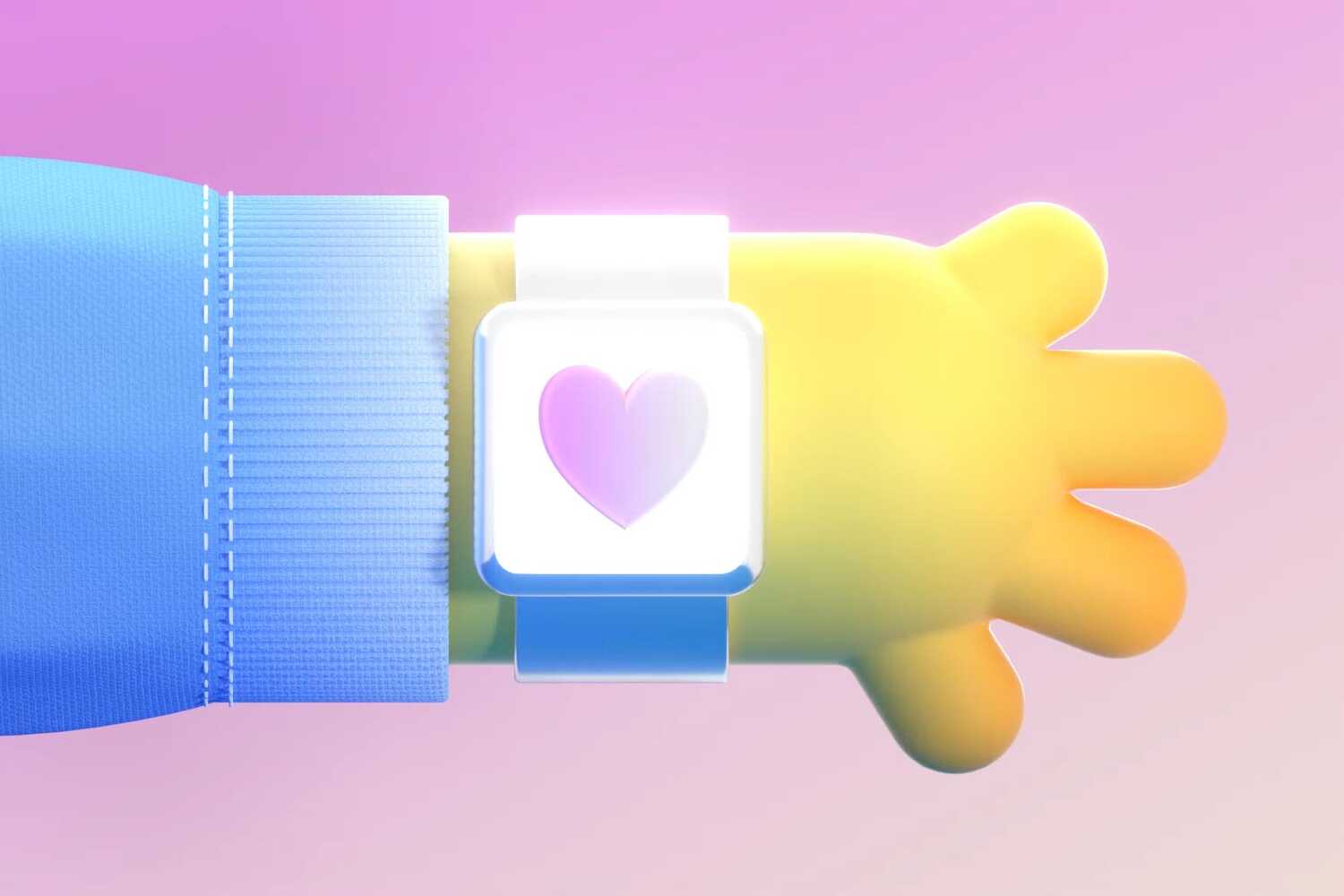
The advent of wearable devices that monitor our heart rhythms both excites and worries doctors.By Sean DongOn a recent Saturday, my 87-year-old mother was feeling a bit woozy, so she pressed a button on the side of her Apple watch to reveal her ECG, a recording of her heart’s electric rhythm. Thirty seconds later, three messages appeared on the watch’s screen. One showed the characteristic zigzag spikes of the ECG, or electrocardiogram. The second revealed that her heart rate, usually 80 beats per minutes, was down to only 40. The third said the results were “inconclusive,” with the advice: “Call your doctor.”My mother is a hardy octogenarian. She walks about a mile every day, works out with a trainer (currently via Zoom) three times a week and, as she often used to say, planks nearly as well as her former sorority sister, the late Ruth Bader Ginsburg.After leaving a message with her doctor’s office, she called my brother, a doctor who lives nearby, and told him she was exhausted and “just not feeling right.” He came over immediately and took her to the emergency room.There, the hospital’s electrocardiogram, which provides a more detailed readout than the watch, showed that the electrical signals in the top part of the heart were not being transmitted properly to the bottom. Her heart was beating, but too slowly. The staff rushed her to the cardiac care unit, where doctors implanted a pacemaker the next morning.When she called a longtime friend to tell her the story, the friend responded that she’d likewise had a recent smartwatch scare: her heart rate was sky-high, reaching 182. Her doctor had her wear a Holter monitor, a medical-grade portable ECG device that monitors heart rhythm continuously, for four days and advised her to keep a diary of symptoms, such as chest pain or a skipped heartbeat. She didn’t notice any, and the report from the Holter device revealed that everything was fine.The advent of smartwatches that retrieve heart physiology both excites and worries physicians. In addition to Apple, a number of companies make wearable E.C.G. monitors for home use, including Samsung, Withing, Fitbit and AliveCor. And for every story like my mother’s, in which a warning leads to the placement a potentially lifesaving pacemaker, there are many more like her friend’s, in which minor variations in heartbeats lead to needless work-ups, treatments with risky side effects and lots of unnecessary anxiety.So are these wearables worth it?Conclusive evidence about their accuracy and cost effectiveness is lacking, though an Apple-sponsored study from 2019 published in The New England Journal of Medicine suggested they may help to detect some kinds of abnormal heart rhythms, particularly in the elderly. A slew of additional studies are underway, including ones to assess whether a smartwatch can actually help to save lives, or whether mobility measures such as step count lead to fewer heart attacks and hospitalizations.Most of these at-home E.C.G. watches are designed to record heart rate and detect atrial fibrillation, the most common irregular heart rhythm, which affects up to six million Americans. A-fib, as it’s called, increases the risk of strokes, leading to 150,000 deaths and 450,000 hospitalizations a year. But doctors say that many people have an irregular heartbeat every now and then that doesn’t have clinical implications.Like many new technologies that uncover things in the body that doctors don’t yet fully understand, these devices may alert the user about an irregular heartbeat, but not all irregularities are dangerous. “It’s like we just invented the microscope and are seeing microorganisms, and we don’t know what they are,” said Dr. Harlan Krumholz, director of the Center for Outcomes Research and Evaluation at Yale. “We are seeing things, and we aren’t sure if it denotes extra risk.”Most watches wait to send an alert until there have been about five abnormal beats within an hour or so, rather than after every altered rhythm. Still, that doesn’t mean the abnormality is dangerous.“As a cardiologist, I really like at-home devices,” said Dr. Gary Rogal, medical director of cardiovascular services at RWJBarnabas Health in West Orange, N.J., whose team cared for my mother. But he clarified he likes them only for patients in whom he feels there’s an indication to look for something, such as those with an existing heart condition or a family history of heart disease. “I would never subscribe to the concept that everyone should be monitored. You’ll see stuff and it will make you crazy, but you’re probably fine.”The American Heart Association agrees that smartwatch monitors could be beneficial, even lifesaving, for some, but Dr. Mariell Jessup, the group’s chief science and medical officer, said, “we do not have enough data yet to recommend it for everyone.”Even electrocardiograms performed at a doctor’s office aren’t routinely recommended for everyone. The U.S. Preventive Services Task Force, a group of experts that advises on screening tests, says there is not enough evidence to show that routine ECGs are effective and worries about the costs, and potential dangers, of further testing. And doctors worry that as more and more people wear these devices that might spot meaningless heart arrhythmias, there could be a flood of unnecessary follow-up testing and too much treatment.“That’s what keeps me up at night,” said Dr. Joseph Ross, a professor of medicine and public health at Yale who is among a team of investigators conducting a randomized clinical trial that compares a group wearing the Apple watch to a control group wearing a smartwatch without the E.C.G. app. “If someone with an occasional abnormal rhythm that would never have caused a stroke undergoes an extensive work-up or is put on a blood thinner, the risk of a dangerous bleed or other harm outweighs the benefits of potentially preventing a stroke.”Dr. Steven Lubitz, an associate professor of medicine at Harvard Medical School and cardiologist at Massachusetts General Hospital, fears that customers will think the watches provide a safeguard for overall heart health and assume, for example, they check for signs of heart attacks, which they do not.“Your mother’s story is the hope for all of these devices. In her case, the technology led to a diagnosis of a dangerously slow heart rate,” he said. “To date, most of the tech work on heart rate has been focused on detecting A-fib. Similar rigor may be required to validate the detection of other health conditions.” We may be on the verge of entering a new era of medicine in which patients can glance at their wrists to check their emails and heart rhythms and notify their physicians if something seems awry. In the perfect health care world, cardiologists envision a day where they can prescribe a watch or other small clip-on device to high-risk patients and insurance would cover the cost. Otherwise, the advent of new technology would only help those who can afford it, exacerbating health inequities.As Dr. Ross noted, “I want to see more scrutiny, to know whether these digital devices that consumers can purchase are making our patients’ lives better.”Two weeks after her surgery, my mother was doing her one-minute planks and lifting weights with her Zoom personal trainer. Maybe, without the watch, my mother would have been OK and just felt really tired until she called her doctor on Monday. Or maybe not.

Read more →