Summer Drink Recipes

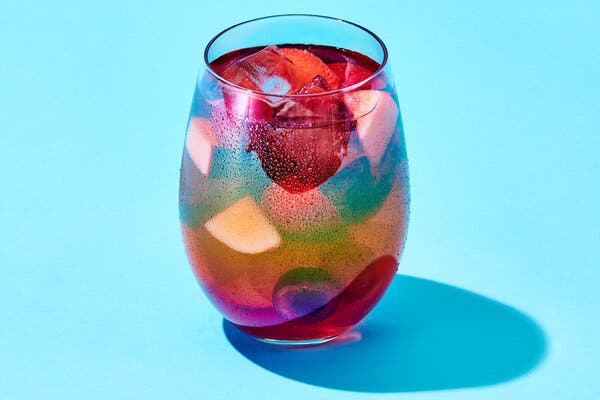
You can’t go wrong with a gin and tonic or a caipirinha. But many summer cocktails could stand a spark of whimsy without compromising their honest appeal.Like moving turtleneck sweaters to the back of the closet, it’s time to retire well-aged whiskeys and bring on the clear spirits, fruit juices and crushed ice. The warmer seasons demand refreshing drinks, alcoholic or not, served in tall, frosted glasses.The classic repertoire has much to offer in this category; it’s hard to go wrong with a gin and tonic or a caipirinha. But many of these summer staples could stand a creative update or a touch of surprise without compromising their honest appeal. Detailed below are a gin and tonic with a Spanish twist, sangria made with rosé wine and a Bellini buzzed with one of the new pink Proseccos that did not exist when Giuseppe Cipriani created the now-classic in Venice. There is also a slushy Southside, with rum replacing the usual gin, a Paloma bolstered with grapefruit liqueur and spiked with chile, and a spritzer bejeweled with cherries, which always ramp up the refreshment level of a glass of wine, especially red. For drinks of the nonalcoholic sort, Agua Fresca is the Mexican and Central American quencher made by simply adding some fruit purée or juice to cold water with a squirt of lime and, depending on the ripeness of your fruit, a touch of sweetener. Almost anything goes for this drink, even non-sweet additions like cucumbers. The Fourth of July American version would be lemonade, an almost blank canvas that can be splashed with summery flavors like strawberry, peach or mango.Beyond these suggestions, you can add liqueurs like triple sec and elderflower or white rum to make a happy-hour iced tea, or drop a jigger of Sambuca into iced coffee to serve with or instead of dessert. Gin in the lemonade is a quick nod to Tom Collins, a summer standby, and crushed fresh berries enliven chilled sparkling cider, alcoholic or not.Having fresh fruit, like watermelon and strawberries, on hand will give you access to festive, colorful summer drinks on a moment’s notice. Process some of it, diced, in a blender, stir into a glass of ice with (or without) the spirit of your choice and top it off with soda water. You might consider expanding your wardrobe of fruit liqueurs and spirits beyond the usual orange to include grapefruit, lemon, raspberry and apricot. In small amounts they can brighten up many summer drinks. And for sweetening drinks, especially chilled ones, it’s a good idea to have simple syrup on hand, made by simmering equal parts granulated sugar and water together until the sugar dissolves and the mixture is clear. Refrigerated, the syrup will keep for a month.To serve, warm-weather drinks demand generous glasses; tall ones are best, chilled before filling. Plastic is often the choice for outdoors, and manufacturers have improved the quality of these, though glass has more class. And then there’s the question of straws. Avoid plastic; look for paper in the disposable department, or some of the new, reusable stainless-steel ones. There are also silver straws, long, and often with a spoon at the end for a posh yet convenient touch.For drinks to serve more than two (or to have refills ready and to transport outdoors), you’ll want a pitcher; some have lids or come fitted with an enclosed receptacle for ice. A long mixing spoon is a useful accessory, and a good citrus juicer is also a worthwhile investment. Frozen drinks also call for a blender to reduce the ice to slush or fruit into purée; there are compact cordless ones on the market that can even go to the beach or on a picnic. And be sure your ice maker or ice cube trays are ready for overtime.Ted + Chelsea Cavanaugh for The New York TimesRosé SangriaAdapted from Rosie SchaapTime: 15 minutes plus chillingYield: 6 servings1 ½ cups mixed red and pink fruit, such as raspberries, halved strawberries and grapes, pitted cherries, cubed apple with red or pink skin, peeled pink grapefruit or blood orange segments1 tablespoon granulated sugar¼ cup triple sec or other orange liqueur1 bottle (750 ml) chilled rosé wine½ cup chilled pomegranate juice1. Place the fruit, sugar and triple sec in a pitcher and stir to combine. Refrigerate until the fruit softens a bit (at least 4 hours and up to 8).2. Add wine and pomegranate juice, stir. Serve over ice in wine glasses, and include some of the fruit in each serving.Ted + Chelsea Cavanaugh for The New York TimesSpanish Gin and TonicAdapted from Socarrat Restaurant, in New York CityTime: 10 minutesYield: 1 drink2 ½ ounces gin8 juniper berries, lightly crushed2 dashes Angostura bitters2 to 3 strips lemon peel (about ½ lemon)4 ounces good-quality tonic water, chilled1. Half-fill a large stemmed wine glass with ice. Add gin, juniper berries and bitters; stir.2. Twist lemon peels over the glass to release the oils and drop them in. Add tonic water, stir and serve.Ted + Chelsea Cavanaugh for The New York TimesBlushing BelliniTime: 15 minutesYield: 6 drinks1 cup chilled peach purée, preferably white (about 2 ripe peaches or purchased purée)1 bottle (750 ml) rosé prosecco, preferably brut12 fresh raspberries1. Place 2 tablespoons peach purée in each of 6 champagne flutes. Slowly add 4 to 5 ounces prosecco, stopping as it bubbles up and continuing once it settles.2. Drop 2 raspberries into each glass and serve.Ted + Chelsea Cavanaugh for The New York TimesDevon Yacht Club SouthsideAdapted from “The Ladies’ Village Improvement Society Cookbook”Time: 10 MinutesYield: 2 drinks2 ounces simple syrup4 ounces white rum2 ounces lemon juice1 ounce lime juice1 cup crushed ice or small ice cubesMint sprigs for garnish1. Combine the simple syrup, rum and citrus juices in a cocktail shaker with ice; shake.2. Strain into a blender with crushed ice. Blend until slushy, then pour into chilled goblets or glasses. Garnish with mint and serve.Ted + Chelsea Cavanaugh for The New York TimesFreshened PalomaTime: 5 minutesYield: 2 drinks4 ounces blanco tequila or mezcal3 ounces lime juice3 ounces grapefruit juice1 ounce grapefruit liqueur4 ounces club soda or seltzerPinch chile powder or cayenneGrapefruit wedges for garnish1. Combine the tequila, citrus juices and grapefruit liqueur with ice in a cocktail shaker; shake well. Strain into tall glasses with ice and add soda.2. Dust chile powder on top. Garnish with grapefruit and serve.Ted + Chelsea Cavanaugh for The New York TimesMelon Agua FrescaTime: 20 minutes plus chilling (optional)Yield: 4 drinks2 cups cubed ripe watermelon or honeydew, chilled2 cups ice cubesJuice of 1 lime1 tablespoon simple syrup or agave syrup to taste (optional)½ teaspoon salt, or to tastePinch ground white pepperBasil sprigs for garnish1. Purée the melon with ice in a blender. Stir in lime juice, syrup to taste, salt and pepper.2. Transfer to a pitcher, add 2 cups water, stir and chill or pour into ice-filled glasses. Garnish with basil and serve.Ted + Chelsea Cavanaugh for The New York TimesStrawberry LemonadeTime: 15 minutes plus chillingYield: 6 drinks4 cups brewed lemon verbena tea, chilled, or cold water3 tablespoons simple syrupJuice of 3 lemons (about ¾ cup)1 cup diced strawberries, puréedLemon wheels and strawberry halves for garnish1. Place tea or water in a pitcher or other container. Stir in simple syrup, lemon juice and strawberry purée. Chill at least 1 hour.2. Stir well, pour into tall glasses filled with ice, garnish with lemon and strawberries and serve.Ted + Chelsea Cavanaugh for The New York TimesRuby SpritzerTime: 10 minutesYield: 1 drink1 glass (4 to 6 ounces) fruity red wine (white or rosé can be substituted)4 ounces sparkling waterTwist of lemon peel3 ripe Bing cherries, pitted and halvedPour wine into a large stemmed wine glass or goblet. Add sparkling water. Drop in lemon twist and cherries and serve.

Read more →

Reassessing Personal Finances

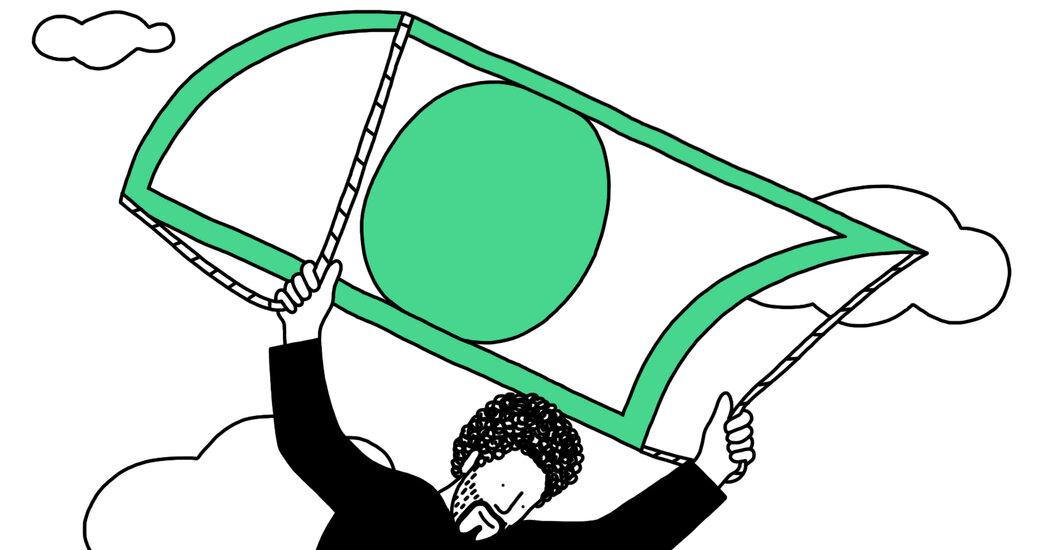
Whether your bank account grew or shrank during the long months of lockdown, now is the time to take stock of your financial situation and decide your next steps.The pandemic swept many people into uncharted financial territory. Millions lost their jobs and loved ones they relied on. Others endured more than a year of isolation and uncertainty, working from home or on the front lines. Whether your bank account bulged or dwindled during the long months of lockdown, now is the time to take stock of your financial situation and decide your next steps.“We’ve been getting a lot of clients who say, ‘I really need to think about this now,’” said Pam Capalad, a certified financial planner based in Brooklyn and founder and chief executive of the financial advisory firm Brunch & Budget. “Either the pandemic was a wake-up call and it really turned their finances upside down, or people got through it OK and now they’re saying, ‘I need to figure out what is next for me.’”In a survey from the Pew Research Center released in March, 30 percent said their situation had improved, while 21 percent said it had gotten worse. Forty-nine percent of adults said that their family’s financial situation was about the same as it was a year ago.With limited spending opportunities, savings shot up during the pandemic. Last March, the personal savings rate was 27.6 percent, according to the Bureau of Economic Analysis. That rate, which represents personal saving as a percentage of disposable income, was 12.9 percent the previous March.Depending on your financial situation and your priorities, what you do now will vary. But there are several ways to put yourself in a better position financially for whatever comes next. Here’s how to get started.First, don’t rush it.The trauma of the past year has been extraordinary, and for many people, their initial impulse may be to plunge in and make travel plans and purchases to make up for lost time.“People feel like life was stolen from them, and an increase in spending often comes along with that,” said Brian O’Leary, a private wealth adviser and senior analyst at Aline Wealth in Melville, N.Y.But if there was ever a time to re-evaluate priorities and align your spending and saving behaviors with your values, that time is now, experts say. Is your career on the right track? Do you like where you live? Are you happy in your relationships?The pandemic may have helped people think about saving differently, focusing on what brings them joy, said Inga Timmerman, a certified financial planner and associate professor of finance at California State University, Northridge.If you’re thinking of switching careers, starting your own business or making some other major life change, there may be a financial cost, at least in the short term. At a minimum, “you should have a spreadsheet with the bills and things you need to have covered regardless of how the business or side hustle does,” Timmerman said. Try to have a good idea of how many months you can cover those bills out of your savings, she said, or what you’ll do instead to pay them. It might mean selling a car or moving into less expensive housing.Assess three things.Whether you’re dreaming of turning your pandemic side hustle into a new career and need to determine how to pay for it, or you simply want to feel you’re on firm financial footing, planners say there are generally three major financial areas to evaluate first.“If someone has an emergency fund, no high-interest debt and is saving a decent amount for retirement, they’re in a good position to make big changes,” said Brian Walsh, senior manager of financial planning at SoFi, an online lending start-up. “If they don’t have those boxes ticked off, they should be more careful.”BUILD UP AN EMERGENCY FUND In the past, planners have generally recommended that people have three to six months of expenses in an emergency savings fund to carry them through tough times. Some now suggest that fund should be able to keep you afloat for up to a year.“Now, the advice is even more conservative,” said Dan Herron, a certified financial planner and co-founder of Elemental Wealth Advisors in San Luis Obispo, Calif. “Covid just happened, it’s still here, and what’s to say that something else isn’t coming down the road that’s even worse?”Your emergency fund should cover basic expenses such as rent or mortgage payments, utilities, food and transportation. You should also set aside enough to cover monthly health insurance premiums and car or homeowners (or renters) insurance as well as credit card or other debt payments.Whether your savings are healthy or you’re trying to shore them up, the same advice applies: Set a monthly savings goal and stick to it. Even better, have the funds automatically withdrawn from your bank account every month and deposited in your savings, retirement or brokerage account.REDUCE CREDIT CARD DEBT Even though credit card balances declined sharply during the pandemic, thanks in part to fewer buying opportunities as people hunkered down at home, the average household credit card balance still tops $8,000, according to a study by WalletHub.If you are carrying a high credit card balance, now is a good time to consolidate that debt by transferring balances or signing on with a debt consolidation service that will allow you to make a single payment monthly. Interest rates are as low now as they’re likely to be for the next few years, said Tony Molina, a certified public accountant and senior product specialist manager at Wealthfront, an online investment advisory company.SAVE FOR RETIREMENTIf you’re one of the lucky ones who increased your savings during the pandemic, don’t stop now.Earmarking some of that money for retirement can be a good strategy. Depending on how close you are to retirement and whether your projected savings will meet your expected needs, your approach may vary. A financial adviser can help you figure out the best plan for you.Capalad encourages her clients to increase their retirement savings incrementally. If every six to 12 months, you increase your retirement contributions by 1 percent, you’ll build up that balance, but the extra withholding will only be “a blip in your paycheck,” she said.Spend wisely.One way to increase savings is to reduce spending that may have ballooned during the long months of isolation. Do you really still need subscriptions to every streaming channel on your TV? Maybe it’s time to cut back on virtual yoga classes now that your gym has opened again, or to cancel your food delivery services.For some, online retailers became not only an essential way to order necessities but also an easy means to buy stuff that was not necessarily needed.Capalad suggests to clients who want to break the habit of making impulsive online purchases that they put items they want in their cart, but not purchase them right away. Then pick one day a week to go through the cart and re-evaluate whether they really want those things.Spending decisions aren’t just about money, of course, but about how you want your life to be going forward.“I have some clients who say they’re never going to order wine at a restaurant again,” Timmerman said. They’d rather uncork a bottle at home and invite their friends over for takeout, she said.Protect yourself and your family.The pandemic brought into sharp relief the fragility and unpredictability of life, and provided an object lesson in the importance of estate planning.In addition to a will, your plan should include documents that detail your wishes for medical treatment and decision making if you’re unable to communicate that yourself. Depending on the state, these may be called living wills, health care proxies or medical directives.Standardized forms may be available online, but since state rules vary, “I almost always suggest that if you want it done right, find a local attorney that specializes in estate planning, as they can help guide you through the process,” said Dana Menard, a certified financial planner and founder of Twin Cities Wealth Strategies in Maple Grove, Minn.Now is also a good time to reassess your life insurance coverage, Menard advised. How much you need will vary depending on what you own, what you want to protect and your life circumstances.

Read more →

Reassessing Boundaries

Over the past year, many of us have played our different roles — professional, parent, student — all from the same space, home. Now, we’re reassessing how much to share as we emerge into the public sphere.In January, Stephanie Creary, an assistant professor of management at the University of Pennsylvania’s Wharton School, was leading a workshop about diversity, equity and inclusion practices in front of a remote audience of academic surgeons. Their work environment, she observed, would usually be a fairly formal one; still, she beamed into the doctors’ homes while sitting in her own living room in Philadelphia, with a vase of flowers on a table in the background, a painting of a wine bottle and glass on one wall.“It felt like, ‘If we are going to talk about this topic we never talk about, we should break all the rules,’” said Dr. Creary, who focuses on issues of identity and diversity in the workplace. “I think people felt more comfortable receiving it because it took the formality down.”Throughout the past year, many of our personal spaces have similarly pulled additional duty as offices, schools, gyms, even psychiatrist’s offices or music studios. “We’ve all had a front-row seat to people’s homes and their living rooms,” Dr. Creary said. And at the same time, many of us have had to click into different roles (professional, parent, student) from the same space. Naturally, the boundaries blurred: Kids careened into the Zoom frame during meetings; workout clothes doubled as office attire.We’re now beginning to make our way back into the public sphere, and though social media platforms and videoconferencing apps will continue to feature in how people log on for work and leisure, such a shift may be prompting you to consider: Is it time to reassess and create new boundaries for our online and offline selves? Here are a few ideas.Bring more of your private self to work.Before the pandemic, casual personal conversations may have been a feature of your workplace relationships — but you probably didn’t have quite the transparency and community with co-workers that developed from frequent video calls from home. Simply having a window into other people’s home environments may have deepened your connections. “Traditionally, there’s been a pretty large division between the personal and the professional,” said Adam Smiley Poswolsky, an author and speaker who focuses on relationships in the workplace. “I think one legacy of the pandemic is that’s just no longer acceptable for the vast majority of workers.”If you found the shift to be a positive, try replicating elements of it more intentionally when you see people in person. Mr. Poswolsky suggested setting aside time at the beginning of in-person meetings to have the kinds of personal conversations that might result from observing an intimate detail (what kind of tea are you drinking? is that a relative passing through?) in the corner of your camera frame.Throughout some of the darkest months of the pandemic, Corinna Nicolaou, a college personal-essay writing instructor in Pullman, Wash., almost never saw her students’ faces — they rarely turned their cameras on in class. “I felt like students were reacting in some ways to that forced sense of intimacy,” she said. “There was a weariness, I felt, to the online thing.”Nevertheless, she switched on her own camera for each class, allowing her students to see her in a more relaxed setting — she sometimes appeared in comfortable clothes, or even in bed. It introduced a new vulnerability and ease to their relationship that, she thinks, set an example for her students: They, too, could open up, at least in their writing. “The essays that I got out of students this semester were really revealing and very deep,” she said.She hopes that she can now take those lessons back into a physical classroom. “Over these last semesters, teachers have had to be flexible, be vulnerable, not have all the answers,” Ms. Nicolaou said. “Once you’ve been through that, you’ve changed.”Consider your comfort levels.Some people have preferred not to put their private lives on screens.“This sense of being exposed has been a challenge for people who do not have an environment that they feel comfortable showing to whoever is on the other side of the line,” said Munmun De Choudhury, an associate professor at the Georgia Institute of Technology who studies health and well-being online. Students from disadvantaged backgrounds who don’t have dedicated work spaces, she said, might not want to share with classmates.As an actor in New York, Anna Suzuki has fielded a fair number of video calls for work this past year — discussions with directors, table reads for television series and so many other Zoom meetings. She also shares a studio apartment with her partner.“Because I’m a pretty private person,” Ms. Suzuki said, “I had to figure out a way they would only see a blank wall behind me.”The solution was to carve out a section of a storage space in her mother’s apartment, conveniently located just below hers. Her “public” perch — an oak-colored table and black office chair — has provided some separation between her work and personal lives, allowing her to turn on and off her “performer brain,” as she described it. It hasn’t always been easy. “I really have to compartmentalize,” she said. “I still had to create a public persona at home.” Yet she also found that being able to stake such a clear divide between public and private was comforting, she said.If you’re not enthusiastic about sharing so much, that’s OK. “It’s fair for someone to say what their needs are,” Mr. Poswolsky said. “Create a boundary around, ‘I don’t want to let people into my space in a vulnerable way.’”And consider taking your time easing back into situations that now give you pause. Dr. Creary said she observed two sources of concern for those who enjoyed the firm boundaries they formed working from home and are now anticipating a return to the workplace: that the change of location will decrease productivity because distractions abound, and that it will increase exposure to unhealthy social environments. She suggested two possible strategies to establish boundaries anew: Think about what time of day you tend to work best and plan meetings and other obligations accordingly, she said, and weigh which social engagements — dinners, happy hours and the like — are essential and which ones you can decline.“It’s about pacing ourselves,” Dr. Creary said.Keep having tough conversations.According to Natalie Bazarova, an associate professor of communication at Cornell University who studies public intimacy, social media users largely shared positive personal information before the pandemic. But over the course of the past 15 months, there has been a change. “There is more acceptance of negative disclosures,” she said, citing research she published this year. “There is this common circumstance that we’re going through, and so that shapes our perception of how we think about what’s appropriate.”So what does that look like? Some social media users have posted more frequently about how the pandemic has affected their mental health, Dr. De Choudhury said. And, posts detailing social justice resources and recounting experiences with racism spread across Instagram last summer as people sought to engage online with the widespread protests that followed the murder of George Floyd. According to a 2020 article in the International Journal of Information Management, social media users have also posted more regularly about their health, particularly underlying conditions that make them vulnerable to Covid-19 — in part aiming to encourage others to take the coronavirus pandemic seriously.Such conversations can have a destigmatizing effect, making it more acceptable to be frank about the challenges individuals and groups have faced this past year (or longer; many of the structural inequalities the pandemic exposed well predated it). If you feel comfortable participating in them, continue to do so both online and off — but be mindful of sharing too much. “We have to be very conscious of the information we put out there for everyone to see,” Dr. Bazarova said.Reconsider what you post, and for whom.At the same time, you may have avoided sharing certain personal events because you thought they might garner negative reactions — maybe a workplace achievement you feared would appear tone-deaf, or travel that might be seen to contravene public health recommendations. “Who knows how many times people stopped themselves from sharing something positive?” Dr. De Choudhury said. And even if you do go ahead and post, say, a photo from a social gathering, you might feel the urge to preface your caption with an assurance that everyone in your group is vaccinated, in order to avoid judgment.Some of that restraint can be productive; you may want to give additional thought to what you share online, as well as your audience and motivations. Ask yourself: Who will receive this? What’s the context — that is, what else are people posting or discussing right now? Why do I want to share this? Is it for my own benefit, or for others? But engaging with social media shouldn’t be anxiety-producing; if it is, consider staking a clearer boundary around your accounts by making them private, or limited to close friends. Remember, too, that the boundaries that you set around personal disclosures online might be at odds with those of other people and will continue to change as the pandemic recedes.Such reflection won’t just spare you some potential negative feedback; it may also prove valuable for those who see your posts. “This idea of a communal social orientation, I think that’s a productive change,” Dr. Bazarova said. “We all have social responsibility to what happens online.”

Read more →

What We are Looking Forward to This Summer

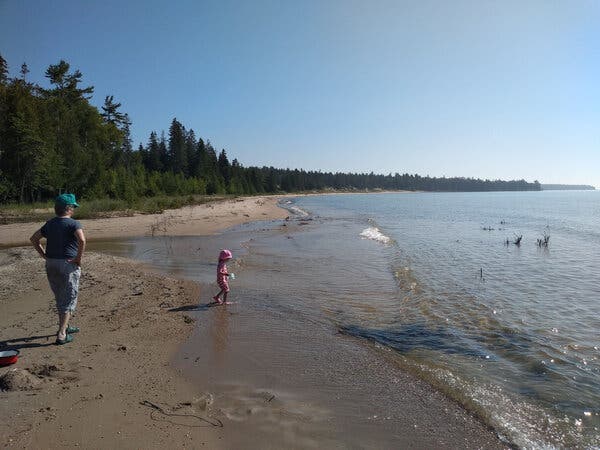
Ahead of Memorial Day, and the unofficial start of summer, we asked readers to share what they are looking forward to most in the coming months. More than 100 people wrote in from across the United States with their post-pandemic plans. Here are a select few, edited and condensed for clarity.My irrepressible, funny granddaughter is coming to stay for two weeks and we will visit the zoo, the aquarium, several museums and the local plunge pool. We’ll mask up and avoid restaurants, but having adventures together after a year of isolation will bring some excitement back to our lives. — Betty Smith, Vermillion, S.D.I can’t wait to throw a real party, a bash, a cocktail party, a party with a theme or costumes! I can’t wait to say, “Sure, bring a friend!” But we’re not ready for that yet. We did throw a very small dinner party for a few fully vaccinated friends. I felt like I couldn’t remember how to dress up. I put a cashmere sweater over the sweatpants I wear daily — I split the difference! — Heather La Riviere, ChicagoI’m looking forward to meeting my new baby niece for the first time. I didn’t get to be with my sister at all during her pregnancy since we live on opposite sides of the country and she got pregnant in August 2020. — Chloe Nagle, Colorado SpringsOur 3-year-old cannot wait to swim once again in my aunt and uncle’s pool with all her cousins. And I will cry tears of joy once the border between Canada and the United States reopens and we can see my dad and brother who both live in Michigan’s Upper Peninsula. — B. Reusch Serapio, Oshawa, OntarioRoad tripping to see my parents and brothers (most of whom I haven’t hugged in nearly two years), getting back to singing in choir and finding more time to ride a real bicycle. — Jen Milius, Portland, Ore.On March 11, 2020, my friends Kelly and Nicole and I decided to hold off on meeting for drinks that Friday — “Seems risky,” Kelly said. As of this coming Monday we will all reach full immunity and we will finally meet for drinks. The last thing I canceled then is the first thing I’m doing now! — Kate Premo, Montclair, N.J.What I am truly looking forward to this summer, if all goes well, is in-person summer camp for my children. The pandemic and lockdowns have been hard on all of us, but keeping children at home for so long has been very hard for them and moms. I wouldn’t want to go as far as a concert or a party. But I would love to have my children explore and interact with other children. They miss it and I miss having time and space to do anything other than try (and fail) to distract them. — Lina Garcia De la Ossa, Miami Beach, Fla.The need to reconnect now feels urgent. I am craving face-to-face, meaningful interactions with people outside our immediate family circle and our dog and cat, who have been elevated to almost human level during the pandemic. I took entertaining for granted before, often looking at it as something I had to plan for. It meant we didn’t entertain often. Now I want to fling open the doors and have our home filled with the friends and family we have missed. It doesn’t matter if we eat on a china plate or a paper plate or have a home-cooked meal or a pizza. — Sally Mathew, Birmingham, Ala.I am looking forward to wearing lipstick this summer. Not a light color that matches your gums, but a real stains-the-napkin-at-lunch bright coral. Something that isn’t going back behind a mask. That is when I will know we have moved on. — Becky Schaeffer, AtlantaI am attending a small, masked, distanced outdoor concert in Santa Cruz, Calif., a big step toward the new normal. I’m going with my concert buddy girlfriend, who was my companion at the last show I attended in January 2020. — Mara J. Wildfeuer, Mountain View, Calif.My friends and I have been meeting together every summer and planning a trip for the past 11 years or so. Last year was tough not seeing them. This year we’re going on a canoe trip together and I can’t wait. We’re all vaccinated, have been diligent and safe throughout the pandemic, and we’re excited to have a moment of normalcy together out in the woods. There are things I’m not quite ready to do (eat inside being one) but more and more, as vaccination rates go up, I’ve started to feel moments of regularity that have shined through. It’s a vaxxed-up summer! — Jared Smith, BostonTraveling to Capri and Positano for a wedding in September. — Mary Bairstow, Atlanta I’m looking forward to being spontaneous! Living in the moment with no reservations. — Robin Berman, Briarcliff Manor, N.Y.I’m looking forward to sitting in a park and feeling content with where I’m at with the world. I’m looking forward to smelling fresh cut grass without a mask. Listening to birds sing on branches above me. Watching the way the sun looks as it peeks behind the distant clouds. I’m looking forward to focusing on these pleasant sensory details and nothing else. I’ve waited a long time to move to New York and the pandemic pushed it back another year. But last week, I took a plane and then a train and then a cab. And now I’m standing in a shower that’s too small. I’m cooking in a kitchen that’s too crowded. I’m lugging bags of groceries up five flights of stairs. And I love it. — Samuel Eaton, New YorkI’m most looking forward to the usual summer of backyard grilling with family, friends and neighbors unencumbered by masks, constant sanitizer wiping, bringing one’s own plates and cutlery and the awkwardness of asking if it’s OK to use the bathroom. To greet guests with hugs, share the same bottle of wine and literally break bread together. — Christina Tunnah, Berkeley, Calif.I look forward to the return of Parkrun USA. It is not just a free weekly timed 5K, it is the most supportive and encouraging group of runners (and walkers) I’ve ever been associated with. I miss the community! — Tricia Jones, Ann Arbor, Mich.Road trips by myself. There is nothing I like as much as the open highway and freedom to stop anywhere interesting. Getting lost is just an added adventure. — Patty deVille, Tempe, Ariz.I am looking forward to surfing as much as I can. Summer means thinner wet suits, warmer waters, more sunlight and mellower waves. I started surfing in the thick of the pandemic but being vaccinated and knowing my fellow surfers in the water are as well means more relaxed and welcoming vibes. — Jean Kim, Los AngelesAt 63, I plan on seeing as much live music as possible! Before the pandemic, this wasn’t important to me — now it is; life is short, but music is everywhere. — Sue Leach, Yarmouth, Mass.River rafting on the South Fork of the American River, plus two nights camping in a tent on the river’s edge. I’m just so happy to get out of my apartment for a couple of nights. I love my little studio on a quiet, dead end street — but after spending 22 hours a day inside for over a year, I’m longing to see the night sky and a lot of trees, and to be in nature. — Marjorie Pryor, San FranciscoI’m looking forward to a reunion in my home state of Nebraska with many of my 20-plus cousins on my dad’s side of the family. Last November our last remaining uncle (out of a family of nine siblings) died of Covid at the age of 87. Because of the pandemic most of us were not able to attend the funeral but vowed to meet up for a reunion over July 4 this summer. I just retired from the State Department and haven’t seen most of them in more than 10 years so I am excited to see everyone again! — Gwen Bedient, Carmichael, Calif.I’m most excited about nightlife in L.A. returning with a bang. I miss a martini (or two) at Sunset Tower or the Sunset Marquis, watching (and tipping) the amazing performers at Jumbo’s Clown Room, and a night of dancing at A Club Called Rhonda or underneath the disco ball ceiling at the WeHo Edition. So many people are talking about a New Roaring Twenties kicking off this summer and I am definitely ready. I would also love for my name to go back to its association with a beloved beer instead of a lethal pandemic. — Victor P. Corona, Los AngelesMy husband and I live in California with our two kids. But I grew up in New Jersey and my dad and brothers and their families are still there. I haven’t seen most of them since March 2020. They haven’t seen my kids since Christmas 2019. We are going to drive across the country this summer to spend a month at the Jersey Shore, like I did as a kid. I am looking forward to the kids spending long days in the sand with their cousins, digging holes and giggling over melting ice cream cones, wasting hours and money in the arcade, riding roller coasters at sunset and eating french fries for dinner. I am looking forward to grilling dinners on my dad’s patio, to cocktails in water bottles smuggled onto the beach, to not spending hours in the car driving around Los Angeles on a schedule predetermined by child care and commutes to jobs. — Lauren Martino, Los AngelesGoing without a mask. Taking in a movie that isn’t on my television. Getting together with friends and families and not being worried about it. Knowing that I will not make someone else ill. Enjoying life once again. — Shirley Shanley, Harstine Island, Wash.I’m reminded of a scene from the film “Doctor Zhivago.” Strelnikov, the Bolshevik military commander, asks a captured Zhivago what he wants out of life. Zhivago replies, “To live.” — Tom Sullivan, San Clemente, Calif.

Read more →

Ways to Improve the Planet After Covid

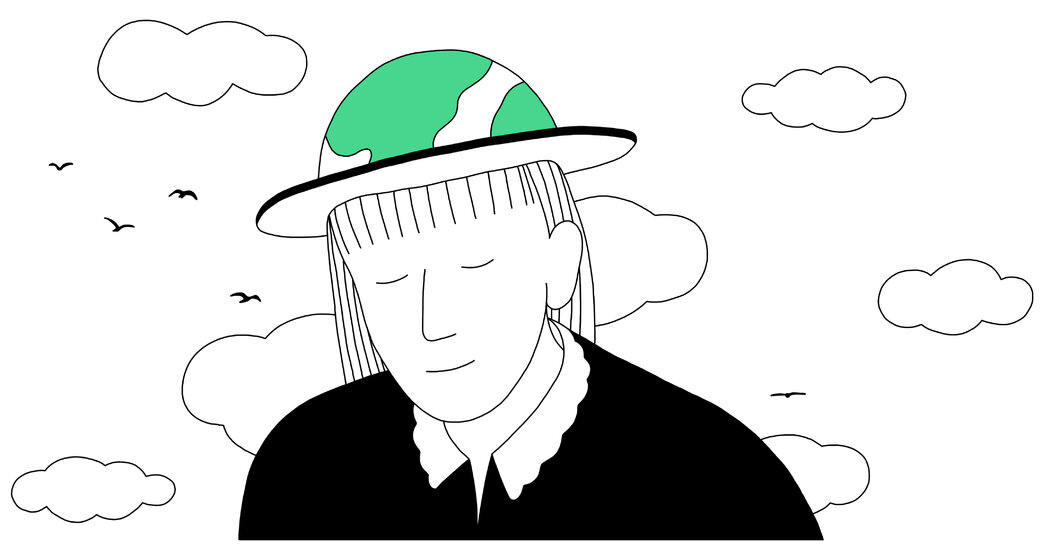
As the pandemic and lockdowns dragged on and on over the past year, many people longed only for the day when the world would return to the time before Covid-19 entered our vocabulary. For others, though, the months of seclusion led them to search for ways they might be able to make the world just a little better than it was before. Here are a few ideas to improve your little part of the post-pandemic Earth, or maybe you have some ideas of your own.Donate Your FlowersHeather Lawson got her good idea while watching bad TV. She was unwinding after work in front of an elaborate wedding show, and she was struck by a couple who had flown in $100,000 worth of tulips from the Netherlands for their big day.“I realized that these flowers were going to be enjoyed for one night and thrown out the next morning,” she said. “I thought: ‘There are people who’d love these. What if I could get them to someone else?’”In 2013, she founded Petal Share, a nonprofit organization that aims to do just that. With a team of volunteers she calls “pollinators,” Ms. Lawson picks up leftover floral arrangements from weddings and events in the Washington area, repurposes them into smaller bouquets and delivers them to residents and workers at hospitals, nursing homes and women’s shelters.“People always ask, ‘Where did these come from?’ and they get a kick out of hearing it was a wedding,” she said. “I like to think that some of the magic and joy from that special event is passed on.”It’s imperative to Ms. Lawson that the flowers look just as stunning in their second act as they did in their first. “We remove the ones that have seen their glory, recut the stems and give them a nice fresh gulp of water and flower food,” she said. “I don’t want anyone to be able to tell these are recycled flowers just by looking at them.”The pollinators have even worked their magic on funeral arrangements. “We had one woman who donated flowers from her father-in-law’s service,” Ms. Lawson said. “We made them into bouquets and brought them to the senior-care facility where he had lived.”A lawyer by day, Ms. Lawson runs Petal Share as a passion project and is always seeking volunteers to pick up flowers, remake bouquets and deliver them. But she also wants to spread the flower power even further.“I’d love to train people to start chapters of Petal Share across the country, so we can bring more comfort to those who need it,” she said. “Let’s keep passing the good vibes forward.” HOLLY BURNS Participate in Food RescueEvery day in the United States, an average of one pound of food per person is thrown away, which translates to 30 to 40 percent of the country’s food supply, according to the Department of Agriculture. And yet more than 40 million people will experience food insecurity and go hungry, many of them children, according to 2021 projections by Feeding America. Food waste also contributes 8 percent of total global greenhouse gas emissions.Organizations like Food Rescue US help close the loop, taking fresh food that would otherwise go to waste and delivering it to communities that can use it. Food Rescue US is tech-savvy; it uses an app to connect donors — including grocery stores, restaurants, farms, schools, caterers and other food-related businesses — with nearby food pantries, soup kitchens and shelters.A wide volunteer network then makes the transfer as efficient as possible. Food donors, recipients and volunteers all register and schedule pickups and deliveries using the app, which also offers reporting and analytics about the number of meals rescued, the pounds of food redirected and the types of food distributed within each community.Food Rescue US has nearly 40 locations across the country operating under its name or teaming up with local organizations. The app makes it easy to become a food rescuer; you can sign up to do a food rescue near you at foodrescue.us. Once you’ve created an account, you can view available rescues and pick one that fits your schedule. If there is not a site near you, you can volunteer to help bring the service to your community. BONNIE TSUIMap Sidewalk Obstacles As the pandemic shut down indoor dining, restaurants increasingly expanded outdoor options, and eager diners took over many city sidewalks. While this may have helped struggling restaurants, it was a nightmare for accessibility, often making it impossible for people who use wheelchairs, walkers or guide dogs to navigate the sidewalks.But sidewalk inaccessibility was a problem long before the pandemic. Thea Kurdi, an accessibility specialist and vice president of DesignABLE Environments, said sidewalk impediments were a common problem for people with disabilities. Some sidewalks aren’t level or have gaps, others have obstacles like poles, mailboxes and poorly placed curb cuts, making it difficult for people with mobility impairments to get around in their own cities.While fixing individual impediments often requires government action, one engineer is using crowdsourcing to identify problem areas, providing valuable information for people with mobility impairments and perhaps even city planners. Jon Froehlich, a computer science professor at the University of Washington, is hoping that his creation, Project Sidewalk, will eventually make cities more accessible for everyone.Participants receive short online training in how to identify and score the severity of common sidewalk problems like obstacles, uneven surfaces and missing curb ramps. Then they are shown Google Street View images and are asked to spot these problems. Block by block, users map out how accessible each street of a city is. Like a video game, new “missions” — meaning new neighborhoods — get unlocked when an existing neighborhood is completely mapped. In collaboration with Anat Caspi, the director of the Taskar Center for Accessible Technology, also at U.W., Dr. Froehlich plans to use data collected during Project Sidewalk to help develop a navigation app for people with mobility limitations.So far, users from around the world have collected data on 6,000 miles of streets in seven cities in the United States and Mexico. Nearly 6,300 people have participated, but Dr. Froehlich is hoping the project will keep growing. “I would love it to be 80,000,” he said.Participation in this project may also help change how people think about the environments they move through every day. For example, Dr. Froehlich said that some schools, including K-12 institutions as well as universities, had started to use Project Sidewalk as a teaching tool.“I think there’s an aspect of empathy-building,” he said, adding that students may be better able to understand “how environment can disable others and prevent others from having equal access to places.” HANNAH THOMASYCreate a Firefly HabitatFireflies are among the flashiest insects in the world, but they spend most of their lives creeping around in the dark and, increasingly, they need your assistance. Scientists have limited data on firefly populations, but studies indicate that several of the approximately 2,000 species are struggling. A 2019 survey of firefly experts in the journal BioScience identified three major global threats: habitat loss, increased artificial light and pesticide use.If you live among fireflies, there are probably juveniles conducting ground-level business in your yard right now. With auspicious timing and a magnifying glass, you can spot bioluminescent eggs or larvae dimly glowing. The fireflies that are most visible to us are in an adult stage, which lasts days or weeks, yet they’ve been living in various life stages that are largely unseen by humans for up to two years.You can do several things to help the next generation of fireflies. The best way to create a firefly-friendly habitat is to have an unruly yard. But to balance local ordinances with the call of the wild, you can mimic the nurture of nature with small changes. Instead of clearing fallen branches, build a small woodpile. Rather than burning leaves, collect them in paper bags for nutrient-rich compost. To enhance soil quality, which supports fireflies, aerate your lawn, avoid pesticides and plant native trees and grasses of varying heights.“When it comes to fireflies, everyone can do something to help,” said Candace Fallow, a conservation biologist with the Xerces Society for Invertebrate Conservation. “Even if you don’t have a yard, you can turn your lights off at night. You can spread the word that this is a species of concern. We get awed by fireflies’ shows in summer, but they’re there all year. We need to give them safe places to live so that they can keep sharing their light.” LEIGH ANN HENIONWatch Your MouthYour parents were right when they told you to think before you speak. Words with racist and ableist histories are exceedingly common and needlessly hurtful, even in casual conversation.Megan Figueroa, a psycholinguist, remembers when a disabled friend asked her not to use “lame” as an adjective for suboptimal. “My chest constricted,” she said. “I felt that physical symptom of an anxiety attack” from causing pain to a friend.Since then, she has worked to remove “lame” and other ableist terms like “idiot” and “moron” from her lexicon. She also hosts the Vocal Fries, a podcast that dives into discriminatory language. “I believe linguistic discrimination is this final frontier where even people who would consider themselves very progressive are still actively discriminating against people linguistically,” she said.Kelly Wright, who studies experimental sociolinguistics at the University of Michigan, said, “Word choice matters because words have history.” For example, she cited “insane,” which you’ve probably used to describe the price of a sandwich. “When we look at a word like insane, that word has been used in the world to limit the liberties of many groups of people,” she said. “It is a label which was used directly to oppress women, to justify inhumane experimentation, to incarcerate, to colonize.” Flippantly inserting “insane” into a conversation about sandwiches belittles the traumatic experiences of millions of people, she said.A current era of cultural change strives to dismantle white supremacy, patriarchy, the gender binary and discrimination against people with disabilities. As culture evolves, Ms. Wright said, so too must language.If you think something might have problematic origins, do an internet search, Dr. Figueroa said. As a general rule, if a word is used strictly in a derogatory way, it probably has an oppressive history.A current era of cultural change strives to dismantle white supremacy, patriarchy, the gender binary and discrimination against people with disabilities. As culture evolves, Ms. Wright said, so too must language.If you think something might have problematic origins, do an internet search, Dr. Figueroa said. As a general rule, if a word is used strictly in a derogatory way, it probably has an oppressive history.Finally, when it comes to using the singular “they” as a gender-neutral pronoun, don’t try to defend your unwillingness to change as a commitment to good grammar, Dr. Figueroa said. If you’re putting grammar ahead of how a person has explicitly asked you to address them, your problem isn’t grammar A. C. SHILTONMake A Lake Less TrashyOne man’s solution to the spread of plastic pollution in Lake Tahoe is to organize an enormous cleanup above and below the surface of the continent’s largest alpine lake. On top of that, he hopes his effort brings awareness to similar problems plaguing waterways around the world.Ringed by Sierra Nevada peaks on the California-Nevada border, the sapphire-hued Lake Tahoe attracts more than 2.7 million visitors a year. But during a dive expedition last summer, a local resident, Colin West, along with volunteers from his environmental nonprofit, Clean Up the Lake, discovered this outdoor wonderland’s trashy secret: Thousands of pounds of plastic bottles, clothing, aluminum cans, food wrappers and other discarded debris lurk beneath its 191-square-mile surface.“Trash is accumulating,” said Mr. West, of South Lake Tahoe, Calif. “I’ve personally seen poly- and plastic-based clothing, tires and other forms of plastic degradation in our environment that could be leaching into the drinking water and contributing to the microplastics issues we have here at the lake. Let’s act now. It’s within our grasp to preserve Tahoe and correct the wrongs.”To this end, Mr. West embarked on his biggest refuse-removal task: a six-month underwater trash haul around Lake Tahoe’s 72-mile perimeter that began on May 15. Through individual and corporate donations, Clean Up the Lake has raised more than $200,000 for operational expenses. The all-volunteer team encourages locals and visitors to donate their time too, and kayakers, experienced divers and boat owners are invited to apply via cleanupthelake.org.Pulling out trash is the task at hand, but keeping it out of the lake, which provides municipal drinking water for numerous small communities, is critical. From avoiding single-use plastic bottles and bags to picking up litter, even when it’s not your own, people have more power than they realize to keep litter out of Lake Tahoe and any body of water, Mr. West said.“So many people feel that one person’s efforts don’t matter,” he said. “But the small daily decisions we make can be impactful.” KIMBERLEY LOVATOBecome a Deep CanvasserLast fall, Shawnna Weighill of Greeley, Colo., was making calls to North Carolina voters when she reached a woman in her 70s with views she described as racist. The woman believed that immigrants were bringing “problems and diseases” into the country, she said, for example, and that people of Asian descent were “willfully contributing” to the ongoing pandemic.“I wanted to point out the ways she was wrong,” said Ms. Weighill, who is of Filipino and Native American descent. The remarks angered and offended her, she said, “but I was there to make a human connection.”Ms. Weighill was participating in a deep canvass, an increasingly popular community organizing technique to persuade voters though personal storytelling and relationship building — not facts and figures.“The antidote to bias and disinformation isn’t more information,” said Adam Kruggel, director of strategic initiatives at People’s Action, a network of community-based groups that organized Ms. Weighill’s deep canvass. “It’s connection.”With this in mind, Ms. Weighill sidestepped a policy debate with the voter and instead asked a more personal question: How had she fared during the pandemic? “I learned she’d been caring for her 3-year-old granddaughter and was struggling,” she said. “I have a niece and nephew around that age — it’s been hard for my family, too.”Deep canvasses require volunteers to be vulnerable with strangers, which can be uncomfortable but effective. A 2016 study published in Science found that 10 percent of voters deep-canvassed on transgender rights shifted their views in a positive direction. “That may not sound like a lot,” said Dave Fleischer, director of the Leadership Lab, a group involved in the research. “But it’s better than zero, which is the result of almost everything else we’ve tried.”These conversations have value, Mr. Kruggel said, even when no one is persuaded. “People connect across race, sexual identity, gender, class and geography,” he said, which can be an effective experience for volunteers and voters alike.Ms. Weighill said she had been transformed by many of the conversations she had had on issues ranging from public safety to racial equality, particularly those that started out “emotionally charged,” as with the North Carolina voter. “Once people realize you’re not there to argue, they let their guard down,” she said. “You really end up hearing each other.” DAVID DODGE‘Buy Nothing,’ and Give a LotOn a quiet night in December, Joanne McClain opened the door to her apartment and placed six plastic containers with neighbors’ names on them into the hallway. Each held a slice of almond-flour cake with pear, pistachio and rose. Ms. McClain had received nine pounds of pistachios from her dad, and had tried a new recipe. It came out amazingly well, but there was no way she could eat a whole cake, she said: “I just had an abundance of ingredients and wanted to share.”The cake became a “give” on Ms. McClain’s local “Ask, Borrow, Give” group — part of a larger movement, called Buy Nothing, that connects people offering free stuff to their neighbors as a way to lessen waste through repurposing. For many, it’s better to give clothes, household items and even unwanted food to neighbors than to send them to donation centers, which can only resell a fraction of what they get. The main rule is that everything must be given free: no buying, selling, trading or bartering.The Buy Nothing Project is an international network of local gifting groups that began when two friends living on Bainbridge Island in Washington created an experimental hyperlocal gift economy in 2013. The movement now has more than four million members in 44 countries around the world and has grown by a third over the past year, said Liesl Clark, one of the founders.“It’s not so much about buying nothing,” she noted, “as it is about throwing nothing away.”The project will soon introduce an app that will help connect givers and seekers in any place, not just communities with organized Buy Nothing Facebook groups. “If you’re going to throw it away, why not give it a second life?” Ms. Clark said.The list of gives on one local Santa Monica, Calif., group varied widely. Mushy bananas for banana bread. A play date with a potbellied pig. Potted succulents. Someone to talk to. Winter gear for a 2-year-old. Feta cheese, mistakenly purchased after a family member asked for “fitted sheets.” Lemons and bay leaves from a neighbor’s backyard.People often share updates on the items they have been given, and pass them back to group members when they’re done — kid’s clothes and birthday decorations often circulate for years. Ms. McClain still has four pounds of pistachios waiting to turn into some other baked goods. She said Buy Nothing had changed her perspective on old household goods: “I no longer look at things as just trash. Things are now just waiting to find another home for others to enjoy them.” KATHARINE GAMMONPedal Toward PositivityLet’s keep America’s pandemic biking momentum rolling.Last year, 10 percent of Americans engaged in cycling in a new way, including 4 percent who got on a bike for the first time or in a very long time, said Patrick Hogan, the research manager at People for Bikes, a cycling advocacy group. That’s a big deal because more bike riders make roads safer for everyone.If the word “cyclist” conjures up men in tight clothes speeding down the road, rethink that image. While Americans of all income levels cycle at about equivalent rates, according to a 2011 paper published by researchers at Rutgers University, cycling as a means of transportation is inversely related to income. Lower-income Americans are more likely to use bikes to travel to and from work or the store. Making roads safer for vulnerable users is an act of class solidarity.The easiest way to show that solidarity is also the most fun: Get out and ride.Tara Goddard, an associate professor in Texas A&M’s school of landscape architecture and urban planning, published a paper in the journal Accident Analysis & Prevention last year that measured drivers’ implicit views of cyclists and their behavior in a driving simulator as they passed a biker. Drivers who also identified as cyclists were more careful as they navigated. That effect tends to ripple outward. “If you have a family member who commutes [by bike], you may look more for cyclists,” she said, because that person on a bike could be your loved one.There’s also safety in expectation. On the roads that cyclists frequent, drivers tend to maneuver more carefully. “Whereas, if you’re not even expecting to see anyone, then your brain just kind of isn’t scanning for them,” Dr. Goddard said.Bikes can also connect riders to their communities. “Bicycling brings us this everyday interactivity that driving just doesn’t,” said Sarah Rebolloso McCullough, a sociologist who studies sustainable transportation at the University of California, Davis. Cars wall us off from the world. On a bike we can interact with strangers at stoplights, smell that hot dog cart, and see our neighbors’ faces. And, when people start riding, they often start advocating for safer infrastructure. They might show up at a City Council meeting, another great way to build community.“Bikes don’t automatically build compassion and community,” said Nedra Deadwyler, founder of Civil Bikes, an organization that leads bike tours through Atlanta.In America, increasing safety in cycling often translates to more law enforcement. That makes Black and brown communities less safe, Dr. McCullough said.If we really want to use bikes to improve the world, we need to put equity — and humanity — at the center of all of our efforts, Ms. Deadwyler said.Bikes, after all, are just a tool. And, like any tool, a bike only moves forward if the person using it engages with doing the work of making this world just a little bit better. A. C. SHILTON

Read more →

Outdoor Science Activities

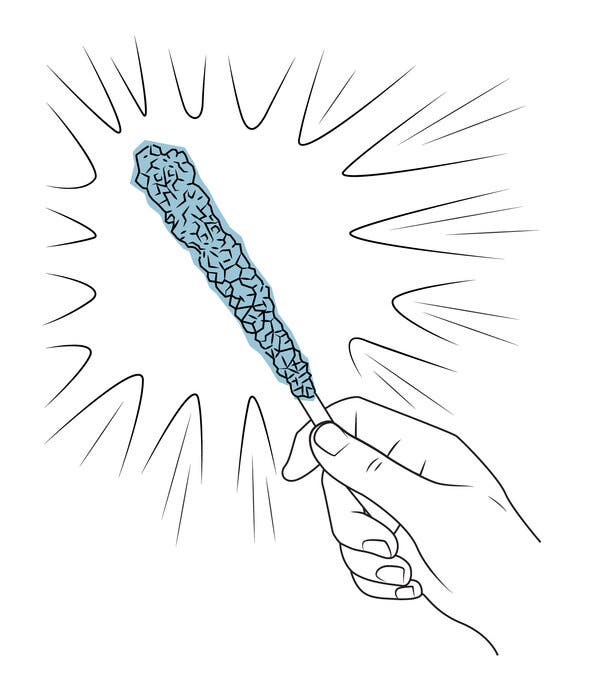
Don’t worry: No final exams, or hefty student loans are involved. All you need are a few simple items, and an abiding interest in the wonders of nature.If you like looking at trees, and bark, and the pattern of veins in leaves; if you are fascinated by clouds or the spots on a ladybug’s back; if you like to split open rocks and see what’s inside, then you are already an outdoor scientist. The best part is you don’t need any special or fancy equipment, you don’t need to remember a charger, you just need your eyes and the power of observation.Are there one or two sets of paw prints in the snow? Three or four kinds of birds having a conversation in a grove? What kinds of plants are strong enough to push their way through the cracks in the sidewalk? You may not always find the answer, but these are the questions an outdoor scientist asks about the world. As summer approaches, here are five projects and experiments to lead you on your scientific journey into the natural world.T.M. DetwilerMake your own crystal One way crystals form is when magma, or liquid rock, begins to cool. Different kinds and colors of crystals will form depending on factors like the temperature of the liquid and the amount of time it takes to cool. It’s the same process with snowflakes, also known as snow crystals. You can observe crystallization up close if you leave a solution of water and salt out all night at room temperature. The water will evaporate, and the salt will crystallize.You’ll need:Pot to boil water1 ¾ cups water½ cup crystal or Epsom saltGlass jar or large glassFood coloring (optional)Thick stringPencil, butter knife, Popsicle stick, or any thin stickInstructions:T.M. Detwiler1. Bring water to a boil in a pot (adults can help with this if you’re not allowed to use the stove yourself).2. Stir in salt, adding until it no longer dissolves. The water should look almost clear with a few grains of salt swirling around (which means you’ve added slightly more salt than the water can absorb).3. Transfer the solution to a jar.4. Add a few drops of food coloring if you want to make colored crystals.5. Tie one end of your string around the middle of your pencil and lower the other end of the string into the jar. The string should be long enough so that it almost touches the bottom of your jar.6. Balance the pencil across the top of your jar.7. Crystals should start to form in one or two days.T.M. DetwilerCapture a Paw Print Dogs and humans go way back. Just as we evolved from primates, dogs evolved from wolves. Dogs were the first animals to live with humans. We call this domestication, which describes how a wild animal becomes our furry friendwatching Netflix beside us on the couch. Today, there are over 300 breeds of dogs, but even after thousands of years of evolution, a dog’s paw and a wolf’s paw are still so similar that you can’t really tell them apart.You’ll need:NewspaperMeasuring cups4 cups plaster of Paris2 cups cold tap water7-cup plastic containerMixing spoonDisposable aluminum cake pan, about 9 inches x 9 inches x 1 ½ inchesSpatulaDog, cat, or any other animalInstructions:T.M. DetwilerWarning: Never completely submerge your hand or a pet’s paw in plaster of Paris, and remove it quickly while still moist. Plaster of Paris gets hot when it dries and you don’t want to get stuck.1. Spread out newspaper on your work surface.2. Place plaster of Paris and water in a plastic container, and use your mixing spoon to stir well until your mixture is the consistency of pancake batter.3. Pour the mixture into the aluminum cake pan and smooth it with a spatula. Let it rest for an hour to set.4. Place your dog’s paw (or the paw/ foot of any other animal) onto the mixture and press it down about ½ to ¾ inch — press firmly. Your dog will probably be more cooperative if you set the plaster of Paris container on the table and the dog on your lap. Remove dog’s paw and rinse thoroughly.5. Allow the plaster of Paris to dry for 24 hours, and you’ll have a life-size keepsake of your pet’s paw.Note: If you don’t have any domestic or outdoor animals, you can always use a human “paw.”Todd DetwilerMeasure a TreeYou’ve probably learned that you can figure out the age of a tree by counting its rings, but each ring is really made up of two parts. One entire year is represented by a lighter band of a layer of tissue known as cambium and a thinner, darker band of cambium measured together. The light-colored band shows growth during the warmer, rainier months and good growth conditions. The dark-colored band shows growth during the colder months and difficult conditions. Trees grow outward, meaning that the center of a tree is the oldest part, and the outer rings the newest. The central core, or heartwood, is the strongest wood in the tree even though it’s no longer alive. Because human records of daily weather conditions only go back so far, trees serve as useful tools for scientists studying climate change. Trees often live hundreds of years and can tell us about weather conditions long before humans started keeping track.You’ll need:Cloth tape measureTreeCalculatorGoogle or a guide to treesMore information on tree growth can be found in “How Old Is My Tree?” by Lindsay Purcell, which you can find at purduelandscapereport.org.Instructions:Todd Detwiler1. Measure the circumference (distance around) of your tree at approximately 4.5 feet from the ground with your cloth tape measure.2. Use your calculator to divide that number by 3.14 (which is, approximately, Pi).3. Multiply that number by the “growth factor” of your tree. The “growth factor” is an average estimate of your tree’ species’ growth over time. The International Society of Arboriculture has published a table of growth factor numbers according to tree species that you need to search for on Google or look up in a guide to trees to complete the formula for measuring your tree.4. The result is the age of your tree. For example: If your silver maple is 20 inches in circumference, and you divide that by 3.14, you get 6.369. Multiply that by the growth factor (3) and get 19.108. That means your tree is approximately 19 years old.T.M. DetwilerMake a Constellation MapThe night skies have always been important to humankind, primarily as a navigational tool. Today, stargazing isn’t as easy as it used to be. The main reason is light pollution. When we think of pollution, we tend to focus on water and air pollution because they directly affect what we drink and breathe. But light pollution has long interfered with our ability to see the night skies in cities and suburbs.An exciting citizen science project that you can participate in involves capturing the night sky from where you live and sharing it with people across the globe to track light pollution. To take part, visit the website Globe at Night. You’ll need:FlashlightDrawing compass2 pieces of 8 ½ inch x 11 inch (80-lb.) black cardstockPencilScissorsTape (optional)Pictures of constellations (either online or in a book)Instructions:T.M. Detwiler1. Measure the circumference of your flashlight’s lens with a drawing compass. Copy the measurement onto cardstock with your pencil.2. Cut out a few circles for different constellations. These should fit snugly over the lens and inside the lip of the flashlight (if your flashlight doesn’t have a lip, you can use tape to hold it in place.) It is important to leave a tab on the circle a little larger than a pencil eraser to pull your circle out of the flashlight’s rim.3. Find images of constellations on the internet or in a book about astronomy.4. Using your pencil, mark dots on your circles that look like your constellation images.5. Using the points of your scissors, punch holes through the dots.6. Insert one disc into the top of your flashlight. Turn on the flashlight in a dark room and shine it on a blank wall or ceiling. Enjoy viewing your constellation!Todd DetwilerMake a Pine Cone Bird FeederBirds need four basic things: food, water, shelter, and a place to lay their eggs. For most common backyard birds in North America, such as the goldfinch, blue jay, robin, hummingbird, cardinal and sparrow, their diet consists of nuts, seeds, fruit and nectar. Ospreys, large coastal birds, like fish and will plunge into the water to scoop them up. Up the food chain: Herons like frogs, roadrunners like reptiles, hawks will eat other birds, owls like rodents and vultures will eat just about anything, including roadkill.You’ll need:StringPine cone (f you don’t live near pine trees, you can buy a pine cone at a local crafts store)Birdseed (can be purchased at a grocery or pet store)PlateHoneyButter knife (optional)Branch or other place to hang feederInstructions: Todd Detwiler1. Tie a string around a pine cone’s top so you can hang it up later. Pour about an inch of bird seeder on a plate, enough to roll your pine cone in. 3. Drizzle honey over your pine cone. (Do this over the plate to catch any honey that drips off your pine cone.)4. Once your pine cone is covered in honey, roll it around in birdseed on your plate until it’s covered. You many need to use a butter knife to get into the nooks and crannies. 5. Hang your pine cone from a branch and move a safe distance away to observe the birds that come to dine. From “The Outdoor Scientist” by Temple Grandin, Ph.D., published by Philomel Books, an imprint of Penguin Young Readers Group, a division of Penguin Random House, LLC. Copyright © 2021 by Temple Grandin.

Read more →

U.S. Mask Companies Struggle to Compete with China

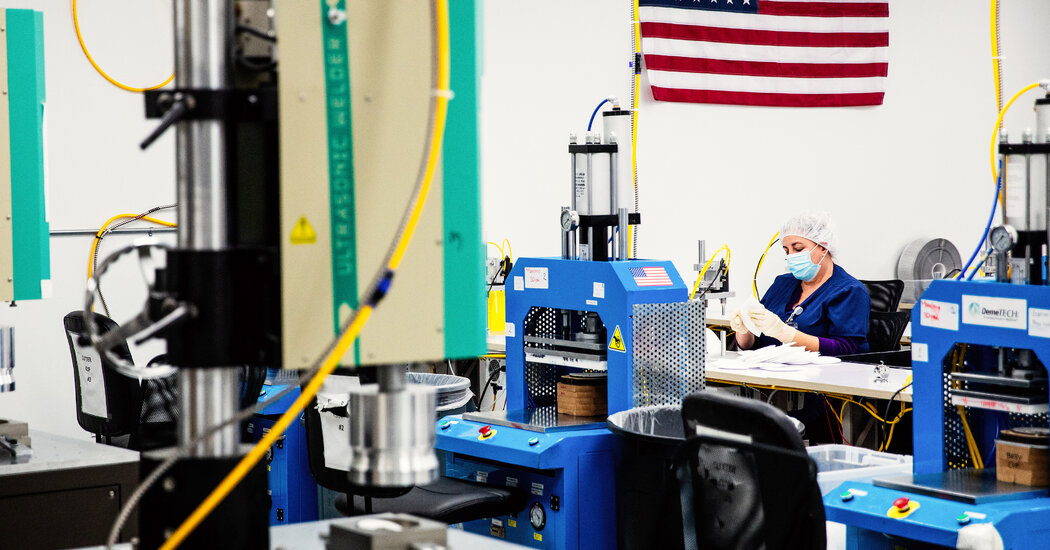
Remember when N95s were in short supply? American companies stepped in to manufacture them. Now, they can’t compete.Mask mandates have eased, a welcome milestone in the battle against Covid-19. But for the two dozen domestic companies that jumped into the mask-making business last year, the good news comes with a downside: a calamitous drop in sales.Some of the slackening demand is tied to the loosening of masking guidelines by the Centers for Disease Control and Prevention, but industry experts say a bigger factor has been the return of inexpensive protective gear from China that began flooding the American market earlier this year.Industry executives and some members of Congress have accused China of dumping, noting that many imports are priced so low — sometimes a tenth of what American factories charge for comparable products — that there is little chance for domestic companies to survive.In recent weeks, at least three companies have stopped producing masks and medical gowns, and several others have markedly scaled back production, among them Premium-PPE, a year-old surgical mask-maker in Virginia that recently laid off most of its 280 workers.“Our industry is in break-glass mode,” said Brent Dillie, the co-owner of the company. Like other start-ups, the company got into the mask business after China, the world’s largest producer of protective medical gear, halted exports at the start of the pandemic. “Six months from now, many of us won’t be around and that won’t be good for America the next time there’s a national health emergency.”The crisis faced by domestic producers is an urgent test for the Biden administration and embodies two of its most important priorities: shore up American manufacturing and ensure that health care workers will never again scramble to find adequate protective gear. Those shortages, health experts say, most likely contributed to the high rates of infection among frontline workers, more than 3,600 of whom died of Covid-19 during the first year of the pandemic, according to a tally by The Guardian and Kaiser Health News.The White House has announced a few measures aimed at buoying domestic producers of personal protective equipment, but industry executives say they are still awaiting more substantial trade policies and supply-chain reforms that would bolster their companies’ chances of survival.Tim Manning, the White House Covid-19 supply coordinator, said the administration has tried to address some of the industry’s challenges: They have pushed federal agencies to procure domestic supplies and they have introduced start-ups to the distribution giants that supply the nation’s hospital chains. The administration, he said, was also poised in the coming months to allocate billions of dollars in federal relief spending that would replenish the Strategic National Stockpile with American-made medical goods.“The scale and scope of these efforts is something we’re still working through,” Mr. Manning said in an interview.In Congress, a bill with bipartisan support would allocate $500 million in annual spending over the next three years to support domestic manufacturers of vital medical equipment.While industry executives commend these moves, they say that time is running out. The American Mask Manufacturer’s Association, a recently created trade group, said its 27 members had already laid off 50 percent of their work force. Without concerted action from Washington, most of those companies will go belly up within the next two months.An immediate boost, they say, would be to rescind the C.D.C. guidelines, born during the pandemic, that force health workers to repeatedly reuse N95 masks, even though they are designed to be thrown away after contact with each patient. Many hospitals are still following the guidelines, even though 260 million masks are gathering dust in warehouses across the country.“We’re not looking for infinite support from the government,” said Lloyd Armbrust, the association’s president and the founder and chief executive of Armbrust American, a mask-making company in Texas. “We need the government’s support right now because unfair pressure from China is going to kill this new industry before the legislators even get a chance to fix the problem.”The association is planning to file an unfair trade complaint with the World Trade Organization, claiming that much of the protective gear imported from China is selling for less than the cost of production. The price for some Chinese-made surgical masks has recently dropped to as low as 1 cent, compared with about 10 to 15 cents for American masks that use domestically produced raw material.“This is full-on economic warfare,” said Luis Arguello Jr., vice president of DemeTech, a medical-suture company in Florida that earlier this month laid off 1,500 workers who made surgical masks. He said that in the coming weeks, 500 other workers who make N95 masks would also likely be let go.“China is on the mission to make sure no one in the industry survives, and so far they’re winning,” Mr. Arguello said.The Chinese Embassy in Washington did not respond to requests for comment.The International Trade Administration, a division of the Commerce Department, declined to say whether it would support an anticompetitive complaint against China. The agency, a spokesperson said in a statement, “continues to monitor market trends closely and assess options to ensure American manufacturers are competing on a level playing field.”The office of United States Trade Representative, which makes trade policy recommendations to the President, did not respond to interview requests.The flood of inexpensive imports also affects producers of other medical gear. Merrow Manufacturing, a 183-year-old textile company in Fall River, Mass., produces an unlikely array of goods — from lingerie and bulletproof vests to tank covers. It entered the surgical gown business last year, prompted in part by the desperation of hospitals across New England that suddenly could not obtain medical supplies from China.“Our phones were ringing off the hook with people asking if we could help,” said Charlie Merrow, who runs the company with his brother.Hundreds of workers were quickly retrained, dozens more were hired and after a retooling that cost $10 million, Merrow’s sewing machines were churning out 700,000 gowns a week by last summer. The governor of Massachusetts stopped by the factory to lionize their efforts. The governor of Rhode Island described the Merrows as heroes.These days, not many hospitals are calling, and Mr. Merrow recently stopped production after the number of unsold gowns hit a million. The company’s $18 reusable gowns, he said, don’t stand a chance against similar products from China that sell for $6.“It’s really a lost opportunity for the country when you consider that our national security is at stake,” he said.The Merrows are determined to stay in the protective gear business. They are pivoting to making scrubs and other medical garments from recycled material, but other companies have decided to call it quits.National Filters, a surgical mask company in Harbor Beach, Mich., ceased production earlier this month, and Protective Health Gear, a year-old mask start-up in Paterson, N.J., is weeks away from laying off its remaining 40 workers. “We’re hanging on by a thread,” said Brian Wolin, the chief executive.The industry shakeout comes as no surprise to Mike Bowen, the co-owner of Prestige Ameritech, a Texas company that is one of the largest mask manufacturers in the country. Mr. Bowen, who has been in the business since 1986, has long warned political leaders in Washington about the nation’s dependence on foreign suppliers.“I have 14 years of letters to presidents, members of Congress and hospital executives telling them a whole bunch of people are going to die without serious changes, and that’s exactly what happened,” he said.

Read more →

Sheffield Black Hair Care Project is 'therapy on so many levels'

A scheme in Sheffield aims to help black people talk about mental health while getting their hair done.The Black Hair Care Project team trained hairdressers so they could deal with trauma and listen effectively.Teetee, who previously had her hair set on fire at school “just to see how black hair burned”, is one of the people who have used the service.She said the scheme is like “therapy on so many levels”.

Read more →

Depressive symptoms linked to rapid kidney function decline

In a study of adults with normal kidney function, those who had frequent depressive symptoms were more likely to later experience a rapid decline in kidney function. The study will appear in an upcoming issue of CJASN.
Depression is a common condition in middle-aged and older adults, and it can contribute to a variety of mental and physical problems. Previous research has found a link between depressive symptoms and rapid kidney function decline in patients with chronic kidney disease (CKD). To look for a potential link in adults with normal kidney function as well, a team led by Xianhui Qin, MD (Nanfang Hospital, Southern Medical University, in China) examined information on 4,763 individuals with healthy kidneys when they enrolled in the China Health and Retirement Longitudinal Study (CHARLS).
At the start of the study, 39% of participants had high depressive symptoms, and during a median follow-up of 4 years, 260 (6%) participants experienced rapid kidney function decline. There was a significant association between depressive symptoms at the start of the study and rapid decline in kidney function during follow-up. Participants with frequent depressive symptoms were 1.4-times more likely to experience rapid kidney function decline than participants with infrequent depressive symptoms, after adjustments.
“CKD is a leading risk factor for cardiovascular disease, kidney failure, and mortality worldwide. Therefore, the identification of more modifiable risk factors may possibly reduce the huge burden of CKD and its related complications by leading to early detection and prevention,” said Dr. Qin. “While our study does not show causality, it demonstrated that high depressive symptoms were significantly associated with rapid decline in kidney function among Chinese adults with normal kidney function. If further confirmed, our data provide some evidence for depressive symptom screening and effective psychosocial interventions to improve the prevention of CKD.”
An accompanying Pantiet Voice article provides the perspective of a two-time kidney transplant recipient with an American-Born Chinese background.
Story Source:
Materials provided by American Society of Nephrology. Note: Content may be edited for style and length.

Read more →