Start-stop system of hunting immune cells

The body is well protected against invading pathogens by barriers such as the skin. But if you injure yourself and break your skin, pathogens can easily enter your body through the wound and cause severe infections. If this occurs, the innate immune system takes over the first rapid defense with an effective arsenal of cellular weapons infiltrating the wounded tissue in large numbers. As one of the first cell types on the spot, neutrophil granulocytes are recruited within few hours from the bloodstream to the infection site to eliminate potential microbial invaders.
Swarming against infections
“Neutrophils are very efficient in hunting and killing bacteria,” says Tim Lämmermann. The group leader at the MPI of Immunobiology and Epigenetics in Freiburg studies this important cell type. Neutrophils are highly abundant cells that make up about 50-70% of white blood cells in the human body. It is estimated that 100 billion neutrophils are produced from stem cells in the bone marrow in an adult every day. “These cells patrol almost all corners of our body, and they are very efficient in sensing anything potentially harmful in our body. Once individual neutrophils detect damaged cells or invading microbes in the tissue, they start secreting attractive signals that act through cell-surface receptors on neighboring neutrophils to recruit more and more cells.” By using this intercellular communication, neutrophils can act together as a cell collective and coordinate effectively their clearance for pathogens as a swarm.
A fine line between host protection and tissue destruction
However, this form of beneficial inflammation can also overshoot and lead to massive tissue damage. If the intensity or the duration of the response becomes dysregulated, the same mechanisms that serve to eliminate invading pathogens can also cause collateral damage to healthy tissues. For example, the substances that neutrophils release to kill invading pathogens also erode the meshwork of proteins and sugars, which provides structural support to tissues. “In this study, we started with the question what stops the swarming response to avoid uncontrolled neutrophil accumulation and prevent excessive inflammation, which can contribute to degenerative diseases such as cancer, diabetes, and autoimmune diseases,” says Tim Lämmermann. In former studies, he and his team already discovered the molecular mechanisms initiating the collective-like swarming behavior. However, the processes that bring this response to an end have remained unknown.
Neutrophil swarming is still a relatively novel topic in the inflammation and infection research fields, and the underlying mechanisms are just beginning to be investigated. The newest study by the lab of Tim Lämmermann now reveals how neutrophils self-limit their swarming activity in bacteria-infected tissues and thus balance search versus destroy phases for efficient pathogen elimination.
By using specialized microscopy for the real-time visualization of immune cell dynamics in living mouse tissues, the researchers demonstrate that swarming neutrophils become insensitive to their own secreted signals that initiated the swarm in the first place. “We identified a molecular break in neutrophils that stops their movement, once they sense high concentrations of accumulating swarm attractants in large neutrophil clusters” says Tim Lämmermann. “This was surprising as the prevailing view suggested that external signals released from the tissue environment are critical for stopping neutrophil activity in the resolution phase of an inflammation,” comments Wolfgang Kastenmüller, collaborating scientist of the Max Planck Research Group Systems Immunology at the University of Würzburg.
An internal start-stop system for optimal bacterial clearance
In light of the discovered start-stop system in neutrophils, the researchers re-evaluated current views on how neutrophils navigate in tissues to eliminate bacteria efficiently. In experiments with neutrophils lacking the stop mechanism, the team observed immune cells excessively swarming and scanning large areas of bacteria-infected tissue, which contrasted the behavior of cells with functioning start-stop system. However, this amplified swarming and scanning did not make these cells better pathogen-killers. “Strikingly, we made the opposite finding. It is not beneficial when neutrophils move around too fast and run around like crazy. Instead, it appears more advantageous for them to stop and enjoy together a nice meal of bacteria — this is more efficient to contain bacterial growth in tissues,” explains Tim Lämmermann.
With these results, the team paves the way for a better understanding of neutrophil biology, which is essential for immune host defense against bacteria and could inform therapeutic approaches in the future. Moreover, the swarming behavior and underlying mechanisms could also inform other categories of collective behavior and self-organization in cells and insects.
Read more →

How cells 'read' artificial ingredients tossed into genetic recipe

If the genome is the recipe of life, base pairs are the individual ingredients listed. These chemical structures form DNA, and every living organism on Earth has just four. The specific arrangements of these four base pairs — A, T, C, G — make us who and what we are.
So it was a big surprise when Scripps Research scientists revealed in 2014 that they could introduce two new, unnatural base pairs (they called them X and Y for short) into the genetic code of living bacteria in the lab. It was like two never-seen-before ingredients tossed into the recipe, hypothetically expanding the variety of dishes a cell can whip up.
Researchers immediately saw the potential applications: With more control and selection, they might be able to use cells as tiny kitchens to cook up new medicines and vaccines. But just because there are more letters in a genetic recipe doesn’t mean the cell can read them, or knows what to do with them — or that any of it works in the cells of organisms more complicated than bacteria.
In a study published June 17, 2021 in Nature Chemical Biology, a team led by researchers at Skaggs School of Pharmacy and Pharmaceutical Sciences at University of California San Diego helped address these hurdles.
The team revealed that yeast cell machinery seamlessly “reads” the unnatural X and Y ingredients, the way it would A, C, T and G, and translates them into RNA, which could eventually be translated into proteins, the basis for just about every part of the cell. Unlike bacteria, yeast are eukaryotes, part of the same multicellular class of life as animals, plants and fungi. (A note about safety: These synthetic cells can’t survive without special liquid food provided in the lab.)
“Now we can see exactly how eukaryotic cell machinery interacts with unnatural base pairs, but it’s not perfect, there’s room to improve in terms of selectivity and efficiency,” said senior author Dong Wang, PhD, professor in the Skaggs School of Pharmacy. “It’s our hope that this finding will have a profound impact in the field by enabling the design of more effective, next-generation unnatural base pairs.”
Wang’s lab has long studied RNA polymerase II, an essential enzyme found in every fungal, plant and animal cell. RNA Pol II reads the DNA recipe and helps convert the genetic code into messenger RNA. (That mRNA then carries that genetic recipe out of the nucleus and into the cytoplasm, where it’s translated and used to assemble proteins as instructed.) In the past, the team has studied the structure of RNA Pol II and how it responds to normal genetic recipe hiccups such as DNA damage caused by radiation.
In their latest study, Wang’s team revealed for the first time step-by-step what it looks like, structurally speaking, when eukaryotic RNA Pol II picks up and incorporates unnatural base pairs as it transcribes a piece of DNA. In doing so, they discovered, for example, that RNA Pol II is selective — it can bind X or Y on one strand of a double-stranded DNA genome, but not the other.
“What we have now is a unique view of what is and what is not well recognized by RNA Pol II,” said Wang, who is also professor at UC San Diego School of Medicine and Department of Chemistry and Biochemistry. “This knowledge is important for us to design new unnatural base pairs that can be used by host RNA polymerases.”
Story Source:
Materials provided by University of California – San Diego. Original written by Heather Buschman. Note: Content may be edited for style and length.

Read more →

Most cancer cells grown in a dish have little in common with cancer cells in people, research finds

In a bid to find or refine laboratory research models for cancer that better compare with what happens in living people, Johns Hopkins Medicine scientists report they have developed a new computer-based technique showing that human cancer cells grown in culture dishes are the least genetically similar to their human sources.
The finding, they say, should help focus more resources on cancer research models such as genetically engineered mice and 3D balls of human tissue known as “tumoroids” to better evaluate human cancer biology and treatments, and the genetic errors responsible for cancer growth and progress.
“It may not be a surprise to scientists that cancer cell lines are genetically inferior to other models, but we were surprised that genetically engineered mice and tumoroids performed so very well by comparison,” says Patrick Cahan, Ph.D., associate professor of biomedical engineering at The Johns Hopkins University and the Johns Hopkins University School of Medicine and lead investigator of the new study.
The new technique, dubbed CancerCellNet, uses computer models to compare the RNA sequences of a research model with data from a cancer genome atlas to compare how closely the two sets match up.
The researchers found that, on average, genetically engineered mice and tumoroids have RNA sequences most closely aligned with the genome atlas baseline data in 4 out of every 5 tumor types they tested, including breast, lung and ovarian cancers.
The investigators say their work adds to evidence that cancer cell lines grown in the laboratory have less parity with their human source because of the complex differences between a human cell’s natural environment and a laboratory growth environment. “Once you take tumors out of their natural environment, cell lines start to change,” says Cahan.

Read more →

Tug-of-war receptors for sour taste in fruit flies sheds light on human taste biology

Sour taste does not have the nearly universal appeal that sweet taste does. Slightly sour foods or drinks such as yogurt and lemon juice are yummy to many, but such highly sour foods as spoiled milk are yucky, even dangerous. Like humans, many other animals, including insects, prefer slightly acidic over very acidic foods.
Evolutionary biologists surmise that the need for sour detection to be finely tuned is a two-sided coin: slightly acidic foods can enhance digestion and stimulate saliva production; relative sour-to-sweet taste can signal optimal ripeness of fruit; and extremely sour food, as with bitter taste, is a warning to what not to ingest. However, despite this usefulness, how do animals discern different concentrations of acid to produce contrasting feeding behaviors using the same sour-taste system?
A research group led by Yali Zhang, PhD, Principal Investigator at the Monell Chemical Senses Center, has recently addressed this long-standing question. Their work was recently published in Nature Communications.
Using the fruit fly as a research model, Zhang and his team set out to elucidate how animals tell the difference between low and high concentrations of acid. “We chose flies because they not only help us identify the genetic components involved in taste transduction, they also exhibit pronounced and distinct taste responses to a range of concentrations of acid compared to other animal models,” said Zhang.
His team, including authors Tingwei Mi, John Mack, and Christopher Lee from the Monell Center and University of Pennsylvania, found that flies use two distinct types of gustatory (taste) receptor neurons (GRNs), which are analogous to taste receptor cells in mammals, to discriminate slightly from highly sour foods. One group of GRNs are maximally activated by low acidity, while the other group displayed its best responses to high acidity. When tasting an acidic food, the fly’s brain evaluates the activation of both neuron populations and decides whether to choose or reject the acidic food, based on which type of neurons win.
“We were thrilled to discover that a fly’s acid-taste behavior is dictated by a ‘tug-of-war’ between low- and high-acid-sensitive taste receptor cells,” said Zhang. This binary sour-taste system can explain why many animals, including humans, are attracted to low but repulsed by high concentrations of acids.
In addition, Zhang’s group identified a fly protein called Otopetrin-like (OtopLa), which has an analogous counterpart in humans, as a long sought-after sour taste receptor. OtopLa forms a proton-selective ion channel that is specifically required for attractive sour taste response. Remarkably, mutant flies lacking OtopLa are averse to low concentrations of acid as well as repulsed by higher concentrations.
“To my knowledge, OtopLa is the first taste receptor to be identified that is evolutionarily conserved between insects and mammals,” said Zhang. This work overturns the established view that insects and mammals make use of different classes of taste receptors.
“I believe our research on fly acid sensation can greatly advance our understanding of sour taste coding in other animals, including humans,” said Zhang.
This work was supported by the National Institute on Deafness and Other Communication Disorders and the Ambrose Monell Foundation.
Story Source:
Materials provided by Monell Chemical Senses Center. Note: Content may be edited for style and length.

Read more →

Vaccination, previous infection, protect against COVID-19 gamma/P.1 variant in animal model

In early January 2021, travelers returning to Tokyo, Japan, from Amazonas, Brazil, were screened for COVID-19 at the airport. A few days later, the National Institute of Infectious Disease of Japan announced that the travelers had returned with a new variant of the SARS-CoV-2 virus.
That variant, known as gamma, or P.1, led to a deadly surge in COVID-19 cases in Brazil this spring, and has now spread across the world. More than 200 cases have been detected in Wisconsin. Whether current vaccines are as effective against the gamma variant remains unknown.
In a new study using variant virus recovered from one of the original travelers, researchers in the U.S. and Japan have found that vaccination with an mRNA vaccine induces antibody responses that would protect humans from infection with the gamma/P.1 variant. Hamsters previously infected with the virus strains first circulating in early 2020 were also protected from infection with the gamma variant nine months later.
The findings, the researchers say, suggest that previous SARS-CoV-2 infection and vaccines that are based on earlier strains of the virus still provide protection against infection with gamma. The study published in the Proceedings of the National Academy of Sciences on June 17, 2021.
“The animals were quite protected,” says study lead Yoshihiro Kawaoka, a professor of virology at the University of Wisconsin-Madison School of Veterinary Medicine and the University of Tokyo. “There may be people who get infected with this variant even though they are vaccinated or were previously infected, but they shouldn’t get severe disease.”
However, he says, “that is not consistent with what has been happening in Brazil,” where there have been reports of people reinfected with the gamma variant after recovering from infection with an earlier strain. It’s possible, Kawaoka says, that COVID-19 immunity lasts longer in hamsters than in humans, or that cases documented as reinfections are actually first infections.

Read more →

New study finds SARS-CoV-2 can infect testes

Researchers at the University of Texas Medical Branch have observed that SARS-CoV-2, the virus that causes COVID-19, can infect the testes of infected hamsters. The findings, published in the journal Microorganisms, could help explain symptoms some men with COVID-19 have reported and have important implications for men’s health.
As the pandemic goes on, clinicians continue to report their findings that COVID-19 affects more than just the lungs. Some patients have reported testicular pain and some reports have shown decreases in testosterone, a key hormone produced in the testes. Autopsies have also shown significant disruption of the testes at the cellular level, including the presence of immune cells.
“Given the magnitude of the COVID-19 pandemic, it is critical to investigate how this disease can impact the testes, and the potential consequences for disease severity, reproductive health, and sexual transmission,” said Dr. Rafael Kroon Campos, the study’s lead author and postdoctoral fellow in the laboratory of Dr. Shannan Rossi at UTMB.
The Rossi lab has been studying Zika virus infection in the testes for years and wondered if SARS-CoV-2 could cause a similar disease. Hamsters are commonly used to model COVID-19 in humans since they develop similar signs of disease. Virus was detected in the testes of all infected hamsters during the first week but tapered off. The authors think this may represent what could occur in men with mild to moderate COVID-19 disease.
“These findings are the first step in understanding how COVID-19 impacts the male genital tract and potentially men’s reproductive health,” said Rossi, an associate professor in the Departments of Pathology and Microbiology & Immunology. “We have much more to do before we have the full picture. Moving forward, we will investigate ways to blunt this impact, including using antivirals, antibody therapies and vaccines.”
Future studies also include modeling conditions associated with severe COVID-19, such as pre-existing conditions like obesity and diabetes and SARS-CoV-2 variants of concern, the study authors said.
The research was funded by the University of Texas Medical Branch Institute for Human Infections and Immunity with additional support from the James W. McLaughlin Fellowship.
Story Source:
Materials provided by University of Texas Medical Branch at Galveston. Note: Content may be edited for style and length.

Read more →

Taiwan Orders Some Tech Workers to Stay Indoors to Tackle an Outbreak

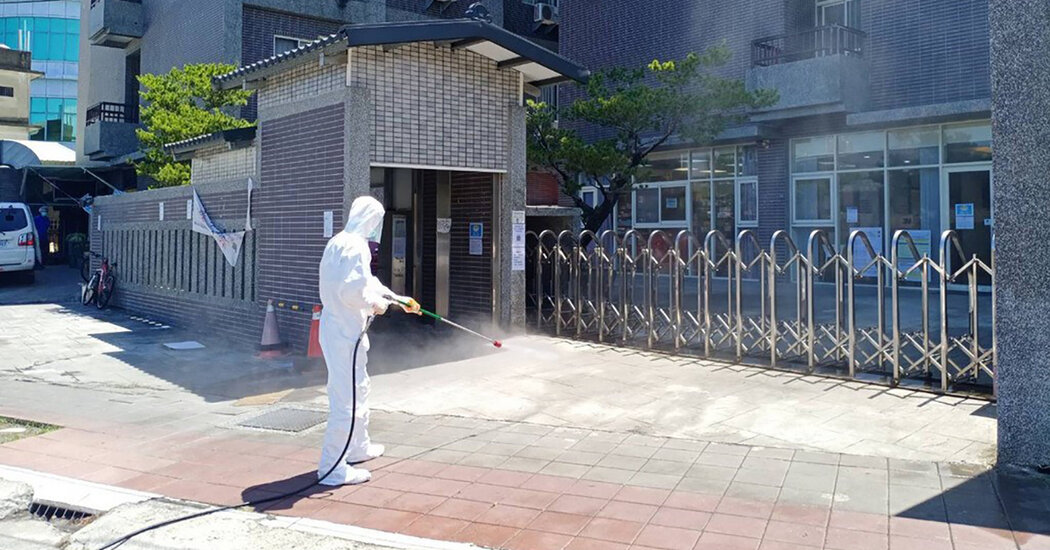
TAIPEI, Taiwan — Officials in a county in Taiwan are facing a storm of criticism after banning foreign laborers from going outside as part of an effort to stamp out a cluster of coronavirus infections among workers at several technology manufacturing companies.Under the measures announced last week by the authorities in the central county of Miaoli, thousands of migrant workers, mostly from Vietnam and the Philippines, are prevented from leaving their dormitories except to travel to and from their jobs at high-tech factories. Some workers expressed concern that the conditions in the cramped dormitories, where as many as six people share a room, could spread the virus further.Other workers who were in close contact with infected colleagues have been sequestered at quarantine centers. In some of those facilities, activists say that workers were served spoiled food or had no running water.Officials have not said how long the restrictions will be in place. At a news briefing last week, Hsu Yao-chang, the Miaoli County magistrate, dismissed migrant workers’ complaints.“You tested positive, and even died because of the virus,” he said. “Why talk about human rights now?”On Friday, Miaoli County reported 26 new infections, mostly among migrant workers, bringing the total confirmed cases related to the factories to more than 450, according to the Taiwan Centers for Disease Control. At the hardest-hit company, King Yuan Electronics, a testing and packaging company for semiconductor chips, more than 300 cases have been found.Some workers said they understood the reasons for the restrictions, but argued that they singled out foreign workers. Taiwanese employees, most of whom work as managers and supervisors at the factories, have been permitted to come and go at will, many foreign workers said.“It is discrimination,” John Ray Tallud, 29, a Filipino equipment engineer at King Yuan Electronics, said in a telephone interview from his dormitory. “Local Taiwanese can go outside any time.”Throughout the pandemic, migrant workers have been among the most vulnerable groups around the world. Singapore barred hundreds of thousands of low-paid foreign workers from leaving their dormitories for months after major outbreaks last year. Farm laborers in the United States were deemed essential and continued to work in the fields shoulder-to-shoulder, even as many became infected.Until recently, Taiwan was an exception — a Covid-free island for most of the pandemic, with strict border controls that made it difficult for companies to bring in more migrant laborers. As a result, labor activists say that the existing migrant work force — more than 700,000 workers, most from Southeast Asian countries — had gained bargaining power with their employers.That changed with the recent outbreak. Migrant-labor advocates have criticized the Miaoli government for provoking further fear and stigmatization of foreign workers. Many said that the order exposed longstanding discrimination against the workers, who have become an essential, if largely invisible, pillar of Taiwan’s economy — particularly its crucial high-tech industries.“This is a clear case of injustice,” said Chang Cheng, founder of 4-Way Voice, a multilingual publication for migrant workers in Taiwan. “When we talk about Taiwan’s most important industries, they would not be able to survive without these foreign workers.”

Read more →

High Hopes for Johnson & Johnson’s Covid Vaccine Have Fizzled in the U.S.

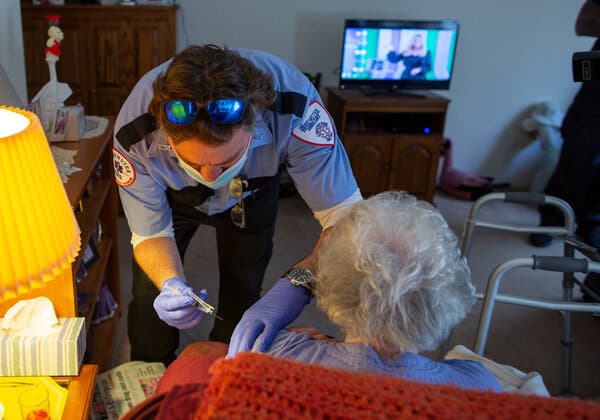
Production problems and a brief pause on its use kept the one-dose vaccine from becoming the game changer that health officials across the country believed it would be.WASHINGTON — When Johnson & Johnson’s single-dose coronavirus vaccine was authorized for emergency use in late February, ​it was seen as a breakthrough for reaching vulnerable and isolated Americans, a crucial alternative to vaccines that require two shots weeks apart and fussier storage. It was soon popular on college campuses, in door-to-door campaigns and with harder-to-reach communities that often struggle with to access health care.But with only 11.8 million doses administered in the United States so far — less than 4 percent of the total — the “one and done” vaccine has fallen flat. States have warned for weeks that they may not find recipients for millions of doses that will soon expire, partly because the vaccine’s appeal dropped after it was linked to a rare but serious blood-clotting disorder and injections were paused for 10 days in April.The vaccine took another hit last week, when regulators told Johnson & Johnson that it should throw out tens of millions of additional doses produced at a plant in Baltimore because they might be contaminated. The diminished supply and enthusiasm for the shot mean that its role in the United States is fading fast, even though millions of Americans have yet to be vaccinated.“It’s just not what I think anybody would have hoped it would be when it came out,” said Dave Baden, the chief financial officer of the Oregon Health Authority.Health officials in a number of other states presented a similarly discouraging picture. The pause on the Johnson & Johnson vaccine, they said, effectively kicked it aside for good; only about 3.5 million doses have been used since the pause was lifted on April 23. Kim Deti, a spokeswoman for the Wyoming Health Department, said the graph of uptake in her state told the vaccine’s story: a significant climb in the early weeks of its rollout, followed by a plateau that began around the pause.State officials had initially hoped the Johnson & Johnson shot would be a workhorse: a versatile, easy-to-store tool they could stockpile at mass vaccination sites, quickly reaching thousands of people they would not need to track down for a second dose. But after demand dropped, their goals grew more modest.It is being used in a smaller-bore fashion this week at the Fiesta festival in San Antonio, the College World Series in Omaha, a Juneteenth celebration in Johnstown, Pa., and an aquarium in Long Beach, Calif. At a food bank in Reno, Nev., 12 doses of the Johnson & Johnson vaccine were administered on Thursday, said Jocelyn Lantrip, the director of marketing and communications for the Food Bank of Northern Nevada.Administering a Johnson & Johnson vaccine in Leominster, Mass., in April. Injections of the company’s shot were paused that month after it was linked to a rare but serious blood-clotting disorder.CJ Gunther/EPA, via ShutterstockBetween the small number of doses distributed and the lack of interest in them, public health experts say, the United States missed a critical opportunity to address health disparities with a vaccine that should have been ideal for reaching vulnerable populations. Dr. Chip Riggins, a regional medical director who oversees vaccine events in south central Louisiana, said that few organizers requested the shot anymore, even in a state with one of the lowest vaccination rates in the country.“In the early days of J&J, working with the African American community and the churches, the faith community here, it was a very, very popular option,” Dr. Riggins said. “It pains me that it isn’t being accepted like it was before the pause.”Dr. José R. Romero, the Arkansas health secretary, called the shot’s fast decline a “lost opportunity” for reaching the vulnerable in his state.“This is a vaccine that was very well-suited for populations where we have problems getting into,” he said. “We’re now at the point where it’s five people or three people; it doesn’t matter, we’ll open a vial.”Dr. Riggins said he had limited success in recent months sending the vaccine to churches, casinos and even gas stations, including one in LaPlace, La., where organizers offered the shot on Thursday. An international crew on a ship was elated to receive their shots last weekend, Dr. Riggins said. But not being able to fully protect more people with just a single dose, he added, was hindering the state’s progress.Johnson & Johnson’s decline in the United States has dovetailed with decreasing demand for Covid vaccines overall. Nearly 30 million doses of the Pfizer-BioNTech vaccine are sitting unused, as are about 25 million of Moderna’s. But a total of 135 million people have been fully immunized with those vaccines, 11 times more than with Johnson & Johnson’s. The two-dose vaccines have a higher efficacy rate overall — roughly 95 percent versus 72 percent for Johnson & Johnson’s — but studies showed that all three were highly effective at preventing hospitalization and death.Alex Gorsky, Johnson & Johnson’s chief executive, said last week that he was still hopeful that the vaccine, which has been used in 26 countries so far, would help contain the pandemic overseas. The company has promised up to 400 million doses to the African Union. Separately, Covax, the global vaccine-sharing program, is supposed to receive hundreds of millions of doses.A mother receiving a Johnson & Johnson vaccine at a migrant camp in Lesbos, Greece, this month. As a precaution, European Union authorities decided to pull back millions of the company’s doses made at a troubled plant in Baltimore.Alkis Konstantinidis/Reuters“We still believe that this is going to be a very important tool in the overall armamentarium,” Mr. Gorsky said at an event hosted by The Wall Street Journal.But manufacturing problems at a factory in Baltimore run by Emergent BioSolutions, Johnson & Johnson’s subcontractor, have had serious consequences for the vaccine. Because of a major production mishap that resulted in a two-month shutdown in operations, Johnson & Johnson has essentially been forced to sit out the brunt of the pandemic in the United States while Pfizer and Moderna, the other federally authorized vaccine makers, provided almost all the nation’s vaccine stock.Johnson & Johnson has had to throw out the equivalent of 75 million doses, and the regulatory authorities in Canada, South Africa and the European Union also decided to pull back millions more doses made at the Baltimore plant. The company has been able to deliver only one-fourth of the 100 million doses it promised the federal government by the end of this month.Dr. Anne Zink, Alaska’s chief medical officer, said that in her state, Johnson & Johnson’s shot had become a victim of its own timing. By late February, when it was authorized by the Food and Drug Administration, Alaska had figured out how to get two-dose vaccines to remote areas, leaving the one-shot regimen less crucial than she had initially imagined.Dr. Clay Marsh, West Virginia’s Covid-19 czar, said that the pause and Johnson & Johnson’s later authorization — more than two months after Pfizer’s and Moderna’s — deprived it of a “halo effect.” By the time West Virginia had an ample supply of all three vaccines, he said, “people started to get this concept that maybe there’s something better about being immunized with Pfizer and Moderna.”The Johnson & Johnson shot had also suffered from a “social network effect,” said Andrew C. Anderson, a professor of public health at Tulane University who researches vaccine hesitancy. Most Americans who were inoculated in the early months of the vaccine campaign received Moderna and Pfizer shots, and so their friends and family were less likely to deviate and accept a different brand.In Louisiana, hospitals in the New Orleans area have started offering the Johnson & Johnson shot to people on their way out of the emergency room; the thinking is that people will be more likely to accept the vaccine when a doctor who has treated them asks them to take it. And in Arkansas, where only a third of the population is fully vaccinated, state officials are offering Johnson & Johnson doses to agriculture, manufacturing, wastewater and poultry workers, with gift certificates for hunting and fishing licenses as a reward.Dashonda Tatum checking bottles during a vaccination event at a gas station in LaPlace, La., on Thursday.Emily Kask for The New York Times“I don’t think that the book on J&J is closed,” said Dr. Joseph Kanter, Louisiana’s top health official. “It’s just not going to be a game changer.”In West Virginia, officials are now hoping to use up some 20,000 doses of the shot at summer fairs and festivals and in parks, Dr. Marsh said. And in Oregon, Mr. Baden, the state health authority official, said that providers were working to exhaust about 150,000 doses in correctional facilities and higher-throughput sites in Portland. The sharp drop in interest, he said, was “tragic.”Onisis Stefas, the chief pharmacy officer at Northwell Health, New York State’s largest health care provider, said he was still working through the system’s original allocation of Johnson & Johnson from March — a sign that demand had shriveled long ago. Doctors’ offices have asked for as few as 10 doses at a time instead of the pack of 50 the vaccine typically comes in.In Michigan, where more than 200,000 Johnson & Johnson doses sit unused, officials are racing to redistribute the vaccine to high-volume sites in hopes of administering them before they expire.“It’s just kind of one after another negative news about the vaccine,” said Dr. Joneigh S. Khaldun, the chief medical executive in the state.Sharon LaFraniere

Read more →

For a Science Reporter, the Job Was Always About the People

In two decades covering medicine for The New York Times, the people I met, and the truths they revealed, have always stayed with me.“I would like to have lived longer, worked longer,” Sister Mary Andrew Matesich, a Catholic nun, told me in 2004. But, she said, “It’s not the hand I’ve been dealt.”She had breast cancer that had spread, and she had volunteered for experimental treatments, knowing they would probably not save her but hoping the research would help other patients.“I wouldn’t be alive today if other women hadn’t been in clinical trials,” she said.She died about a year after we spoke. She was 66.In 22 years of writing about medicine for The New York Times, I’ve covered births, deaths, diseases, new treatments that worked and some that failed, bold innovations in surgery and countless studies written up in medical journals. The goal has always been to provide clear information that readers would find useful and interesting, and to show the human side, what the news might mean for patients. Reporting on Covid in the past year, my work focused on vaccines and treatments, and also people with other serious illnesses who missed out on care because of the pandemic.Today is my last day as a staff writer at The Times. As I head into retirement, what stays with me most vividly are the people: their faces, their voices, their stories, the unexpected truths they revealed — sometimes after I put my notebook away — that shook or taught or humbled me, and reminded me that this beat is about much more than all the data I had tried to parse over the decades. It is a window into the ways that illness and injury can shape people’s lives, and the tremendous differences that advances in medicine can make, for those who have access to them.Many who spoke with me had suddenly become what we all fear turning into — patients — and faced tough situations. None were looking for attention, but they consented to interviews in the hopes that their stories might help or encourage other people.Tom and Kari Whitehead invited me into their home in 2012 to meet their daughter, Emily, then 7, who had been near death from leukemia when they gambled on an experimental treatment that genetically altered some of her cells. She was the first child to receive it. During our visit seven months after she was treated, she was doing somersaults and had decorated the family’s Christmas tree with a naked Barbie doll. Emily is 16 now, and the treatment she received was approved by the Food and Drug Administration in 2017.Other stories were achingly instructive. A woman described her painful, aggressive cancer, caused by a sexually transmitted virus, but needed her name left out because she believed her mother-in-law would call her a “slut” if she learned the diagnosis.A young former Marine, with a brain injury and severe damage to his face from a bomb in Iraq, said he had had a girlfriend before his deployment, and they had talked about getting married when he came back. “But I didn’t come back,” he said.Moments of kindness and wisdom stand out, too. A physician, pointing out that a little extra time for a cancer patient could mean being there for a wedding or graduation, forever softened my science writer’s cynicism about treatments that might add just months to a person’s life.In the middle of the night, I accompanied a transplant team assigned to recover organs, with parental consent, from a young woman who was brain-dead from a drug overdose. The team members slipped into a waiting room, taking special care to make sure that the relatives would not have to see the ice chests that would carry the young woman’s organs, including her heart.Looking for help with an article in January, I told Dr. James Bussel, an expert on blood disorders at Weill Cornell Medicine, about a woman who had developed a severe bleeding problem after a Covid vaccination. He surprised me by asking for the family’s phone number, so he could offer to help. Guided by Dr. Bussel, the woman’s doctors altered her treatment, a course change that the patient believes saved her life. Since then, Dr. Bussel has provided similar help in about 30 to 40 other cases of this rare disorder around the country.When I asked why he was willing to get involved, he said he had become a doctor to help people, and added, “I feel like I have this specialized knowledge and it would be silly to waste it, if I could make a contribution and help somebody.”In a smaller way, I’ve had similar aspirations. I’ve had the chance to do work that I believe is valuable, and that I hoped might do some good. Reporting for The Times has been a license to meet fascinating people and ask them endless questions. I am in debt to everyone who took the time to talk to me, and I hope I’ve done their stories justice.

Read more →

The Maldives Lured Tourists Back. Now It Needs Nurses.

The island nation kept Covid cases low, and its resorts open, for much of the pandemic. But a recent surge exposed its overreliance on expatriate health workers.MALÉ, Maldives — The largest Covid-19 treatment facility in the Maldives has nearly 300 beds and a steady supply of oxygen. But as the country reported some of the world’s highest caseloads per capita last month, Covid wards ran low on another essential resource: employees.“At worst, we had one nurse to attend to 20 patients in the general wards,” said Mariya Saeed, the head of the Hulhumalé Medical Facility in Malé, the capital. “We needed human resources to provide proper care to the many bedridden elderly, but the nurses were exhausted.”The pandemic has triggered shortages of health workers around the world, forcing governments to scramble. Spain, for instance, launched an emergency plan last year to recruit medical students and retired doctors for Covid duty. And in India last month, Prime Minister Narendra Modi asked local officials to start recruiting final year medical students.But the Maldives, an archipelago of about 1,200 islands in the Indian Ocean, faces unique challenges. It can’t easily call up masses of students because it has only one university with a school of medicine. And it can’t rely just on its citizens, because its health care system depends largely on foreign workers. Many of those doctors and nurses come from India, a country that is facing its own gargantuan outbreak.The Hulhumalé Medical Facility, in Malé, shown in another image from the government, is turning to volunteers to help care for patients.Health Emergency Operations CenterOne result is that the Maldives, which has otherwise tackled the pandemic with meticulous attention to detail, isn’t sure how to staff its hospitals for the next crisis.“We have spoken to countries like Bangladesh and India” about recruiting their doctors and nurses, President Ibrahim Mohamed Solih told reporters last month. “But they are unable to provide any assistance due to their own Covid situations.”The Maldives, a Muslim-majority nation with a population of about 540,000, has styled itself a model of pandemic response for small countries. Using aggressive contact tracing, and relying on dispersed island geography to slow outbreaks, the government kept its Covid caseload low enough to lift curbs on domestic movements and lure international tourists back to its luxury resorts, a mainstay of the economy. In April it allowed Ramadan feasts and nationwide council elections to go ahead as usual.“You never know what will happen tomorrow,” Thoyyib Mohamed, the managing director of the country’s official public relations agency, told The New York Times in February. “But for the time being, I must say: This is a really good case study for the entire world, especially tropical destinations.”Though 59 percent of the population has received at least one dose of a Covid-19 vaccine, the recent surge took a heavy toll. Nearly half of the country’s 200 Covid-19 deaths during the entire pandemic were reported in May.Healthcare workers taking swab samples in Malé. The country’s health care system depends heavily on foreign doctors and nurses. Ahmed Shurau/Agence France-Presse — Getty ImagesMany people in Malé now have someone in their extended families who has died, said Marjan Montazemi, the Unicef representative to the Maldives. “Because the numbers are not the same as in other countries, it doesn’t attract that much attention,” she said. “But for the country it has been quite difficult.”Officials in the Maldives have not confirmed how variants may have influenced the latest outbreak, but local doctors say the Delta variant, first detected in neighboring India, likely played a role.As cases surged to more than 1,500 a day last month, hundreds of Covid-19 patients descended on the Hulhumalé Medical Facility. . Despite being built last year for the purpose of treating Covid patients, the facility — staffed with 16 doctors and 89 nurses — was not ready.“We were always prepared for a possible surge, but a wave this sudden and massive was just unexpected,” said Nazla Musthafa, a health adviser to the government.To compensate for a shortage of doctors and nurses, Maldives National University’s medical school — which opened in 2019 and has a total of 115 students — sent dozens of medical and nursing students to help work in Malé’s Covid wards. The government also called nurses out of retirement and drafted volunteers with no medical experience.Ms. Saeed, the head of the Hulhumalé Medical Facility, said that volunteers mostly helped patients go to the toilet, roll over in bed, maneuver wheelchairs and oxygen cylinders, and perform other basic functions. She said volunteers wore protective gear but that there was no time to screen them for Covid-19.President Solih, middle, shown in an image provided by his office, visited the Hulhumalé facility, where the government plans to build a ward with 270 more beds. The President’s Office Republic of MaldivesOne volunteer, Rizna Zareer, 35, said she mainly provided moral support to patients who were not allowed to receive visitors.“We were their family, and I saw them that way, too,” she said.The shortage of medical workers is so bad that lab technicians involved in contact tracing must work around the clock, a team of World Bank experts said in a statement.The bottleneck highlights a dependence on foreign health workers that the government knew was a problem even before the pandemic hit.In 2018, expatriates made up all but a fifth of the Maldives’s 900 or so doctors and more than half of its nearly 3,000 nurses, leading to high turnover that affects the quality of health care, a government report said.Other countries, including Ireland, Israel and New Zealand, also rely heavily on expatriates to work in health care. But unlike them, the Maldives isn’t rich. That means it can’t compete as aggressively to lure foreign doctors and nurses, especially during a pandemic that has left virtually every nation’s health work force short-handed.The President’s Office Republic Of MaldivesS. Irudaya Rajan, the chairman of the International Institute of Migration and Development, a research organization based in southern India, said that he expected countries that send large numbers of health workers abroad, including India and the Philippines, to tweak policies to keep more workers at home.The Maldives needs a better strategy for securing a steadier supply of expatriate doctors and nurses, Mr. Rajan said. One option would be to sponsor Indian medical students in India and require them to work in the Maldives for a few years after graduating, he said.“One lesson every country should learn from Covid-19 is: Don’t exploit poor countries like India and the Philippines,” Mr. Rajan said. “Invest in them and their people, and they can benefit you.”A spokesman for President Solih of the Maldives did not respond to requests for comment.The daily average of new cases in the Maldives is now about 260, or less than a quarter what it was during the peak last month. But as of Friday, the country still had about 21,000 active cases, and a 12-hour curfew implemented in Malé last month remained in effect. The call to prayer still rings out five times a day from the city’s mosques, but worshipers are allowed inside only in small numbers.The government recently announced a plan to build an additional 270-bed ward at the Hulhumalé Medical Facility to deal with future outbreaks and boost the country’s total bed capacity for Covid patients from 460 to 730. The main challenge for the new ward may be figuring out how to staff it.Mr. Solih told reporters last month that his health minister, Ahmed Naseem, hoped to recruit 40 doctors and 100 nurses from India and Bangladesh by the end of June. But at the same news conference, Mr. Naseem tried to lower expectations.“Currently it is difficult to employ people from India, Bangladesh and Sri Lanka,” he said. “Sri Lanka, especially, is near impossible. I have been trying for many days.”An Air India flight carrying doses of the Covishield vaccine, made in India, is seen after its arrival in Malé in January.Agence France-Presse — Getty ImagesMaahil Mohamed reported from Malé, the Maldives, and Mike Ives from Hong Kong.

Read more →