F.D.A. Upgrades Recall of Some Cal Yee Chocolates to Highest Risk Level

The agency warned that the products, made by Cal Yee Farm, could have potentially serious or even deadly consequences because the packages were mislabeled. No illnesses have been reported.The Food and Drug Administration has upgraded its December recall of some chocolate- and yogurt-covered products made by Cal Yee Farm to its highest level of severity.The agency warned this week of potentially serious, or even deadly, consequences from eating the products for those who have an allergy or sensitivity to almonds, milk, sesame, soy, wheat and the synthetic dye FD&C No. 6.Cal Yee Farm of Suisun Valley, Calif., began voluntarily recalling some of its products on Dec. 12 because they were mislabeled, and contained ingredients that were not listed on their packages.No illnesses have been reported. The recall began after an F.D.A. inspection of Cal Yee Farm’s manufacturing plant.The products subject to the highest-level recall include: certain packages of dark chocolate almonds, dark chocolate apricots, dark chocolate raisins and dark chocolate walnuts. Some packages of New Orleans hot mix, Cajun sesame hot sticks, tropical trail mix and yogurt-coated almonds were also affected.Products were sold under the Cal Yee’s or Cal Yee Farm brands.The recalled products were made by Cal Yee Farm in Suisun Valley, Calif.GoogleCal Yee Farm said that the affected products were sold at two retail stores, in Suisun Valley, Calif., and Placerville, Calif.; and through online and phone orders to Arizona, California, New Mexico, Ohio, Oregon, Pennsylvania, Tennessee, Texas and Virginia.The company said that customers with those allergies and sensitivities who bought the affected products should not eat them. It recommended throwing them away, or returning them to Cal Yee Farm for a full refund. It said the labeling problem has since been fixed.The F.D.A. has three classifications for recalls, and this week’s reclassification, or update, is a standard part of the process, according to the agency.Class I, the most severe notice that was assigned to Cal Yee, is “a situation in which there is a reasonable probability that the use of or exposure to a violative product will cause serious adverse health consequences or death,” the agency said.The Food Allergen Labeling and Consumer Protection Act of 2004 identifies milk as one of eight major food allergens. The others are crustacean shellfish, eggs, fish, peanuts, soybeans, tree nuts and wheat.

Read more →
Health Programs Shutter Around the World After Trump Pauses Foreign Aid

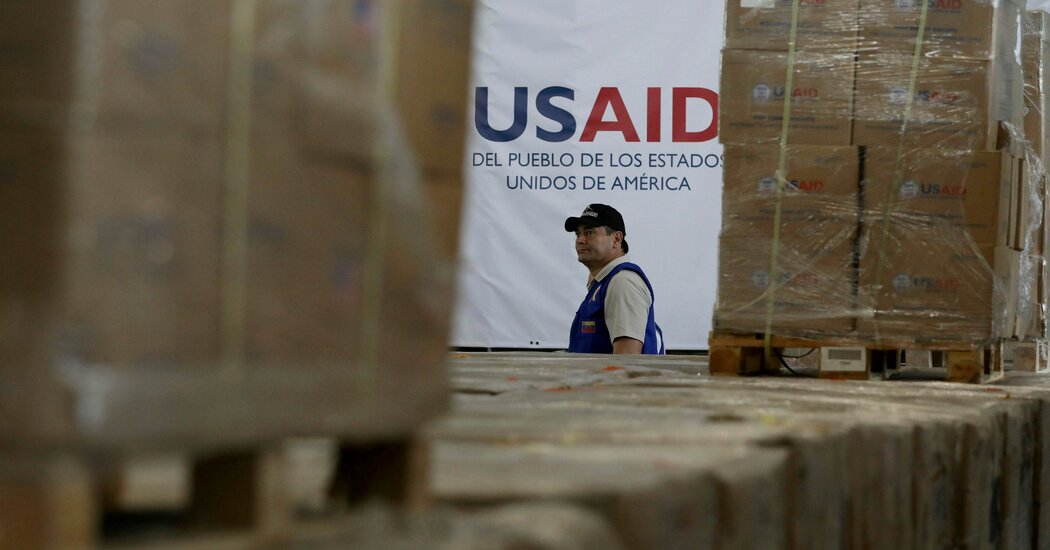
Lifesaving treatment and prevention programs for tuberculosis, malaria, H.I.V. and other diseases cannot access funds to continue work.Lifesaving health initiatives and medical research projects have shut down around the world in response to the Trump administration’s 90-day pause on foreign aid and stop-work orders.In Uganda, the National Malaria Control Program has suspended spraying insecticide into village homes and ceased shipments of bed nets for distribution to pregnant women and young children, said Dr. Jimmy Opigo, the program’s director.Medical supplies, including drugs to stop hemorrhages in pregnant women and rehydration salts that treat life-threatening diarrhea in toddlers, cannot reach villages in Zambia because the trucking companies transporting them were paid through a suspended supply project of the United States Agency for International Development, U.S.A.I.D.Dozens of clinical trials in South Asia, Africa and Latin America have been suspended. Thousands of people enrolled in the studies have drugs, vaccines and medical devices in their bodies but no longer have access to continuing treatment or to the researchers who were supervising their care.In interviews, more than 20 researchers and program managers described the upheaval in health systems in countries across the developing world. Most agreed to be interviewed on the condition that their names not be published, fearing that speaking to a reporter would jeopardize any possibility that their projects might be able to reopen.Many of those interviewed broke down in tears as they described the rapid destruction of decades of work.We are having trouble retrieving the article content.Please enable JavaScript in your browser settings.Thank you for your patience while we verify access. If you are in Reader mode please exit and log into your Times account, or subscribe for all of The Times.Thank you for your patience while we verify access.Already a subscriber? Log in.Want all of The Times? Subscribe.

Read more →

These Settings Aren’t Real. But for Dementia Patients, What Is?

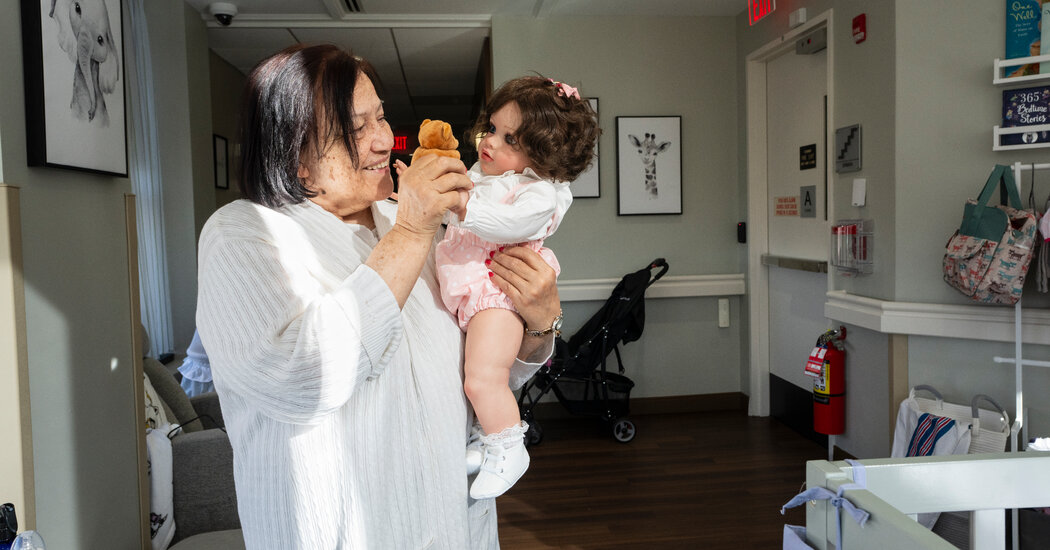
Fake nurseries and town squares seem to comfort patients. But some experts wonder whether they are patronizing, even infantilizing.The nursery at RiverSpring Residences in the Bronx is a sunny, inviting space outfitted with a bassinet, a crib with a musical mobile, a few toys, bottles, picture books for bedtime reading and a rack of clothing in tiny sizes.The other morning, Wilma Rosa was there trying to soothe one of its cranky, small charges. “What’s the matter, baby?” she crooned, patting the complainer’s back. “You OK? I want you to go to sleep for a little while.”Ms. Rosa, 76, a memory care resident in assisted living, visits the nursery daily. She has had plenty of experience with babies.She was the oldest girl of eight children, so she handled lots of family responsibilities, she told Catherine Dolan, the facility’s director of life enrichment, who was asking questions to help the memories flow. Later in life, Ms. Rosa worked in a bank and a store; the stories emerged as she cuddled the doll.No actual babies live in this immersive environment, where the fragrance blend includes a talcum scent. Just as no actual sales were taking place at the store down the corridor, another new RiverSpring undertaking.Amid its wooden shelves of clothing, accessories and tchotchkes, the sales clerks were, like Ms. Dolan, staff members trained to interact effectively with residents with dementia.We are having trouble retrieving the article content.Please enable JavaScript in your browser settings.Thank you for your patience while we verify access. If you are in Reader mode please exit and log into your Times account, or subscribe for all of The Times.Thank you for your patience while we verify access.Already a subscriber? Log in.Want all of The Times? Subscribe.

Read more →

New York Doctor Indicted in Louisiana for Sending Abortion Pills There

The case opens a new front in the battle between states that ban abortion and states that support providing abortion anywhere in the country.A state grand jury in Louisiana has indicted a New York doctor for providing abortion pills to a Louisiana resident. The case appears to be the first time criminal charges have been filed against an abortion provider for sending pills into a state with an abortion ban.The charges mark a new chapter in an escalating showdown between states that ban abortion and those that want to protect and expand access to it. It is challenging one of the foremost strategies used by states that support abortion rights: shield laws intended to provide legal protection to doctors who prescribe and send abortion pills to states with bans.The charges were brought against Dr. Margaret Carpenter, who was operating under New York’s telemedicine abortion shield law, which stipulates that New York authorities will not cooperate with prosecutions or other legal actions filed against New York abortion providers by other states.Telemedicine abortion shield laws, which have been adopted by eight states so far, have become a significant avenue for providing access to abortion for women in states with bans without requiring them to leave their state. Doctors, nurse practitioners and other health care providers in states with shield laws have been sending more than 10,000 abortion pills per month to states with abortion bans or restrictions.Legal experts said the case ratchets up the legal wars over abortion and will almost certainly end up in federal court and possibly the Supreme Court. It is expected to become a major test of whether states can apply criminal laws to people acting outside their borders.Since the Supreme Court’s 2022 decision in Dobbs v. Jackson Women’s Health Organization overturning the national right to abortion, the United States has been divided between states that restrict abortion and states that protect abortion.We are having trouble retrieving the article content.Please enable JavaScript in your browser settings.Thank you for your patience while we verify access. If you are in Reader mode please exit and log into your Times account, or subscribe for all of The Times.Thank you for your patience while we verify access.Already a subscriber? Log in.Want all of The Times? Subscribe.

Read more →

Health Officials Struggle to Comply With D.E.I. and Gender Orders

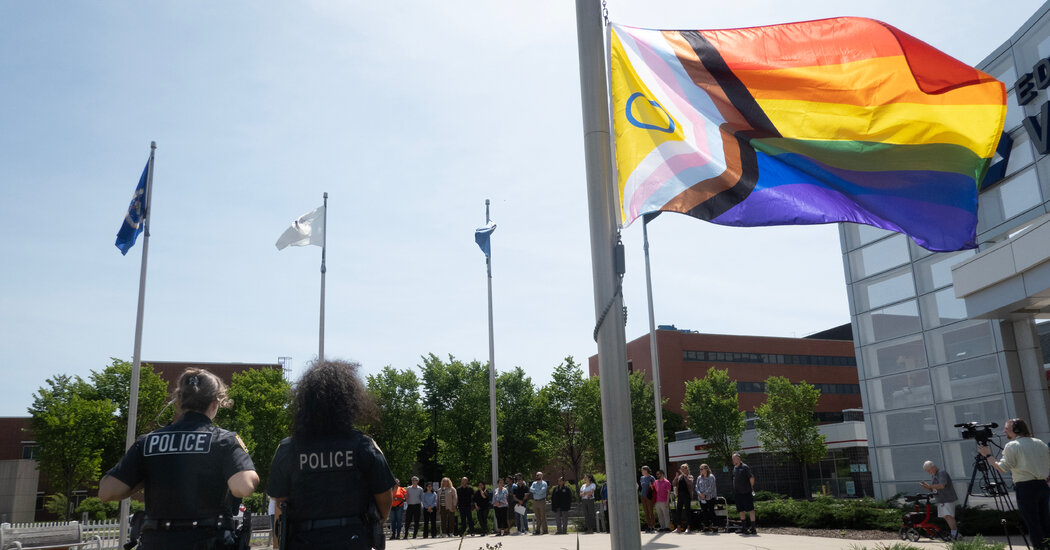
Federal and state health officials and staff members scrambled on Friday to comply with a 5 p.m. deadline by the Trump administration to terminate any programs that promote “gender ideology,” and to withdraw documents and any other media that may do so.Federal workers had already been ordered to halt diversity, equity and inclusion initiatives, to scrub public references to those efforts and to place employees involved in them on administrative leave.At federal health agencies, veterans hospitals, and local and state health departments, compliance took a variety of forms. At the Centers for Disease Control and Prevention, employees hurried to remove terms like “transgender,” “immigrant,” L.G.B.T.” and “pregnant people” from the website.Employees at some VA Hospitals were told that L.G.B.T.Q. flags and other displays were no longer acceptable, according to an administrative email reviewed by The New York Times.Bathrooms at health agencies were to be set aside for use by a single “biological sex,” according to federal directives, and the word “gender” was to be removed from agency forms.The instructions are a 180-degree pivot for health scientists and clinicians, who have worked for years to integrate diversity and equity into research and clinical services, including those for gay, lesbian and transgender individuals.We are having trouble retrieving the article content.Please enable JavaScript in your browser settings.Thank you for your patience while we verify access. If you are in Reader mode please exit and log into your Times account, or subscribe for all of The Times.Thank you for your patience while we verify access.Already a subscriber? Log in.Want all of The Times? Subscribe.

Read more →

Kennedy Says He Will Give HPV Vaccine Lawsuit Proceeds to His Son

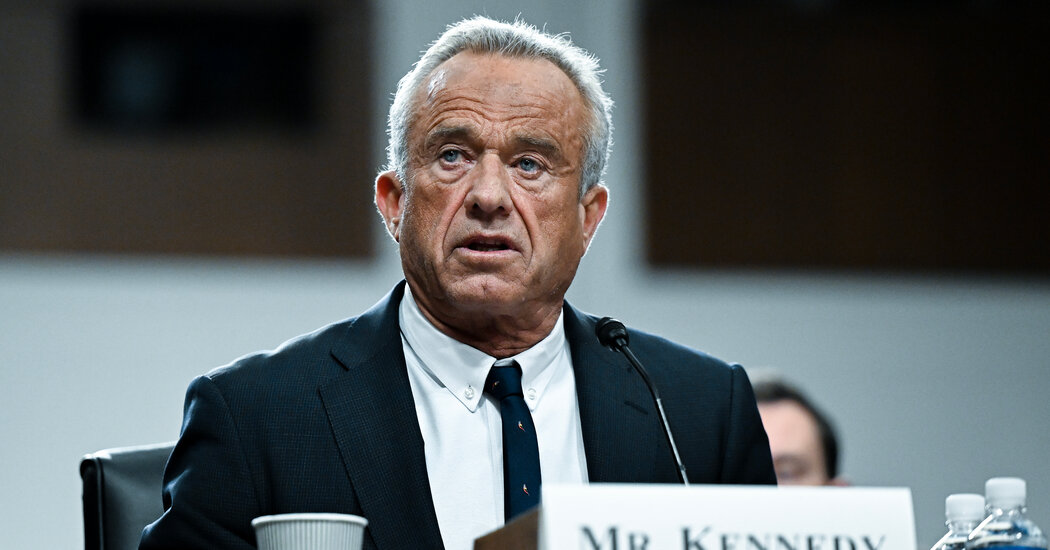
Robert F. Kennedy Jr. also disclosed that he had reached at least one settlement agreement with a company or individual that has accused him of “misconduct or inappropriate behavior.”Robert F. Kennedy Jr. told lawmakers in responses to questions released on Friday that he would divest his interest in litigation against a major HPV vaccine maker and would sign over the financial stake to an adult son.He also disclosed he had reached at least one settlement agreement with a company or individual that had accused him of “misconduct or inappropriate behavior.” No other details were provided.At his two confirmation hearings this week, several Democrat senators assailed his legal work, which included referrals for lawsuits against a vaccine maker. In the ethics agreement he provided to senators as part of the process to become the nation’s health secretary, he stated that he would keep his financial stake in cases that he referred to Wisner Baum, a personal injury law firm based in Los Angeles.Mr. Kennedy told senators on Thursday that he had sent hundreds of cases to the firm for lawsuits against the drug maker Merck claiming injuries from the company’s Gardasil vaccine, which is given to prevent cervical cancer that can be caused by the human papillomavirus, or HPV.After fiery grilling from senators, Mr. Kennedy said on Thursday that he would relinquish his financial stake, but did not elaborate.On Friday, he provided additional details in his written answers to the senators’ questions: “An amendment to my ethics agreement is in process,” Mr. Kennedy wrote. “It provides that I will divest my interest in any such litigation via an assignment to my nondependent, adult son.”We are having trouble retrieving the article content.Please enable JavaScript in your browser settings.Thank you for your patience while we verify access. If you are in Reader mode please exit and log into your Times account, or subscribe for all of The Times.Thank you for your patience while we verify access.Already a subscriber? Log in.Want all of The Times? Subscribe.

Read more →