New research finds gender differences in fear and risk perception during COVID-19

Research from Virginia Tech suggests that men and women worry about the impact of COVID-19 in far different ways. For example, men are more likely to be concerned about financial consequences from COVID-19 while women report greater fear and more negative expectations about health-related outcomes.
The researchers, Sheryl Ball and Alec Smith, conducted an online survey in April 2020 to measure emotions, behaviors and expectations connected to gender and the pandemic.The study was published in Frontiers in Psychology earlier this month.
“We found that women reported a higher fear of the health risks of COVID-19 than men. Men expressed more fear about the economic implications of the pandemic than women,” said Smith.
In the initial days of the pandemic, Ball and Smith were interested in how the COVID-19 pandemic would change people’s economic preferences — things like how willing someone is to take a financial risk or to trust someone. Previous research shows that women are often less willing to take risks than men.
“The average person is probably less afraid of COVID-19 now than in April 2020,” said Ball. “The reason we believe this is that we originally collected data in the beginning, middle and end of April 2020, and we found that fear decreased substantially even during that month. We expect that it has continued to decrease since then.”
“The big takeaway from our research is that people have economic as well as health care concerns about the pandemic,” said Smith. “We know that preventative measures like mask wearing are effective. We think that messages that encourage people to take these preventative measures might want to emphasize not only the health consequences and benefits, but also the economic benefits.”
Professors Sheryl Ball and Alec Smith teach in the Virginia Tech’s Department of Economics, with a focus on behavioral economics.
Story Source:
Materials provided by Virginia Tech. Note: Content may be edited for style and length.

Read more →

Call for healthcare leaders to ensure women and girls have access to safe and affordable menstrual products and health

With evidence estimating that nearly one-fourth of the world’s women and girls face challenges related to menstrual management — including stigma, privacy, and access to affordable materials — a commentary in JAMA reinforces the need to engage the public in understanding the importance of menstrual health. This includes sufficient funding and more research to educate young people, their parents and communities about the process of menstruation, along with the clinicians who serve them.
“A culture of silence around the issues of menstruation needs to be broken,” said Marni Sommer, DrPH, MSN, RN, associate professor of sociomedical sciences at Columbia University Mailman School of Public Health. “Menstrual equity is a human rights and public health issue, with racial, socioeconomic, and sex disparities intertwined,” said co-author Diana J. Mason, PhD, RN, senior policy service professor at the Center for Health Policy and Media Engagement, George Washington University School of Nursing.
Evidence from low as well as high resource countries shows that significant menstruation-related challenges are faced by schoolgirls, displaced adolescent girls and women, as well as women in the workplace, and many of these disparities intensified during the pandemic. Additional data highlight how those affected by homelessness face issues that go beyond access to products, and how they encounter barriers to manage their periods with dignity.
“At a minimum, access to free menstrual products in all public spaces is needed, as Scotland has done. In addition, attention is essential to assure all people with periods have access to safe, private spaces with water and soap for changing their menstrual products in comfort,” noted Sommer.
To promote menstrual equity Sommer and Mason make the following points: Policy makers in the U.S. should eliminate state sales taxes on menstrual products. High-quality menstrual products should be available for free in schools, prisons, homeless shelters, and health care facilities. Health professionals should advocate for free access to menstrual products. The U.S. should open the door for coverage of menstrual products under Medicaid and propose increasing the monthly benefit for adolescent girls and women of childbearing age under The Temporary Assistance for Needy Families. We need to underscore the relevance of menstrual health and hygiene to all UN 17 Sustainable Development Goals.”Women, adolescent girls, and all people with periods in the U.S. and around the world must be able to manage their periods with dignity and comfort, without stigma or shame,” said Mason.
Story Source:
Materials provided by Columbia University’s Mailman School of Public Health. Note: Content may be edited for style and length.

Read more →

A game changer: Virtual reality reduces pain and anxiety in children

It isn’t a matter of one needle puncture. Many children coming through the doors of Children’s Hospital Los Angeles are seen for chronic conditions and often require frequent visits. Painful procedures — like a blood draw or catheter placement — can cause anxiety and fear in patients. Now, a study published in JAMA Network Open shows that virtual reality can decrease pain and anxiety in children undergoing intravenous (IV) catheter placement.
For nearly two decades, Jeffrey I. Gold, PhD, an investigator at The Saban Research Institute of Children’s Hospital Los Angeles, has been investigating the use of virtual reality (VR) as a technique to help children undergoing painful medical procedures. His research shows that the technology can have powerful effects. VR works so well that Children’s Hospital Los Angeles now offers it routinely for blood draws.
“Some patients don’t even realize that their blood is being drawn,” says Dr. Gold, who is also a Professor of Clinical Anesthesiology, Pediatrics, and Psychiatry & Behavioral Sciences at The Keck School of Medicine of USC. “Compare that to a child who is panicking and screaming, and it’s a no-brainer. We want kids to feel safe.”
In his recent publication, Dr. Gold’s team reports the results of a study to test whether VR could prevent pain and distress for patients undergoing peripheral intravenous catheter (PIVC) placement. The game is simple, but requires focus and participation. Patients in one group used VR throughout the procedure, while those in another group received standard of care, which includes simple distraction techniques and the use of a numbing cream. The patients who used VR reported significantly lower levels of pain and anxiety.
“We can actually reduce pain without the use of a medication,” says Dr. Gold. “The mind is incredibly powerful at shifting focus and actually preventing pain from being registered. If we can tap into that, we can make the experience much better for our kids.”
But the story is bigger than that.

Read more →

In hot weather, outdoor laborers work less — when economy is growing

A new analysis suggests that U.S. workers in industries that expose them to weather conditions work fewer hours per day when temperatures surpass 90 degrees Fahrenheit — but only during periods of economic growth. Matthew Neidell of Columbia University, New York, and colleagues present these findings in the open-access journal PLOS ONE on August 25, 2021.
Earlier research conducted by Neidell and co-author Joshua Graff Zivin of the University of California, San Diego, revealed an association between extreme heat and fewer hours worked by people in weather-exposed conditions in the U.S. However, that analysis was conducted during a four-year period of economic growth, so it was unclear whether the same relationship would hold up over time or under different economic conditions.
To clarify, Neidell, Graff Zivin, and colleagues used historical weather records and data from the American Time Use Survey to analyze the relationship between time worked per day and daily temperatures for the period spanning 2003 through 2018. They focused on high-risk laborers, meaning workers in industries that expose them to weather conditions, such as agriculture, construction, and manufacturing.
The analysis showed that, when the U.S. economy was in a period of growth, such as from 2003 to 2007 and from 2015 to 2018, high-risk laborers worked fewer hours on high-heat days. Specifically, on days above 90 degrees, a high-risk laborer worked 2.6 minutes less on average for every degree above 90 than they worked on a 90-degree day.
However, during the Great Recession, from 2008 to 2014, there was no association between high-heat days and daily hours worked — perhaps, the authors suggest, because workers faced higher competition for employment and employers were less flexible.
The researchers also used climate and economic projections to predict the future effects of this relationship between heat and work time. They estimated that, in a “business-as-usual” scenario where greenhouse-gas emissions remain high, lost wages due to high-heat days could add up to $80 billion per year by 2090.
Further research will be needed to confirm and clarify these findings and predictions, which could help inform policies and adaptations to address high-heat labor conditions.
The authors add: “Our findings support previous results that the amount of time people work is affected by temperature, but the magnitude of this relationship depends on where we are in the business cycle. During hard economic times, work time is less sensitive to temperature changes, suggesting the relative bargaining power of employers and employees seems to influence who bears the costs of extreme heat.”
Story Source:
Materials provided by PLOS. Note: Content may be edited for style and length.

Read more →

COVID-19 is most transmissible 2 days before and 3 days after symptoms appear

Each wave of the pandemic has underscored just how gravely contagious COVID-19 is, but there is less clarity among experts on exactly when — and to what extent — infected individuals are most likely to spread the virus.
Now, a new study co-led by a Boston University School of Public Health (BUSPH) researcher has found that individuals infected with the virus are most contagious two days before, and three days after, they develop symptoms.
Published in the journal JAMA Internal Medicine, the study also found that infected individuals were more likely to be asymptomatic if they contracted the virus from a primary case (the first infected person in an outbreak) who was also asymptomatic.
“In previous studies, viral load has been used as an indirect measure of transmission,” says Dr. Leonardo Martinez, assistant professor of epidemiology at BUSPH, and who co-led the study with Dr. Yang Ge, research assistant in the Department of Epidemiology & Biostatistics at the University of Georgia College of Public Health. “We wanted to see if results from these past studies, which show that that COVID cases are most transmissible a few days before and after symptom onset, could be confirmed by looking at secondary cases among close contacts.”
Martinez and colleagues conducted contact tracing and studied COVID-19 transmission among approximately 9,000 close contacts of primary cases in the Zhejiang province of China from January 2020 to August 2020. “Close” contacts included household contacts (defined as individuals who lived in the same household or who dined together), co-workers, people in hospital settings, and riders in shared vehicles. The researchers monitored infected individuals for at least 90 days after their initial positive COVID test results to distinguish between asymptomatic and pre-symptomatic cases.
Of the individuals identified as primary cases, 89 percent developed mild or moderate symptoms, and only 11 percent were asymptomatic — and no one developed severe symptoms. Household members of primary cases, as well as people who were exposed to primary cases multiple times or for longer durations of time, had higher infection rates than other close contacts. But regardless of these risk factors, close contacts were more likely to contract COVID-19 from the primary infected individual if they were exposed shortly before or after the individual developed noticeable symptoms.
“Our results suggest that the timing of exposure relative to primary-case symptoms is important for transmission, and this understanding provides further evidence that rapid testing and quarantine after someone is feeling sick is a critical step to control the epidemic,” Dr. Martinez says.
In comparison to mild and moderate symptomatic individuals, asymptomatic primary individuals were much less likely to transmit COVID to close contacts — but if they did, the contacts were also less likely to experience noticeable symptoms.
“This study further emphasizes the need for vaccination, which reduces clinical severity among people that develop COVID,” says Dr. Martinez.
The study’s senior authors were Dr. Ye Shen of the Department of Epidemiology & Biostatistics at UGA College of Public Health, and Dr. Feng Ling of the Zhejiang Provincial Center for Disease Control and Prevention in Hangzhou, China. The study was co-authored by researchers at SPH, UGA, the Zhejiang Provincial Center for Disease Control and Prevention, the University of Texas School of Public Health, and Tulane University School of Public Health and Tropical Medicine.
Story Source:
Materials provided by Boston University School of Medicine. Original written by Jillian McKoy. Note: Content may be edited for style and length.

Read more →

How firefighters deal with heat stress and fatigue

Searing heat, fireballs and walls of embers. Australian firefighters faced extreme conditions during the 2020 summer bushfires, which claimed the lives of nine firefighters across the country. Now research is drawing on sport performance strategies to better help them combat heat stress and fatigue.
A new study asked more than 470 firefighters how they recover in the field, especially in situations of greatest heat stress. Air and helmet temperatures at residential fires can reach 750C and 190C respectively, while flame temperatures during bushfires can be as high as 1100C.
The study found firefighters generally rely on simple strategies to lower their core body temperature, such as finding shade, drinking water and removing helmets and jackets. However, the research suggests there is potential for better cooling and recovery protocols.
Dr Hugh Fullagar from the Human Performance Research Centre at the University of Technology Sydney (UTS) led the study, which was conducted in partnership with Fire and Rescue NSW — the fourth largest urban fire service in the world.
“NSW’s 7000 firefighters are tasked with protecting the homes and lives of 8 million people from the perils of fire. They have to perform physical tasks in extreme heat while wearing heavily insulated protective clothing, which results in acute physical and psychological fatigue.
“We know from data overseas that more than 75 per cent of firefighters experience heat-related illness symptoms such as headache, sudden muscle cramps, dizziness, nausea, and fainting, and that sudden cardiac death accounts for almost half of all firefighter duty-related fatalities.

Read more →

Sibling's likelihood of autism diagnosis impacted by age gap, study finds

Mothers of children with autism who delayed their subsequent pregnancy by 2.5 to three years reduced the likelihood of their next child also being diagnosed on the spectrum, new research shows.
The Curtin University research in collaboration with the Telethon Kids Institute, published in Autism Research, investigated more than 925,000 births in Denmark, Finland and Sweden including more than 9,300 that resulted in a child later being diagnosed with autism spectrum disorder.
Lead author Professor Gavin Pereira, from Curtin’s School of Population Health, said the research found a significant — and surprising — link between the time between pregnancies and a sibling’s chances of also being diagnosed with autism.
“Our research found that the siblings of children with autism were less likely to be diagnosed on the spectrum if there was a 30 to 39-month gap between both pregnancies,” Professor Pereira said.
“Waiting 2.5 to three years to conceive another child was considered the optimum timeframe, potentially preventing five per cent of cases of autism in Denmark, eight per cent in Finland and nine per cent in Sweden, on average.
“Across the general population, this study also showed that children born to mothers who became pregnant again three months after giving birth had a 50 per cent higher chance of being diagnosed with autism, and those born five years later had a 24 per cent greater chance.”
Professor Pereira said he was surprised to find his research identified an environmental link to autism in addition to documented genetic and biological factors.
“The results of this large-scale, multi-country research may help to inform family planning counselling, particularly for those families that are already at a higher risk because of a genetic history of neurological disease,” Professor Pereira said.
Co-author Associate Professor Helen Leonard, from the Telethon Kids Institute, said the findings were most relevant to families where there was an increased risk of autism.
“However, couples seeking advice on pregnancy spacing should always consult with their medical provider for advice on their individual circumstances,” Associate Professor Leonard said.
“This work was initially spearheaded by researchers at Telethon Kids and is continuing to contribute to our understanding of this challenging condition.”
The high-income countries studied provided universal healthcare and paid parental leave after childbirth, including a maximum of 46 weeks in Denmark, 47 weeks in Finland and 92 weeks in Sweden.
Story Source:
Materials provided by Curtin University. Note: Content may be edited for style and length.

Read more →

Baby detector software embedded in digital camera rivals ECG

University of South Australia researchers have designed a computer vision system that can automatically detect a tiny baby’s face in a hospital bed and remotely monitor its vital signs from a digital camera with the same accuracy as an electrocardiogram machine.
Using artificial intelligence-based software to detect human faces is now common with adults, but this is the first time that researchers have developed software to reliably detect a premature baby’s face and skin when covered in tubes, clothing, and undergoing phototherapy.
Engineering researchers and a neonatal critical care specialist from UniSA remotely monitored heart and respiratory rates of seven infants in the Neonatal Intensive Care Unit (NICU) at Flinders Medical Centre in Adelaide, using a digital camera.
“Babies in neonatal intensive care can be extra difficult for computers to recognise because their faces and bodies are obscured by tubes and other medical equipment,” says UniSA Professor Javaan Chahl, one of the lead researchers.
“Many premature babies are being treated with phototherapy for jaundice, so they are under bright blue lights, which also makes it challenging for computer vision systems.”
The ‘baby detector’ was developed using a dataset of videos of babies in NICU to reliably detect their skin tone and faces.

Read more →

Brain refreshing: Why the dreaming phase matters

Scientists have long wondered why almost all animals sleep, despite the disadvantages to survival of being unconscious. Now, researchers led by a team from the University of Tsukuba have found new evidence of brain refreshing that takes place during a specific phase of sleep: rapid eye movement (REM) sleep, which is when you tend to dream a lot.
Previous studies have measured differences in blood flow in the brain between REM sleep, non-REM sleep, and wakefulness using various methods, with conflicting results. In their latest work, the Tsukuba-led team used a technique to directly visualize the movement of red blood cells in the brain capillaries (where nutrients and waste products are exchanged between brain cells and blood) of mice during awake and asleep states.
“We used a dye to make the brain blood vessels visible under fluorescent light, using a technique known as two-photon microscopy,” says senior author of the study Professor Yu Hayashi. “In this way, we could directly observe the red blood cells in capillaries of the neocortex in non-anesthetized mice.”
The researchers also measured electrical activity in the brain to identify REM sleep, non-REM sleep, and wakefulness, and looked for differences in blood flow between these phases.
“We were surprised by the results,” explains Professor Hayashi. “There was a massive flow of red blood cells through the brain capillaries during REM sleep, but no difference between non-REM sleep and the awake state, showing that REM sleep is a unique state”
The research team then disrupted the mice’s sleep, resulting in “rebound” REM sleep — a stronger form of REM sleep to compensate for the earlier disruption. Blood flow in the brain was further increased during rebound REM sleep, suggesting an association between blood flow and REM sleep strength. However, when the researchers repeated the same experiments in mice without adenosine A2a receptors (the receptors whose blockade makes you feel more awake after drinking coffee), there was less of an increase in blood flow during REM sleep, even during rebound REM sleep.
“These results suggest that adenosine A2a receptors may be responsible for at least some of the changes in blood flow in the brain during REM sleep,” says Professor Hayashi.
Given that reduced blood flow in the brain and decreased REM sleep are correlated with the development of Alzheimer’s disease, which involves the buildup of waste products in the brain, it may be interesting to address whether increased blood flow in the brain capillaries during REM sleep is important for waste removal from the brain. This study lays preliminary groundwork for future investigations into the role of adenosine A2a receptors in this process, which could ultimately lead to the development of new treatments for conditions such as Alzheimer’s disease.
Story Source:
Materials provided by University of Tsukuba. Note: Content may be edited for style and length.

Read more →

Search for Covid's origins stalled, scientists say

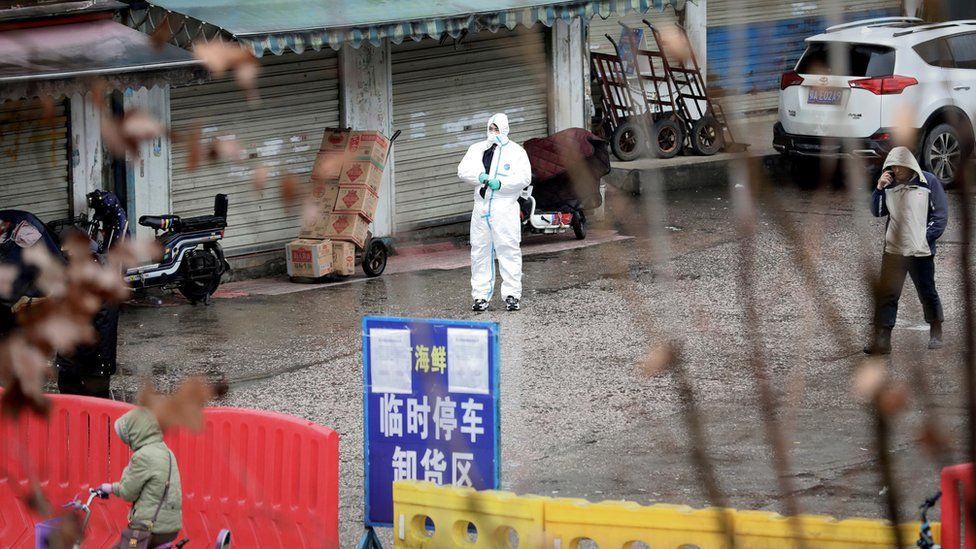
SharecloseShare pageCopy linkAbout sharingimage sourceReuters”The window of opportunity” to conduct crucial studies into how the Covid-19 pandemic started is closing, senior scientists have said. Researchers asked by the World Health Organization to find the cause of the initial outbreak say the process has stalled, in scientific journal Nature,And further delay could make crucial studies “biologically impossible”. They are calling on political and scientific leaders to expedite those studies “while there is still time”. US report on coronavirus origins ‘inconclusive’Scientists weigh up evidence over Covid’s originsCoronavirus: A year of high-speed discoveryDutch virologist Prof Marion Koopmans, a member of the WHO team, told BBC Radio 4’s Inside Science programme the risk of pandemics was increasing. “Because of the way the world is changing – population increase, crowding and more interaction between humans and animals, we need to learn where things go wrong and how we can avoid that in the future,” she said.The WHO team visited Wuhan in January and published a report in March recommending: searching blood banks in China and other countries for antibodies to the virus in blood donated in the months preceding the December 2019 outbreak taking samples from farmed wild animals such as mink and racoon dog that might be the “intermediate host” that allowed the virus to jump species image sourceScience Photo LibraryBut since farmed animals have a limited lifespan and blood banks store donations for a fixed period, the researchers are worried that valuable biological information may already have been lost. The politically contentious issue of whether the virus might have escaped from a laboratory in China had also made some of the work more difficult, Prof Koopmans said.All the lines of inquiry were relevant, she said, “but when accusations get mixed with the scientific questions, things become quite difficult”.In their report, however, the team concluded while it was impossible to determine how the virus had infected the first humans, “all available evidence” suggested it had a natural animal origin and was “not a manipulated or constructed virus”.Sparked controversyThe closest relative to Sars-Cov-2, Prof Koopmans said, was a virus found in wild bats. But there remained a significant “time gap” in the evolution of that virus into the one that infected humans that could be explained only by taking samples from the animals that may have provided an “intermediate host”. The report itself, however, sparked controversy that now threatens to overshadow the science. The team essentially “graded” the different possible origin scenarios. image sourceReutersMost likely, they said, was a farmed animal, possibly a wild species on a fur farm, was that “intermediate host” between bats and humans. And the possibility the virus leaked from a laboratory in China was “highly unlikely”.But this led some scientists and commentators to suggest the “lab-leak theory” had been dismissed. “In retrospect, the exact phrasing – ‘extremely unlikely’ – maybe wasn’t the smartest way of putting things, given that that has become the core of the debate,” Prof Koopmans told BBC News. “But it really was about – given everything we know, where would you prioritise [the next scientific steps].”Accidentally releasedThe continuing furore over the lab-leak theory has centred on the Wuhan institute of Virology, where the WHO team spent time interviewing researchers. “If we’re talking about an accident in that laboratory, then you would still have to have that exact same virus in the lab for it to be accidentally released,” Prof Koopmans said. “We found no indication of that.” Amid the lab-leak debate, President Joe Biden ordered US intelligence to hold its own investigation. But its report, delivered to the president this week, was unable to reach a conclusion about whether the virus emerged naturally or as a result of an accident at a lab, according to US media.’Bad bugs’Meanwhile, Prof Koopmans said we may never find “patient zero” in the case of the Covid-19 pandemic. But without the more scientific studies, there was no chance of reaching a conclusion about the vital question of how a bat virus had unleashed a pandemic that was continuing to cause sickness, death and economic chaos around the world.”We have to really try – but there’s no guarantee of success,” she said.. “But what we do need to learn is, how can we recognise which are the really ‘bad bugs’.”There is a whole range of [bat viruses], so which of those really are the high-risk ones? “And how can we recognise that? “That’s the kind of thing that we really could learn and take forward from these studies.”Follow Victoria on Twitter.

Read more →