With Abortion Rights Under Threat, Democrats Hope to Go on Offense

Warning of Texas-style laws nationwide, the party believes it can use the issue to turn out suburban women in the Virginia governor’s race this fall and the 2022 midterms.VIRGINIA BEACH — Kenzie Smith is “not big into politics,” she said, and while she votes faithfully in presidential elections, for Democrats, she is less interested in off-year races, such as those seven weeks away in Virginia for governor and the legislature.But the recent news that the Supreme Court had allowed Texas to ban most abortions after about six weeks of pregnancy, with no exceptions for rape or incest, grabbed her attention.The fear that such a restrictive law, which she called “insane,” could conceivably come to Virginia if Republicans take power has sharpened her desire to turn out on Election Day. “If there are laws like what’s going on in Texas coming here, I’d absolutely be motivated to go to the polls over that,” said Ms. Smith, 33, a marketing consultant.The Supreme Court’s decision on Sept. 1 to let Texas enact the country’s most restrictive abortion law came as a grievous blow to abortion rights advocates, a long-sought victory for abortion opponents and, for Democrats, a potential political opportunity.As the party mobilizes for next year’s midterms, its first big test on the issue will come in the Virginia elections this fall. Democrats are hoping to win a tight governor’s race and keep control of the legislature in a state that has moved rapidly to the left. Former Gov. Terry McAuliffe, a Democrat who is running for his old office, has repeatedly promised to be a “brick wall” against anti-abortion measures, and has played up his defense of abortion rights at a debate last week, on the campaign trail and in fund-raising appeals.Democrats in Virginia and beyond are focusing in particular on suburban women, who played a large role in electing President Biden, but whose broader loyalty to his party is not assured. With Republicans smelling blood in next year’s midterm elections as Mr. Biden’s approval ratings slip and the economy faces a potential stall over the lingering pandemic, Democrats are looking for issues like abortion to overcome their voters’ complacency now that Donald J. Trump is gone from office.In more than two dozen interviews in the politically divided city of Virginia Beach, the largest in the state but essentially a patchwork of suburban neighborhoods, Democratic-leaning and independent female voters expressed fear and outrage over the Supreme Court’s green light for the Texas law. Many said it intensified their desire to elect Democrats, although historically, single issues have not driven turnout waves; candidate personalities and the overall economy have.Even a number of women who said they favored Republicans noted that they also supported abortion rights — which may explain why G.O.P. candidates in Virginia have played down the issue, scrubbing anti-abortion comments from campaign websites and walking back some remarks.In a debate on Thursday between candidates for governor, Glenn Youngkin, the Republican, said, “I would not sign the Texas bill today.” But he dodged when asked if he would sign a six-week abortion ban with exceptions for rape and incest. He affirmed that he supported a “pain-threshold bill,” which generally outlaws abortion after 20 weeks.Mr. McAuliffe said he was “terrified” that “the Trump Supreme Court” could overturn Roe v. Wade, the 1973 landmark decision granting a constitutional right to an abortion. He said he supported “a woman’s right to make her own decision to a second trimester.” He misleadingly said that Mr. Youngkin “wants to ban abortions.”Early in the campaign, a liberal activist recorded Mr. Youngkin saying that he had to play down his anti-abortion views to win over independents, but that if he were elected and Republicans took the House of Delegates, he would start “going on offense.” The McAuliffe campaign turned the recording into an attack ad.Ellen Robinson was “horrified” by the Texas law.Carlos Bernate for The New York TimesKathleen Moran said the Supreme Court’s decision on the Texas law “scared” her.Carlos Bernate for The New York TimesRepublicans portray Mr. McAuliffe as favoring abortions up to the moment of birth, trying to tie him to a failed 2019 bill in the legislature that would have loosened some restrictions on late-term abortions. Virginia law permits abortions in the third trimester if a woman’s life is in danger.Polling on abortion shows that Americans’ attitudes have remained stable for decades, with a majority of around 60 percent saying abortion should be legal in all or most cases. In Virginia, slightly fewer people, 55 percent, agree, according to the Pew Research Center.However, in a contradiction that illustrates the moral complexities of the issue, national polls also show that majorities favor abortion restrictions that are impermissible under Roe, such as outlawing second-trimester abortions in most cases.A Washington Post-Schar School poll of Virginia conducted this month, after the Supreme Court cleared the way for the Texas law, found that abortion ranked low among voters’ concerns, with only 9 percent saying that it was their most important issue in the governor’s race.The starkness of the Texas decision — and the prospect that the Supreme Court could overturn Roe next year in a case involving a 15-week abortion ban in Mississippi — has sharpened the issue.Virginia Beach presents a test case of the fraught abortion issue on the front lines of America’s shifting electoral landscape. The large population of military families has long lent a conservative cast to local politics, but last year the city voted for a Democratic presidential candidate, Mr. Biden, for the first time since Lyndon B. Johnson. Representative Elaine Luria, a Democrat and former Navy commander whose congressional district includes Virginia Beach, is among Republicans’ top targets for 2022.The city stretches from saltwater taffy shops on the touristy Atlantic beaches to quiet streets of brick homes that lace around the area’s many bays. Outdoor conversations are interrupted by earsplitting military jets, which rarely draw a glance skyward.Ellen Robinson, a retired nurse, who identifies as a political independent, was “horrified” by the Texas law and said that if the court overturned Roe, “I think it would be the beginning of fascism in this country.”Kathleen Moran, a technical editor in the engineering field, who favors Democrats, said the Supreme Court’s decision on the Texas law “scared” her.“I have boys who will be dating women,” she said. “I have nieces. This goes back to the whole ‘white men get to make all the decisions about everything.’”Ms. Moran said she was more intent on voting after the court declined to halt the Texas law, which the Biden administration is trying to block.“We are in a really dangerous situation,” she said. “Obviously for abortion, we don’t want to become Texas, but on a lot of issues we could lose what is now a blue state.”While many Republican women across Virginia would most likely support stricter abortion laws, few conservative-leaning women in suburban Virginia Beach expressed support for a six-week abortion law or a reversal of Roe v. Wade. Overall, while these women didn’t always embrace the “pro-choice” label, they agreed that women should be able to make their own reproductive decisions.Glenn Youngkin, the Republican candidate for governor in Virginia, dodged a question at a debate about whether he would sign a six-week abortion ban with exceptions for rape and incest.Carlos Bernate for The New York Times“I know Republicans have been against abortion forever, but as a woman, I think I ought to be able to choose myself,” said Janis Cohen, 73, a retired government employee. Her lawn featured a parade of signs for G.O.P. candidates. When it was pointed out that one of them, Winsome Sears, who is running for lieutenant governor, has said she would support a six-week abortion ban, Ms. Cohen fired back that the current governor, the Democrat Ralph Northam, was what she considered an abortion extremist.In 2019 the governor, a pediatric neurologist, seemed to suggest that a delivered baby could be left to die if the mother requested an abortion while in labor with a deformed fetus unlikely to survive. Republicans across the country seized on the comments as sanctioning “infanticide.” Mr. Northam’s office called the accusations a bad-faith distortion of his views.Polls of the Virginia governor’s race have generally forecast a close race, including one by Emerson College last week with the candidates within the margin of error.Nancy Guy, a Democratic state delegate who flipped a Republican-held seat in Virginia Beach by just 27 votes in 2019, said that before abortion rose as an issue in recent weeks, “most people were complacent and not paying attention.”Ms. Guy’s opponent has pledged that if elected, he will donate his salary to a so-called crisis pregnancy center that steers pregnant women away from abortions. The contrast could not be more clear to voters who follow the issues. Still, Ms. Guy said, with the news constantly churning, it is difficult to know what will drive voters nearly two months from now to cast ballots.Nancy Guy, a Democratic state delegate, said that before abortion rose as an issue in recent weeks, “most people were complacent and not paying attention.”Carlos Bernate for The New York TimesDemocrats in Virginia made huge strides during Mr. Trump’s divisive leadership, culminating in 2019, when the party took control of both the State Senate and House of Delegates. But Democrats’ majorities are slim, and Republicans believe they have an anti-incumbent wind at their backs this year. Three statewide positions are on the ballot on Nov. 2 — governor, lieutenant governor and attorney general — along with all 100 seats in the House.The field director for Planned Parenthood Advocates of Virginia said that on average, 10 to 15 volunteers were on door-knocking shifts, compared with 25 to 40 two years ago, a worrying sign for supporters of abortion rights.Han Jones, Planned Parenthood’s political director in Virginia, added: “People are exhausted with elections and exhausted with Donald Trump’s rhetoric and feel like they can take a break. We could easily go red in this election alone if Democratic voters who are not feeling as passionate or leaned in don’t turn out to vote.”A team of Planned Parenthood canvassers who visited a neighborhood of attached town homes recently encountered general support for Democrats, but not much awareness of the election or enthusiasm for it.One voter, Carly White, said abortion was a touchy subject in her household. “I’m for Planned Parenthood but my husband is not,” she said, stepping outside a home with a small, precisely trimmed lawn. “I think the issue is, he’s a man. He’s never grown a baby. I just can’t — I don’t like somebody telling me what I can do with my own body.”

Read more →

A New Covid Testing Model Aims to Spare Students From Quarantine

More school districts are embracing “test-to-stay” protocols that allow uninfected close contacts to remain in the classroom.When the schools in Marietta, Ga., opened their doors on Aug. 3, the highly contagious Delta variant was sweeping across the South, and children were not being spared.By Aug. 20, 51 students in the city’s small school district had tested positive for the coronavirus. Nearly 1,000 others had been flagged as close contacts and had to quarantine at home for seven to 10 days.“That’s a lot of school, especially for children that are recovering from 18 months in a pandemic where they missed a lot of school or had to transition to virtual,” said Grant Rivera, the superintendent of Marietta City Schools.Last week, the district changed tack. Students who are identified as close contacts can now continue attending school as long as they have no symptoms and test negative for the virus every day for seven days.An increasing number of school districts are turning to testing to keep more children in the classroom and avoid disrupting the work lives of their parents. The resource-intensive approach — sometimes known as “test to stay” or modified quarantine — allows students who have been exposed to the virus to stay in school as long as they take frequent Covid tests, which are typically provided by the school, and adhere to other precautions.Experts agree that children who are infected with the virus should isolate at home, but the question of what to do about their classmates poses a dilemma.Allowing children who have been exposed to the virus to remain in school does pose a potential transmission risk, and the Centers for Disease Control and Prevention says that it “does not have enough evidence” to support the approach. Instead, it recommends that close contacts who have not been fully vaccinated quarantine for as long as 14 days. (Vaccinated close contacts can remain in the classroom as long as they are asymptomatic and wear a mask, according to the agency’s school guidance.)Students walking to class at Alta High School in Sandy, Utah, one of 13 schools in the state that conducted test-to-stay events early this year. Just 0.7 percent of 13,809 students tested positive, researchers reported in May.Kim Raff for The New York Times“At this time, we do not recommend or endorse a test-to-stay program,” the C.D.C. said in a statement to The New York Times. The agency added, “However, we are working with multiple jurisdictions who have chosen to use these approaches to gather more information.”The C.D.C. guidelines mean that a single case of Covid in an elementary school, where students are generally too young to be vaccinated, can force an entire classroom of children out of school. New York City’s school guidelines also stipulate that all unvaccinated students must quarantine for seven to 10 days if one of their classmates contracts the virus.With the academic year barely underway, some districts in Florida, Louisiana, Missouri and other Covid hot spots have already had to quarantine hundreds or even thousands of students. In mid-August, Mississippi had nearly 30,000 students in quarantine, according to data reported to the state.A new study, which was published last week in The Lancet, suggests that the test-to-stay approach can be safe. The randomized controlled trial included more than 150 schools in Britain, and found that case rates were not significantly higher at schools that allowed close contacts of infected students or staff members to remain in class with daily testing than at those that required at-home quarantines.Roughly 2 percent of school-based close contacts ultimately tested positive for the virus, researchers found, which means that schools were keeping 49 uninfected students out of class every time one student tested positive.“When you put that in the broader context of what we’re doing in society, it’s putting a pretty strong penalty on young people, I think,” said Dr. Bernadette Young, an infectious disease expert at the University of Oxford and a lead author of the paper.This summer, the United Kingdom announced that children identified as close contacts no longer needed to quarantine, although it encouraged them to be tested for the virus.As school officials embark on a third pandemic academic year, many say the time has come for a new approach.“The philosophy of this is how can we keep healthy kids in school and sick kids at home?” said Isaac Seevers, the superintendent of Lebanon City Schools in Ohio, which is preparing to start a test-to-stay program. “I think there’s some real optimism that this is a game-changer for how we learn to live with Covid.”Testing trialsMelissa True Gibbs, center, and her teenagers Brody, left, and Lydia. “That first half of that year, I saw things happening with my kids that scared me,” Ms. True Gibbs said. “They were struggling.”Kim Raff for The New York TimesMelissa True Gibbs, a mother of two teenagers in Sandy, Utah, prefers not to think about last fall. “It was hell,” she said.In August, her soccer-playing daughter, Lydia, and theater-loving son, Brody, trudged off to Alta High School.By late September, with Covid cases on the rise, the school shut its doors and transitioned to online learning. Two weeks later, it shifted to a hybrid schedule — in which students came to school on some days and learned from home on others — and then back to in-person and then back to hybrid and then back to entirely online as case numbers rose again.“My kids are pretty resilient,” Ms. True Gibbs said. “But man, that first half of that year, I saw things happening with my kids that scared me. They weren’t emotionally well, they weren’t mentally well, they were struggling.”Many other schools in Utah were having similar experiences. So as winter approached, officials developed a test-to-stay protocol. Small schools that had 15 cases, or larger ones that had a 1 percent infection rate, could either switch to online learning or hold a mass testing event. Students who tested negative could return to class, while those who were infected, or whose families did not consent to the testing, would stay home.Thirteen schools, including Alta High, conducted test-to-stay events early this year. Just 0.7 percent of 13,809 students tested positive, researchers reported in May.“That made us feel really confident that continuing in-person learning in these schools was the right call,” said Dr. Adam Hersh, an expert in pediatric infectious diseases at the University of Utah and a co-author of the paper.The program saved more than 100,000 in-person student-days last winter, the researchers found.Ms. True Gibbs said that the testing program allowed her children, who tested negative, to keep going to class, practice and rehearsal. “For my kids, it made them feel safer, because they knew the students who were at school weren’t sick,” she said.In March, the state enacted a law requiring schools to hold test-to-stay events when they hit certain outbreak thresholds.Other schools and districts have adopted similar solutions, focusing on testing only students who had been identified as close contacts.Some states, including Illinois, Kansas, California and Massachusetts, have now outlined their own test-to-stay or modified quarantine protocols, as have some local districts elsewhere. More than 2,000 schools in Massachusetts are using the state’s procedure, which allows close contacts to stay in school as long as they are asymptomatic, wear a mask and test negative for the virus daily for seven days after exposure.Mixed opinionsMs. Cifuentes administered a test at a test-to-stay site in Marietta.Nicole Craine for The New York TimesMany parents across the country are thrilled about the new approach. For Monica Fambrough, who has twin daughters in second grade and a son in fifth grade in school in Marietta, the first six weeks of school had been harrowing.“We have, every Friday, sort of done a little cheer — we made it through the week without getting quarantined,” she said. “I just feel like every day that I send them to school, we’re kind of rolling the dice that we’re going to get a close-contact notice. And so having the option to keep them in school, even if they are a close contact, is a very big deal for my family.”Attending class in person is not only a better educational experience for her children, she said, but also a boon for her and her husband, both of whom work at home.But Jennifer Shotwell, who has children and grandchildren in school in Missouri, worried that allowing close contacts to remain in school could put vulnerable children — like her granddaughter, who has an autoimmune disorder — at risk. “If I could have my way, modified quarantine would not be used in her classroom at all until students can be vaccinated,” she said.And some localities have more stringent guidelines than others. While Massachusetts and Marietta require daily testing for close contacts, Illinois calls for testing every other day and California’s guidelines stipulate twice-weekly testing.Some districts have solved the problem of disruptive quarantines by abandoning the practice altogether. “If you’re a close contact, we’re not requiring that you stay home for a quarantine period,” said Joe Koch, the deputy superintendent of the school district of Waukesha, Wis. The school board has taken the approach that “essentially it’s up to you how you want to manage Covid for yourself,” he said.Making it workArriving for school at Park Street Elementary School in Marietta.Nicole Craine for The New York TimesFor the test-to-stay approach to work, the tests must be readily available and easily accessible. Relatively few families have opted into Marietta’s program so far, perhaps because they don’t have transportation to the district’s central testing site, Dr. Rivera said. (The district hopes to expand the number of testing sites soon.)In Bay County, Mich., more than 300 students have already been identified as close contacts, said Joel Strasz, the county’s health officer.“We require that the test be done on site prior to entry to school,” Mr. Strasz said of the test-to-stay protocol. “It’s pretty manageable if you only have to test five or 10 kids. But when you’ve got to test close to 100, then that can be challenging, and we had to scramble to get resources to the schools.”Test-to-stay programs are most feasible when paired with other safety measures, including masking, experts said. Utah, which required masks in schools last year, has banned such mandates this year, and some districts have decided not to do any testing at all unless they hit the outbreak threshold, said Kendra Babitz, the state’s Covid testing director.Robust testing is a “really important” strategy for supporting in-person learning, Dr. Hersh said. “But it’s operationally challenging. So to the extent that we can reduce the frequency with which we need to be concerned about close contact exposures, and all that goes with that, we’re going to be creating much more sustainable learning environments.”

Read more →

Biden Administration Seeks to Expand Telehealth in Rural America

New funding will allow more medical appointments to take place via video in rural communities, where some of the nation’s oldest and sickest patients live.The roughly 15 percent of the population living in rural America includes some of the oldest and sickest patients in the country — a disparity that has grown more stark during the coronavirus pandemic. The Biden administration is investing more in telemedicine, whose use has grown sharply during the pandemic, as a way to improve their access to care.Last month, the Department of Health and Human Services announced that it was distributing nearly $20 million to strengthen telehealth services — usually medical appointments that take place by video or phone — in rural and underserved communities across the country. While the amount is relatively modest, it is part of a broader push to address the long-neglected health care infrastructure in those areas.The spending includes about $4 million to help bring primary, acute and behavioral health care directly to patients via telehealth in 11 states, including Arkansas, Arizona and Maine. The money will update technology in rural health care clinics, train doctors and nurses how to conduct telehealth appointments and teach patients how to take advantage of virtual appointments when they cannot see a doctor in person.An additional $4.3 million will help specialists at academic medical centers provide training and support to primary care providers in rural and other underserved areas via “tele-mentoring,” so that they can treat patients in their communities with complex conditions, such as long Covid or substance use disorders.“Telehealth expands access to care and is a vital tool for improving health equity,” said Diana Espinosa, the acting administrator of the Health Resources and Services Administration, an agency within the department that is distributing the money. “This funding will help drive the innovation necessary to build clinical networks, educational opportunities and trusted resources to further advance telehealth.”Rural Americans are at greater risk of dying from heart disease, cancer, accidental injury, chronic respiratory illnesses and strokes than their urban counterparts, according to the Centers for Disease Control and Prevention. The pandemic, too, has hit them disproportionately: I.C.U. beds have been sparse in rural Idaho during virus surges. Navajo Nation in rural Arizona once had a higher virus death rate than New York City.In August, the Biden administration provided billions of dollars to rural communities through the American Rescue Plan — separate from the $20 million — to address virus concerns, including by expanding telehealth, and to help rebuild crumbling health care infrastructure..css-1xzcza9{list-style-type:disc;padding-inline-start:1em;}.css-3btd0c{font-family:nyt-franklin,helvetica,arial,sans-serif;font-size:1rem;line-height:1.375rem;color:#333;margin-bottom:0.78125rem;}@media (min-width:740px){.css-3btd0c{font-size:1.0625rem;line-height:1.5rem;margin-bottom:0.9375rem;}}.css-3btd0c strong{font-weight:600;}.css-3btd0c em{font-style:italic;}.css-1kpebx{margin:0 auto;font-family:nyt-franklin,helvetica,arial,sans-serif;font-weight:700;font-size:1.125rem;line-height:1.3125rem;color:#121212;}#NYT_BELOW_MAIN_CONTENT_REGION .css-1kpebx{font-family:nyt-cheltenham,georgia,’times new roman’,times,serif;font-weight:700;font-size:1.375rem;line-height:1.625rem;}@media (min-width:740px){#NYT_BELOW_MAIN_CONTENT_REGION .css-1kpebx{font-size:1.6875rem;line-height:1.875rem;}}@media (min-width:740px){.css-1kpebx{font-size:1.25rem;line-height:1.4375rem;}}.css-1gtxqqv{margin-bottom:0;}.css-19zsuqr{display:block;margin-bottom:0.9375rem;}.css-12vbvwq{background-color:white;border:1px solid #e2e2e2;width:calc(100% – 40px);max-width:600px;margin:1.5rem auto 1.9rem;padding:15px;box-sizing:border-box;}@media (min-width:740px){.css-12vbvwq{padding:20px;width:100%;}}.css-12vbvwq:focus{outline:1px solid #e2e2e2;}#NYT_BELOW_MAIN_CONTENT_REGION .css-12vbvwq{border:none;padding:10px 0 0;border-top:2px solid #121212;}.css-12vbvwq[data-truncated] .css-rdoyk0{-webkit-transform:rotate(0deg);-ms-transform:rotate(0deg);transform:rotate(0deg);}.css-12vbvwq[data-truncated] .css-eb027h{max-height:300px;overflow:hidden;-webkit-transition:none;transition:none;}.css-12vbvwq[data-truncated] .css-5gimkt:after{content:’See more’;}.css-12vbvwq[data-truncated] .css-6mllg9{opacity:1;}.css-qjk116{margin:0 auto;overflow:hidden;}.css-qjk116 strong{font-weight:700;}.css-qjk116 em{font-style:italic;}.css-qjk116 a{color:#326891;-webkit-text-decoration:underline;text-decoration:underline;text-underline-offset:1px;-webkit-text-decoration-thickness:1px;text-decoration-thickness:1px;-webkit-text-decoration-color:#326891;text-decoration-color:#326891;}.css-qjk116 a:visited{color:#326891;-webkit-text-decoration-color:#326891;text-decoration-color:#326891;}.css-qjk116 a:hover{-webkit-text-decoration:none;text-decoration:none;}Other investments in rural health during the pandemic have included improving training for clinicians working at rural Veteran Affairs hospitals; more than $8 billion to help hospitals and doctors’ offices make up for lost revenues and increased expenses during that time; and $350 million to rural communities for food, medical supplies and vaccines.Even though telehealth has become more mainstream during the pandemic, challenges persist. It remains inaccessible in areas without internet or proper speeds. And there is still a lot of uncertainty about how using telemedicine more would affect insurers’ and hospitals’ bottom lines over time, not to mention patient outcomes. A large body of research supports the use of telehealth for communication and counseling, and for monitoring patients with chronic conditions, but more evidence is needed on its broader use.The University of Mississippi Medical Center will receive more than $3.5 million of the $20 million from the Health Resources and Services Administration, through two grant programs to improve health care in rural, medically underserved areas of the state that have widespread chronic disease and high poverty rates.A drive-through coronavirus testing site in Philadelphia, Miss. The pandemic has hit rural areas disproportionally. Emily Kask for The New York TimesThe coronavirus pandemic increased not only the need for telehealth but also the amount that doctors and nurses get paid to use it. Early in the pandemic, Congress and the Trump administration expanded Medicare’s coverage of telehealth services for the duration of the public health emergency, although it is unclear whether the coverage will continue indefinitely.“There is now momentum; telehealth is now considered part of the mainstream of health care delivery,” said Dr. Saurabh Chandra, the chief telehealth officer at the Center for Telehealth at the University of Mississippi Medical Center. “There were lots of loosening of regulations that allowed us to expand telehealth and do telehealth in a very short period of time.”Telehealth is not just for rural areas, Dr. Chandra said. It can be used in schools and correctional facilities, as well as in patients’ homes, nursing homes, doctors’ offices and hospitals. Among other things, telehealth technology has been crucial to stabilizing rural Covid-19 patients as they await transfer, through a program commonly called “tele-I.C.U.”The University of Mississippi Medical Center plans to start such a program — essentially a two-way video system that connects critically ill patients in rural hospital I.C.U. beds with teams of doctors and nurses who specialize in caring for patients from a distance. Angela Turner-Ford, a Democratic state senator in Mississippi who is the chairwoman of the state’s legislative Black caucus, said that increasing access to telehealth would also help medical providers combat misinformation that had been circulating among the state’s Black residents and creating high vaccine hesitancy.If it were easier to connect with doctors regularly, many of the hesitant might change their minds, she said.“They are left to themselves and what someone may have told them that may not be reliable information,” Ms. Turner-Ford said. “If you don’t have that existing relationship with a practitioner, someone in that instance may have known who to call just to have a simple conversation.”Jennifer Yturriondobeitia, the chief executive of Cornerstone Whole Healthcare Organization, a nonprofit in Boise, Idaho, focused on improving rural health care, said the $350,000 it received will go toward telehealth for mental and substance abuse disorders. Idaho lacks treatment for these conditions, especially in rural areas, she said.Ms. Yturriondobeitia said her group had used telehealth in Idaho since 2015. Back then, patients drove to doctors’ offices to connect with distant specialized providers. Now the focus is on connecting patients with those providers from their own homes.In Oregon, the funding will help residents primarily in the Columbia River Gorge region. Five of the six counties that will benefit are in the vast rural area where mountain ranges form the boundary between Oregon and Washington. Poverty levels are high, and for some, a visit to the doctor can be an hour’s drive away. Nearly a third of the population is Hispanic.“They don’t have enough primary care doctors, they don’t have enough mental health professionals, they don’t have enough anybody there,” said Dr. Nancy Elder, the director of the Oregon Rural Practice-Based Research Network, which received $475,000.Chronic diabetes is also pervasive in the region. Dr. Elder said one way she believed the quality of care could be improved was by increasing the skills of the doctors and nurses already based there.The region’s award will be used for Project ECHO, a program that allows rural primary care clinicians to learn from specialists by video. The meetings begin with an educational presentation, followed by a discussion of real-life clinical obstacles the providers are facing.“They get access to expertise that they wouldn’t have,” said Maggie McLain McDonnell, the director of the Oregon ECHO Network and Health Education Initiatives, “but they also get support so that they feel less alone in the challenges that they’re facing treating these patients.”

Read more →

‘The green gym has pulled me out of a rut’

Planting trees and vegetables are being offered as an alternative for some to lifting weights and running on treadmills. There are green gyms dotted across the UK that are managed by The Community Volunteers (TCV). Christopher Bingham from Northern Ireland got involved with his local green gym earlier this year. The 27 year old from Ballysillan in Belfast said: “During lockdown I was in a dark period, I was doing nothing with my life. “But as soon as the green gym came along it’s really helped me, it’s pulled me out of a rut.” In Northern Ireland, there are 36 green gym session per week delivered across 22 sites– a combination of community garden, allotment and woodland settings. A new partnership with National Museums NI’s and TCVs has seen a pilot green gym project being introduced at Ulster Folk Museum. Daniel Bingham said: “I’m unemployed, but going to the green gym, gardening, exercising and meeting other people has really boosted my confidence to keep on going with my job search.” Video journalist: Niall McCracken

Read more →

Turkmenistan: Getting Covid in a land where no cases officially exist

SharecloseShare pageCopy linkAbout sharingimage source, Getty ImagesTurkmenistan is one of only a handful of countries, including North Korea, which says it has no coronavirus cases. But reports suggest it is experiencing its third and possibly strongest wave of Covid-19.Sayahat Kurbanov was suffocating. He gasped for air as if he were running a marathon, the pain in his chest unbearable. He had all the symptoms of coronavirus. The problem was he was in Turkmenistan, where patients like him officially do not exist.When he called an ambulance last month the doctor told him he had pneumonia and should go to hospital urgently. Mr Kurbanov (not his real name) knew that the country’s doctors referred to Covid cases as pneumonia. On the way to the hospital Mr Kurbanov managed to call the clinic where he had done a Covid test a few days earlier. “It is positive,” he heard a quiet voice say. “What is positive?” he shouted, “is it Covid?” “Yes,” came the answer.Only later did he discover they never give you a piece of paper if you test positive in Turkmenistan.The first hospital they went to refused to take him because it was full. “I nearly died on the way,” Mr Kurbanov said. “The lack of air… the virus progressed so quickly. I started hitting the window and shouted ‘Please stop, I can’t breathe’. They gave me oxygen but it didn’t help much.”The next hospital also refused to admit him, this time because it was banned from taking in patients who were not registered in the capital, Ashgabat. “I started panicking. I asked the doctor, ‘What am I supposed to do? Die here?'” He called a doctor he knew and begged for help. After numerous phone calls and heated conversations he was eventually admitted. His condition did not change for five days.”I couldn’t inhale – it was as if everything inside me was glued. I had panic attacks since I couldn’t breathe. It was as if I had dived under water and couldn’t surface.”He shouted for nurses to give him something to alleviate the pain. Getting into hospital is not always enough to receive treatment in Turkmenistan, Mr Kurbanov says. Doctors routinely ignore patients and nurses don’t check on them unless someone high up calls the right people.image source, Turkish governmentThe hospital was also badly understaffed with a couple of nurses looking after more than 60 people. There were times when a cleaning lady administered injections, he said.Nurses shared stories about patients collapsing and dying in front of them because there were no ventilators available and oxygen machines didn’t work. Doctors changed Mr Kurbanov’s treatment several times. He spent about $2,000 (£1,500) on medicine and bribes, a huge sum in Turkmenistan, and was discharged after 10 days.Why has this country reported no virus cases?Berdymukhamedov ridiculed for exercise videoHow the rumour mill ‘killed off’ a presidentForeign-based Turkmen media are reporting on the third wave of infections, but almost everyone inside the country is afraid to speak. The Turkmen.news website has identified more than 60 people who have died of Covid-19 since the start of the pandemic.The Turkmen authorities do not disclose coronavirus cases. President Gurbanguly Berdymukhammedov, a former dentist, uses the image of a healthy nation as the core of state propaganda. To admit that the country is being affected by the pandemic could undermine his regime’s legitimacy. However, one case last year almost blew the cover-up. A Turkish diplomat in Ashgabat fell ill. Kemal Uckun had typical coronavirus symptoms: pain in the chest, sweating, fever. He was diagnosed with pneumonia. His wife, Guzide Uckun, sent his chest X-rays to Turkish hospitals and they all confirmed that he had Covid-19. She desperately tried to get Mr Uckun back to Turkey but the Turkmen authorities reportedly refused to allow a medically-equipped plane to fly him out. Permission was only granted several hours after his death. Mr Uckun’s body was embalmed and forensic experts could not find traces of coronavirus. image source, Getty ImagesThe Turkmen authorities have introduced some quarantine measures to stop the spread of the disease. But the government insists that, thanks to its “preventive steps”, the country remains Covid-free.None of the staff at Mr Kurbanov’s hospital used the words Covid or coronavirus. “They would say ‘this virus’ or ‘this disease'”, he said. “I would push them, ‘Why aren’t you saying what it is? Is it Covid?’ And they would nod silently.”While in hospital, Mr Kurbanov received a text message from the government with a health warning. It urged people to wear face masks because of dust in the air. “Are we dying from the dust?” he said. “They will let people die but they will never admit that they have Covid.”

Read more →

After Egress, SpaceX Inspiration4 Astronauts to Get Health Check

When astronauts return to Earth from space, they can experience a number of health and physical issues after they land — a result of living without gravity.For flights that go as long as six months, astronauts can experience difficulties with balance, muscle weakness and cardiovascular deconditioning, according to NASA. Although the Inspiration4 flight was only three days long, the four astronauts returning will also receive a health screening.It’s unclear exactly what that health screening might consist of. Health researchers working with Inspiration4 said the astronauts were to undertake some experiments that gauge their sense of balance — standing without swaying and moving between sitting and standing positions.They will also perform a series of tests measuring their cognitive performance — the same ones they performed before liftoff and each during orbit.A NASA medical requirements overview from the era when astronauts flew on the space shuttles provides an idea of what doctors look for in astronauts returning from shorter flights in space.For flights that last less than 30 days, doctors screen the astronauts’ vital signs and look for neurological issues as well as problems with chest and lungs.Headaches, dizziness, vertigo and feeling faint are among the neurological symptoms that doctors screen for in astronauts.The functions of the eyes of returning astronauts are also checked, and they are asked to perform a series of tasks, including: touching their finger to their nose, rising from a chair, lifting a leg and hopping, walking in a straight line and then turning, and a heel-toe-walk.If the doctors observe enough issues, they may decide that an astronaut needs to undergo additional testing.Even before splashdown, the four astronauts have already gone through a series of health screenings while they were in space in hopes of furthering human exploration of space. They have been screened for heart activity, sleep, blood oxygen saturation, and blood.

Read more →

Delta Variant Detected in 99 percent of U.S. cases, C.D.C. Says

The Delta variant of the coronavirus has overtaken others in the United States and now represents more than 99 percent of cases tracked in the country, according to the latest biweekly report of sequencing data by the Centers for Disease Control and Prevention.The variant is the same that was linked to surges of infections in Britain and India this spring and summer, with outbreaks resurfacing after cases had seemed to be on the decline. The Delta variant has been fueling outbreaks in the U.S. through this summer as well, as many people resisted getting the Covid-19 vaccine.The latest numbers underscore the transmissibility of the variant, as it climbed from just over a quarter of cases by mid-June to near total dominance in September.“It’s not unexpected, because it’s more transmissible, but it is also a strong reminder that we need to have continuous vigilance,” said Dr. Saskia Popescu, an epidemiologist and assistant professor at George Mason University.The C.D.C.’s COVID Data Tracker, reporting results for the two-week period ending on Sept. 11, put the B.1.617.2 lineage of Delta at 99.4 percent among variants of concern, with two other Delta lineages tracked at 0.2 percent and 0.1 percent, the Mu variant at 0.1 percent and several other, unidentified variants at 0.2 percent, all for the same period. The results are based on thousands of sequences provided every week through the C.D.C.’s national genomic surveillance efforts, the agency website says.The country recently experienced a rise in hospitalizations despite the availability of vaccines, and the Delta variant was cited as the culprit in the virus’s advance.“We’re seeing more children in the hospital now because the Delta variant is more readily transmissible among everybody, adults and children,” Dr. Anthony S. Fauci, the nation’s top infectious disease doctor, told The New York Times.Popescu said the rise of Delta should help Americans and health officials realize the coronavirus remains a serious public health threat.“The biggest piece is, ‘Don’t let your guard down.’ We need continuous surveillance, genomic sequencing, access to testing and public health interventions,” Popescu said.Vaccination and wearing masks can help, she said.“We have transmission occurring with very limited exposure, and that means that, for example, times without a mask, when you are out and around others, become much more of a risk,” Popescu said.

Read more →

Infants exposed to domestic violence have poorer cognitive development

While assessing a pregnant woman with premature labor in 1983, Linda Bullock noticed bruises on the woman. When she asked what happened, the woman told Bullock a refrigerator had fallen on her while cleaning the kitchen.
“Something didn’t seem right, but I didn’t know what to say at the time. I just went on to the next question of the assessment,” said Bullock, now a professor emerita at the University of Missouri Sinclair School of Nursing. “We stopped her labor and sent her home, but I will bet my last dollar I sent her back to an abusive relationship, and it sparked my interest in helping other nurses assist battered women. What we didn’t know at the time was the impact violence had on the baby.”
Bullock helped implement the Domestic Violence Enhanced Perinatal Home Visits (DOVE) program in rural Missouri, which empowered safety planning and reduced domestic violence for hundreds of abused pregnant women. After learning from home health visits that many of the abused women had up to nine different romantic partners during and following pregnancy, Bullock conducted a study to examine the impact of multiple father figures on the cognitive development of the newborn infants.
After administering neurodevelopmental tests during home visits three, six and 12 months after birth, she was surprised to find the infants of women who had only one male partner who abused them had worse cognitive outcomes compared to infants of women with multiple male partners, only some of whom were abusive.
“The findings highlight the variety of ways the multiple father figures may have been helping the mom support her baby, whether it was providing food, housing, childcare or financial benefits,” Bullock said. “For the women with only one partner who abused them, the infant’s father, the father may not have provided any physical or financial support or played an active role in the child’s life. It can be difficult for busy, single moms struggling to make ends meet to provide the toys and stimulation their infants need to reach crucial developmental milestones.”
Bullock added that infants coming from homes with domestic violence often go on to have worse academic outcomes in school due to neurodevelopmental lags and a higher risk for a variety of health issues, including gastrointestinal distress, trouble eating and sleeping, as well as stress and illness.
“When nurses are visiting homes to check in on pregnant women and their developing babies, we want them to be trained in recognizing the warning signs of potential intimate partner violence,” Bullock said. “I still think back to 1983 when I sent that lady back home into a terrible situation, and I am passionate about making sure I can help nurses today not make the same mistake I made.”
“Children exposed to intimate partner violence: Impact of multiple father figures” was recently published in Maternal Child Health Journal. Funding for the study was provided by the National Institutes of Nursing Research. The study involved collaborators from Johns Hopkins University and University of Virginia.
Story Source:
Materials provided by University of Missouri-Columbia. Note: Content may be edited for style and length.

Read more →

Vaccinated groups who are at highest risk of COVID-19 hospitalization and death identified using new QCovid tool

Researchers from the University of Oxford have today reported on findings on the vaccinated people who are at greatest risk from severe Covid-19 leading to hospitalisation or death from 14 days post the second dose vaccination, when substantial immunity should be expected.
In a paper published in the British Medical Journal, they write that by updating the QCovid tool developed in 2020, which directly influenced UK policy in February 2021, adding 1.5 million people in February 2021 to list of those advised to shield, they are able to identify groups more at risk of hospitalisation or death from Covid-19.
They used national linked datasets from general practice, national immunisation and SARS-CoV-2 testing, death registry and hospital episode data, in order to analyse a sample of over 6.9m vaccinated adults, of whom 5.2m had both vaccines doses, which was representative of the UK population as a whole. This sample included 2,031 Covid-19 deaths and 1,929 Covid-19 related hospital admissions, of which 81 deaths and 71 admissions occurred 14 or more days after the second vaccine dose.
Based on this, the researchers have developed cumulative risk scores to calculate people’s risk of hospitalisation or death from Covid-19 following one, or two vaccination doses. These scores take into account factors including age, sex, ethnic group and the background rate of Covid infections, and in particular highlight an elevated risk to: Those who are immunosuppressed as a result of chemotherapy, a recent bone marrow or solid organ transplant, or HIV/AIDS People with neurological disorders, including dementia and Parkinson’s Care home residents, and those with chronic disorders including Down’s SyndromeJulia Hippisley-Cox, Professor of Clinical Epidemiology and General Practice at the University of Oxford, co-author of the paper, said:
“The UK was the first place to implement a vaccination programme and has some of the best clinical research data in the world. We have developed this new tool using the QResearch database, to help the NHS identify which patients are at highest risk of serious outcomes despite vaccination for targeted intervention. This new tool can also inform discussions between doctors and patients about the level of risk to aid shared decision making.”
The researchers report that there were relatively few COVID-19 related hospitalisations or deaths in the group who had received the second dose of any vaccine, meaning that the study lacked the statistical power to determine if the groups listed above are more, or less, at risk following a second vaccine dose compared with following the first dose.

Read more →

They Shunned Covid Vaccines but Embraced Antibody Treatment

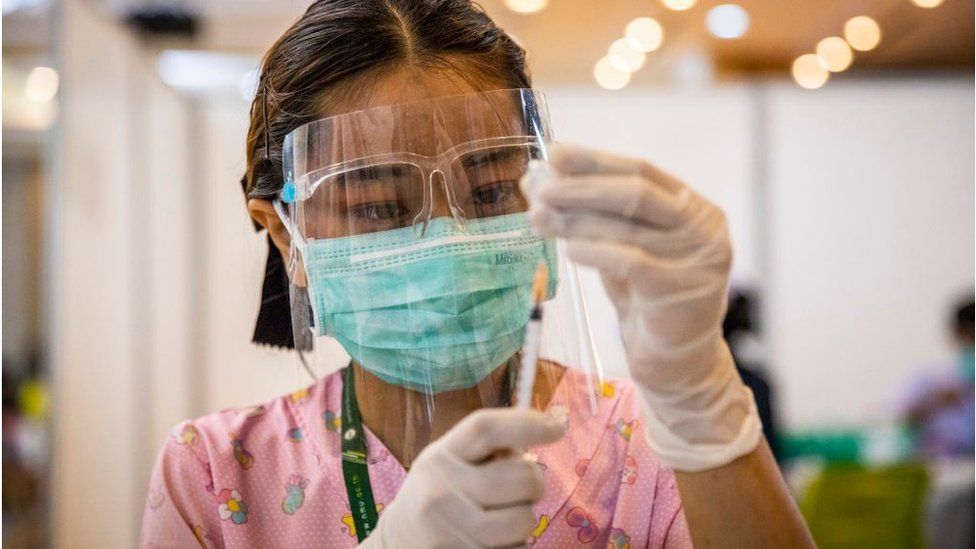
Championed by doctors and conservative radio hosts alike, monoclonal antibodies for Covid are in high demand — even from those who don’t want a vaccine.Lanson Jones did not think that the coronavirus would come for him. An avid tennis player in Houston who had not caught so much as a cold during the pandemic, he had refused a vaccine because he worried that it would spoil his streak of good health.But contracting Covid shattered his faith in his body’s defenses — so much so that Mr. Jones, nose clogged and appetite vanished, began hunting for anything to spare himself a nightmarish illness.The answer turned out to be monoclonal antibodies, a year-old, laboratory-created drug no less experimental than the vaccine. In a glass-walled enclosure at Houston Methodist Hospital this month, Mr. Jones, 65, became one of more than a million patients, including Donald J. Trump and Joe Rogan, to receive an antibody infusion as the virus has battered the United States.Vaccine-resistant Americans are turning to the treatment with a zeal that has, at times, mystified their doctors, chasing down lengthy infusions after rejecting vaccines that cost one-hundredth as much. Orders have exploded so quickly this summer — to 168,000 doses per week in late August, up from 27,000 in July — that the Biden administration warned states this week of a dwindling national supply.The federal government, which was already covering the cost of the treatment — currently about $2,100 per dose — has now taken over its distribution as well. For the coming weeks, the government has told states to expect scaled-back shipments because of the looming shortages.With seven Southern states accounting for 70 percent of orders, the new process has unsettled some of their governors, who have made the antibody treatment central to their strategy for enduring a catastrophic wave of the Delta variant.More supplies are on the way. The federal government bought 1.8 million more doses this week, expected to arrive in the fall and winter. But for now, some hospitals are uncertain of supplies, state health officials said, even as patients keep searching for doses.“We have providers struggling to get the necessary product,” Kody Kinsley, who leads operations for North Carolina’s Covid-19 response, said in an interview. “I think what has happened is a classic logistics issue, where all of a sudden there’s much more demand.”Amid a din of antivaccine falsehoods, monoclonal antibodies have become the rare coronavirus medicine to achieve near-universal acceptance. Championed by mainstream doctors and conservative radio hosts alike, the infusions have kept the country’s death toll — 2,000 per day and climbing — from soaring even higher.And after months of work by President Biden and Southern governors to promote the treatments, they have won the affection of vaccine refusers who said that the terrors and uncertainties of actually getting Covid had made them desperate for an antidote.“The people you love, you trust, nobody said anything negative about it,” Mr. Jones said of the antibody treatment. “And I’ve heard nothing but negative things about the side effects of the vaccine and how quickly it was developed.”Lanson Jones, a landscape architect in Houston, recovered quickly from Covid after receiving monoclonal antibodies.Brandon Thibodeaux for The New York TimesSome Republican governors have set up antibody clinics while opposing vaccine mandates, frustrating even some of the drugs’ strongest proponents. Raising vaccination rates, scientists said, would obviate the need for many of the costly antibody treatments in the first place. The infusions take about an hour and a half, including monitoring afterward, and require constant attention from nurses whom hard-hit states often cannot spare.“It’s clogging up resources, it’s hard to give, and a vaccine is $20 and could prevent almost all of that,” said Dr. Christian Ramers, an infectious disease specialist and the chief of population health at Family Health Centers of San Diego, a community-based provider. Pushing antibodies while playing down vaccines, he said, was “like investing in car insurance without investing in brakes.”The government-supplied monoclonal antibodies, made by Regeneron and Eli Lilly, have been shown to significantly shorten patients’ symptoms and reduce their risk of being hospitalized — by 70 percent, in the case of Regeneron’s antibody cocktail. The treatments, given in a single sitting, use lab-made copies of the antibodies that people generate naturally when fighting an infection.Patients and doctors alike overlooked the treatments during the wintertime surge of infections. But hospitals and health centers have now ramped up their offerings, transforming dental clinics, mobile units and auditoriums into infusion centers. In states like Texas, where elective surgeries have been postponed to make room for Covid-19 patients, operating room nurses have been enlisted to give infusions.One factor driving the demand is that many patients, including vaccine skeptics, have been spreading the word about their seemingly miraculous recoveries.“They’re like, ‘I have Covid, I want this treatment, my friend or family told me about this,’” said Jennifer Berry, the Houston Methodist nursing director of infusion services. “Now the word is out.”At Houston Methodist, nurses administered nearly 1,100 treatments across eight sites in the first week of September, well more than twice as many as any week last winter. The hospital reduced the average time between orders and infusions to two days this month from three days in early August, giving patients a better chance of fighting off infections.Juggling the infusions with more seriously ill Covid patients this summer forced the hospital, in one case, to move a monoclonal antibody clinic to a strip mall storefront.But the Texas health department has helped, providing 19 nurses for a different Houston Methodist infusion clinic, said Vicki Brownewell, the lead administrator for the hospital’s program. The Biden administration has also invested $150 million in expanding access to monoclonal antibodies, and Houston Methodist has used federal money to arrange medical taxis for patients struggling with transportation.Antibody infusions at Houston Methodist earlier this week. Of the 2.4 million monoclonal antibody doses shipped nationally, at least 1.1 million have been used.Brandon Thibodeaux for The New York TimesEven so, the infusions remain inaccessible to many. Given the heavy demands on staff and the need to create separate infusion rooms for infectious patients, certain communities, especially in rural areas, do not have clinics.In San Diego, Dr. Ramers said, some large, for-profit hospitals have decided not to administer the antibodies at all because of the logistical hassles, leaving wealthier, well-insured patients to hunt down doses at his publicly funded clinic. Some nurses that he hired for infusions left for short, better-paying assignments in hard-hit intensive care units.“The natural, capitalist incentives for health care organizations that are for profit don’t really favor doing this,” Dr. Ramers said. “It’s a lot of work.”.css-1xzcza9{list-style-type:disc;padding-inline-start:1em;}.css-3btd0c{font-family:nyt-franklin,helvetica,arial,sans-serif;font-size:1rem;line-height:1.375rem;color:#333;margin-bottom:0.78125rem;}@media (min-width:740px){.css-3btd0c{font-size:1.0625rem;line-height:1.5rem;margin-bottom:0.9375rem;}}.css-3btd0c strong{font-weight:600;}.css-3btd0c em{font-style:italic;}.css-w739ur{margin:0 auto 5px;font-family:nyt-franklin,helvetica,arial,sans-serif;font-weight:700;font-size:1.125rem;line-height:1.3125rem;color:#121212;}#NYT_BELOW_MAIN_CONTENT_REGION .css-w739ur{font-family:nyt-cheltenham,georgia,’times new roman’,times,serif;font-weight:700;font-size:1.375rem;line-height:1.625rem;}@media (min-width:740px){#NYT_BELOW_MAIN_CONTENT_REGION .css-w739ur{font-size:1.6875rem;line-height:1.875rem;}}@media (min-width:740px){.css-w739ur{font-size:1.25rem;line-height:1.4375rem;}}.css-9s9ecg{margin-bottom:15px;}.css-16ed7iq{width:100%;display:-webkit-box;display:-webkit-flex;display:-ms-flexbox;display:flex;-webkit-align-items:center;-webkit-box-align:center;-ms-flex-align:center;align-items:center;-webkit-box-pack:center;-webkit-justify-content:center;-ms-flex-pack:center;justify-content:center;padding:10px 0;background-color:white;}.css-pmm6ed{display:-webkit-box;display:-webkit-flex;display:-ms-flexbox;display:flex;-webkit-align-items:center;-webkit-box-align:center;-ms-flex-align:center;align-items:center;}.css-pmm6ed > :not(:first-child){margin-left:5px;}.css-5gimkt{font-family:nyt-franklin,helvetica,arial,sans-serif;font-size:0.8125rem;font-weight:700;-webkit-letter-spacing:0.03em;-moz-letter-spacing:0.03em;-ms-letter-spacing:0.03em;letter-spacing:0.03em;text-transform:uppercase;color:#333;}.css-5gimkt:after{content:’Collapse’;}.css-rdoyk0{-webkit-transition:all 0.5s ease;transition:all 0.5s ease;-webkit-transform:rotate(180deg);-ms-transform:rotate(180deg);transform:rotate(180deg);}.css-eb027h{max-height:5000px;-webkit-transition:max-height 0.5s ease;transition:max-height 0.5s ease;}.css-6mllg9{-webkit-transition:all 0.5s ease;transition:all 0.5s ease;position:relative;opacity:0;}.css-6mllg9:before{content:”;background-image:linear-gradient(180deg,transparent,#ffffff);background-image:-webkit-linear-gradient(270deg,rgba(255,255,255,0),#ffffff);height:80px;width:100%;position:absolute;bottom:0px;pointer-events:none;}.css-uf1ume{display:-webkit-box;display:-webkit-flex;display:-ms-flexbox;display:flex;-webkit-box-pack:justify;-webkit-justify-content:space-between;-ms-flex-pack:justify;justify-content:space-between;}.css-wxi1cx{display:-webkit-box;display:-webkit-flex;display:-ms-flexbox;display:flex;-webkit-flex-direction:column;-ms-flex-direction:column;flex-direction:column;-webkit-align-self:flex-end;-ms-flex-item-align:end;align-self:flex-end;}.css-12vbvwq{background-color:white;border:1px solid #e2e2e2;width:calc(100% – 40px);max-width:600px;margin:1.5rem auto 1.9rem;padding:15px;box-sizing:border-box;}@media (min-width:740px){.css-12vbvwq{padding:20px;width:100%;}}.css-12vbvwq:focus{outline:1px solid #e2e2e2;}#NYT_BELOW_MAIN_CONTENT_REGION .css-12vbvwq{border:none;padding:10px 0 0;border-top:2px solid #121212;}.css-12vbvwq[data-truncated] .css-rdoyk0{-webkit-transform:rotate(0deg);-ms-transform:rotate(0deg);transform:rotate(0deg);}.css-12vbvwq[data-truncated] .css-eb027h{max-height:300px;overflow:hidden;-webkit-transition:none;transition:none;}.css-12vbvwq[data-truncated] .css-5gimkt:after{content:’See more’;}.css-12vbvwq[data-truncated] .css-6mllg9{opacity:1;}.css-qjk116{margin:0 auto;overflow:hidden;}.css-qjk116 strong{font-weight:700;}.css-qjk116 em{font-style:italic;}.css-qjk116 a{color:#326891;-webkit-text-decoration:underline;text-decoration:underline;text-underline-offset:1px;-webkit-text-decoration-thickness:1px;text-decoration-thickness:1px;-webkit-text-decoration-color:#326891;text-decoration-color:#326891;}.css-qjk116 a:visited{color:#326891;-webkit-text-decoration-color:#326891;text-decoration-color:#326891;}.css-qjk116 a:hover{-webkit-text-decoration:none;text-decoration:none;}Of the 2.4 million monoclonal antibody doses shipped nationally, at least 1.1 million have been used. Precisely how many are still sitting on shelves is hard to determine because of reporting gaps. Still, waning federal supplies and soaring demand from less-vaccinated Southern states have caused what several states have described as large shortfalls in deliveries.North Carolina providers have requested 15,000 weekly doses, the health department there said, more than double what the federal government has allocated. Florida said its latest weekly allotment left clinics there 41,000 doses short of what they wanted.Hospitals had previously been able to order the drugs themselves. But the Department of Health and Human Services will now decide how many doses each state receives based on case rates and use of the treatment. State governments, in turn, will decide on doses for individual sites.The new ordering process, which the Biden administration said would ensure “equitable distribution,” has unsettled some backers of the drug. Gov. Ron DeSantis of Florida, a Republican, warned on Thursday that state officials were unprepared for the new responsibility of parceling out doses.And in heavily vaccinated states, like New York, people coordinating treatments fear that shipments will plummet because of low case rates, leaving hospitals with so few doses that they shutter their programs. Some hospitals recently reported growing numbers of vaccinated patients receiving infusions.Diana Berrent, the founder of Survivor Corps, which has worked to help patients find monoclonal antibody treatments, said that involving state governments would create delays: “You’re layering in 50 new layers of bureaucracy,” she said.Dr. Howard Huang, Houston Methodist’s medical leader for the infusion program.Brandon Thibodeaux for The New York TimesDoctors have warned that antibody treatments alone cannot keep pace with ballooning outbreaks. Whereas any one vaccination protects untold others from exposure, a single infusion only helps a single patient. Infusions must be given within 10 days of symptoms; they are unhelpful to most hospitalized patients. And receiving the antibodies once does not keep people from becoming seriously ill if they catch the virus again later.“Something like that just doesn’t scale,” said Dr. Howard Huang, the medical leader for Houston Methodist’s infusion program.As a result, health officials have warned that vaccine skeptics may become so enamored of monoclonal antibodies that they become even more resistant to getting a protective shot.Within days of his infusion, Mr. Jones, the patient in Houston, had left the bedroom where he had been quarantined and returned to his work as a landscape architect. But he was still weighing whether to be vaccinated.His doctor was pushing for the shot, he said. But the monoclonal antibodies had worked so well that he was tempted to simply return for another infusion if he caught Covid-19 again.“If I can go get an infusion and feel as good as I do right now, man, I’d rather not take a vaccine that has just been developed,” he said. “That makes me nervous, still.”Rebecca Robbins contributed reporting.

Read more →