Linda Evangelista Says Body Sculpting Procedure Left Her ‘Disfigured’

The ’90s-era supermodel said side effects from a fat-freezing procedure caused her to become depressed and a recluse after “not looking like myself any longer.”Linda Evangelista, the supermodel made famous in the 1990s, said she had become “brutally disfigured” and “unrecognizable” after a cosmetic body-sculpting procedure that had turned her into a recluse.“Today I took a big step towards righting a wrong that I have suffered and have kept to myself for over five years,” she wrote in an Instagram post on Wednesday.“To my followers who have wondered why I have not been working while my peers’ careers have been thriving, the reason is that I was brutally disfigured by Zeltiq’s CoolSculpting procedure which did the opposite of what it promised.”Ms. Evangelista, 56, said after the fat-freezing procedure she developed paradoxical adipose hyperplasia, a side effect in which patients develop firm tissue masses in the treatment areas.She said the cosmetic procedure left her “permanently deformed even after undergoing two painful, unsuccessful, corrective surgeries.” She said she had not been told of the risk.“PAH has not only destroyed my livelihood, it has sent me into a cycle of deep depression, profound sadness, and the lowest depths of self-loathing,” she wrote. “In the process, I have become a recluse.”Although Ms. Evangelista’s Instagram post mentioned a lawsuit, it was unclear whether one had been filed or where.According to CoolSculpting, the procedure has been cleared by the Food and Drug Administration for the treatment of visible fat bulges.According to the website of Allergan Aesthetics, a global pharmaceutical company whose brands include CoolSculpting, the procedure may cause an enlargement in the treated area about two to five months after treatment, requiring surgical intervention for correction.Neither Allergan Aesthetics nor the F.D.A. immediately responded to a request for comment on Thursday.

Read more →

Artificial Intelligence Accurately Predicts RNA Structures, Too

Credit: Camille L.L. Townshend

Researchers recently showed that a computer could “learn” from many examples of protein folding to predict the 3D structure of proteins with great speed and precision. Now a recent study in the journal Science shows that a computer also can predict the 3D shapes of RNA molecules [1]. This includes the mRNA that codes for proteins and the non-coding RNA that performs a range of cellular functions.

This work marks an important basic science advance. RNA therapeutics—from COVID-19 vaccines to cancer drugs—have already benefited millions of people and will help many more in the future. Now, the ability to predict RNA shapes quickly and accurately on a computer will help to accelerate understanding these critical molecules and expand their healthcare uses.

Like proteins, the shapes of single-stranded RNA molecules are important for their ability to function properly inside cells. Yet far less is known about these RNA structures and the rules that determine their precise shapes. The RNA elements (bases) can form internal hydrogen-bonded pairs, but the number of possible combinations of pairings is almost astronomical for any RNA molecule with more than a few dozen bases.

In hopes of moving the field forward, a team led by Stephan Eismann and Raphael Townshend in the lab of Ron Dror, Stanford University, Palo Alto, CA, looked to a machine learning approach known as deep learning. It is inspired by how our own brain’s neural networks process information, learning to focus on some details but not others.

In deep learning, computers look for patterns in data. As they begin to “see” complex relationships, some connections in the network are strengthened while others are weakened.

One of the things that makes deep learning so powerful is it doesn’t rely on any preconceived notions. It also can pick up on important features and patterns that humans can’t possibly detect. But, as successful as this approach has been in solving many different kinds of problems, it has primarily been applied to areas of biology, such as protein folding, in which lots of data were available for researchers to train the computers.

That’s not the case with RNA molecules. To work around this problem, Dror’s team designed a neural network they call ARES. (No, it’s not the Greek god of war. It’s short for Atomic Rotationally Equivariant Scorer.)

To start, the researchers trained ARES on just 18 small RNA molecules for which structures had been experimentally determined. They gave ARES these structural models specified only by their atomic structure and chemical elements.

The next test was to see if ARES could determine from this small training set the best structural model for RNA sequences it had never seen before. The researchers put it to the test with RNA molecules whose structures had been determined more recently.

ARES, however, doesn’t come up with the structures itself. Instead, the researchers give ARES a sequence and at least 1,500 possible 3D structures it might take, all generated using another computer program. Based on patterns in the training set, ARES scores each of the possible structures to find the one it predicts is closest to the actual structure. Remarkably, it does this without being provided any prior information about features important for determining RNA shapes, such as nucleotides, steric constraints, and hydrogen bonds.

It turns out that ARES consistently outperforms humans and all other previous methods to produce the best results. In fact, it outperformed at least nine other methods to come out on top in a community-wide RNA-puzzles contest. It also can make predictions about RNA molecules that are significantly larger and more complex than those upon which it was trained.

The success of ARES and this deep learning approach will help to elucidate RNA molecules with potentially important implications for health and disease. It’s another compelling example of how deep learning promises to solve many other problems in structural biology, chemistry, and the material sciences when—at the outset—very little is known.

Reference:

[1] Geometric deep learning of RNA structure. Townshend RJL, Eismann S, Watkins AM, Rangan R, Karelina M, Das R, Dror RO. Science. 2021 Aug 27;373(6558):1047-1051.

Links:

Structural Biology (National Institute of General Medical Sciences/NIH)

The Structures of Life (National Institute of General Medical Sciences/NIH)

RNA Biology (NIH)

RNA Puzzles

Dror Lab (Stanford University, Palo Alto, CA)

NIH Support: National Cancer Institute; National Institute of General Medical Sciences

Read more →

Insulin resistance doubles risk of major depressive disorder

Stanford Medicine scientists have linked insulin resistance to an increased risk of developing major depressive disorder.
“If you’re insulin-resistant, your risk of developing major depressive disorder is double that of someone who’s not insulin-resistant, even if you’ve never experienced depression before,” said Natalie Rasgon, MD, PhD, professor of psychiatry and behavioral sciences.
Upward of 1 in 5 Americans experiences major depressive disorder sometime during their lives. Symptoms include unremitting sadness, despair, sluggishness, sleep disturbances and loss of appetite. Some factors contributing to this deeply debilitating disease — childhood traumas, loss of a loved one or the stresses of the COVID-19 pandemic, for example — are things we can’t prevent. But insulin resistance is preventable: It can be reduced or eliminated by diet, exercise and, if need be, drugs.
The researchers’ findings are described in a study to be published online Sept. 22 in the American Journal of Psychiatry. Rasgon shares senior authorship of the study with Brenda Penninx, MD, PhD, professor of psychiatric epidemiology at the University of Amsterdam Medical Center. The study’s lead author is Kathleen Watson, PhD, a postdoctoral scholar in Rasgon’s group.
A common but silent condition
Studies have confirmed that at least 1 in 3 of us is walking around with insulin resistance — often without knowing it. The condition does not arise from a deficiency in the pancreas’s ability to secrete insulin into the bloodstream, as occurs in Type 1 diabetes, but because of the decreased ability of cells throughout the body to heed this hormone’s command.

Read more →

Different types of cancers are likely to spread to specific areas of the brain

Brain metastasis occurs when cancer in one part of the body spreads to the brain. The lifetime incidence of such metastatic brain tumors in cancer patients is between 20%-45%, research shows.
A new study from USC Norris Comprehensive Cancer Center, part of Keck Medicine of USC, suggests that the region cancer spreads to in the brain may not be random, but rather, is dependent on where the cancer originated in the body.
“We discovered that different types of cancer are more likely to show up in specific parts of the brain once they metastasize, indicating the location of tumors follow a distinct pattern,” said Gabriel Zada, MD, a brain and tumor neurosurgeon with Keck Medicine of USC and senior author of the study. He is also a member of USC Norris and director of the USC Brain Tumor Center.
Zada and colleagues analyzed the location of brain tumors caused by five common types of cancer — melanoma (a type of skin cancer), lung, breast, renal (kidney) and colorectal. They discovered that lung cancer and melanoma showed a higher likelihood for the metastasis to be at the frontal and temporal lobes (which sit behind the ears). Breast, renal and colon cancers had a higher propensity to spread to the back of the brain, such as the cerebellum and brainstem.
The findings are important not only because they may predict where a specific cancer may spread in the brain, but because they also have implications for how brain tumors grow.
“It may be that cancer cells have the ability to adapt to regional microenvironments in the brain that allow them to colonize and progress, while other areas of the brain are inhospitable to the same cells,” said Josh Neman, PhD, assistant professor of neurological surgery and physiology and neuroscience at the Keck School of Medicine of USC, scientific director of the USC Brain Tumor Center and lead author of the study. He is also a member of USC Norris.

Read more →

After Vaccine Booster Decision, Panel Meets on Who Gets Shots

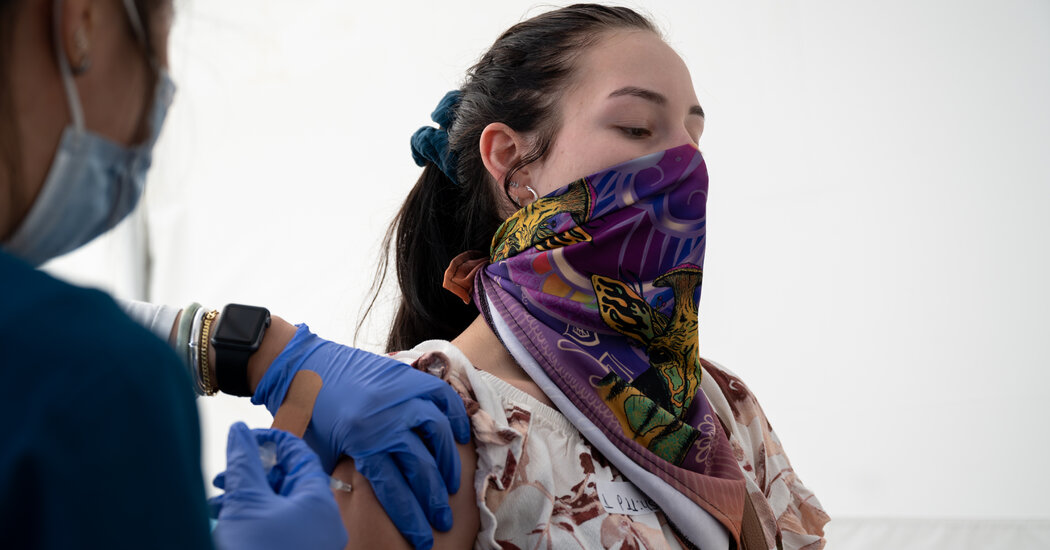
Scientific advisers to the Centers for Disease Control and Prevention will take up a thorny challenge on Thursday: Who qualifies for the new Pfizer-BioNTech coronavirus booster and why?On Wednesday evening, the Food and Drug Administration authorized booster shots of the vaccine for people over 65 who received their second at least six months earlier. The agency also approved boosters for adult Pfizer-BioNTech recipients who are at high risk of severe Covid-19, or who are at risk of serious complications because of exposure to the virus in their jobs.Roughly 22 million Americans are at least six months past their second Pfizer dose, according to the C.D.C. About half are 65 or older.But who exactly risks becoming severely ill? What does it mean to be exposed on the job? Do teachers count as exposed, or just frontline health care workers? And what about Americans who got the Moderna and Johnson & Johnson shots?Those are questions scientists on the C.D.C. Advisory Committee on Immunization Practices have been debating, and their decisions will shape the federal government’s guidance.In its deliberations on Wednesday, the C.D.C.’s advisory committee zeroed in on unanswered questions.A third dose undoubtedly amps up antibody levels, the experts concluded. But it’s unclear so far how long that increase lasts, whether it translates to meaningful extra protection against severe disease, and whether it can significantly decrease transmission of the virus.Scientists on the committee also noted the paucity of safety data, especially among younger people. And several advisers said they believed the goal of the boosters should be to prevent severe illness, hospitalization and death, rather than stave off infection.“I don’t think there’s any hope that vaccines such as the ones we have will prevent infection after the first, maybe, couple weeks that you have those extraordinary immediate responses,” said Dr. Sarah Long, a pediatric infectious disease expert at Drexel University College of Medicine in Philadelphia.The advisers also wrestled with the practicalities of endorsing a booster shot of Pfizer’s vaccine, but not of Moderna or Johnson & Johnson’s. Recipients of those vaccines may hear that boosters are necessary — but they can’t have them yet.“That’s a big public health panic that we would like to avoid,” Dr. Long said.Moderna has applied for F.D.A. authorization of booster shots, but at half the dosage given in the first two.Mixing first shots of the Moderna vaccine with a Pfizer booster — or vice versa — is untested ground, and federal agencies are always reluctant to make moves that the evidence doesn’t explicitly support.Some global health experts have criticized the Biden administration for pushing booster shots when much of the world has yet to receive a first dose. But on Wednesday, Jen Psaki, the White House press secretary, argued that was a “false choice.”On Wednesday morning, President Biden said the United States would buy 500 million more doses of the Pfizer-BioNTech vaccine to donate worldwide, doubling up on a purchase in July.“We’re now donating three shots globally for every one shot we put in the arm of an American, and our view continues to be that we can do both,” Ms. Psaki said. “Our view also continues to be that frankly the rest of the world needs to step up and do more.”Sharon LaFraniere

Read more →

C.D.C. Panel Meets on Who Gets Booster Shots After F.D.A. Decision

Scientific advisers to the Centers for Disease Control and Prevention will take up a thorny challenge on Thursday: Who qualifies for the new Pfizer-BioNTech coronavirus booster and why?On Wednesday evening, the Food and Drug Administration authorized booster shots of the vaccine for people over 65 who received their second at least six months earlier. The agency also approved boosters for adult Pfizer-BioNTech recipients who are at high risk of severe Covid-19, or who are at risk of serious complications because of exposure to the virus in their jobs.Roughly 22 million Americans are at least six months past their second Pfizer dose, according to the C.D.C. About half are 65 or older.But who exactly risks becoming severely ill? What does it mean to be exposed on the job? Do teachers count as exposed, or just frontline health care workers? And what about Americans who got the Moderna and Johnson & Johnson shots?Those are questions scientists on the C.D.C. Advisory Committee on Immunization Practices have been debating, and their decisions will shape the federal government’s guidance.In its deliberations on Wednesday, the C.D.C.’s advisory committee zeroed in on unanswered questions.A third dose undoubtedly amps up antibody levels, the experts concluded. But it’s unclear so far how long that increase lasts, whether it translates to meaningful extra protection against severe disease, and whether it can significantly decrease transmission of the virus.Scientists on the committee also noted the paucity of safety data, especially among younger people. And several advisers said they believed the goal of the boosters should be to prevent severe illness, hospitalization and death, rather than stave off infection.“I don’t think there’s any hope that vaccines such as the ones we have will prevent infection after the first, maybe, couple weeks that you have those extraordinary immediate responses,” said Dr. Sarah Long, a pediatric infectious disease expert at Drexel University College of Medicine in Philadelphia.The advisers also wrestled with the practicalities of endorsing a booster shot of Pfizer’s vaccine, but not of Moderna or Johnson & Johnson’s. Recipients of those vaccines may hear that boosters are necessary — but they can’t have them yet.“That’s a big public health panic that we would like to avoid,” Dr. Long said.Moderna has applied for F.D.A. authorization of booster shots, but at half the dosage given in the first two.Mixing first shots of the Moderna vaccine with a Pfizer booster — or vice versa — is untested ground, and federal agencies are always reluctant to make moves that the evidence doesn’t explicitly support.Some global health experts have criticized the Biden administration for pushing booster shots when much of the world has yet to receive a first dose. But on Wednesday, Jen Psaki, the White House press secretary, argued that was a “false choice.”On Wednesday morning, President Biden said the United States would buy 500 million more doses of the Pfizer-BioNTech vaccine to donate worldwide, doubling up on a purchase in July.“We’re now donating three shots globally for every one shot we put in the arm of an American, and our view continues to be that we can do both,” Ms. Psaki said. “Our view also continues to be that frankly the rest of the world needs to step up and do more.”Sharon LaFraniere

Read more →

For Parents ​of Disabled Children, School Mask Wars Are Particularly Wrenching

In Tennessee, where the governor allows families to ignore school mask mandates, some parents are making excruciating calculations each morning about whether to send their children to school.FRANKLIN, Tenn. — Five years ago, Kim Hart’s son underwent an open-heart surgery that got him healthy enough for the family to move from Cincinnati to this quiet suburb of Nashville. Her son has Down syndrome and autism, and she liked that Williamson County had a reputation for caring neighbors and safe schools.But every day for the past month, she has wondered whether she made a mistake.It was here that an explosive debate over masking in schools — one of the most effective strategies for keeping students learning in person safely during the pandemic — made the county a poster child for divisions over coronavirus safety measures. A video clip of a county school board meeting last month, showing protesters heckling and threatening medical professionals and parents who supported a universal mask mandate as they left the meeting, drew national attention and a rebuke from President Biden.As cases in Tennessee surged — the state was leading the nation in new infections per capita earlier this month — many residents of the predominantly white, wealthy county were left despondent that a piece of fabric had become a political statement.“It’s very dystopian,” Ms. Hart said. “I’m used to arguing with a district to get my kid what he needs. I’m not used to my neighbors screaming at a school board meeting over a mandate that protects everybody.”“I’m used to arguing with a district to get my kid what he needs,” Ms. Hart said.Sarahbeth Maney/The New York Times“I’m not used to my neighbors screaming at a school board meeting over a mandate that protects everybody.”Sarahbeth Maney/The New York TimesAt the high school Ms. Hart’s son attends, data published weekly by the district shows that more than 30 percent of parents have formally opted out of the mask mandate.Sarahbeth Maney/The New York TimesAt the school board’s August meeting, parents who objected to the mandate pleaded with board members to allow them to be the arbiters of their children’s health decisions. Many said they believed that forcing children to wear masks negatively affected their emotional and physical health; some said they did not believe masks had been proven to work at all.One parent, Leigh-Allyn Baker, a self-described “California refugee,” said she gave up a Hollywood career “for freedom, and to come to this friendly place of Tennessee and be greeted with open arms.” Holding up copies of the Constitution, the Declaration of Independence, the Bill of Rights, the Federalist Papers and the Bible, Ms. Baker told the board: “These guarantee my freedom, and yours, and my children’s to breathe oxygen.”The opposition to masks has been particularly crushing for parents like Ms. Hart, who see in-person schooling as a lifeline for their children with disabilities. Those students have been among the most underserved during the pandemic but also sometimes face a higher probability that going to school could make them severely ill.Tennessee is one of seven states that the federal Education Department is investigating to determine whether governors’ orders allowing families to flout school mask mandates discriminate against students with disabilities by restricting their access to education.Even though many local school boards, including Williamson County’s, have voted to require universal masking, an executive order issued by Gov. Bill Lee, a Republican, allows parents to send their children to school maskless, no questions asked. At the high school Ms. Hart’s son attends, data published weekly by the district shows that more than 30 percent of parents have formally opted out, a percentage that mirrors the district’s overall.“We’ve always known that not everybody really cares about our children, but it is in our face right now — that it’s not worth you asking your child to wear a mask, so my child can be safe,” said Ms. Hart, who is a researcher and a trained epidemiologist. “That is the scar that I will carry from the pandemic, this playing out in my face over and over and over again.”Parents of special education students in two Tennessee counties covering the eastern and western parts of the state have sued to block the governor’s order; one lawsuit has succeeded. A third, covering Williamson County, had a hearing before a judge this week.In the most recent complaint, three lawyers argued that the governor, the Williamson County school board and a carve-out district within the county called the Franklin Special School District, are violating the rights of special education students by allowing parents to opt their children out of the mandate.The suit was filed on behalf of a student with Down syndrome and another with Type 1 diabetes, but seeks protections for all “similarly situated” students. “Defendants’ actions have pitted children against children, while placing the health and safety of medically vulnerable children with disabilities in danger,” the complaint said.A spokeswoman for the governor did not respond to several requests for comment.Becky Peterson with her son at their home in Brentwood, Tenn., last week.Sarahbeth Maney/The New York TimesThe federal scrutiny and legal challenges were welcome news to Becky Peterson, whose 16-year-old son has a rare chromosomal disorder called Dup15q syndrome, as well as autism and epilepsy. At the outset of the pandemic, it seemed that all parents understood the value of the “free appropriate public education” that federal law guarantees special-needs children. “There was somewhat of a level playing field because we were all in the same boat,” she said. “As this has worn on, we’re all in the pandemic, but our boats look very different.”Last fall, her son contracted the coronavirus at school — and that was when there was a mask mandate with no loopholes. Ms. Peterson, a professor, said her son’s bout with the virus was distressing, but not as much as the idea of keeping him home from his school, where more than 37 percent of students are not wearing masks.The gregarious teenager’s communication is limited, but on a recent day he gave hugs and fist bumps as he got off the school bus. One day during remote learning last year, he hugged his computer when his teacher appeared on the screen.Ms. Peterson’s son has a rare chromosomal disorder called Dup15q syndrome, as well as autism and epilepsy.Sarahbeth Maney/The New York TimesEvery morning, Ms. Hart makes excruciating calculations about the risks of sending her nonverbal 18-year-old son to school. He still has residual complications from the congenital heart defect that his surgery sought to correct. And while he recently got the coronavirus vaccine, she worries about breakthrough cases — as a child, he got the chickenpox despite being vaccinated against it.Like other parents of special education students, Ms. Peterson and Ms. Hart also have, between them, hundreds of other reasons to send their children to school: the hours of instruction and services lost to the pandemic, which the district is supposed to make up this year. This week, the school boards of both local districts voted to extend their mask mandates until January. The governor’s opt-out order expires on Oct. 5; he has not indicated whether he plans to renew it. The judge overseeing the Williamson County lawsuit ordered the state to notify the court of its intentions by Oct. 1.In Williamson County, this week’s board meeting was much more civil than the one in August, but just as divided.“All mandates say that I don’t get to choose, but the ruling class does,” Shelby Rollins, a parent who opposes masks, told the board.Laura Coons’s youngest child is not going back to school until he is vaccinated.Sarahbeth Maney/The New York Times“People here are done with the pandemic, but the pandemic is not done with us,” Mrs. Coons said.Sarahbeth Maney/The New York TimesMrs. Coons reviewing class material with her son. She quit her job working for the school system last year because she didn’t feel safe.Sarahbeth Maney/The New York TimesAva Martin, who identified herself as a junior at Independence High School, which has a nearly 40 percent opt-out rate, implored the board to keep the mask mandate. “There’s many people that find masks a violation of their rights,” she said, “but I say it’s a greater violation to ignore those who need us to help them.”District officials acknowledged that the percentage of students not wearing masks was most likely much higher than the roughly 30 percent formally opting out. But they maintained that more students were wearing them than before, and that coronavirus positivity rates and quarantine cases were dropping..css-1xzcza9{list-style-type:disc;padding-inline-start:1em;}.css-3btd0c{font-family:nyt-franklin,helvetica,arial,sans-serif;font-size:1rem;line-height:1.375rem;color:#333;margin-bottom:0.78125rem;}@media (min-width:740px){.css-3btd0c{font-size:1.0625rem;line-height:1.5rem;margin-bottom:0.9375rem;}}.css-3btd0c strong{font-weight:600;}.css-3btd0c em{font-style:italic;}.css-w739ur{margin:0 auto 5px;font-family:nyt-franklin,helvetica,arial,sans-serif;font-weight:700;font-size:1.125rem;line-height:1.3125rem;color:#121212;}#NYT_BELOW_MAIN_CONTENT_REGION .css-w739ur{font-family:nyt-cheltenham,georgia,’times new roman’,times,serif;font-weight:700;font-size:1.375rem;line-height:1.625rem;}@media (min-width:740px){#NYT_BELOW_MAIN_CONTENT_REGION .css-w739ur{font-size:1.6875rem;line-height:1.875rem;}}@media (min-width:740px){.css-w739ur{font-size:1.25rem;line-height:1.4375rem;}}.css-9s9ecg{margin-bottom:15px;}.css-16ed7iq{width:100%;display:-webkit-box;display:-webkit-flex;display:-ms-flexbox;display:flex;-webkit-align-items:center;-webkit-box-align:center;-ms-flex-align:center;align-items:center;-webkit-box-pack:center;-webkit-justify-content:center;-ms-flex-pack:center;justify-content:center;padding:10px 0;background-color:white;}.css-pmm6ed{display:-webkit-box;display:-webkit-flex;display:-ms-flexbox;display:flex;-webkit-align-items:center;-webkit-box-align:center;-ms-flex-align:center;align-items:center;}.css-pmm6ed > :not(:first-child){margin-left:5px;}.css-5gimkt{font-family:nyt-franklin,helvetica,arial,sans-serif;font-size:0.8125rem;font-weight:700;-webkit-letter-spacing:0.03em;-moz-letter-spacing:0.03em;-ms-letter-spacing:0.03em;letter-spacing:0.03em;text-transform:uppercase;color:#333;}.css-5gimkt:after{content:’Collapse’;}.css-rdoyk0{-webkit-transition:all 0.5s ease;transition:all 0.5s ease;-webkit-transform:rotate(180deg);-ms-transform:rotate(180deg);transform:rotate(180deg);}.css-eb027h{max-height:5000px;-webkit-transition:max-height 0.5s ease;transition:max-height 0.5s ease;}.css-6mllg9{-webkit-transition:all 0.5s ease;transition:all 0.5s ease;position:relative;opacity:0;}.css-6mllg9:before{content:”;background-image:linear-gradient(180deg,transparent,#ffffff);background-image:-webkit-linear-gradient(270deg,rgba(255,255,255,0),#ffffff);height:80px;width:100%;position:absolute;bottom:0px;pointer-events:none;}.css-uf1ume{display:-webkit-box;display:-webkit-flex;display:-ms-flexbox;display:flex;-webkit-box-pack:justify;-webkit-justify-content:space-between;-ms-flex-pack:justify;justify-content:space-between;}.css-wxi1cx{display:-webkit-box;display:-webkit-flex;display:-ms-flexbox;display:flex;-webkit-flex-direction:column;-ms-flex-direction:column;flex-direction:column;-webkit-align-self:flex-end;-ms-flex-item-align:end;align-self:flex-end;}.css-12vbvwq{background-color:white;border:1px solid #e2e2e2;width:calc(100% – 40px);max-width:600px;margin:1.5rem auto 1.9rem;padding:15px;box-sizing:border-box;}@media (min-width:740px){.css-12vbvwq{padding:20px;width:100%;}}.css-12vbvwq:focus{outline:1px solid #e2e2e2;}#NYT_BELOW_MAIN_CONTENT_REGION .css-12vbvwq{border:none;padding:10px 0 0;border-top:2px solid #121212;}.css-12vbvwq[data-truncated] .css-rdoyk0{-webkit-transform:rotate(0deg);-ms-transform:rotate(0deg);transform:rotate(0deg);}.css-12vbvwq[data-truncated] .css-eb027h{max-height:300px;overflow:hidden;-webkit-transition:none;transition:none;}.css-12vbvwq[data-truncated] .css-5gimkt:after{content:’See more’;}.css-12vbvwq[data-truncated] .css-6mllg9{opacity:1;}.css-qjk116{margin:0 auto;overflow:hidden;}.css-qjk116 strong{font-weight:700;}.css-qjk116 em{font-style:italic;}.css-qjk116 a{color:#326891;-webkit-text-decoration:underline;text-decoration:underline;text-underline-offset:1px;-webkit-text-decoration-thickness:1px;text-decoration-thickness:1px;-webkit-text-decoration-color:#326891;text-decoration-color:#326891;}.css-qjk116 a:visited{color:#326891;-webkit-text-decoration-color:#326891;text-decoration-color:#326891;}.css-qjk116 a:hover{-webkit-text-decoration:none;text-decoration:none;}“For the purpose of our mission of serving students, it strikes me as wise to leave it in place,” Jason Golden, Williamson County’s superintendent, said of the mandate. “And I think with the balance of the opt-out, we’ve got a structure that’s stable.”The extensions brought parents some relief. But even without the added challenge of disabilities, some families with children who are too young to be vaccinated have concerns about the safety of attending schools in the county.Laura Coons does not plan to send her youngest child, a fourth grader, back to in-person classes at his Williamson County school until he is vaccinated. She quit her job with the school system last year because she did not feel safe. She had helped recruit one of the speakers at the August board meeting who was harassed. She knows of local pastors who have preached “faith over fear” from the pulpit. Recently, a man in a Kroger grocery store yelled at her, “The mask don’t work, ma’am.”“People here are done with the pandemic, but the pandemic is not done with us,” she said. “I couldn’t send him in there knowing there are a fair number of people in this district, in this area, who weren’t taking precautions in life and weren’t going to do so when they send their kid to school.”Clifton and Shanika Robinson having dinner with their three children at their home in Franklin last week.Sarahbeth Maney/The New York TimesClifton and Shanika Robinson’s three children were excited to head back to school on Aug. 6, having not attended in-person classes since the spring of 2020. Their two sons started school in the Franklin Special School District, which did not impose a mask mandate until Aug. 20. Their daughter attended high school in Williamson County, which voted to establish the mask mandate in high schools on Aug. 26. On Aug. 28, their youngest son — the only unvaccinated person in the house — tested positive for the virus. Ms. Robinson, a registered nurse, felt defeated: “It was in our house, down a couple doors from our bedroom, in my baby.”The Robinsons wonder if it was a child who was allowed to go to school without a mask who sent the virus into their home. They worry that their son might have passed it to someone else. They fear it is inevitable that it will happen again.In August, the Robinsons’ youngest son — the only unvaccinated person in the house — tested positive for the virus. Sarahbeth Maney/The New York TimesHis sister, Amari Robinson, was terrified she had given it to him. Amari, a 16-year-old junior, attends a high school with a 19 percent opt-out rate, and prays every day that the percentage dwindles.“I just want us to do what we can to keep ourselves safe, and those around us safer,” she said. “It’s a group effort; everyone just hasn’t realized it yet.”

Read more →

'Giving birth left me needing a colostomy bag'

SharecloseShare pageCopy linkAbout sharingimage source, Kayleigh AdamsThe trauma of giving birth to her first child changed Kayleigh Adams’s life. The birth, in 2017, has left the former triathlete, now 25, with post-traumatic stress disorder (PTSD).During the delivery, she suffered a fourth-degree perineal tear, the most severe of what are known as obstetric anal sphincter injuries (Oasis), which extends into the lower bowel.”I have now had to adapt my life to living with a colostomy bag, due to the injuries,” she says.Previously, Kayleigh, from Lincolnshire, was very active. She had attended antenatal classes but never knew how extreme tearing in childbirth could be, and she did not receive the emotional support she needed.”I was a triathlete representing Great Britain,” she says. “I came eighth in the World Championships, in 2014, and second in Europe, in 2015.”People thought that because I was so fit that the pregnancy would be fairly easy. But when I was pregnant, I had no signs of what was to come.”image source, Kayleigh AdamsRoyal College of Obstetricians and Gynaecologists vice-president Dr Ranee Thakar has helped develop antenatal-care guidance that, in the 16 maternity units where it has so far been introduced, has led to a 20% reduction in serious tears.”I see women who have third- and fourth-degree tears and the common story is that they were not told about it at the antenatal stage,” she says.”It is difficult to measure the psychological impact. The women affected have hospital appointments, investigations, to take time off work, to wear pads, to take medication to alleviate their symptoms – and none of that is measured.”Use forcepsKayleigh had planned a water birth – but when she was in labour, in a birthing pool, she was in a lot of pain. “I was given an epidural,” she says, “and because of this, I wasn’t allowed to give birth in the water. I was in hospital, on the Sunday night, contracting on and off – and my son wasn’t delivered until the Tuesday morning. “They had to use forceps – he weighed just under 8lbs. After the delivery, I went straight to theatre to be operated on because of my tear. I was told afterwards that I wouldn’t have a natural birth again.”Birth trauma: Women urged to ‘raise your voices’Birth trauma mother ‘wanted to die’Swimming with my stoma bag”Two weeks after my son was born, I was back in hospital because of a bad infection,” she says. “I came out but was admitted again two weeks later with sepsis. This was all happening whilst I had a newborn at home.”This also made bonding with her son difficult.”I didn’t feel right for so long,” Kayleigh says. “My baby was with me while I was in hospital but he would be at home sometimes so that I could get some sleep and get better quicker.”It was difficult to be away from him for those first few months.”Perineal tearsThe risk of severe tearing in childbirth increases when: the mother is olderthe baby is biggerthe baby is delivered with forcepsthe baby’s head is facing the wrong waythe baby’s shoulders become stuckTwo and a half years after her son was born, Kayleigh had a second child, a baby girl. She was prepared for a Caesarean section, as doctors had told her she could not have a vaginal birth. But once again, she became unwell.”I was still getting symptoms that I was having before – but they had got worse,” she says. “My stools were leaking through the front of me and I had constant infections.image source, Kayleigh Adams”I have been back and forth to various hospitals. Then in September 2020, doctors said that I will need a colostomy bag. “I don’t know how long I will need it for – I’ll probably have it forever.” Raise awarenessVery little information is available about birth trauma, Kayleigh says, so she sought help via social media.”I met a few other people online and I think birth traumas and stomas are quite common but people are afraid to talk about it.”A group on Facebook helped me so much. I got information from women who had been through similar scenarios as me. “I want to raise awareness about how childbirth can lead to PTSD, which is what I have. Even now, my mental health is still not what it was before. I wake up in the night in a sweat and I have daily flashbacks of giving birth.”image source, Kayleigh AdamsHer experience prompted Kayleigh to become a student midwife but while she was studying, staff noticed something was wrong.”My university referred me to counselling, as they could see how much I was affected by what happened to me,” she says. “I have also had intense therapy from a community mental health team – something that is not offered too much.” Kayleigh says various agencies involved in pregnancies, from medical staff to counsellors, should be aware of Oasis and how to support women affected.”There should be more teaching around that and the impact it has on women’s lives,” she says. “Also, follow-ups including counselling should be available. “Not all tears are traumatic but there should be more involvement from a multi-disciplinary team to help vulnerable women. Women shouldn’t have to fight for the care they need.”If you think something wrong is happening to you, don’t let the doctors tell you that it is not. Don’t be left wondering if you’re imagining it.”Lost friendsAnna Clements, the administration co-ordinator of Masic, the only UK charity to focus on third- and fourth-degree perineal tears in childbirth, had fourth-degree tearing when she had her third child.”I was lucky in that my tear was picked up straight away and I was on the pathway of getting treatment,” she says.”Cognitive behavioural therapy helped me too. I had made excuses for not going out, as I was anally incontinent, and I lost friends along the way – but you get to know the real ones.”My colorectal nurse set up a support group in hospital and I met people with the same injuries as me. That’s where I found out about Masic. I felt it was a place where I needed to be. “I wanted to be an advocate for other women to be respected and listened to and to receive the same treatment as I did. “To help women, a multi-disciplinary approach is needed, with an ideal model of surgeons, physiotherapists, nutritionists, and psychologists working together to make sure that the women who have been injured get the best quality care.”image source, Kayleigh AdamsWhile her body heals, Kayleigh plans to take up a new challenge – to raise awareness of Oasis, by swimming Lake Windermere, in Cumbria, next year.”This journey has had a big impact on all areas of my life and I hope spreading awareness of birth trauma will help women who have been in a similar position as me,” she says.If you or someone you know has been affected by the issues in this story, these organisations may be able to help:The NHS provides information about episiotomy and perineal tears – for non-emergencies, call 111The Masic charity supports women who have had severe injuries during childbirth – helpline 0808 1640 8333Tommy’s charity works to improve care and support for families during pregnancy – pregnancy line 0800 014 7800The Birth Trauma Association charity supports women with birth trauma – 01264 860380Around the BBCBBC Actionline: Pregnancy-related issuesRelated Internet LinksRoyal College of Obstetricians and GynaecologyMASICTommy’sThe Birth Trauma AssociationNHS: EpisiotomyThe BBC is not responsible for the content of external sites.

Read more →

F.D.A. Authorizes Pfizer Booster Shot for Higher-Risk People

Regulators said that people over 65 or at high risk of severe Covid-19 were eligible for an extra shot, setting up a staggered national booster campaign.WASHINGTON — After weeks of internal strife at the Food and Drug Administration, the agency on Wednesday authorized people over 65 who had received Pfizer-BioNTech’s coronavirus vaccine to get a booster shot at least six months after their second injection.The F.D.A. also authorized booster shots for adult Pfizer-BioNTech recipients who are at high risk of becoming severely ill with Covid-19 or are at risk of serious complications from the disease due to frequent exposure to the coronavirus at their jobs.The authorization sets up what is likely to be a staggered campaign to deliver the shots, starting with the most vulnerable Americans. It opens the way for possibly tens of millions of vaccinated people to receive boosters at pharmacies, health clinics, doctors’ offices and elsewhere.Roughly 22 million Americans are at least six months past their second dose of the Pfizer-BioNTech vaccine, according to the Centers for Disease Control and Prevention. About half of them are 65 and older. Millions of Americans who received the Moderna and Johnson & Johnson vaccines are still waiting to learn whether they, too, can get boosters.The F.D.A.’s decision will be followed as soon as Thursday by a recommendation from the C.D.C., which issues guidance on vaccine policy for clinicians and public health officials throughout the United States. An advisory committee of the C.D.C. is now in the midst of a two-day meeting on the issue. But even if the C.D.C. takes a different stance, health care providers are now authorized to offer third shots to Pfizer-BioNTech recipients who meet the F.D.A.’s eligibility criteria.The ruling followed weeks of internal disagreement at the F.D.A., where some vaccine regulators openly challenged the idea of offering booster shots to the general population. Public health experts and state officials have criticized what they said were confusing public messages from the Biden administration about who should be eligible for a booster shot and when.Regulators have significantly slowed the booster rollout that top federal health officials drafted and President Biden announced in mid-August. At the time, Mr. Biden said that pending regulatory approval, he wanted to offer third shots to every American adult who had been fully vaccinated with the Pfizer-BioNTech or Moderna vaccine at least eight months earlier, starting this week.But so far the F.D.A. has cleared booster shots only for Pfizer-BioNTech recipients, and not all of them. Regulators are expected to take up whether to authorize the shots for recipients of the Moderna and Johnson & Johnson vaccines in short order.Wednesday’s authorization made the United States the most recent wealthy nation to offer people booster doses, joining a list that includes Germany, France, Israel and Britain. Some public health experts say those doses should instead be directed to countries that have vaccinated far fewer of their residents.At a virtual Covid-19 summit on Wednesday, Mr. Biden pledged an additional 500 million doses of Pfizer-BioNTech’s vaccine to countries that need them.The F.D.A.’s ruling could set off a spirited debate about who falls into the eligible subgroups, especially those who are considered at special risk because of their jobs.At a meeting last Friday, members of the agency’s advisory committee of experts said that health care workers should be eligible for boosters because of their work, and a senior F.D.A. regulator said that teachers fit in the same category. There was also a push to include some inmates and staff at jails and prisons because of risks tied to incarceration. Those specific recommendations will be left to the C.D.C.The F.D.A.’s decision to include those who are at high risk of severe Covid-19 captures another significant swath of the population. An estimated 60 percent of Americans suffer from obesity or other chronic medical conditions that heighten their risk of suffering from severe Covid-19, but not all of them might be included.Pfizer had asked the F.D.A. to approve a third shot for all recipients of its vaccine who were 16 and older, six months or more after their second injection. Regulators scrambled to collect and review safety and efficacy data fast enough to meet the administration’s goal of offering shots this week.At a dramatic meeting last week, members of the F.D.A.’s outside advisory committee said the available data was too limited to justify additional injections for so many people and voted 16 to 2 against approving Pfizer’s request. Some of the committee’s experts were concerned that Pfizer’s clinical trial results on boosters included only about 300 volunteers, a point that was brought up repeatedly by the C.D.C.’s experts.But the advisory committee voted unanimously for the narrower option reflected in the regulatory decision.President Biden attends a virtual global Covid-19 summit on Wednesday from New York. He had hoped to offer a third shot more broadly to adults who had received the Pfizer or Moderna vaccines. Doug Mills/The New York TimesThe F.D.A. not only narrowed Pfizer’s request, but authorized the third shot on an emergency basis instead of fully approving it..css-1xzcza9{list-style-type:disc;padding-inline-start:1em;}.css-3btd0c{font-family:nyt-franklin,helvetica,arial,sans-serif;font-size:1rem;line-height:1.375rem;color:#333;margin-bottom:0.78125rem;}@media (min-width:740px){.css-3btd0c{font-size:1.0625rem;line-height:1.5rem;margin-bottom:0.9375rem;}}.css-3btd0c strong{font-weight:600;}.css-3btd0c em{font-style:italic;}.css-w739ur{margin:0 auto 5px;font-family:nyt-franklin,helvetica,arial,sans-serif;font-weight:700;font-size:1.125rem;line-height:1.3125rem;color:#121212;}#NYT_BELOW_MAIN_CONTENT_REGION .css-w739ur{font-family:nyt-cheltenham,georgia,’times new roman’,times,serif;font-weight:700;font-size:1.375rem;line-height:1.625rem;}@media (min-width:740px){#NYT_BELOW_MAIN_CONTENT_REGION .css-w739ur{font-size:1.6875rem;line-height:1.875rem;}}@media (min-width:740px){.css-w739ur{font-size:1.25rem;line-height:1.4375rem;}}.css-9s9ecg{margin-bottom:15px;}.css-16ed7iq{width:100%;display:-webkit-box;display:-webkit-flex;display:-ms-flexbox;display:flex;-webkit-align-items:center;-webkit-box-align:center;-ms-flex-align:center;align-items:center;-webkit-box-pack:center;-webkit-justify-content:center;-ms-flex-pack:center;justify-content:center;padding:10px 0;background-color:white;}.css-pmm6ed{display:-webkit-box;display:-webkit-flex;display:-ms-flexbox;display:flex;-webkit-align-items:center;-webkit-box-align:center;-ms-flex-align:center;align-items:center;}.css-pmm6ed > :not(:first-child){margin-left:5px;}.css-5gimkt{font-family:nyt-franklin,helvetica,arial,sans-serif;font-size:0.8125rem;font-weight:700;-webkit-letter-spacing:0.03em;-moz-letter-spacing:0.03em;-ms-letter-spacing:0.03em;letter-spacing:0.03em;text-transform:uppercase;color:#333;}.css-5gimkt:after{content:’Collapse’;}.css-rdoyk0{-webkit-transition:all 0.5s ease;transition:all 0.5s ease;-webkit-transform:rotate(180deg);-ms-transform:rotate(180deg);transform:rotate(180deg);}.css-eb027h{max-height:5000px;-webkit-transition:max-height 0.5s ease;transition:max-height 0.5s ease;}.css-6mllg9{-webkit-transition:all 0.5s ease;transition:all 0.5s ease;position:relative;opacity:0;}.css-6mllg9:before{content:”;background-image:linear-gradient(180deg,transparent,#ffffff);background-image:-webkit-linear-gradient(270deg,rgba(255,255,255,0),#ffffff);height:80px;width:100%;position:absolute;bottom:0px;pointer-events:none;}.css-uf1ume{display:-webkit-box;display:-webkit-flex;display:-ms-flexbox;display:flex;-webkit-box-pack:justify;-webkit-justify-content:space-between;-ms-flex-pack:justify;justify-content:space-between;}.css-wxi1cx{display:-webkit-box;display:-webkit-flex;display:-ms-flexbox;display:flex;-webkit-flex-direction:column;-ms-flex-direction:column;flex-direction:column;-webkit-align-self:flex-end;-ms-flex-item-align:end;align-self:flex-end;}.css-12vbvwq{background-color:white;border:1px solid #e2e2e2;width:calc(100% – 40px);max-width:600px;margin:1.5rem auto 1.9rem;padding:15px;box-sizing:border-box;}@media (min-width:740px){.css-12vbvwq{padding:20px;width:100%;}}.css-12vbvwq:focus{outline:1px solid #e2e2e2;}#NYT_BELOW_MAIN_CONTENT_REGION .css-12vbvwq{border:none;padding:10px 0 0;border-top:2px solid #121212;}.css-12vbvwq[data-truncated] .css-rdoyk0{-webkit-transform:rotate(0deg);-ms-transform:rotate(0deg);transform:rotate(0deg);}.css-12vbvwq[data-truncated] .css-eb027h{max-height:300px;overflow:hidden;-webkit-transition:none;transition:none;}.css-12vbvwq[data-truncated] .css-5gimkt:after{content:’See more’;}.css-12vbvwq[data-truncated] .css-6mllg9{opacity:1;}.css-qjk116{margin:0 auto;overflow:hidden;}.css-qjk116 strong{font-weight:700;}.css-qjk116 em{font-style:italic;}.css-qjk116 a{color:#326891;-webkit-text-decoration:underline;text-decoration:underline;text-underline-offset:1px;-webkit-text-decoration-thickness:1px;text-decoration-thickness:1px;-webkit-text-decoration-color:#326891;text-decoration-color:#326891;}.css-qjk116 a:visited{color:#326891;-webkit-text-decoration-color:#326891;text-decoration-color:#326891;}.css-qjk116 a:hover{-webkit-text-decoration:none;text-decoration:none;}As a practical matter, since the F.D.A. fully approved the Pfizer-BioNTech vaccine as a two-dose regimen last month, physicians have had broad latitude to prescribe a third dose to people they deemed in need of one. Many Americans have already sought extra shots on their own, typically by finding a cooperative pharmacist or pretending to be unvaccinated.“There’s anxiety about this public expectation that everyone should go get a booster,” said Dr. Marcus Plescia, the chief medical officer for the Association of State and Territorial Health Officials, which represents state health agencies. “If we pull back on that, then states are going to get left holding the bag.”Dr. Jesse L. Goodman, a former chief scientist at the F.D.A., said that because of some uncertainty around the benefits of boosters, regulators were right to grant only an emergency clearance for the shots while continuing to study their safety and performance.“A stepwise approach is very judicious,” he said. Some state health officials greeted the F.D.A.’s move enthusiastically. Dr. Clay Marsh, West Virginia’s Covid-19 czar, said that his state’s success vaccinating older residents early meant that they were overdue for extra protection.He also said that strained hospitals in the state could not afford to lose more staff, and that booster doses could protect frontline workers from milder infections that would require them to stay at home.“Anxious would be an understatement,” he said of those waiting for extra shots. “We’ve asked them to be patient with us. We’ve gotten texts and emails from people saying they’re living like hermits again with Delta variant, asking when is it going to be safe.”The decision is the latest in a series of important ones that the F.D.A. is expected to make in the next few weeks. Ahead lie complex decisions on whether to authorize booster shots for recipients of the Johnson & Johnson and Moderna vaccines, whether to authorize the use of Moderna’s vaccine for children ages 12 to 17, and whether to authorize Pfizer-BioNTech’s vaccine for children between the ages of 5 and 11.Top federal health officials have said they needed to publicly announce plans for a booster campaign so that states could prepare for a rollout. But some state officials said it was a challenge to sort out conflicting messages from federal officials.For instance, the president said people should be eligible for a booster eight months after their second shot, but the F.D.A. set the interval at six months. Patrick Allen, the director of the Oregon Health Authority, said that the switch has thrown off the state’s planning and caused officials there to “scramble” to prepare for many more residents who now could be eligible.“We thought at an eight month window we were going to be OK with supply and demand, with our core infrastructure being clinics and pharmacies. But if we have 350,000 people eligible at the beginning, we’re going to have some challenges,” he said, referencing estimates the state has made. At least one county is now preparing to reopen a fairgrounds site for booster doses, he said.

Read more →