Power of stem cells harnessed to create cartilage tissue

Researchers at the University of Southampton have invented a new way to generate human cartilage tissue from stem cells. The technique could pave the way for the development of a much-needed new treatment for people with cartilage damage.
Cartilage acts as a shock absorber in joints, but it is susceptible to damage through daily wear-and-tear, or trauma from sports injuries and falls. The current gold-standard surgical approach to restore regions of damaged cartilage, using cartilage cells, is not wholly successful. This is because survival of the repair tissue, generated by cartilage cells at the site of damage, has been shown to decrease significantly after 5-10 years. As such, there is a need for a new way to promote robust, long-term repair through the implantation of cartilage tissue, as opposed to cartilage cells, at the site of damage.
Scientists at the Centre for Human Development, Stem Cells and Regeneration think they may have found the answer. They generated cartilage tissue in the laboratory by successfully differentiating embryonic stem cells into cartilage cells, and then used these to generate three-dimensional pieces of cartilage tissue without any synthetic or natural supporting materials. This is known as a ‘scaffold-free’ cartilage tissue engineering technique. The generated cartilage tissue is structurally and mechanically comparable to normal human cartilage with the potential to form a stable and longer lasting repair than current treatment options available to patients.
The researchers are the first to use the scaffold-free technique to generate cartilage tissue, which is scaled up beyond 1 mm without adversely affecting its structural and mechanical properties. The team hopes that eventually, after more research is conducted, this lab created tissue could be routinely used in surgery to mend damaged cartilage.
The interdisciplinary study, published in the journal Scientific Reports, was led by Dr Franchesca Houghton and Dr Rahul Tare from the Faculty of Medicine at the University of Southampton.
Dr Houghton said: “This research is exciting as our ability to generate cartilage with properties akin to normal human cartilage has the potential to provide a robust tissue engineered product for cartilage repair.”
Dr Tare adds: “This tissue-based approach of replacing ‘like-for-like’ has the potential to constitute a step-change improvement in current cell-based surgical approaches for repairing damaged cartilage and improve long-term patient outcomes.”
This research was funded by the Institute for Life Sciences and the Faculty of Medicine, University of Southampton; Rosetrees Trust; MRC CiC and EPSRC IAA.
Story Source:
Materials provided by University of Southampton. Note: Content may be edited for style and length.

Read more →

Fear of Delta, not rewards or mandates, is motivating Americans to get shots, a survey found.

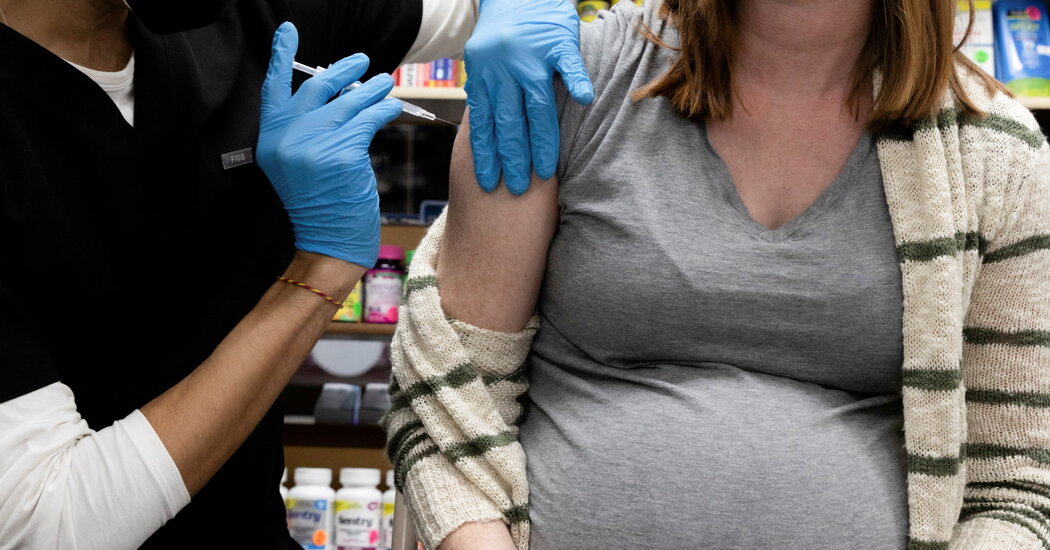
The Delta variant was the main reason that people decided to get vaccinated against Covid-19 this summer and why most say they will get boosters when eligible, according to the latest monthly survey on vaccine attitudes by the Kaiser Family Foundation, released on Tuesday morning. But the survey indicated that nearly three-quarters of unvaccinated Americans view boosters very differently, saying that the need for them shows that the vaccines are not working.That divide suggests that while it may be relatively easy to persuade vaccinated people to line up for an additional shot, the need for boosters may complicate public health officials’ efforts to persuade the remaining unvaccinated people to get their initial one.Another takeaway from the Kaiser Family Foundation survey: For all the carrots dangled to induce hesitant people to get Covid shots — cash, doughnuts, racetrack privileges — more credit for the recent rise in vaccination goes to the stick. Almost 40 percent of newly inoculated people said that they had sought the vaccines because of the increase in Covid cases, with more than a third saying that they had become alarmed by overcrowding in local hospitals and rising death rates.“When a theoretical threat becomes a clear and present danger, people are more likely to act to protect themselves and their loved ones,” said Drew Altman, the Kaiser Family Foundation’s chief executive.The nationally representative survey of 1,519 people was conducted from Sept. 13-22 — during a time of surging Covid deaths, but before the government authorized boosters for millions of high-risk people who had received the Pfizer-BioNTech shot, including those 65 and over and adults of any age whose job puts them at high risk of infection.Sweeteners did have some role in getting shots in arms. One-third of respondents said that they had gotten vaccinated to travel or attend events where the shots were required.Two reasons often cited as important for motivating those hesitant to get a vaccine — employer mandates (about 20 percent) and full federal approval for the Pfizer-BioNTech vaccine (15 percent) — carried less sway.Seventy-two percent of adults in the survey said that they were at least partly vaccinated, up from 67 percent in late July. The latest numbers from the Centers for Disease Control and Prevention are even higher, reporting 77 percent of the adult population in the United States with at least one shot. The sharpest change in this month was in vaccination rates for Latinos: a jump of 12 percentage points since late July, to 73 percent, in the number of Latino adults who had received at least one shot.With the vaccination racial gap narrowing, the political divide has, by far, become the widest, with 90 percent of Democrats saying that they have gotten at least one dose, compared with 58 percent of Republicans.Perhaps reflecting pandemic fatigue, about eight in 10 adults said that they believed Covid was now a permanent fixture of the health landscape. Just 14 percent said that they thought “it will be largely eliminated in the U.S., like polio.”

Read more →

How Covid Misinformation Created a Run on Animal Medicine

Emerson Animal Hospital was down to its last 10 milliliters of ivermectin.For months, the veterinary center in West Point, Miss., had watched its supplies of the drug dwindle. Dr. Karen Emerson, the veterinarian who owns the hospital, started the year with one 500-milliliter bottle of ivermectin, which she uses to kill parasites in dogs, chickens and other patients. But as the bottle emptied and her staff tried to find more, they were able to obtain only a 50-milliliter vial. Everyone else told them: None available.So Dr. Emerson began rationing the medicine to give to snakes and other exotic animals for which she had no other deworming treatment. She told dog owners to pay for a more available replacement drug that can cost seven times as much.Dr. Emerson was surprised by ivermectin’s scarcity because it had always been plentiful. But she put two and two together after people started streaming into her clinic to ask about using the drug to treat Covid-19.“I really think that’s why we have a shortage, because so many people are using it,” she said. For more than a year, misinformation that ivermectin is effective at treating or preventing the coronavirus has run rampant across social media, podcasts and talk radio. Even as the Food and Drug Administration has said the drug is not approved to cure Covid and has warned people against taking it, media personalities who have cast doubt on coronavirus vaccines, such as the podcaster Joe Rogan, have promoted ivermectin for that very purpose.The inaccuracies have led to some people overdosing on certain formulations of the drug, which has then stretched doctors and hospitals. But at the very tail end of the misinformation trail are people, like Dr. Emerson, who regularly use the medicine for the animal treatments that it was approved for.Dr. Emerson inspected a chicken for mites and injected it with some of the last doses of ivermectin that she had.Houston Cofield for The New York TimesWhile certain versions of ivermectin can treat head lice and other ailments in people, other formulations — which come in forms such as liquid and paste — are common across the equine and livestock industries as ways to get rid of worms and parasites. People are increasingly trying to obtain those animal products to ward off or battle the coronavirus, farmers, ranchers and suppliers said.The demand has strained the equine and livestock world. Jeffers, a national retailer of animal supplies, recently raised the price of ivermectin paste to $6.99 a tube from $2.99. Overwhelmed by orders, one farm supply store in Las Vegas started selling the medicine only to customers who could prove they had a horse. In California, a rancher was told the backlog of orders was so large that she was 600th in line for the next batch.The dearth has led some farm owners, ranchers and veterinarians to switch to generic or more expensive alternatives for their animals. Others have turned to expired ivermectin or quietly stockpiled the drug when they could. Many were alarmed.“I’m pretty worried,” said Marc Filion, the owner of Keegan-Filion Farm in Walterboro, S.C., which uses the drug for his 400 pigs and 25 cattle. If he couldn’t treat his pigs with the medicine when they were 5 weeks old, he said, they could develop diarrhea and might need to be killed. These experiences underscore the real-world effects of misinformation and how far the fallout can spread, said Kolina Koltai, a researcher at the University of Washington who studies online conspiracy theories.“It doesn’t just affect the communities that believe in misinformation,” she said. “This is something that’s affecting even people who don’t have a stake in the vaccine — it’s affecting horses.”Dr. Emerson’s last vial of ivermectin.Houston Cofield for The New York TimesShe has told dog owners to pay for a more expensive medicine instead.Houston Cofield for The New York TimesLast month, prescriptions for human formulations of ivermectin jumped to more than 88,000 a week, up from a prepandemic baseline of 3,600, according to the Centers for Disease Control and Prevention. Data on people buying animal ivermectin was not available.In a statement, the F.D.A. said it had not received reports of ivermectin shortages but “recognizes that access to animal ivermectin is important for ranchers, farmers and horse owners to maintain herd and animal health.”The agency posted on Twitter last month that people should not use the drug for Covid, writing: “Seriously, y’all. Stop it.”Misinformation about ivermectin as a potential Covid cure began proliferating just weeks after the pandemic hit. In April 2020, scientists at Monash University in Melbourne, Australia, published preliminary findings showing that the medicine, when used in a lab setting, could kill the coronavirus within 48 hours. Monash University cautioned that the results were early and that the research was continuing.“Do NOT self-medicate with Ivermectin and do NOT use Ivermectin intended for animals,” it said on its website.A week later, the F.D.A. issued a warning against using the animal formulations for Covid. No matter. The findings spread rapidly online, fed by other studies that showed beneficial effects from the drug in coronavirus patients. At least one study has been retracted.Inaccurate information has since flourished on social media sites such as Reddit and Facebook. In one Facebook group, Ivermectin Covid-19 Testimonials, 4,200 members swap advice on what side effects to expect from taking the drug and how to calculate dosages of paste meant for horses. The discussions are often echoed on podcasts and elsewhere.“Ivermectin paste do you take orally or rub into skin?” read one recent post in the Facebook group.“Put it on a cracker with a dab of peanut butter on same cracker,” a commenter responded.Facebook said it removed content on potential ivermectin transactions, as well as any claims that the drug is a guaranteed cure. Reddit said it encouraged open discussion as long as the discussions did not violate its policies.As the medicine’s popularity increased, some veterinarians prepared for a shortage. Last year, Dr. Juliana Sorem, a veterinarian at WildCare, an urban research center in San Rafael, Calif., that treats injured wildlife, bought two years’ supply of the drug. Her director told her to act as soon as they heard that people were using it against Covid.“We were trying to be proactive,” Dr. Sorem said. WildCare now has six precious bottles stored away..css-1xzcza9{list-style-type:disc;padding-inline-start:1em;}.css-3btd0c{font-family:nyt-franklin,helvetica,arial,sans-serif;font-size:1rem;line-height:1.375rem;color:#333;margin-bottom:0.78125rem;}@media (min-width:740px){.css-3btd0c{font-size:1.0625rem;line-height:1.5rem;margin-bottom:0.9375rem;}}.css-3btd0c strong{font-weight:600;}.css-3btd0c em{font-style:italic;}.css-1kpebx{margin:0 auto;font-family:nyt-franklin,helvetica,arial,sans-serif;font-weight:700;font-size:1.125rem;line-height:1.3125rem;color:#121212;}#NYT_BELOW_MAIN_CONTENT_REGION .css-1kpebx{font-family:nyt-cheltenham,georgia,’times new roman’,times,serif;font-weight:700;font-size:1.375rem;line-height:1.625rem;}@media (min-width:740px){#NYT_BELOW_MAIN_CONTENT_REGION .css-1kpebx{font-size:1.6875rem;line-height:1.875rem;}}@media (min-width:740px){.css-1kpebx{font-size:1.25rem;line-height:1.4375rem;}}.css-1gtxqqv{margin-bottom:0;}.css-16ed7iq{width:100%;display:-webkit-box;display:-webkit-flex;display:-ms-flexbox;display:flex;-webkit-align-items:center;-webkit-box-align:center;-ms-flex-align:center;align-items:center;-webkit-box-pack:center;-webkit-justify-content:center;-ms-flex-pack:center;justify-content:center;padding:10px 0;background-color:white;}.css-pmm6ed{display:-webkit-box;display:-webkit-flex;display:-ms-flexbox;display:flex;-webkit-align-items:center;-webkit-box-align:center;-ms-flex-align:center;align-items:center;}.css-pmm6ed > :not(:first-child){margin-left:5px;}.css-5gimkt{font-family:nyt-franklin,helvetica,arial,sans-serif;font-size:0.8125rem;font-weight:700;-webkit-letter-spacing:0.03em;-moz-letter-spacing:0.03em;-ms-letter-spacing:0.03em;letter-spacing:0.03em;text-transform:uppercase;color:#333;}.css-5gimkt:after{content:’Collapse’;}.css-rdoyk0{-webkit-transition:all 0.5s ease;transition:all 0.5s ease;-webkit-transform:rotate(180deg);-ms-transform:rotate(180deg);transform:rotate(180deg);}.css-eb027h{max-height:5000px;-webkit-transition:max-height 0.5s ease;transition:max-height 0.5s ease;}.css-6mllg9{-webkit-transition:all 0.5s ease;transition:all 0.5s ease;position:relative;opacity:0;}.css-6mllg9:before{content:”;background-image:linear-gradient(180deg,transparent,#ffffff);background-image:-webkit-linear-gradient(270deg,rgba(255,255,255,0),#ffffff);height:80px;width:100%;position:absolute;bottom:0px;pointer-events:none;}.css-19zsuqr{display:block;margin-bottom:0.9375rem;}.css-12vbvwq{background-color:white;border:1px solid #e2e2e2;width:calc(100% – 40px);max-width:600px;margin:1.5rem auto 1.9rem;padding:15px;box-sizing:border-box;}@media (min-width:740px){.css-12vbvwq{padding:20px;width:100%;}}.css-12vbvwq:focus{outline:1px solid #e2e2e2;}#NYT_BELOW_MAIN_CONTENT_REGION .css-12vbvwq{border:none;padding:10px 0 0;border-top:2px solid #121212;}.css-12vbvwq[data-truncated] .css-rdoyk0{-webkit-transform:rotate(0deg);-ms-transform:rotate(0deg);transform:rotate(0deg);}.css-12vbvwq[data-truncated] .css-eb027h{max-height:300px;overflow:hidden;-webkit-transition:none;transition:none;}.css-12vbvwq[data-truncated] .css-5gimkt:after{content:’See more’;}.css-12vbvwq[data-truncated] .css-6mllg9{opacity:1;}.css-qjk116{margin:0 auto;overflow:hidden;}.css-qjk116 strong{font-weight:700;}.css-qjk116 em{font-style:italic;}.css-qjk116 a{color:#326891;-webkit-text-decoration:underline;text-decoration:underline;text-underline-offset:1px;-webkit-text-decoration-thickness:1px;text-decoration-thickness:1px;-webkit-text-decoration-color:#326891;text-decoration-color:#326891;}.css-qjk116 a:visited{color:#326891;-webkit-text-decoration-color:#326891;text-decoration-color:#326891;}.css-qjk116 a:hover{-webkit-text-decoration:none;text-decoration:none;}Others didn’t move as quickly — and regretted it. Judi Martin, the manager of Skyline Ranch, an equestrian center in Oakland, Calif., said her brother warned her early this year to stock up on ivermectin after he took it to prevent Covid. Ms. Martin said she didn’t take him seriously.Nine months later, Ms. Martin’s provider had sold out. She said the supplier called the drug “liquid gold” and told her that she was 600th in line for its next shipment.Some distributors have made adjustments to deal with the soaring demand. The news spread rapidly last month that V&V Tack & Feed, an animal supply store in Las Vegas, had put up a sign saying customers must show a picture of themselves with their horse to buy ivermectin.“I’m keeping it for my horse people, because they need it,” Shelly Smith, the store associate who put up the sign, said in an interview. “That’s who I’m protecting.”Dr. Emerson treating a 14-pound bunny at her hospital.Houston Cofield for The New York TimesRuth Jeffers, who owns Jeffers, the animal supplies retailer, said she had sold out of ivermectin paste on her website this year. After she restocked with more expensive versions, those tubes sold out, too.So this spring, she limited new customers to five tubes. Partly driven by the demand, she raised prices for Jeffers-branded ivermectin, her cheapest option, to $4.99 a tube from $2.99 — and then to $6.99.“It’s hard having your No. 1 product turn into a circus,” Ms. Jeffers said.At the Horsey Haven Retirement Home in Newcastle, Calif., a boarding stable for retired horses, the lack of affordable ivermectin recently caused a debate about costs. Laura Beeman, Horsey Haven’s owner, said she had long used the drug to kill worms in the stable’s 28 horses. The treatments take place four times a year, at no cost to the horses’ owners.But with the medicine’s prices rising, Ms. Beeman wasn’t sure she could keep offering the service free. She said she might start charging the owners for the now $7.99 tubes of paste, which previously cost $1.99.“At this point, I have none left,” she said.Dr. Emerson said her animal hospital usually went through two 500-milliliter bottles of ivermectin a year. Since opening her 3,500-square-foot hospital seven years ago, she added, she had “never” had difficulties getting the drug.Her first clue that something had changed came two months ago when pet owners started asking about the medicine to treat the coronavirus. Last month, her housekeeper said her sister was drinking ivermectin in her coffee.Dr. Emerson had been trying to restock the drug, but found only the 50-milliliter bottle. Now she said she understood why.She has since done her best to slow the use of the drug in her community, she said. In an August interview with a local TV station, she warned people about the dangers of taking ivermectin and the impact that shortages could have on animals. When people come in to ask about the drug, she said, she also explains the hazards of off-label use.With just 10 milliliters left, Dr. Emerson estimated that she would run out in the next month.“If I have another flock of chickens with leg mites, I’m not going to be able to help them,” she said. “And then I don’t know what we’re going to do.”

Read more →

Facebook Groups Promoting Ivermectin as a Covid-19 Treatment Flourish

Facebook has become more aggressive at enforcing its coronavirus misinformation policies in the past year. But the platform remains a popular destination for people discussing how to acquire and use ivermectin, a drug typically used to treat parasitic worms, even though the Food and Drug Administration has warned people against taking it to treat Covid-19.Facebook has taken down a handful of the groups dedicated to these discussions. But dozens more remain up, according to recent research. In some of those groups, members discuss strategies to evade the social network’s rules.Media Matters for America, a liberal watchdog group, found 60 public and private Facebook groups dedicated to ivermectin discussion, with tens of thousands of members in total. After the organization flagged the groups to Facebook, 25 of them closed down. The remaining groups, which were reviewed by The New York Times, had nearly 70,000 members. Data from CrowdTangle, a Facebook-owned social network analytics tool, showed that the groups generate thousands of interactions daily.Facebook said it prohibited the sale of prescription products, including drugs and pharmaceuticals, across its platforms, including in ads. “We remove content that attempts to buy, sell or donate for ivermectin,” Aaron Simpson, a Facebook spokesman, said in an emailed statement. “We also enforce against any account or group that violates our Covid-19 and vaccine policies, including claims that ivermectin is a guaranteed cure or guaranteed prevention, and we don’t allow ads promoting ivermectin as a treatment for Covid-19.”In some of the ivermectin groups, the administrators — the people in charge of moderating posts and determining settings like whether the group is private or public — gave instructions on how to evade Facebook’s automated content moderation.In a group called Healthcare Heroes for Personal Choice, an administrator instructed people to remove or misspell buzzwords and to avoid using the syringe emoji.An administrator added, referring to video services like YouTube and BitChute: “If you want to post a video from you boob or bit ch ut e or ru m b l e, hide it in the comments.” Facebook rarely polices the comments section of posts for misinformation.Identifying information has been redacted.Facebook said that it broadly looks at the actions of administrators when determining if a group breaks the platform’s rules, it said, and if moderators do break the rules, that counts as strikes against the overall group.The groups also funnel members into alternative platforms where content moderation policies are more lax. In a Facebook group with more than 5,000 members called Ivermectin vs. Covid, a member shared a link to join a channel on Telegram, a messaging service, for further discussion of “the latest good news surrounding this miraculous pill.”“Ivermectin is clearly the answer to solve covid and the world is waking up to this truth,” the user posted.After The Times contacted Facebook about the Ivermectin vs. Covid group, the social network removed it from the platform.Identifying information has been redacted.

Read more →

What it's like to be a nine-year-old in a vaccine clinical trial

In Charlottesville, Virginia, fraternal twins Evan and Lizzy are enrolled in Pfizer’s vaccine trial for children between ages five and 11. The BBC follows them as they go to their second appointment where they receive a placebo or the vaccine. Their father, John, explains that though the family is very comfortable with the safety of the vaccine, consent from the children was the priority.

Read more →

Anti-seizure medication improves cognitive function in some Alzheimer’s patients

An inexpensive anti-seizure medication markedly improves learning and memory and other cognitive functions in Alzheimer’s patients who have epileptic activity in their brains, according to a study published in the Sept. 27th issue of JAMA Neurology.
“This is a drug that’s used for epilepsy,” says Keith Vossel, MD, MSc, director of the Mary S. Easton Center for Alzheimer’s Disease Research at UCLA, and the principal investigator on the clinical trial. “We used it in this study for Alzheimer’s patients who had evidence of silent epileptic activity, which is seizure-like brain activity without the associated physical convulsions.”
Alzheimer’s disease (AD) is the leading cause of dementia worldwide. Early symptoms include short-term memory loss, decline in problem solving, word-finding difficulties, and trouble with spatial navigation. Among Alzheimer’s patients, an estimated 10-22% develop seizures, while an additional 22-54% exhibit silent epileptic activity.
Dr. Vossel showed in earlier studies that patients who experience silent epileptic activity in their brains have a more rapid decline in cognitive function. The researchers chose to test the anti-seizure medication levetiracetam, which was approved by the FDA in 1999 and had also performed well in animal models of Alzheimer’s disease. Now available as a generic, levetiracetam costs around $70 per year. The dose tested in the trial was 125 mg twice a day, far less than a typical dose used for epilepsy.
In the study, 54 patients with mild Alzheimer’s symptoms were screened for silent epileptic activity using an electroencephalogram (EEG) to monitor them overnight, as well as an hour-long magnetoencephalogram (MEG) to record magnetic waves generated from electrical activity.
“MEG can pick up epileptic activity that EEGs miss because it’s looking at a different population of brain cells,” Dr. Vossel explained.

Read more →

How SNPs can be used to detect disease pathways

Researchers at the University of Illinois Urbana-Champaign have developed a new computational tool that can identify pathways related to diseases, including breast and prostate cancer, using single-nucleotide polymorphisms. SNPs, which refer to mutations in a person’s DNA, are the most common type of genetic variation among people. The researchers hope that the tool can help them discover new pathways that have been previously overlooked.
“This work was a part of the Mayo Grand Challenge, which aimed at improving our understanding of Hypoplastic Left Heart Syndrome,” said Saurabh Sinha (BSD/CABBI/GNDP/GSP), a professor of computer science and the IGB’s Director of Computational Genomics. “It is a rare, congenital heart disease that affects children and there is no cure. Our collaborators at the Mayo Clinic had sequenced the DNA of the children and their parents, and our colleagues at UIUC had identified mutations that were present in the children but not the parents. After that, we developed a tool to analyze the data to understand the disease pathways better.”
The tool, called VarSAn (Variant Set Annotator, pronounced ‘version’), uses SNPs that have been identified by sequencing studies as being disease-related, to predict which pathways may be perturbed by these SNPs. Previously, scientists have looked at SNPs that show the strongest statistical signals with respect to a disease. They then carried out experiments to check whether each individual SNP was important.
“We’re trying to approach the problem from a computational point of view. Does the whole gamut of SNPs identified in a genetic study point us to specific pathways that may not be known in the literature?” Sinha said. “The underlying computation is similar to how Google uses an algorithm to identify the right web pages for searches. These types of algorithms are applicable in biology as well to understand genetic variation. Additionally, 90% of the disease-related mutations are in parts of the DNA that do not code for proteins and using this type of approach will be useful for future work.”
The VarSAn tool was validated by two distinct approaches. “We first did a literature search to see if those identified pathways were relevant to the diseases we were looking at,” said Xiaoman Xie, a graduate student in the Sinha lab. “However, this type of validation is subjective and so we also developed an objective approach.”
The second approach is based on testing the consistency of VarSAn’s findings. “If we have two studies that identify two sets of SNPs associated with the same disease, the algorithm should ideally identify the same set of pathways for both of them i.e., it should be consistent. However, if the tool is given two sets of SNPs associated with two different diseases, it should report pathways specific to each disease but not the same set of pathways,” Xie said.
The team is now trying to make VarSAn an online tool where researchers can paste the list of SNPs and the tool reports the pathways directly. “Currently, if a user wants to use this tool, they have to download the repository and run the code themselves, which can be inconvenient. We’re working on making it easier,” Xie said.
The work was funded by the Mayo Clinic Center for Individualized Medicine and the Todd and Karen Waneck Program for Hypolastic Left Heart Syndrome and the National Institutes of Health.
Story Source:
Materials provided by Carl R. Woese Institute for Genomic Biology, University of Illinois at Urbana-Champaign. Original written by Ananya Sen. Note: Content may be edited for style and length.

Read more →

Experimental drug development approach points to better targeted therapies for treatment-resistant leukemia

New research from Johns Hopkins Kimmel Cancer Center investigators shows why some drugs in clinical trials for treating a form of acute myeloid leukemia (AML) often fail and demonstrates a way to restore their effectiveness.
The preclinical study, published in September in Blood Cancer Discovery, potentially clears a pharmacologic hurdle in developing molecularly targeted therapies for AML.
About one-third of patients with AML have a mutation in the gene FLT3. Normal FLT3 genes produce an enzyme that signals bone marrow stem cells to grow and replenish. When mutated, FLT3 causes rapid growth of leukemia cells, leading to higher rates of relapse following treatment and lower survival overall.
FLT3-mutated AML is particularly sensitive to a class of drugs called e-family tyrosine kinase inhibitors (TKIs), making them prime candidates for drug development, says first author David Young, M.D., Ph.D., who conducted the study while at the Johns Hopkins Kimmel Cancer Center. Dr. Young is now at the National Heart, Lung and Blood Institute of the National Institutes of Health.
However, these TKIs and others often fail and patients relapse. In a series of experiments with human leukemia cell lines and mice, the Kimmel Cancer Center team demonstrated that the human alpha(1)-acid glycoprotein (AGP) binds the drug, effectively preventing it from reaching its intended FLT3 mutation target and killing the cancer cells.
Donald Small, M.D., Ph.D., director of the Division of Pediatric Oncology and the Kyle Haydock Professor of Oncology at the Johns Hopkins Kimmel Cancer Center, and colleagues treated mutant FLT3 cell lines grown in human plasma from healthy donors or standard laboratory conditions with lestaurtinib, TTT-3002 or midostaurin a drug approved by the Food and Drug Administration (FDA) that targets FLT3 — at various concentrations. Plasma is the clear part of blood that contains proteins and other non-cellular factors. They found that adding human plasma reduced the ability of TKI to inhibit FLT3, unlike blood components from other sources. Further testing identified human AGP as binding the three drugs and inhibiting their ability to kill leukemia cells.

Read more →

Screening device accurately detects amblyopia (lazy eye)

A handheld screening device that detects subtle misalignment of the eyes accurately identifies children with amblyopia (lazy eye), according to a study published in the Journal of the American Association for Pediatric Ophthalmology and Strabismus.
“The findings suggest that pediatricians and other primary care providers could use the device to catch amblyopia at an early age when it’s easier to treat,” said Michael F. Chiang, M.D., director of the National Eye Institute (NEI), which supported research and development of the device. NEI is part of the National Institutes of Health.
Amblyopia is impaired vision in one eye and it is the leading cause of preventable monocular (single eye) vision loss, affecting three of every 100 children in the U.S.
During early childhood, our developing brains learn how to take images from each eye and fuse them into a single image to produce vision. Amblyopia develops when misalignment of the eyes (strabismus) or decreased acuity in one eye interferes with the brain’s ability to process visual information from both eyes, causing it to favor one eye. Once a child is visually mature, vision lost in the weaker eye cannot be corrected with glasses or contact lenses.
Children with amblyopia can suffer from poor school performance and impairments in depth perception and fine motor skills such as handwriting and other hand-eye coordinated activities.
Treatment of amblyopia generally involves placing a patch over the good eye to improve vision in the weaker eye. Patching is less successful as children get older, making early detection crucial. However, this depends on timely diagnosis by the child’s doctor, and most pediatricians are equipped only for basic eye chart vision screening tests, which are not useful for detecting amblyopia in very young children.

Read more →

Sunlight exposure guidelines may need to be revised

Previously published solar exposure guidelines for optimal vitamin D synthesis based on a study of skin samples may need to be revised, according to new research published today in PNAS.
A study by researchers from King’s College London, with support from the NIHR Guy’s and St Thomas’ Biomedical Research Centre, has tested the optimum ultraviolet radiation (UVR) wavelengths for human skin production of vitamin D in sunlight.
UVR from sunlight can cause sunburn and skin cancer, however, it is the most important source of vitamin D that is essential for healthy bone development and maintenance.
Public health advice on sunlight exposure takes both risk and benefits into account. Calculating the potential risks and benefits from sunlight exposure is not simple because the health outcomes from UVR exposure vary considerably with wavelength within the sun’s UVR spectrum. For example, the sun’s UVR contains less than 5% short wavelength UVB radiation but this is responsible for over 80% of the sunburn response. Each health outcome from solar exposure has its own unique wavelength dependency.
The association between specific UVB wavelengths and vitamin D production was determined more than thirty years ago in skin samples (ex vivo). However, the finding is less well established and there have been doubts about its accuracy. These doubts compromise risk/benefit calculations for optimal solar exposure.
Researchers led by the Professor Antony Young from King’s College London measured blood vitamin D levels in 75 healthy young volunteers, before, during, and after partial or full body exposure to five different artificial UVR sources with different amounts of UVB radiation, to weigh the trade-off between the benefits of solar exposure, which include vitamin D synthesis, versus the risks of sunburn and skin cancer.
They then compared their results with those that would be predicted from the old ex vivo vitamin D study and found the previous study is not an accurate predictor of benefit from UVR exposure.
The authors recommend a simple systematic correction of the ex vivo wavelength dependency for vitamin D. The new study means that many risk benefit calculations for solar UVR exposure must be reviewed with a revised version of the wavelength dependency for vitamin D.
Professor Antony Young said: “Our study shows that risk versus benefit calculations from solar exposure may need to be re-evaluated. The results from the study are timely because the global technical committee, Commission internationale de l’éclairage, that sets UVR standards will be able to discuss the findings of this paper to re-evaluate the wavelength dependency of vitamin D. Further research from our group will determine the risk/benefit calculations.”
Story Source:
Materials provided by King’s College London. Note: Content may be edited for style and length.

Read more →