Pfizer and BioNTech Submit Data on Vaccine for Kids 5 to 11

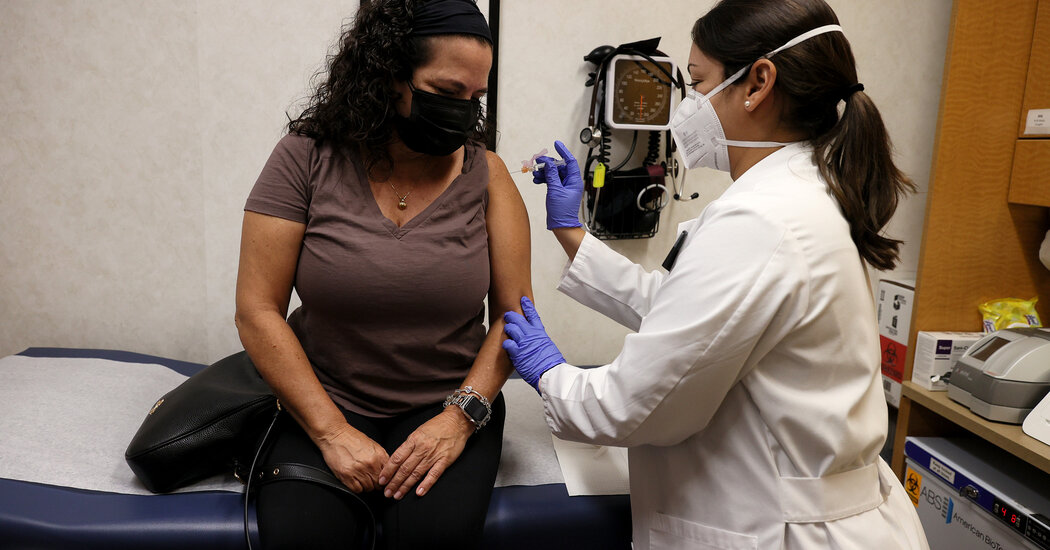
The companies said that their vaccine was safe and effective in that age group, and that they would submit a formal request in the coming weeks to U.S. regulators to allow a pediatric dose.WASHINGTON — Pfizer and BioNTech announced on Tuesday that they had submitted data to the Food and Drug Administration that the companies said showed their coronavirus vaccine is safe and effective in children ages 5 to 11.The companies said they would submit a formal request to regulators to allow a pediatric dose of their vaccine to be administered in the United States in the coming weeks. Similar requests will be filed with European regulators and in other countries.The announcement, coming as U.S. schools have resumed amid a ferocious wave of the highly contagious Delta variant, brings many parents another step closer to the likelihood of a coronavirus vaccine for their children.Asked on Tuesday when the vaccine might be cleared for children, Pfizer’s chief executive, Dr. Albert Bourla, said he did not want to pre-empt regulators.“It’s not appropriate for me to comment how long F.D.A. would take to review the data,” Dr. Bourla said in an appearance at the Atlantic Festival, hosted by The Atlantic magazine. “They should take as much time as they think is appropriate for them.” He added that an authorization around Halloween, as some health officials have suggested could be possible, was “one of the options, and it’s up to the F.D.A.”Just over a week ago, Pfizer and BioNTech announced favorable results from their clinical trial with more than 2,200 participants in that age group. The F.D.A. has said it will analyze the data as soon as possible. Dr. Peter Marks, the agency’s top vaccine regulator, said recently that barring “surprises,” an authorization could come in “a matter of weeks, not months” after the companies submitted data.The companies said last week that their vaccine had been shown to be safe and effective in low doses in children ages 5 to 11, offering hope to parents in the United States who are worried that a return to in-person schooling has put children at risk of infection.About 28 million children ages 5 to 11 would be eligible for the vaccine in the United States, far more than the 17 million ages 12 to 15 who became eligible for the vaccine in May.But it is not clear how many in the younger cohort will be vaccinated. Inoculations among older children have lagged: Only about 43 percent of children ages 12 to 15 have been fully vaccinated in the United States, compared with 67 percent of adults, according to federal data.Although many remain eager to inoculate their children, opinion polls suggest that some parents have reservations. A survey published last month by the Kaiser Family Foundation found that 26 percent of parents of children ages 5 to 11 would vaccinate their children “right away” once doses were authorized for their age group, 40 percent said they would “wait and see” how the vaccine worked before doing so and 25 percent said they would not have their child vaccinated at all.Studies have shown that unvaccinated children who contract the coronavirus tend not to get seriously ill, leading some parents to wonder whether the risks of a new vaccine outweigh the benefits.And some parents who are themselves vaccinated have expressed concerns about the relatively small size of the children’s trials and about a lack of data on the long-term safety of the shots. The Pfizer-BioNTech and Moderna vaccines have been tied in rare cases to the heart condition myocarditis, an inflammation of the heart muscle, particularly in younger men. Concern about that possible side effect could be alleviated by the lower doses that children are set to receive of the Pfizer-BioNTech vaccine.

Read more →

Plasmodium falciparum evolving to escape malaria rapid diagnostics in Africa

A major tool against malaria in Africa has been the use of rapid diagnostic tests, which have been part of the “test-treat-track” strategy in Ethiopia, the second most-populated country in Africa. But researchers studying blood samples from more than 12,000 individuals in Ethiopia now estimate these tests missed nearly 10% of malaria cases caused by the parasite Plasmodium falciparum, the most common cause of malaria cases and deaths.
The research, published in Nature Microbiology, showed that two genetic mutations to the parasite allow it to escape detection.
“This is a serious problem for malaria control efforts and a reminder that pathogens are very capable of adapting to survive,” said senior author Jonathan B. Parr, MD, assistant professor in the division of infectious diseases at the UNC School of Medicine. “Surveillance across the Horn of Africa and alternative malaria diagnostic approaches in affected regions are urgently needed.”
Co-corresponding authors are Sindew M. Feleke, MSc, at the Ethiopian Public Health Institute, Jane Cunningham, MD, at the WHO, and Dr. Parr.
This research project was conducted in partnership with the Ethiopian Public Health Institute and the World Health Organization. The research team enrolled 12,572 participants along Ethiopia’s border with Eritrea, Sudan, and South Sudan, using RDTs, PCR diagnostics, an ultrasensitive immunoassay for antigen detection, and next-generation sequencing to find that P. falciparum lacking the genes histidine-rich protein 2 (pfhrp2) and histidine-rich protein 3 (pfhrp3) escape detection by the RDTs and appear to have spread rapidly.
In collaboration with Brown University’s Jeffrey A. Bailey, MD, PhD, and Ozkan Aydemir, PhD, the researchers applied a molecular sequencing approach to pinpoint the particular deletion patterns of these genetic mutations. “Our method allowed us to study the rich genomic information surrounding these genes in fine detail and at scale, facilitating the identification of evolutionary origins of these deletions,” Aydemir said.
“Our work indicates that prhrp3 deletions have arisen independently multiple times over the course of years,” said Parr, who is a member of the UNC Institute for Global Health and Infectious Diseases. “We also found signs that RDT-based testing and treatment are driving a recent rise in pfhrp2 deletion mutation prevalence, allowing parasites to escape detection.”
In the Nature Microbiology paper, the authors ask, “What other advantages might pfhrp2/3-deleted parasites have over those with intact genes? Our limited understanding of the biology of these deletions makes this question hard to answer.” But the authors posit several lines of inquiry in the paper, though one thing is certain.
Parr said, “We found clear evidence that parasites have recently evolved to escape detection by malaria rapid diagnostic tests along Ethiopia’s borders with Sudan and Eritrea. False-negative results were common in multiple sites and will lead to misdiagnosis and malaria deaths without intervention.”
“The results of this joint research effort have prompted us to change our diagnostic testing policies from HRP2/3-detecting RDTs to non-HRP2/3 targeted RDTs in the most affected regions of Ethiopia,” Feleke said.
Also, along with several other unpublished reports, this study prompted the WHO to issue a statement of concern.
Cunningham, said, “The WHO recommends that all malaria endemic countries start and maintain surveillance for pfhrp2/3 deletions and respond appropriately when they are confirmed, in order to prevent unnecessary morbidity and deaths and to safeguard inroads that have been made towards malaria elimination, particularly in sub-Saharan Africa.”

Read more →

Reducing salt in bread without sacrificing taste

Most people in the U.S. consume too much salt; adult Americans typically eat twice the daily amount recommended by dietary guidelines. Bread may not seem like an obvious culprit; however, due to high consumption and relatively high salt content, baked goods are a major source of sodium in the diet. A new study from the University of Illinois explores ways to reduce sodium in bread without sacrificing taste and leavening ability.
“Bread is one of the staple foods in a lot of people’s diets, and people generally don’t stick to just one serving of bread,” says Aubrey Dunteman, graduate student in the Department of Food Science and Human Nutrition at U of I, and lead author on the paper.
“About 70% of sodium in the U.S. food supply comes from packaged and processed foods. And the top source is actually baked goods, so reducing salt in that particular category would help to reduce sodium consumption tremendously,” adds study co-author Soo-Yeun Lee, professor of food science at U of I.
We can’t completely eliminate salt from our diet, but we can reduce it to a healthier level.
“Salt is an essential nutrient, and this is why we crave it. However, we consume more than we should, just like sugar and fat. Salt is related with hypertension and other cardiovascular diseases, but it’s the amount that is the problem, not the salt itself,” Lee notes.
Salt is also an essential ingredient in bread making; it contributes to the structure and flavor of the bread, and is necessary for the yeast to work properly.

Read more →

Researchers identify mutations of Delta, Delta Plus variants

When Kamlendra Singh flew back to Missouri from India in April, he developed a cough and fever on the plane, despite being vaccinated for COVID-19 and testing negative for the virus right before departure.
Still, Singh tested positive for COVID-19, most likely due to infection from the Delta variant, upon his arrival home in Boone County — a diagnosis other fully vaccinated people and those who have already tested positive for the contagious virus were experiencing. He wanted to know why.
Following his recovery at home, Singh, a professor in the MU College of Veterinary Medicine and Bond Life Sciences Center, teamed up with MU undergraduate student Austin Spratt, Saathvik Kannan, a freshman at Hickman High School, and Siddappa Byrareddy, a professor at the University of Nebraska Medical Center, to analyze protein sequences for more than 300,000 COVID-19 samples of two emerging variants around the world, known as Delta and Delta Plus.
Using bioinformatics tools and programming, the team identified five specific mutations that are far more prevalent in Delta Plus infections compared to Delta infections, including one mutation, K417N, that is present in all Delta Plus infections but not present in nearly any Delta infections. The findings provide important clues to researchers about the structural changes to the virus recently and highlight the need to expand the toolbox in the fight against COVID-19.
“Whether it is natural antibodies produced from previously having COVID-19 or the antibodies produced from the vaccine, we are showing structurally how dangerous and clever the virus is by being able to mutate in a way that the antibodies don’t seem to recognize and defend against these new variants,” Spratt said. “These findings help explain why there have been so many people testing positive for the Delta variants despite being vaccinated or having previously been infected with COVID-19.”
Singh explained that while COVID-19 vaccines have been effective, another possible tool in responding to the pandemic could be the development of antiviral drugs that target specific areas of the virus that remain unchanged by mutations.
“There has not yet been a vaccine for HIV due to the unpredictable variability that often comes with viruses that mutate frequently,” Singh said. “If we can develop small molecule drugs that target the part of the virus that does not mutate, that will be the ultimate solution for combatting the virus.”
“Evolutionary analysis of the Delta and Delta Plus variants of the SARS-CoV-2 viruses” was recently published in the Journal of Autoimmunity. Funding was provided by MU’s Bond Life Sciences Center and the National Strategic Research Institute at the University of Nebraska.
Story Source:
Materials provided by University of Missouri-Columbia. Note: Content may be edited for style and length.
Read more →

Counting cells may shed light on how cancer spreads

As tumors grow within an organ, they also release cells that enter the bloodstream. These cells can travel to other organs, seeding new tumors called metastases.
MIT engineers have now developed a technique that, for the first time, allows them to measure the generation rate of these circulating tumor cells (CTCs) in mice. Their approach, which also reveals how long CTCs survive once released into the bloodstream, could help scientists learn more about how different types of cancers spread through the body.
“By exchanging blood between mice while counting CTCs in real-time, we obtained a direct measurement of how quickly CTCs enter the circulation and how long it takes before they’re cleared,” says Scott Manalis, the David H. Koch Professor of Engineering in the departments of Biological Engineering and Mechanical Engineering, a member of the Koch Institute for Integrative Cancer Research, and the senior author of the study.
Using their new system, the researchers were able to study CTCs from pancreatic tumors as well as two types of lung tumors.
Graduate student Alex Miller and Bashar Hamza PhD ’20, a Koch Institute visiting scientist, are the lead authors of the paper, which appears today in Nature Communications.
Capturing rare cells
Circulating tumor cells are rare in patients: One milliliter of blood might contain between one and 10 such cells. In recent years, researchers have devised strategies to capture these elusive cells, which can yield a great deal of information about a patient’s tumor, and even help doctors track how a tumor is responding to treatment.

Read more →

How Alcohol Can Affect Your Heart Rate

My smartwatch shows me that my sleeping heart rate is much higher at night after I’ve had a couple of glasses of wine. It’s normally around 60 beats per minute, but it spikes up to 80 to 100 if I drink more than a glass of wine. Is that normal?We all know that a glass or two of wine can help you relax and unwind. But alcohol can also have pronounced effects on your cardiovascular system in the hours after you consume it, causing your heart to beat faster, at least in the short term. And in general, the more you drink, the greater the uptick in your heart rate.Experts say that for most healthy adults, a temporary increase in heart rate caused by one or two drinks is probably not something to worry about. But it could be problematic for people who have conditions that cause irregular heart rhythms, such as atrial fibrillation or other types of arrhythmias, or for those who are at high risk for heart attacks or strokes.Last year, a group of researchers analyzed data from 32 different clinical trials of alcohol consumption involving 767 people; most were healthy young men in their 20s and 30s. They saw distinct patterns in how alcohol affected their heart rates and blood pressure readings shortly after drinking.In general, a normal resting heart rate for adults is between 60 and 100 beats per minute. The researchers found that consuming one standard drink — generally defined as a 12-ounce beer, a five-ounce glass of wine or a cocktail containing 1.5 ounces of liquor — tended to elevate the participants’ heart rates by about five beats per minute in the six hours that followed. With two or more drinks, the increase in heart rate was greater, and heart rates remained slightly elevated up to 24 hours later.Alcohol also had distinct effects on blood pressure. A single drink had little effect on blood pressure, but when people consumed two drinks, they experienced a slight dip in their blood pressure levels in the hours that followed. When they had more than two drinks, however, they saw their blood pressure levels fall at first and then begin to climb, eventually becoming slightly elevated about 13 hours after they drank. The findings on blood pressure seem to square with other studies that have shown that light drinking can be slightly beneficial to cardiovascular health, causing your blood vessels to dilate and blood pressure to fall, but that having more than two drinks on one occasion can stress your circulation.It’s common for people to drink in the evening. So scientists have also looked at what happens when people consume alcohol before going to bed. In one study published in January, researchers recruited 26 men and women and had them spend three nights in a lab where they were monitored as they slept. On one occasion, the participants consumed what are considered “moderate” amounts of alcohol before going to bed: The women each had one glass of wine, and the men drank two glasses of wine. On another night, the participants drank heavier amounts: The women drank three glasses of wine, and the men had four. On the third night, they were all given nonalcoholic wine, which served as a placebo.Aileen Son for The New York TimesThe researchers found that when people drank moderate amounts of wine, their nighttime heart rates rose by 4 percent compared with when they did not drink alcohol. But their heart rates returned to normal in the morning hours. When people drank heavier amounts, however, their nighttime heart rates spiked 14 percent and remained elevated into the morning. The study also found that alcohol, especially when consumed in higher amounts, temporarily lowered the participants’ heart rate variability, a measure of the variation in time between heartbeats. A higher variability is generally a sign of better cardiovascular fitness.One particularly striking study published in 2017 looked at how alcohol can affect your heart rate in social settings. The study was carried out at the Munich Oktoberfest, the world’s largest public beer festival. The researchers recruited more than 3,000 men and women who had been drinking, but were not legally impaired. They tested their blood alcohol concentrations and gave them EKGs to assess their cardiac function. They found that about 26 percent of the revelers had a resting heart rate above 100 beats per minute, a risky but not life-threatening condition known as sinus tachycardia. About 5 to 6 percent of the participants showed other types of irregular heartbeats that are considered more dangerous, including atrial fibrillation, which can lead to serious complications such as strokes. The higher the participants’ breath alcohol concentrations, the greater their odds of having one of these irregular heart rhythms.Dr. Stefan Brunner, a cardiologist at the University Hospital of Munich and an author of the study, said his findings demonstrate that in general, heart rate climbs continuously with increasing blood alcohol levels, but not everyone shows the same level of susceptibility. “Some people react more profoundly with an increasing heart rate than others,” he said, though it’s unclear why that is. Some people may simply have a higher tolerance for alcohol, he said.Dr. Brunner emphasized that for most healthy adults, an increase in heart rate in response to alcohol should not be alarming, especially if you are drinking in moderation, which the Dietary Guidelines for Americans defines as no more than one drink a day for women and up to drinks per day for men. “An increase in heart rate from 60 to 80 to 100 beats per minute is not of concern and just reflects the influence of alcohol,” Dr. Brunner said, though he added that you should be concerned if you experience palpitations after drinking or if your smartwatch alerts you to an abnormal heart rhythm such as atrial fibrillation.You should also be cautious if you have strong risk factors for developing a heart rhythm disorder, such as high blood pressure or coronary artery disease, or if you have experienced arrhythmias in the past. One recent trial published in the Annals of Internal Medicine found that just one can of beer or a single glass of wine could cause an episode of atrial fibrillation in people who have a history of the condition.Dr. Peter Kistler, a cardiologist and expert on heart rhythm disorders, said that people with arrhythmias can drink alcohol, but that they should do so only occasionally, limiting themselves to just one standard drink no more than three or four times a week. Avoiding alcohol altogether, however, could make a big difference. Dr. Kistler’s research has shown that in people with recurrent arrhythmias who were regular drinkers, giving up alcohol cut their rate of events in half.

Read more →

MacArthur Foundation Announces 2021 ‘Genius’ Grant Winners

This year’s 25 winners include Ibram X. Kendi, who wrote “How to Be an Antiracist,” the poet Hanif Abdurraqib and the writer and curator Nicole Fleetwood. The awards come with prestige — and $625,000.The historian and social critic Ibram X. Kendi is used to getting hate mail. And sometimes the disdain for him and his work takes the form of a phone call. So when he does not recognize the number he does not often answer.Such was the case on a recent day when Dr. Kendi, who wrote the best-selling book, “How to Be an Antiracist,” ignored a call from Chicago. It would take a text-message exchange with the caller and a little online sleuthing, but he eventually discovered that the person calling was from the John D. and Catherine T. MacArthur Foundation. He was intrigued: Were they calling to talk about a potential research collaboration — or was it something else?Dr. Kendi let them call again. And when he picked up, he would learn that the foundation was calling to convey happy news — the something else he had allowed as a possibility: He had been awarded a prestigious (and lucrative) MacArthur Fellowship.“My first words were ‘Are you serious?’” he recalled. Indeed, they were.“It’s very meaningful — I think to anyone who studies a topic where there’s a lot of acrimony and a lot of pain — to be recognized and to get love mail sometimes,” he said. “And this is one of the greatest forms of that I have ever received.”Dr. Kendi, 39, is perhaps the most widely known of the 25 people in this year’s class of MacArthur Fellows. His 2019 book, “How to Be an Antiracist,” has sold 2 million copies and established him as one of the country’s leading commentators on race since the George Floyd protests last year.But the MacArthur Fellowship is not simply love mail. It comes with a no-strings-attached grant of $625,000, to be awarded over five years. And it is known colloquially as the “genius” award, to the sometime annoyance of the foundation.Cecilia Conrad, managing director of the program, said the goal of the awards is to recognize “exceptional creativity,” as well as future potential, across the arts, sciences, humanities, advocacy and other fields.“We want to have a share in people who are at a pivotal moment, when the fellowship could accelerate what their future could look like,” she said.Most of the 2021 fellows, while esteemed in their fields, have yet to become household names.There are artists and writers like the poet and lawyer Reginald Dwayne Betts, the critic, essayist and poet Hanif Abdurraqib; the novelist and radio producer Daniel Alarcón; and the writer and curator Nicole R. Fleetwood, whose book “Marking Time: Art in the Age of Mass Incarceration” won the 2021 National Book Critics Circle Award for criticism.Dr. Fleetwood, 48, who is also a professor of media, culture and communication at New York University, curated an exhibition by the same name that won praise after its debut at MoMA PS1 last year. In the book and the accompanying museum exhibition, Dr. Fleetwood delves into the cultural and aesthetic significance of the art made by incarcerated people.“To me, one of the great gifts for people who go to the show or read the book is that it challenges their assumptions about who’s incarcerated, why they are incarcerated and what they do with their time,” Dr. Fleetwood said.The grant will help the “Marking Time” project expand its footprint on tour, she added, noting that she had recently helped install the exhibition in Birmingham. Ala.Other fellows in this year’s class include Trevor Bedford, a virologist who is developing real-time tools for tracking virus evolution; Marcella Alsan, a physician and economist who studies how the legacies of discrimination perpetuate health inequalities; and Desmond Meade, a civil rights activist who works to restore voting rights to formerly incarcerated people.And there are several fellows who work with or study technology. Joshua Miele, a technology designer at Amazon, develops devices that help visually impaired or blind people like himself gain access everyday to tech products and digital information. Safiya Noble, a digital media scholar, has written about how search engines reinforce racist and sexist stereotypes.The youngest fellow is Jordan Casteel, 32, a painter known for portraits that capture everyday encounters with people of color. The oldest is Jawole Willa Jo Zollar, 70, a choreographer who founded the performance ensemble Urban Bush Women.Unusually, the fellows include a married couple, Cristina Ibarra, a documentary filmmaker who chronicles border communities, and Alex Rivera, a filmmaker who explores issues around migration to the United States. The couple, who sometimes collaborate, were evaluated and selected separately, but informed together.Cristina Ibarra, a documentary filmmaker who chronicles border communities, was awarded a fellowship as was her husband, Alex Rivera, a filmmaker.John D. and Catherine T. MacArthur Foundation“It was a lot of fun to call them,” Ms. Conrad said.Few honors carry the prestige — and mystique — of the MacArthurs. Potential fellows cannot apply but are suggested by a network of hundreds of anonymous nominators from across the country and narrowed down by a committee of about a dozen people, whose names are not released.“There is nothing like being recognized by your peers,” Dr. Kendi said. “We’re all creating, writing and functioning in communities. We as individuals are nothing without the communities where we create and work.”There is no theme to any given class, Ms. Conrad said. But virtually all this year’s winners outside the sciences do work relating to social and racial justice. And that meshes with the funding priorities of the foundation, which was one of five foundations that last June pledged additional payouts of $1.7 billion in response to the pandemic, in part financed by issuing debt.In July, the foundation, whose endowment in December 2020 was $8.2 billion, announced $80 million in grants to support “an equitable recovery from the pandemic and combat anti-Blackness, uplift Indigenous Peoples and improve public health equity.”Another fellow, Monica Muñoz Martinez, a historian at the University of Texas, Austin, is a co-founder of Refusing to Forget, a nonprofit that promotes awareness of the largely ignored history of racial violence along the U.S.-Mexico border in the early 20th century, which she recounted in her 2018 book “The Injustice Never Leaves You: Anti-Mexican Violence in Texas.”It’s a hotly contested subject in Texas, which has been flooded by legislation that seeks to play down references to slavery and anti-Mexican discrimination in the teaching of state history.“As a historian who studies histories of racist violence, and who studies the long struggle for civil rights and for social justice, it is unsettling every day to see so many of the dangerous patterns from the past repeating,” Dr. Martinez said.“We are living in a moment where there are organized efforts to restrict rights: Voting rights, reproductive rights, you could talk about immigration all afternoon,” she added. “There is so much at stake.”

Read more →

Magnetic stimulation of the brain can improve episodic memory, study finds

Memories of past events and experiences are what define us as who we are, and yet the ability to form these episodic memories declines with age, certain dementias, and brain injury. However, a study publishing in the open access journal PLOS Biology on September 28thby Mircea van der Plas and Simon Hanslmayr from the University of Glasgow and colleagues, shows that low frequency repetitive transcranial magnetic stimulation — or rTMS — delivered over the left prefrontal cortex of the brain can improve memory performance by reducing the power of low frequency brain waves as memories form.
Based on current knowledge of the brain and the effects rTMS, the researchers hypothesized that they could improve episodic memory, and in the process, generate targets for future memory-related therapies.
The researchers first analyzed past data from 40 college students who had been asked to memorize lists of words. Half of the students received slow rTMS over the left dorsolateral prefrontal cortex while trying to memorize the words, and the other half received rTMS over a control region of the brain. In a new experiment, researchers collected data from 24 college students who each performed a similar memory task under both rTMS conditions.
Analysis of both datasets revealed that memory performance was better for words that were memorized while the left prefrontal cortex was being stimulated. Examining the EEG data that was recorded during the experiments, the researchers found that the slow rTMS applied to the prefrontal region led to reduced power of low-frequency (beta) waves in the parietal region of the brain, which is known to be involved in attention and perception.
Because slow rTMS inhibits brain activity, and the prefrontal cortex inhibits the posterior regions of the brain, van der Plas and co-authors theorize that the slow rTMS disinhibited the activity of the parietal region, leading to enhanced encoding of the words being memorized, and thus improved memory.
van der Plas notes, “Our electrophysiological results suggest that frontal stimulation affects a wider network and improves memory formation by inhibiting parietal areas. These are complex but interesting effects that require further experiments to better understand their neural basis.”
Hanslmayr adds, “We were quite surprised when we saw these effects in the first study, which was designed to investigate a different question. Therefore, we needed to replicate the effects in a second experiment to see whether this is real, and indeed it seems to be.”
Story Source:
Materials provided by PLOS. Note: Content may be edited for style and length.

Read more →

AI may predict the next virus to jump from animals to humans

Most emerging infectious diseases of humans (like COVID-19) are zoonotic — caused by viruses originating from other animal species. Identifying high-risk viruses earlier can improve research and surveillance priorities. A study publishing in PLOS Biology on September 28th by Nardus Mollentze, Simon Babayan, and Daniel Streicker at University of Glasgow, United Kingdom suggests that machine learning (a type of artifical intelligence) using viral genomes may predict the likelihood that any animal-infecting virus will infect humans, given biologically relevant exposure.
Identifying zoonotic diseases prior to emergence is a major challenge because only a small minority of the estimated 1.67 million animal viruses are able to infect humans. To develop machine learning models using viral genome sequences, the researchers first compiled a dataset of 861 virus species from 36 families. They then built machine learning models, which assigned a probability of human infection based on patterns in virus genomes. The authors then applied the best-performing model to analyze patterns in the predicted zoonotic potential of additional virus genomes sampled from a range of species.
The researchers found that viral genomes may have generalizable features that are independent of virus taxonomic relationships and may preadapt viruses to infect humans. They were able to develop machine learning models capable of identifying candidate zoonoses using viral genomes. These models have limitations, as computer models are only a preliminary step of identifying zoonotic viruses with potential to infect humans. Viruses flagged by the models will require confirmatory laboratory testing before pursuing major additional research investments. Further, while these models predict whether viruses might be able to infect humans, the ability to infect is just one part of broader zoonotic risk, which is also influenced by the virus’ virulence in humans, ability to transmit between humans, and the ecological conditions at the time of human exposure.
According to the authors, “Our findings show that the zoonotic potential of viruses can be inferred to a surprisingly large extent from their genome sequence. By highlighting viruses with the greatest potential to become zoonotic, genome-based ranking allows further ecological and virological characterisation to be targeted more effectively.”
“These findings add a crucial piece to the already surprising amount of information that we can extract from the genetic sequence of viruses using AI techniques,” Babayan adds. “A genomic sequence is typically the first, and often only, information we have on newly-discovered viruses, and the more information we can extract from it, the sooner we might identify the virus’ origins and the zoonotic risk it may pose. As more viruses are characterized, the more effective our machine learning models will become at identifying the rare viruses that ought to be closely monitored and prioritized for preemptive vaccine development.”
Story Source:
Materials provided by PLOS. Note: Content may be edited for style and length.

Read more →

Seven symptoms jointly predict COVID-19 diagnosis, study finds

A set of 7 symptoms, considered together, can be used to maximize detection of COVID-19 in the community, according to a new paper published this week in PLOS Medicine by Marc Chadeau-Hyam and Paul Elliott of Imperial College London, UK, and colleagues.
The rapid detection of SARS-CoV-2 infection in the community is key to ensuring efficient control of transmission. When testing capacity is limited, it is important to use tests in the most efficient way possible, including using the most informative symptoms for test allocation. In the new study, researchers obtained throat and nose swabs with valid SARS-CoV-2 PCR test results from 1,147,345 volunteers in England aged 5 years and above. The data were collected over 8 testing rounds conducted between June 2020 and January 2021 as part of the REal-time Assessment of Community Transmission-1 (REACT-1) study. Participants were asked about symptoms they experienced in the week prior to testing.
A model was developed based on the data obtained during rounds 2 to 7, with 7 symptoms selected as jointly positively predictive of PCR positivity: loss or change of smell, loss or change of taste, fever, new persistent cough, chills, appetite loss, and muscle aches. The first 4 of those symptoms are currently used in the UK to determine eligibility for community PCR testing. In round 8 of testing, the resulting model predicted PCR positivity with an area under the curve of 0.77, and testing people in the community with at least 1 of the 7 selected positively predictive symptoms gave sensitivity, specificity, and positive predictive values of 74%, 64%, and 9.7%, respectively. Modeling suggested that the use of the 7 symptoms identified for PCR test allocation would result in 30% to 40% of symptomatic individuals in England being eligible for a test (versus 10% currently) and, if all those eligible were tested, would result in the detection of 70% to 75% of positive cases.
“In order to improve PCR positivity detection rates and consequently improve control of viral transmission via isolation measures, we would propose to extend the list of symptoms used for triage to all 7 symptoms we identified,” the authors say.
“These findings suggest many people with COVID-19 won’t be getting tested — and therefore won’t be self-isolating — because their symptoms don’t match those used in current public health guidance to help identify infected people,” Elliott adds. “We understand that there is a need for clear testing criteria, and that including lots of symptoms which are commonly found in other illnesses like seasonal flu could risk people self-isolating unnecessarily. I hope that our findings on the most informative symptoms mean that the testing programme can take advantage of the available evidence, helping to optimise the detection of infected people.”
Story Source:
Materials provided by PLOS. Note: Content may be edited for style and length.

Read more →