Building bacteria to keep us well

That feeling in your gut? Well, it’s in your head, but some of it does truly start in the gastrointestinal tract.
Some of the trillions of bacteria living in your gut — among viruses, eukaryotes and archaea — synthesize some of the neurotransmitters that are responsible for your nerves, anxiety and euphoria.
When you don’t have enough — or you have too much — of any of these hormones, your mental health can suffer.
Tae Seok Moon, associate professor in the Department of Energy, Environmental & Chemical Engineering at the McKelvey School of Engineering at Washington University in St. Louis, says he’s experienced this imbalance himself. And he’s working on a fix: genetically engineered bacteria that can monitor chemical production from inside a person’s gut and fix any imbalances.
His research was published Nov. 11 in the journal Cell Systems.
“It is a difficult job to do,” Moon said, “to keep your neurotransmitters balanced.” But he has already begun. In 2017, Moon was awarded a grant to engineer a probiotic specifically aimed at protecting people from the negative health effects of adrenaline surges.

Read more →

Team engineers new way to get medication past blood-brain barrier

A University of Texas at Dallas-led team of researchers has developed a new technique to open the blood-brain barrier temporarily to deliver medication to the brain.
Getting medication past the brain’s unique and protective blood vessels, known as the blood-brain barrier, is one of the biggest challenges in treating brain and central nervous system diseases, said Dr. Zhenpeng Qin, associate professor of mechanical engineering at UT Dallas and co-corresponding author of the study that describes the method. The technique uses light and nanoparticles to pry open temporarily these barriers — called tight junctions — to allow medication to reach its target.
Qin and his colleagues in the Erik Jonsson School of Engineering and Computer Science and at other institutions demonstrated the approach in mice in a study published online Sept. 13 in the journal Nano Letters.
Researchers synthesized gold nanoparticles to target the tight junction specifically and demonstrated that transcranial picosecond laser stimulation of the nanoparticles post-intravenous injection increases the permeability of the blood-brain barrier. (Illustration credit: Nano Letters)
The findings are the result of five years of research funded in part by the Cancer Prevention and Research Institute of Texas (CPRIT). Qin said the approach could lead to treatments for brain tumors and Lou Gehrig’s disease, also known as amyotrophic lateral sclerosis; aid in stroke recovery; and deliver gene therapy. Qin said further development and testing is needed before it could be used in humans.
“Approaches to increase blood-brain barrier [BBB] permeability are essential to advance therapeutics for central nervous system diseases,” said Xiaoqing Li, the paper’s co-lead author and a biomedical engineering doctoral student at UT Dallas.

Read more →

Scientists employ digital esophagus to battle Barrett’s

A team including researchers from the Department of Energy’s Oak Ridge National Laboratory has developed a digital tool to better monitor a condition known as Barrett’s esophagus, which affects more than 3 million people in the United States. Barrett’s occurs when the mucosal lining of the lower esophagus deteriorates, altering its cellular structure, and is most common in those with chronic acid reflux.
Barrett’s is considered a premalignant condition because it’s a common precursor to esophageal cancer, so monitoring patients is critical. However, the current paradigm for tracking the progress of the disease, known as the Seattle protocol, is invasive, expensive and potentially ineffective.
Per the protocol, Barrett’s patients must have their esophagus poked with forceps every few months, an uncomfortable experience that only captures a small percentage of the affected tissue, meaning that despite the invasive procedure problematic tissues can remain undetected.
A research team set out to test the effectiveness of the Seattle protocol by constructing a computational model to represent the human esophagus, using real-world data across a large population of tissues.
The team, which also included researchers from Columbia University’s Irving Medical Center, Mount Sinai’s Icahn School of Medicine and Massachusetts General Hospital’s Institute for Technology Assessment, published their results in the journal Simulation.
“The ultimate goal was to strike a balance between physically poking a patient and how often you find something that may be concerning,” said Jim Nutaro, leader for computational systems engineering at ORNL and a researcher on the project. “It reproduces historical data, and cancers that surface in the simulations are analogous to the real world. These are virtual patients, and we can poke them as much as we want.”
The team’s end goal is to minimize the invasiveness of tracking the condition and, by extension, reduce deaths from esophageal cancer by providing a testbed for potential future monitoring regimes.

Read more →

Malaria: New knowledge about naturally acquired immunity may improve vaccines

Each year, about half a million children in Africa die from malaria. Infection with the malaria parasite is such a widespread and deadly disease that scientists all over the globe are working to understand it better in order to be able to fight it.
Now, researchers from the University of Copenhagen have come a significant step closer, as they have found an important difference between naturally acquired immunity and immunity following vaccination.
“The antibodies which the body produces when you have been infected with malaria look different from those produced by the body when you have been vaccinated. And that probably means that our immune system has a more efficient response when we have been naturally infected than when we are vaccinated against malaria,” says Lars Hviid, Professor at the Department of Immunology and Microbiology.
“Natural killer cells”
The immune system can trigger various mechanisms in order to defend the body. The usual defence against infections with parasites, viruses and bacteria consists of so-called macrophages.
“When we are exposed to an attack from the outside, the immune system can produce antibodies that attach to the foreign body that needs to be fought. They are then recognised by some small cells called macrophages, which are attracted to the antibody and eat the bacterium or virus. This is basically how immunity to most infectious diseases works,” explains Lars Hviid.

Read more →

Noninvasive brain biopsy shows improved sensitivity in tumor detection

Glioblastomas are aggressive brain tumors that are commonly diagnosed through a risky and invasive surgical biopsy. A team of researchers led by Hong Chen at Washington University in St. Louis has developed a noninvasive diagnostic method that may one day replace the tissue biopsy with a simple blood test.
Chen, associate professor of biomedical engineering in the McKelvey School of Engineering and of radiation oncology in the School of Medicine; Eric Leuthardt, MD, professor of neurosurgery at Washington University School of Medicine and of biomedical engineering in McKelvey Engineering; and the team tested the method in both small and large animal models and found significantly improved detection and diagnostic sensitivity for brain tumors via a simple blood sample. Results of the study are published online in Theranostics Nov. 10, 2021.
The method, known as sonobiopsy, uses focused ultrasound to target tumors deep in the brain. Once located, the researchers inject microbubbles into the blood that travel to the ultrasound-targeted tissue and pulsate, which safely opens the blood-brain barrier. The temporary openings allow biomarkers, such as DNA, RNA and proteins, from the tumor to pass through the blood-brain barrier and release into the blood.
Chen, Leuthardt and the team have been working on their focused ultrasound-enabled liquid biopsy (sonobiopsy) method for several years, first conducting a feasibility study in mice, followed by a safety evaluation study, and most recently, another study in pigs. While blood-based liquid biopsy has been used in human patients with other cancers for personalized medicine, progress in extending the method to human brain cancer has been limited.
In the new research, the team, including Christopher Pacia, first author and a biomedical engineering doctoral student in the Chen Ultrasound lab, found that the sonobiopsy method boosted detection of genes highly expressed in the mouse model of glioblastoma, EGFRvIII. The DNA levels of EGFRvIII circulating in the bloodstream of the group that underwent sonobiopsy was 920 times greater than the group that underwent convention blood-based liquid biopsy. Further, detection of another circulating tumor genetic marker, TERT C228T ctDNA was 10-fold higher after sonobiopsy. In addition, the method improved diagnostic sensitive from 7.14% to 64.71% for EGFRvIII and from 14.29% to 45.83% for TERT C228T. The team found no increase in tissue damage in the tumor region of interest after the sonobiopsy.
In the pig model, sonobiopsy boosted detection of EGFRvIII ctDNA by 270-fold and increased levels of TERT ctDNA nine-fold. It improved diagnostic sensitivity from 28.57% to 100% for EGFRvIII and from 42.86% to 71.43% for TERT C228T. No significant tissue damage was found.
“Our study showed that sonobiopsy enriched tumor-specific ctDNA in the plasma and improved the detection sensitivity for two glioblastoma phenotypes without posing significant safety risks,” Chen said. “The integration of sonobiopsy with advanced blood analysis assays has the promise to provide minimally invasive, spatiotemporal-controlled, and sensitive diagnosis of brain cancer.”
This work is a collaborative effort involving members from both engineering and medical schools, including Eric Leuthardt, MD, chief of the Division of Neurotechnology and of the Center for Innovation in Neuroscience and Technology and professor of neurosurgery and of neuroscience at the School of Medicine, as well as of biomedical engineering and of mechanical engineering and of applied science in the McKelvey School of Engineering.
“Besides neuroimaging and surgically-acquired tissue for pathology and molecular profiling, sonobiopsy has the potential to become the third pillar for brain tumor management by substantially advancing brain cancer diagnosis, treatment monitoring, and recurrence detection,” Leuthardt said. “This enhanced capability could have an important impact throughout the continuum of patient care.”
Story Source:
Materials provided by Washington University in St. Louis. Original written by Beth Miller. Note: Content may be edited for style and length.

Read more →

More evidence of an evolutionary ‘arms race’ between genes and selfish genetic elements

The human genome is littered with selfish genetic elements, which do not seem to benefit their hosts, but instead seek only to propagate themselves.
These “parasites of the genome” can wreak havoc at the cellular level by distorting sex ratios or causing harmful mutations, and can even lead to a species’ extinction. But, as researchers at the University of Rochester report, species evolve mechanisms to fight back.
In a new paper published in Nature Ecology and Evolution, Daven Presgraves, a University Dean’s Professor in the Department of Biology at the University of Rochester, and Christina Muirhead, a computational biologist and population geneticist in Presgraves’s lab and the first author on the paper, present further evidence of an evolutionary arms race within organisms — and the mechanisms at play in this arms race — to combat selfish genetic elements.
“We have found that an evolutionary arms race has led to a proliferation of meiotic drive genes on the X chromosome and suppressor genes elsewhere in the genome,” Muirhead says.
Drosophila is fruitful and multiplies — which is ideal for studying genetics
The researchers studied the genomes of three closely related species of Drosophila (fruit flies). Fruit flies share about 70 percent of the same genes that cause human diseases and are similar to humans on the molecular level. Because fruit flies have such short reproductive cycles — less than two weeks — scientists can create generations of the flies in a short time. These key characteristics make the insects ideal models for learning more about human genetics.

Read more →

Obesity raises the risk of gum disease by inflating growth of bone-destroying cells

Chronic inflammation caused by obesity may trigger the development of cells that break down bone tissue, including the bone that holds teeth in place, according to new University at Buffalo research that sought to improve understanding of the connection between obesity and gum disease.
The study, completed in an animal model and published in October in the Journal of Dental Research, found that excessive inflammation resulting from obesity raises the number of myeloid-derived suppressor cells (MDSC), a group of immune cells that increase during illness to regulate immune function. MDSCs, which originate in the bone marrow, develop into a range of different cell types, including osteoclasts (a cell that breaks down bone tissue).
Bone loss is a major symptom of gum disease and may ultimately lead to tooth loss. Also known as periodontal disease, gum disease affects more than 47% of adults 30 years and older, according to the Centers for Disease Control and Prevention.
“Although there is a clear relationship between the degree of obesity and periodontal disease, the mechanisms that underpin the links between these conditions were not completely understood,” says Keith Kirkwood, DDS, PhD, professor of oral biology in the UB School of Dental Medicine.
“This research promotes the concept that MDSC expansion during obesity to become osteoclasts during periodontitis is tied to increased alveolar bone destruction. Taken together, this data supports the view that obesity raises the risk of periodontal bone loss,” says Kyuhwan Kwack, PhD, postdoctoral associate in the UB Department of Oral Biology.
The study examined two groups of mice fed vastly different diets over the course of 16 weeks: one group a low-fat diet that derived 10% of energy from fat, the other group a high-fat diet that drew 45% of energy from fat.
The investigation found that the high-fat diet group experienced obesity, more inflammation and a greater increase of MDSCs in the bone marrow and spleen compared to the low-fat diet group. The high-fat diet group also developed a significantly larger number of osteoclasts and lost more alveolar bone (the bone that holds teeth in place).
Also, the expression of 27 genes tied to osteoclast formation were significantly elevated in the group fed a high-fat diet.
The findings may shed more light on the mechanisms behind other chronic inflammatory, bone-related diseases that develop concurrently with obesity, such as arthritis and osteoporosis, says Kirkwood.
Additional investigators include Lixia Zhang, PhD, research scientist in the UB Department of Oral Biology; Jiho Sohn, doctoral candidate in the Jacobs School of Medicine and Biomedical Sciences at UB; Victoria Maglaras, student in the UB School of Dental Medicine; and Ramkumar Thiyagarajan, research scientist in the Jacobs School.
Story Source:
Materials provided by University at Buffalo. Original written by Marcene Robinson. Note: Content may be edited for style and length.

Read more →

AstraZeneca to take profits from Covid vaccine

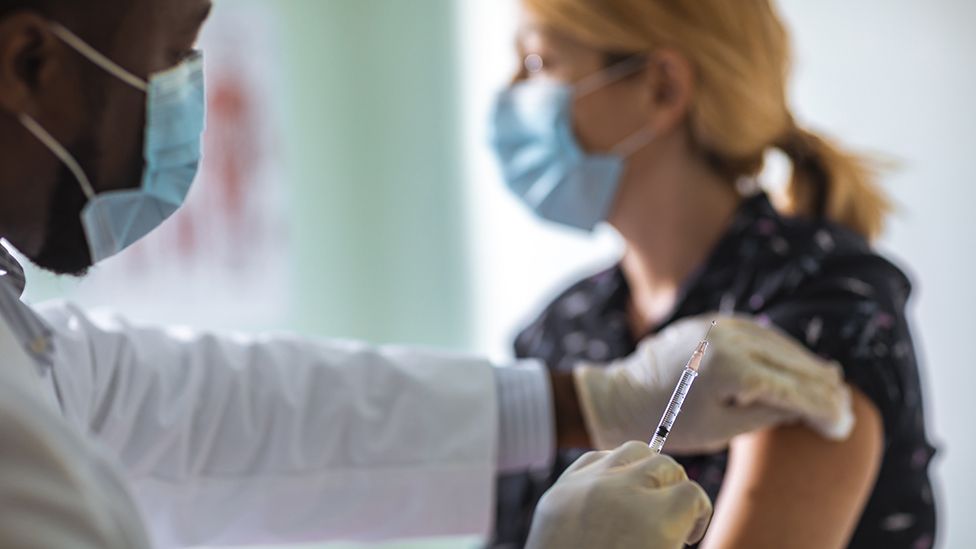
SharecloseShare pageCopy linkAbout sharingImage source, Getty ImagesAstraZeneca has started to move away from providing its Covid-19 vaccine to countries on a not-for-profit basis.The drugs giant has signed a series of for-profit agreements for next year, and expects to make a modest income from the vaccine, it said.The company had previously said it would only start to make money from the vaccine when Covid-19 was no longer a pandemic.Its chief executive Pascal Soriot said the disease was becoming endemic.The jab will continue to be supplied on a not-for-profit basis to poorer countries.Mr Soriot had said previously: “We decided to provide it at no profit, because our top priority was to protect global health.”He told the BBC he had “absolutely no regrets” about not making a profit when competitors had been, despite having to deal with political criticism in various countries.He said the vaccine, which was developed with the University of Oxford, had saved a million lives around the world.”I absolutely don’t regret it,” Mr Soriot said. “We are proud as a company of the impact we have had – we’ve saved millions of hospitalisations. The [AstraZeneca] team continues to do a stellar job.”Covid jab to be compulsory for England’s NHS staffCovid-resistant people inspire new vaccine tacticHe said that the contracts that had been signed are for next year, adding: “The virus is becoming endemic which means we have to learn to live with it.”We started this to help, but we said we would transition [to making a profit on the vaccine],” he said. “It’s not something we see as a huge profit-earner.”There will be tiered pricing for countries to make sure the vaccine is affordable, Mr Soriot said.By the end of the year AstraZeneca expects to have supplied 250 million doses of its vaccine to the Covax programme for developing countries.Covid vaccines: Will drug companies make bumper profits?Other vaccine manufacturers including Pfizer and Moderna have been making profits from their vaccines.A normal profit margin in the drugs industry is about 20%, but Mr Soriot said AstraZeneca, which charges about $5 per shot for the Covid vaccine at cost price, would not be making as much profit as that.However, Nick Dearden, director of campaign group Global Justice Now, said AstraZeneca’s decision to start profiting from the vaccine while the coronavirus pandemic was continuing “shows the utter folly of giving away publicly-funded science to big pharma”.”The non-profit pledge was never a gift to the world from a benevolent company,” he said. “It was the most Oxford could get from a manufacturer playing hardball during a global health emergency.”In its latest financial results, AstraZeneca said: “The company is now expecting to progressively transition the vaccine to modest profitability as new orders are received.”Covid-19 vaccine sales in [the fourth quarter of 2021] are expected to be a blend of the original pandemic agreements and new orders, with the large majority coming from pandemic agreements.”By the end of September, AstraZeneca and its sub-licensees had supplied 1.5 billion doses.The company reported revenues for the first nine months of the year of $25.4bn (£19bn), but said its overall profit margins had declined, mainly due to providing the Covid-19 vaccine at cost price.AstraZeneca said a rise in profits in the fourth quarter from the Covid-19 vaccine would balance out costs related to developing a Covid-19 antibody treatment, as it kept its overall profit forecast for the year the same.

Read more →

Covid: Medication holiday may boost vaccine protection

SharecloseShare pageCopy linkAbout sharingImage source, Getty ImagesAn important trial will test how to boost Covid jab protection in vulnerable patients whose immune systems are weakened by drugs they need for other health conditions. About 1.3 million people in the UK are on methotrexate for conditions such as rheumatoid arthritis and psoriasis. It stops flare-ups, but can make the body less able to fight infections or respond to vaccines. The team will check if a two-week drug holiday timed to vaccination will help. A previous study from Korea showed that a fortnight’s break from methotrexate immediately after the flu vaccine increased the patients’ immune response to that jab. The University of Nottingham researchers, working with other universities and hospitals, will recruit 560 methotrexate patients, and half of them will try the two-week break when they are due to have their third, or booster, Covid jab. Although the Vroom study will take one to two years to complete, scientists hope it will provide confidence for some of the most vulnerable patients at risk from Covid.Image source, Annabelle ImrayOne of the participants is 48-year-old Nottingham mum Annabelle Imray. She takes methotrexate for her psoriatic arthritis to help treat her swollen joints and dry skin. At times, she feels so tired because of her condition that she has to plan her days carefully.She was shielding earlier in the year, and says she is still very cautious now because she is worried about catching Covid.”I explain to the kids that if I catch it, I’m much more likely to be seriously ill than them. “When I do go out, I’m worried walking close to strangers, or if someone is coughing without a mask I would be worried about the potential of catching something. “Hopefully the trial will make a big difference for people on immune-suppressing medicines giving reassurance and confidence to do things they enjoy in their lives and know that we are more protected. It’s the uncertainty that is the worst.”Prof Abhishek Abhishek, the chief investigator, said people on immunosuppressants faced being more at risk of getting ill if they catch Covid, as well as potentially being less able to mount the strongest possible immune response to vaccines against the virus.He said: “We hope to find out whether they can safely take a break from medications for their inflammatory conditions and an improved protection from the booster jab, without the risk of flare-up of their long-term illness which affects their daily lives so heavily.”Many people take methotrexate for more than 10 to 20 years, so we hope to provide high quality evidence which can help them with their day-to-day lives going forward.”Prof Andy Ustianowski from the National Institute for Health Research, which is funding the work, said: “This pivotal study will help develop our understanding of immune responses in people taking this widely-prescribed medicine.” VROOM trialThe BBC is not responsible for the content of external sites.

Read more →

Low-cost medicine effective in treating high blood pressure for some

An all Indiana University School of Medicine team of researchers led by, Rajiv Agarwal, MD, professor of medicine and staff physician at the Roudebush VA, and including Arjun Sinha, MD, associate professor of clinical medicine and renal section chief at the Roudebush VA, and Wanzhu Tu, PhD, professor of biostatistics and health data sciences and research scientist at Regenstrief Institute, found that chlorthalidone was effective in lowering blood pressure in individuals with advanced kidney disease.
The double-blind, placebo-controlled and randomized study, funded by the National Institutes of Health’s National Heart, Lung, and Blood Institute, titled Chlorthalidone in Chronic Kidney Disease (CLICK) was presented as part of a news conference and High Impact Clinical Trials session at the recent international meeting of the American Society of Nephrology and simultaneously published in the New England Journal of Medicine.
“Kidneys are key regulators of blood pressure. When an individual has chronic kidney disease, the kidneys are unable to control blood pressure,” said Agarwal. “If a person suffers from chronic kidney disease and high blood pressure, it is more likely their kidney disease will advance even further and lead to other health issues such as heart failure.”
The CLICK Study randomly assigned patients with stage 4 chronic kidney disease (CKD) to either a placebo or chlorthalidone group, with dosing at 12.5 mg daily. The dose was increased every four weeks, if needed, to a maximum of 50 mg per day for patients in the chlorthalidone group. The study was designed to see if blood pressure decreased in the patients treated with chlorthalidone from baseline to twelve weeks, when monitored using a state-of-the-art device called a 24-hour ambulatory blood pressure monitor.
Chlorthalidone was approved by the FDA in 1960 for treatment of high blood pressure or hypertension. However, it was largely believed to be ineffective in treating high blood pressure in people with advanced chronic kidney disease.
Results from the CLICK study showed chlorthalidone lowered blood pressure by a significant 11 mm Hg at 12 weeks as compared to 0.5 mm Hg reduction with placebo. There was a 50% reduction in albuminuria, a protein that appears in the urine of those suffering from kidney disease, which Agarwal says is remarkable and suggests that chlorthalidone has the potential to reduce kidney failure progression and hospitalizations for heart failure in these patients.
“These results show chlorthalidone is a low-cost solution for the treatment of hypertension in people with chronic kidney disease, ” said Agarwal.” These are people who are already taking a variety of medicines, so to have one that is cheap and effective is incredibly meaningful. However, the drug is potent, so the lowest therapeutic dose and careful monitoring is needed to avoid complications.”
This study was also funded by the Indiana Institute of Medical Research.
Story Source:
Materials provided by Indiana University School of Medicine. Note: Content may be edited for style and length.

Read more →