Male workers should be able to carry out mammograms, experts say

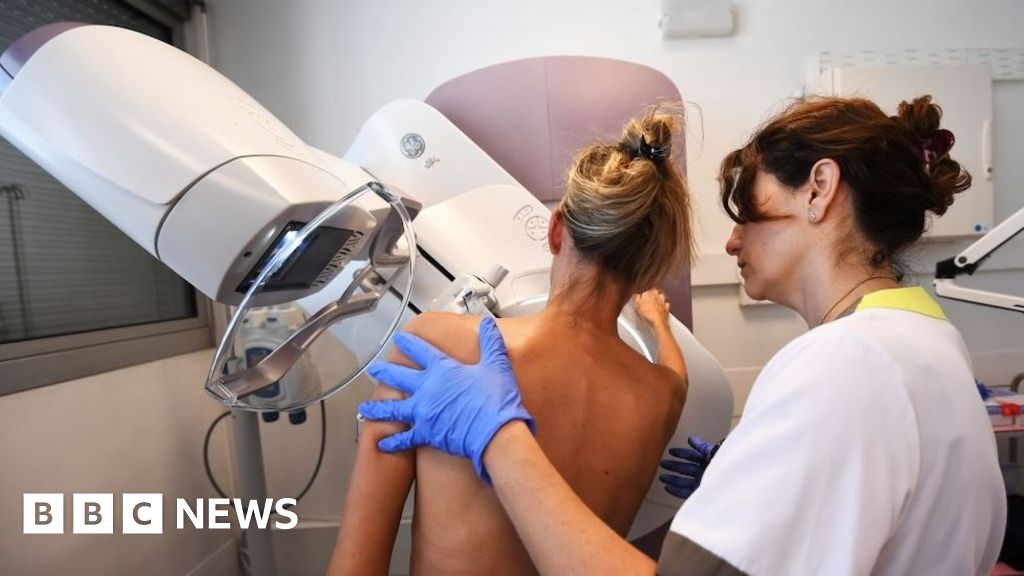
Male health workers should be allowed to perform breast screening examinations to help relieve staff shortages, say experts.X-rays called mammograms are offered to women between the age of 50 and 71 every three years to check for signs of cancer, but can currently only be performed by female staff.The Society of Radiographers (SoR) has called for a change in policy due to “critical” staff shortages among radiographers who specialise in this area.Sally Reed, 67, who had two mastectomies after mammograms revealed breast cancer, told the BBC that “if something can save your life you should go for it” – whether it’s administered by a woman or man.But Sally also admits women who already don’t want to go for breast screening “would definitely be turned off by a man”.Breast X-rays, which look for cancers that are too small to see or feel, are only permitted to be undertaken by female health workers. Mammography is the only health examination carried out exclusively by female staff.According to radiographers, the vacancy rate among mammographers who specialise in breast exams is 17.5%.Among mammographers who assess women who have found a lump in their breast or have a family history of breast cancer, the figure is 20%. Changes to staffing were being discussed at the annual SoR conference, with discussions also taking place over whether transgender men should be included in the NHS breast screening programme. Sue Johnson, who represents the SoR, told the BBC: “The role of the radiographer has developed and evolved and there is a much broader scope to the job role than simply taking the images.”It’s a very desirable and enjoyable career and men are saying ‘we would like to access that same career and we could help deliver the service'”.Johnson said she believes this could help the recruitment of more radiographers and open up the job to more qualified people because “mammography doesn’t get as much publicity” as other health professions.The prospect of men performing mammograms has been explored unsuccessfully in the past, but Johnson believes “the world has changed” and that “the time is right” to start reconsidering the role.Sally Reed said having two mammograms 15 years apart were responsible for “saving” her life.She’s now had two mastectomies after two separate breast cancer diagnoses.Because of what she’s gone through, having a male radiographer “wouldn’t bother me at all”, she says.

Read more →

Plans to extend sugar tax to milkshakes

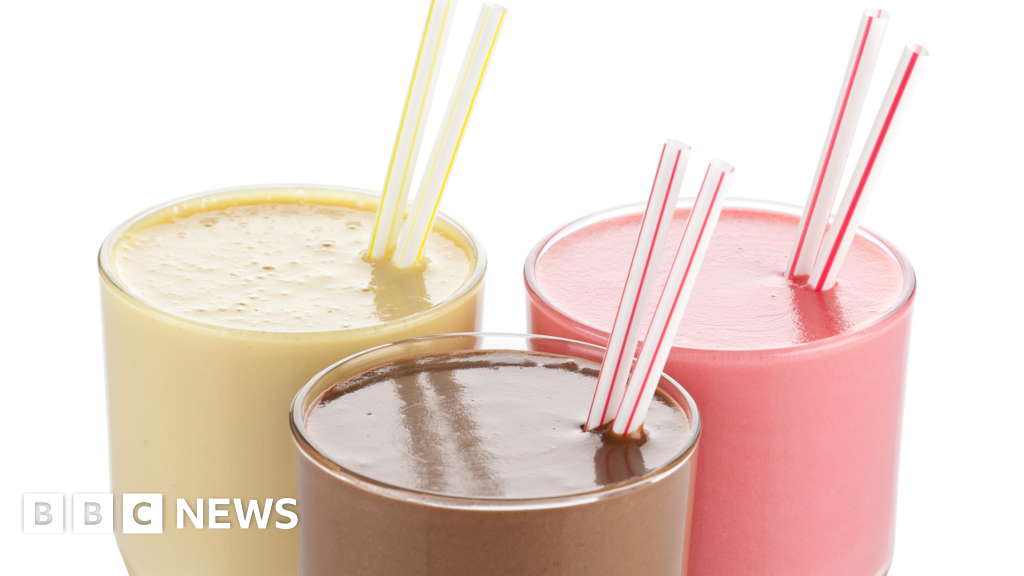
The sugar tax applied to fizzy drinks is set to be extended to milkshakes and other milk-based drinks under new government plans.The government is consulting on proposals to end the exemption from the tax for dairy-based drinks, as well as non-dairy substitutes such as oats or rice.Chancellor Rachel Reeves announced in her autumn budget last year that the government was considering widening the levy.The so-called sugar tax, known formally as the soft drinks industry levy (SDIL), applies to manufacturers and was introduced by the Conservative government in April 2018 as a means to tackle obesity.On Monday, the Treasury also confirmed proposals to reduce the maximum amount of sugar allowed in drinks before they become subject to the levy from 5g to 4g per 100ml.Some 203 pre-packed milk-based drinks on the market, which make up 93% of sales within the category, will be hit with the tax unless their sugar content is reduced in accordance with the proposals, government analysis says.The exemption for milk-based drinks was included because of concerns about calcium consumption, particularly among children.The Treasury said that young people only get 3.5% of their calcium intake from such drinks, meaning “it is also likely that the health benefits do not justify the harms from excess sugar”.”By bringing milk-based drinks and milk substitute drinks into the SDIL, the government would introduce a tax incentive for manufacturers of these drinks to build on existing progress and further reduce sugar in their recipes,” the Treasury said.The government estimates that 89% of soft drinks sold in the UK are not subject to the tax because of widespread reformulation by manufacturers since 2018.But it added that the levy had effectively created a “target” of just below the 5g threshold, and products had clustered below 5g as a result.The government consultation will run from Monday until 21 July.The SDIL has raised a total of £1.9 billion since its introduction in 2018, according to government statistics released last September. Revenue for HMRC for the 2023-24 financial year was £338 million.Opponents of the levy in recent years include the soft drinks industry, pubs and off licences. Some argue the levy disproportionately affects lower-income families and does little to tackle obesity.On the latest plans, industry body the Food and Drink Federation said it welcomed the chance to share its views in the consultation. It said “significant progress” had already been made and “many years of investment in research and development” had reduced sugar in soft drinks by 46% in the last five years, with a 30% sugar reduction in pre-packed milk-based drinks in the last three years.It added that food and drink manufacturers were facing a series of inflationary pressures and called on the government to “continue to create the right conditions for businesses to innovate and also be clear about their long-term goals to promote business confidence”.

Read more →

Mental health inquiry chair vows to ‘seek out’ truth

2 hours agoShareSaveNikki FoxHealth correspondent, BBC EastLewis AdamsBBC News, EssexShareSavePA MediaThe chair of England’s first public inquiry into mental health deaths vowed to “seek out the truth” – despite difficulties getting documents from the NHS.The first key evidence sessions in the Lampard Inquiry – examining more than 2,000 deaths at NHS inpatient units in Essex between 2000 and 2023 – have begun in London.Baroness Lampard said although the hearing was “breaking new ground”, 21 legal notices had been issued to NHS organisations to force them to submit evidence.”We will seek out the truth,” she said, adding she would not hesitate to use her legal powers “to the fullest extent necessary to compel the production of evidence where it’s not provided”.Baroness Lampard said the inquiry was of “national significance” as it focussed on “the big critical concerns about what went wrong over almost a quarter of a century”.RICHARD DANIEL/BBCCounsel to the inquiry, Nicholas Griffin KC, said: “We have been unimpressed with a significant number of requests for deadline extensions… and the number of occasions where providers have not given the material expressly asked for.”He said there were problems with the condition of paper records, “missing documents” and providers, including private ones, sending information late.Mr Griffin said it was a criminal offence to suppress, conceal, alter, or destroy relevant evidence and said providers should be properly resourced to respond to the inquiry. He said the inquiry should not be delayed because of it.RICHARD DANIEL/BBCThe original government investigation into the deaths of inpatients stalled after only 11 out of 14,000 staff agreed to take part.But Mr Griffin said the inquiry was still facing barriers in the flow of information.He said the inquiry team had asked providers and regulators for a reassurance that they would not take action against staff if they provided information to the inquiry or failed to provide it in the past.He said almost all, including the largest providers, declined to give such undertakings and said the inquiry was reflecting on what further steps to take.Over the next three weeks, Baroness Lampard will hear from care regulators, experts, and the chief executive of the Essex Partnership NHS University Trust (EPUT).She said she would confront difficult topics “head on” and promised to keep those affected at the “heart of the inquiry,” adding that she wanted to make “lasting, positive recommendations to improve mental healthcare” across England.RICHARD DANIEL/BBCMelanie Leahy, whose 20-year-old son Matthew died under NHS care, was joined by fellow campaigners outside the hearing at Arundel House.She said: “It’s been years of heartbreak, unanswered questions and fighting just to be heard.”Ms Leahy, who campaigned for more than a decade for an inquiry, said it was a real chance to get the truth.”At Matthew’s inquest, they [those in charge of EPUT] walked out of the back door and didn’t speak to anybody, let’s bring them out now.”Campaigners and lawyers acting for bereaved families have alleged mental health services are still unsafe.It is understood the inquiry team has referred ongoing concerns to regulators.Mr Griffin said they would be looking at what recent inquests and deaths may reveal about the extent to which the issues in Essex “are really being addressed”.Nottingham Trent UniversityHe said Dr Emma Ireton, an associate professor from Nottingham Law School, would be producing a report on how the inquiry’s final recommendations will be implemented.EPUT chief executive Paul Scott has apologised for deaths under his trust’s care.He said: “As the inquiry progresses, there will be many accounts of people who were much loved and missed over the past 24 years and I want to say how sorry I am for their loss.”Evidence is due to continue until 15 May and will resume in July.Baroness Lampard is expected to produce her recommendations for change in 2027.More on this storyRelated internet links

Read more →

Prescription charges frozen in England

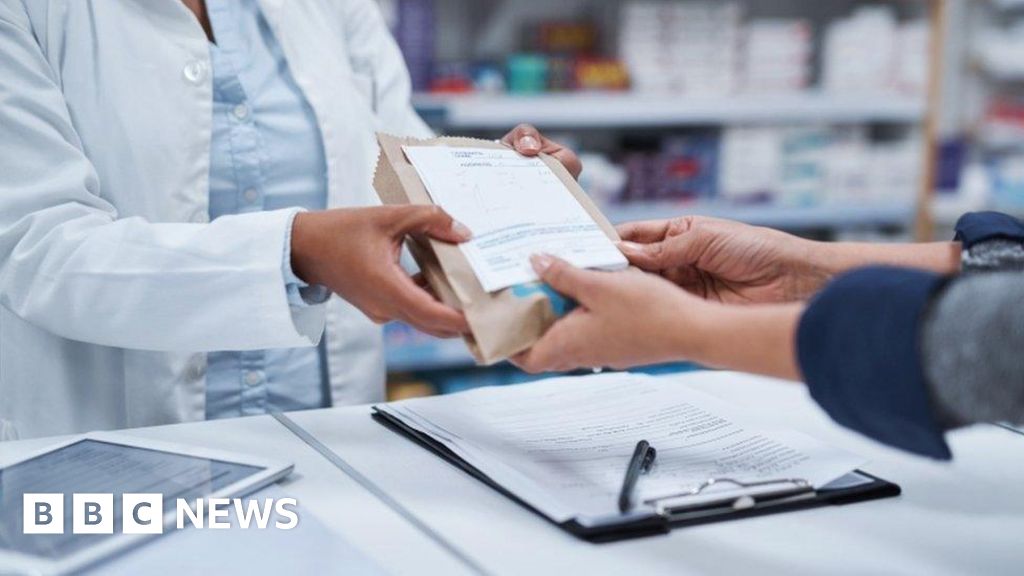
Prescription charges in England will be frozen this year – for the first time since 2022.The charge for a single item will remain at £9.90 in 2025-26, the government has announced.Three-month and annual prescriptions prepayment certificates will also be frozen and existing exemptions will continue. Charges only apply in England as prescriptions are free in the rest of the UK.Nearly nine in 10 prescriptions in England are already dispensed free of charge, with children, over 60s, pregnant women, people with certain medical conditions and those on lower incomes exempt from paying.A three-month prescription prepayment certificate costs £32.05 while a 12-month certificate costs £114.50.Rachel Power, chief executive of Patients Association which campaigns for improvements in health and social care, said freezing the charges was a “positive step”. But she warned that it did little to tackle the “deep inequalities” in what she described as an outdated system.She said the medical exemption criteria had remained virtually unchanged since the late 1960s, with nearly three million people in England living with long-term conditions not eligible for an exemption because they were not recognised 60 years ago or people rarely survived into adulthood. Conditions which are not currently on the medical exemption list include Parkinson’s disease, cystic fibrosis and motor neurone disease.”We urge the government to go further – to commit to a full review of the medical exemption list and prescription charges,” Ms Powers added.Health is a devolved area of government. Prescription fees were abolished by Wales in 2007, Northern Ireland in 2010 and Scotland in 2011 under the powers available to their respective governments.

Read more →

DHL lifts suspension of high-value deliveries to US

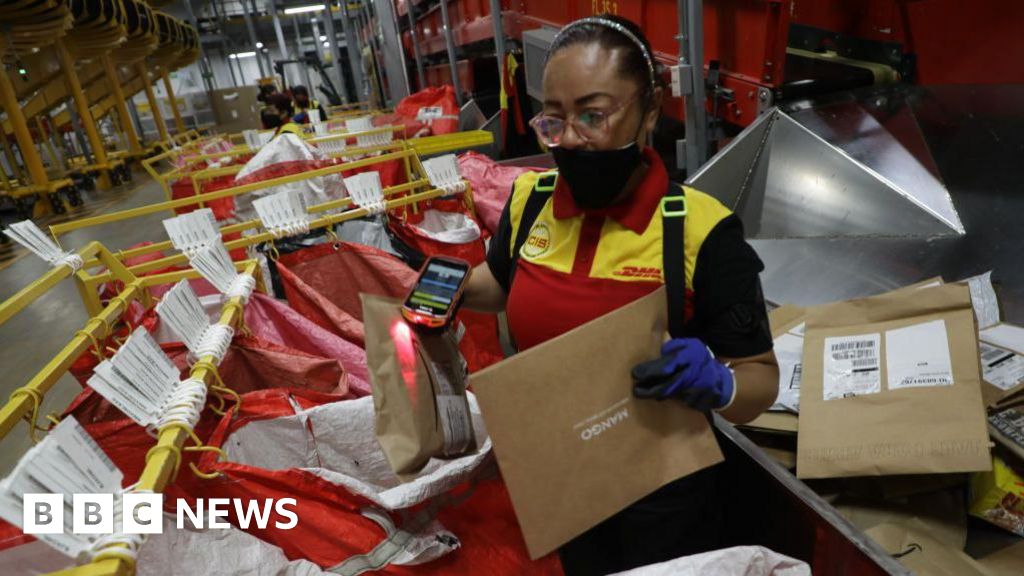
DHL has lifted a suspension it had imposed on deliveries worth more than $800 (£603) to the US after negotiating “adjustments” to customs rules.Earlier this month, the delivery giant said it had stopped such shipments to US shoppers “until further notice” due to a “significant increase” in red tape from President Donald Trump’s tariff policies.However, DHL has now lifted the suspension after “constructive dialogue” between the delivery industry and the US government.A DHL spokesperson said it “values this positive development and the support of the federal government in making these changes”.US Customs and Border Protection, the Department of Homeland Security, and the Department of Commerce have been approached for comment.DHL’s reversal is the latest development in the ongoing tussle between businesses and the White House over US tariff policies.Previously, packages worth up to $2,500 could enter the US with minimal paperwork but, due to tighter customs checks that came into force alongside the tariffs earlier this month, the threshold has been lowered.DHL said last week the change had “caused a surge in formal customs clearances, which we are handling around the clock”.It said that while it was working to “scale up and manage this increase, shipments worth over $800, regardless of origin, may experience multi-day delays”.However, on Monday, DHL lifted the suspension after negotiations with customs authorities and other US government bodies.”The express industry… had a constructive dialogue with [the US government] to optimise customs regulations as to ensure critical goods still reach US businesses and consumers in a timely, safe and compliant manner,” a DHL spokesperson said.”Adjustments to US customs regulations will allow DHL to resume accepting business to consumer shipments with a declared value exceeding $800 into the US.”The back and forth between DHL and the White House comes as the US government looks to clamp down on deliveries under $800 – specifically those sent from China and Hong Kong. On 2 May, it intends to close a loophole allowing low-value packages to enter the US without incurring any duties.The removal of the so-called “de minimis” rule will affect the likes of the fast-fashion firm Shein and low-cost retail giant Temu.Shein and Temu have both warned that they will increase prices “due to recent changes in global trade rules and tariffs”.

Read more →

Ultra-processed foods may be linked to early death

34 minutes agoShareSavePhilippa RoxbyHealth reporterShareSaveGetty ImagesPeople who eat lots of ultra-processed foods (UPF) may be at greater risk of dying early, a study in eight countries including the UK and the US suggests.Processed meats, biscuits, fizzy drinks, ice cream and some breakfast cereals are examples of UPF, which are becoming increasingly common around the world.UPFs tend to contain more than five ingredients, which are not usually found in home cooking, such as additives, sweeteners and chemicals to improve the food’s texture or appearance.Some experts say it’s not known why UPFs are linked to poor health – there is little evidence it’s down to the processing itself and could be because these foods contain high levels of fat, salt and sugar.’Artificial ingredients’The researchers behind the study, published in the American Journal of Preventive Medicine, looked at previous research to estimate the impact of ultra-processed food intake on mortality.The study cannot definitively prove that UPFs caused any premature deaths.This is because the amount of ultra-processed foods in someone’s diet is also linked to their overall diet, exercise levels, wider lifestyle and wealth, which can all also affect health. The studies looked at surveys of people’s diets and at data on deaths from eight countries – Australia, Brazil, Canada, Chile, Colombia, Mexico, UK and US.The report estimates that in the UK and the US, where UPFs account for more than half of calorie intake, 14% of early deaths could be linked to the harms they cause.In countries such as Colombia and Brazil, where UPF intake is much lower (less than 20% of calorie intake), the study estimated these foods are linked to around 4% of premature deaths.Lead study author Dr Eduardo Nilson, from Brazil, said UPFs affected health “because of the changes in the foods during industrial processing and the use of artificial ingredients, including colorants, artificial flavours and sweeteners, emulsifiers, and many other additives and processing aids”.By their calculations, in the US in 2018, there were 124,000 premature deaths due to the consumption of ultra-processed food. In the UK, nearly 18,000.The study says governments should update their dietary advice to urge people to cut back on these foods.What is ultra-processed food?There is no one definition that everyone agrees on, but the NOVA classification is often used. Examples include:cakescrispssupermarket breadready mealsprocessed meatchicken nuggetsfish fingersyoghurtstofubaby formula Still questions to answerThe numbers in the study are based on modelling the impact of ultra-processed foods on people’s health. Prof Kevin McConway, emeritus professor of applied statistics, Open University, said the study makes lots of mathematical assumptions which make him cautious about what the findings mean.”It’s still far from clear whether consumption of just any UPF at all is bad for health, or what aspect of UPFs might be involved.”This all means that it’s impossible for any one study to be sure whether differences in mortality between people who consume different UPF amounts are actually caused by differences in their UPF consumption. “You still can’t be sure from any study of this kind exactly what’s causing what.”Dr Nerys Astbury, an expert in diet and obesity at the University of Oxford, also agrees there are limitations to the research.It’s been known for some time that diets high in energy, fat and sugar can increase the risk of diseases, such as type 2 diabetes, obesity, heart conditions and some cancers, which can lead to premature death.”Many UPF tend to be high in these nutrients,” she says, adding that studies to date haven’t been able to prove that the effects of UPFs are due to anything more than “diets high in foods which are energy dense and contain large amounts of fat and sugar”.This type of research cannot prove that consumption of ultra-processed foods is harmful, says Dr Stephen Burgess at Cambridge University.How physically fit someone is may be the main cause of poor health instead. But when numerous studies across many countries and culture suggest UPFs could be a risk to health, Dr Burgess says “ultra-processed foods may be more than a bystander”.

Read more →

Top-brand baby food pouches lack key nutrients

9 hours agoShareSaveCatrin Nye, Adam Eley and Oliver EnglehartBBC PanoramaShareSaveGetty ImagesBaby food pouches from six of the UK’s leading brands are failing to meet key nutritional needs of babies and toddlers – with parents being “misled” by their marketing – BBC Panorama has been told.Laboratory testing of 18 pouches made by Ella’s Kitchen, Heinz, Piccolo, Little Freddie, Aldi and Lidl found many to be low in vitamin C and iron, while some contained more sugar in a single pouch than a one-year-old should have in a day.There are more than 250 of these products on the multi-million pound baby pouch market – they have become a staple for many households with babies and children up to the age of two or three. They are convenient and have long shelf lives.Experts have told the BBC the products should only be used sparingly, are not replacements for homemade meals, and can cause children health problems if used as their main source of nutrition.When we put this to the brands, the market leader Ella’s Kitchen said it agreed with all three points. All of the brands said their products were intended as a complementary part of a child’s varied weaning diet.The brands also told the BBC they are committed to infant health, and they provide quality, nutritional products that meet UK regulations.Young children should be protected from commercial interests, experts told us – while the government said existing laws already set nutritional requirements for baby foods.A laboratory approved by the United Kingdom Accreditation Service was commissioned by Panorama to independently test the nutritional value of a fruit, yoghurt and savoury pouch from each of the six leading brands.Our investigation found:Savoury pouches, used by some families as replacements for main meals, containing less than 5% of the key nutrient, iron, that an infant needs each dayA fruit pouch in which virtually all the vitamin C had been lost during the manufacturing processFruit pouches marketed as having “no added sugar” containing about four teaspoons of so-called “free sugars” (created when fruit is blended) – something that experts say is “intentionally misleading”Pouches being marketed to babies as young as four months old, against the clear recommendations of the UK government and the World Health Organization (WHO)’Misleading’ nutrition claims”You think they are going to be nutritionally good for your child,” said one parent, Hazel, during a focus group on baby food pouches at Leeds University.”You trust the brands… it’s really, really concerning.”However, public health experts have been unified in telling the BBC that no parent should feel guilty for using the products.The nutritional claims of baby food pouches are misleading, according to Dr Alison Tedstone, who spent nine years as chief nutritionist to the UK government.”You think as a parent it is a healthy product, and it just isn’t,” she said.Many of the biggest brands use “halo-marketing” – surrounding products with healthy words or phrases – according to Dr Tedstone.Ella’s Kitchen, for example, describes savoury products as “perfectly balanced for growing babies”, while Piccolo claims many pouches are “packed with goodness”.Some Little Freddie pouches come branded as “Good for Brains” and Heinz claims some of its fruit products are “as nutritionally good as homemade”.Piccolo and Little Freddie told us their packaging accurately represented the key ingredients and flavours contained in their products, while Ella’s Kitchen said it “would never use” misleading claims. Heinz did not address our questions on marketing.’Very, very low in iron’Savoury pouches are often used by parents as a main meal – but of the six such products sent for laboratory testing, none could provide a significant contribution to the 7.8mg of iron an infant needs in a day.Iron is a key nutrient for a healthy immune system, growth and brain development – but levels are not shown on the products’ labelling.By seven months old, “babies’ iron stores are starting to run out, so we now need to get that from food,” explained Bahee Van de Bor, a paediatric dietitian from the British Dietetic Association.Our lab results found that none of the pouches came close to the 3mg of iron that Ms Van de Bor would want an infant to be having from a main meal.Of the four pouches that contained meat – known to be a good source of iron – Heinz’s Sweet Potato, Chicken and Veggies contained the lowest, with just over 0.3mg of iron.”That’s really low. Very, very low,” Ms Van de Bor told the BBC. “That doesn’t meet even 5% of [an infant’s] daily requirements.”The ingredients list on the back of the pouch says it contains 12% chicken – “so the iron-rich food is a very tiny amount,” she said.All the companies stressed they were committed to providing nutritious products for babies, and that their products were intended as a complementary part of a child’s varied weaning diet. Little Freddie added that its products were not intended to be meal replacements for one-year-olds.Sugar and tooth decayAlongside savoury products, companies also sell pouches containing only fruit, which are leaving dentists concerned about the potential for tooth decay.The NHS says an infant should have as little sugar as possible, and that a one-year-old child should have no more than 10g of free sugars a day.Free sugars occur when fruit is pureed, as is the case with the pouches. Unlike eating fresh fruit – which is much better for a child – pureeing releases sugar from inside fruit cell walls and can be absorbed much more quickly.A recent British Dental Association (BDA) report, shared exclusively with the BBC, indicated that 37 of 60 fruit pouches found on supermarket shelves contained more free sugar than this 10g guideline.The NHS says eating too many free sugars can also lead to weight gain.Children who are “barely out of weaning” are coming to hospital for multiple tooth extractions because of tooth decay caused by their diets, said Eddie Crouch, BDA chair.”It’s obviously not all down to these pouches,” he added. “But clearly, regular use and feeding with these pouches with such high levels of sugar cause serious problems to the general health of children as they’re growing up.”Some pouches contain higher levels of sugar than some fizzy drinks. The highest found by the BBC was Ella’s Kitchen’s Bananas and Apples, which has 19.6g of sugar – equivalent to more than four teaspoons.At the same time, Ella’s Kitchen – as well as Lidl, Aldi, Piccolo and Heinz – label their products as containing “no added sugar”.While such claims are truthful and not breaking any guidelines, Mr Crouch believes “the wording itself is intended to mislead”.Piccolo said it develops “recipes that combine fruits with vegetables” to reduce sugar levels, while Ella’s Kitchen said that, “the sugar content would be the same if you pureed the ingredients yourself at home” and that it has “a dedicated sugar reduction pathway for 2025”.Heinz, Aldi, Little Freddie and Lidl all said their products contained “no added sugars”.Vitamin C lostThe BBC found that nearly all the vitamin C in one of the fruit pouches tested had been lost during the manufacturing process.Vitamin C is important for immune systems and an infant needs 25mg a day, the government says. But the Pure Mango pouch from Piccolo had, in effect, no vitamin C left – less than 0.1mg. This is despite the same amount of fresh mango (70g) containing 18.2mg of vitamin C.”That is a huge surprise for me,” said paediatric dietitian Ms Van de Bor. What’s left is “free sugars, sadly, and fluids”, she said, plus a “small amount” of fibre.Vitamin C is heat sensitive, which means it degrades because the food inside pouches is heated to ensure safety and increase shelf life.We tested three separate production batches of the mango pouch, and all came back with the same result.However, not all the pouches had low results. Heinz’s Apple pouch – which has vitamin C added – and Ella’s Kitchen’s Bananas pouch tested high in vitamin C.Piccolo said vitamins degrade during processing, so it boosts many of its fruit pouches with ingredients rich in vitamin C. Ella’s Kitchen said it keeps the loss of vitamin C to a minimum.None of the other brands commented directly on our vitamin C results.Ignoring expert guidanceWe also found that the six companies had failed to implement some NHS, Public Health England and WHO recommendations.Piccolo, Aldi and Ella’s Kitchen currently promote their fruit pouches to babies as young as four months, despite the NHS and WHO saying babies should not be given solid food until about the age of six months.Introducing products at four months old, added Dr Tedstone, is “a whole eight weeks of extra product sales”.”I think we should put our babies’ health ahead of commercial incentives to sell more product,” she said.Dr Kremlin Wickramasinghe from the World Health Organization (WHO) told the BBC that companies promoting foods to parents of four-month-olds were acting “against the best interest of the babies”.Companies are now making changes to the age recommendations on their products. Since we began our investigation Ella’s Kitchen has announced that by March next year it will only recommend pouches for babies older than six months to align with UK guidance. Piccolo told us it has begun relabelling all four-month packets to six-months. And since we contacted Aldi, it has said it will make that change too, “in line with other brands and retailers”.Babies should not feed from the spoutBaby food pouches are topped off with a little spout, but both the NHS and the World Health Organization say it should not be used to suck directly from the pouch. It means babies can eat too fast and it can cause dental decay.None of the companies we looked at used front-of-pack labelling to advise parents against feeding children directly from the spout, despite this being a Public Health England recommendation made in 2019.We also found that Piccolo was promoting the “convenience” of eating directly from the pouch on its website, which said: “There is no need for extra utensils because food pouches can be squeezed right into a baby’s mouth.”Since the BBC contacted the company, this has been removed – but the brand does have multiple videos on social media showing children eating from pouches through the spout.Piccolo didn’t respond when asked about its social media images.All the other brands say their labelling – on the back of pouches – either recommends parents use a spoon, or to not let babies eat directly from the spout.’We need to protect our babies’Mandatory legislation is what is needed, said Dr Tedstone and the WHO’s Dr Wickramasinghe.The current UK regulations that cover baby food were written in 2003, before baby food pouches came to market. They provide some guidelines for labelling, prohibit the use of pesticides and set out the minimum and maximum levels of some nutrients. But campaigners say they are outdated and do not ensure products are nutritionally appropriate or stop them being promoted to four month olds.”I would hope that ministers, when they think about the baby food industry, recognise that we need to protect our babies,” said Dr Tedstone.”[Businesses] are not going to [change] unless they are forced to.”Lidl said it welcomed clear government guidelines, while Little Freddie said it actively participated in policy consultations. Ella’s Kitchen said it would “never, ever” put profit above the health of children.Voluntary guidelines for manufacturers aimed at improving standards were drawn up for the government by Public Health England in 2020, but haven’t been published by either the Conservative or Labour administrations.Existing laws already ensure that the safety and quality of baby foods and the claims made on packaging are clear and accurate, the Department of Health and Social Care told the BBC.It added that it was “committed to tackling the childhood obesity crisis and improving children’s health through our Plan for Change”.Brands, said Dr Wickramasinghe “will always come up with the argument why we shouldn’t introduce these regulations.””But we never really quantify the cost [of inaction] to the children… and to the NHS.”

Read more →

Urgent care worse than pre-pandemic, think tank says

10 hours agoShareSaveShareSaveEPAA leading health think tank says urgent and emergency care in England is performing “far worse” than before the pandemic.The Health Foundation argues that the NHS was “in distress” this winter with A&E waiting times reaching a record high.The group says it would be wrong just to blame relatively high levels of flu.The government is due to publish an urgent and emergency care plan soon. The Department for Health and Social Care said that hospitals were “feeling the strain” but that it was taking “decisive action” to prevent winter crises.The Health Foundation report on the recent winter says that the number of people waiting 12 hours or more in A&E after a decision to admit to a ward was the highest since modern records began. It topped 60,000 in January, or 11% of emergency admissions.The report says that a familiar problem remains as acute as ever – delays discharging patients from hospital who are fit to leave. This, it says, made bottlenecks worse in A&E and for ambulances trying to hand over patients and that delays for those handovers were worse than in previous winters.The authors acknowledge that flu cases in hospitals were higher than usual but no worse than in the winter of 2022-23 – though the number took longer to fall than in that year.Hospital patients with the winter vomiting bug norovirus were also more numerous than in many winters.But hospital admissions for the respiratory virus RSV were similar to previous winters, and Covid admissions remained relatively low. Overall emergency hospital admissions fell slightly compared to the previous winter, as did the number of people going into major A&E units.The authors argue that the NHS should be prepared for winters like this one and that blaming external factors such as winter bugs risked offering “false comfort” about the state of the health service.Tim Gardner, assistant director at the Health Foundation, said an annual winter crisis did not have to be inevitable and the analysis should be a “wake up call to the government to focus on the underlying issues”.PA MediaA Department for Health and Social Care spokesperson said: “Despite our actions to protect patients during the colder months, including vaccinating more people than last winter, we know hospitals are feeling the strain.”Annual winter pressures should not automatically lead to an annual winter crisis.” It says its “decisive action” included ending the junior doctors’ strikes and rolling out the country’s first RSV vaccine.The Royal College of Emergency Medicine said in response to the report there was a “clear roadmap” and that the urgent and emergency care plan and a 10-year plan for the NHS, which are both due soon, offered “an unmissable opportunity to implement changes that are so desperately needed”.In a separate move the Department of Health and Social Care said a target for increasing the number of hospitals in England allowing patients to view appointments through the NHS app had been exceeded. The target was 85% by March and the outcome was 87%, up from 68% last July, it said.The department also said because more patients could get access to correspondence via the app, 12 million fewer letters had been sent since July. There were 1.5 million fewer missed appointments, it said. Ministers said this was helping cut waiting lists and saving taxpayers money.

Read more →

Immunotherapy Drug Spares Cancer Patients From Grisly Surgeries and Harsh Therapies

For a limited group of cancer patients who have solid tumors in the stomach, rectum, esophagus and other organs, an immunotherapy trial offered stunning results.When a person develops solid tumors in the stomach or esophagus or rectum, oncologists know how to treat them. But the cures often come with severe effects on quality of life. That can include removal of the stomach or bladder, a permanent colostomy bag, radiation that makes patients infertile and lasting damage from chemotherapy.So a research group at Memorial Sloan Kettering Cancer Center, using a drug from the pharmaceutical company GSK, tried something different.The researchers started with a group of 103 people. The trial participants were among the 2 to 3 percent of cancer patients with tumors that should respond to immunotherapy, a drug that overcomes barriers that prevent the immune system from attacking cancers.But in clinical trials, immunotherapy is not supposed to replace the standard treatments. The researchers, led by Dr. Luis A. Diaz Jr. and Dr. Andrea Cercek, decided to give dostarlimab, an immunotherapy drug, on its own.The result was stunning, and could bring hope to the limited cohort of patients contending with these cancers.In 49 of the patients, who had rectal cancer, the tumors disappeared and, after five years, have not recurred. Cancers also vanished for 35 of 54 patients who had other cancers, including in the stomach, esophagus, liver, endometrium, urinary tract and prostate.We are having trouble retrieving the article content.Please enable JavaScript in your browser settings.Thank you for your patience while we verify access. If you are in Reader mode please exit and log into your Times account, or subscribe for all of The Times.Thank you for your patience while we verify access.Already a subscriber? Log in.Want all of The Times? Subscribe.

Read more →

Europe’s Pharma Industry Braces for Pain as Trump Tariff Threat Looms

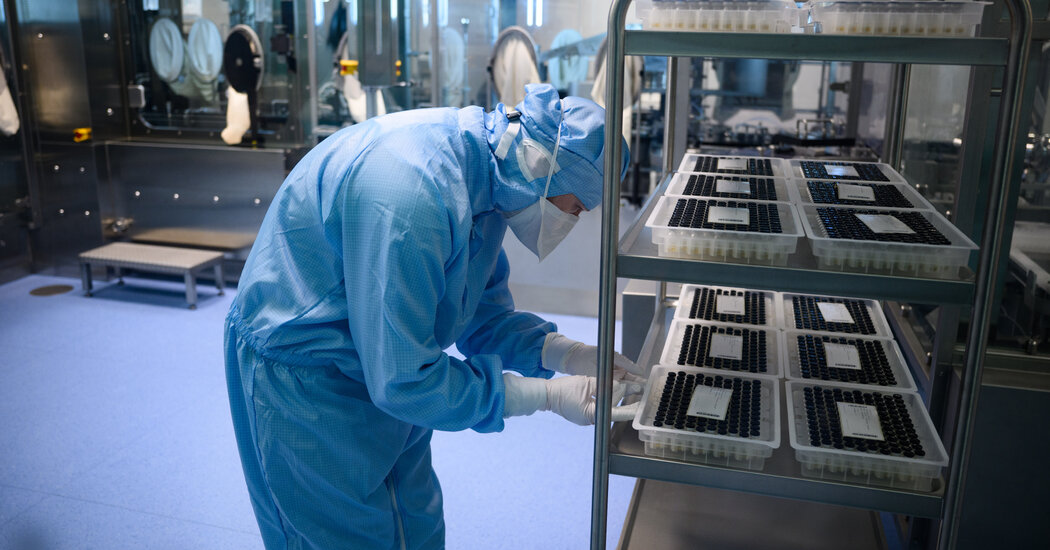
Medicines and chemicals are huge exports for European Union countries. That makes the sector a weak spot as trade tensions drag on.Insulin, heart treatments and antibiotics have flowed freely across many borders for decades, exempt from tariffs in a bid to make medicine affordable. But that could soon change.For months, President Trump has been promising to impose higher tariffs on pharmaceuticals as part of his plan to reorder the global trading system and bring key manufacturing industries back to the United States. This month, he said pharmaceutical tariffs could come in the “not too distant future.”If they do, the move would have serious — and wildly uncertain — consequences for drugs made in the European Union.Pharmaceutical products and chemicals are the bloc’s No. 1 export to America. Among them are the weight-loss blockbuster Ozempic, cancer treatments, cardiovascular drugs and flu vaccines. Most are name-brand drugs that yield a large profit in the American market, with its high prices and vast numbers of consumers.“These are critical things that keep people alive,” said Léa Auffret, who heads international affairs for BEUC, the European Consumer Organization. “Putting them in the middle of a trade war is highly concerning.”European companies could react to Mr. Trump’s tariffs in a range of ways. Some pharmaceutical companies trying to dodge the tariffs have already announced plans to increase production in the United States, which Mr. Trump wants. Others could decide to move production there later.We are having trouble retrieving the article content.Please enable JavaScript in your browser settings.Thank you for your patience while we verify access. If you are in Reader mode please exit and log into your Times account, or subscribe for all of The Times.Thank you for your patience while we verify access.Already a subscriber? Log in.Want all of The Times? Subscribe.

Read more →