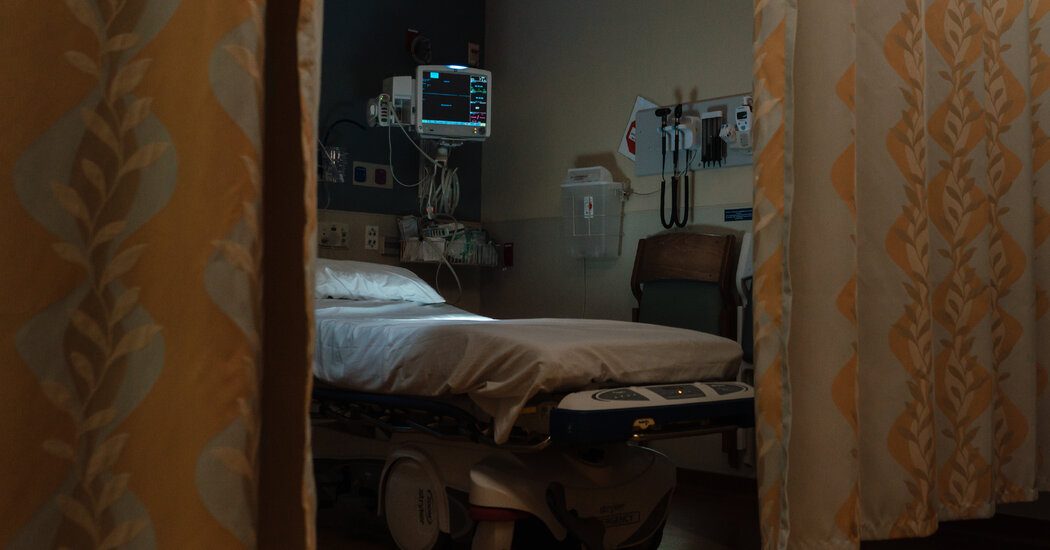
Pregnant women warned against using weight-loss jabs

2 hours agoShareSavePhilippa Roxby and Elena BaileyHealth reportersShareSaveGetty ImagesWomen using weight-loss jabs are being advised to stop if they are trying for a baby, have fallen pregnant or are breastfeeding.Drug safety experts in the UK say it’s not known whether taking the medicines, such as Wegovy and Mounjaro, could harm an unborn baby.The advice already appears in patient information leaflets that come with the medicines.But there are concerns that the growing popularity of ‘skinny jabs’ means many women aren’t using the drugs safely or getting the right advice.Natasha MajorNatasha Major, 26, started using Mounjaro to lose weight before planning to try for her third baby in a few years’ time, but was shocked six weeks later to find she was pregnant. She was taking the contraceptive pill at the time.”I have polycystic ovaries as well, so I can’t get pregnant easily or quickly. So it was an even bigger shock that I had, which didn’t make any sense to me,” she says.She then worried she could be harming the baby or it wouldn’t develop properly, so she rang her GP for advice, who told her to stop taking it.”We’re over the initial shock now and really happy, just wasn’t expected,” she says. “The last injection I took, I found out about the pregnancy three hours later and haven’t taken it since then.”I’ve had an early scan to make sure the pregnancy was viable and okay – baby had a little heartbeat and everything looks good,” Natasha says.The UK drugs regulator, as well as doctors and pharmacists, are worried that popular GLP-1 medicines, known as Wegovy, Mounjaro, Saxenda, Victoza and Ozempic, are not being used safely.These prescription medicines, which are licensed to treat obesity (and Ozempic for type 2 diabetes), make people feel full by mimicking a hormone released after eating. Mounjaro also acts on another hormone linked to appetite and blood sugar control.They are only available on the NHS to people with a very high BMI, but such is the demand for them that many people are buying them from unregulated sellers on social media or from beauty salons, without any medical advice, as a quick fix to lose weight. As a precaution, the Medicines and Healthcare products Regulatory Agency (MHRA) says women should use contraception while taking GLP-1 medicines and for a certain period afterwards before trying to become pregnant – two months for Wegovy and Ozempic, and one month for Mounjaro.It also advises that those using Mounjaro and taking an oral contraceptive should also use a condom for four weeks after starting the drug, or switch to another method such as the coil or implant. Weight-loss jabs may make the contraceptive pill less likely to work in those who are overweight or obese, the MHRA says. Women should be told this information when they starting taking the jabs, but there are fears the message is not getting through.Natasha bought Mounjaro online and says she “can’t remember reading anything about contraception on there”.The MHRA has produced new guidance on weight-loss jabs for people taking them.It’s acted now because of a very small number of reports of unintended pregnancies and complications in pregnancy made to its Yellow Card scheme, where the public can report suspected side-effects of medicines. Dr Alison Cave, chief safety officer at the MHRA, said there was evidence from animal studies “that these medicines may harm the unborn baby”.”But we don’t know whether we have the same effects in humans, so much more data is needed to determine that.”Women of child-bearing age are usually not included in clinical trials, which is why there is a lack of safety information for them.”If you are taking this medicine and you are pregnant, you should talk to your doctor about stopping the medicine as soon as possible,” she said.Sukhi Basra, vice-chairwoman of the National Pharmacy Association, said women should visit their pharmacist for advice if they are confused about when to stop using the drugs.When it comes to accessing contraception, BPAS, the British Pregnancy Advisory Service, says women in the UK “face significant challenges” when trying to access their method of choice.A lack of appointments, long waiting lists and high costs are just some of the barriers they face, BPAS said, as it called for a better plan for providing the choice women need.

Read more →
Trump Budget Eliminates Funding for Crucial Global Vaccination Programs

The spending proposal terminates support of health programs that, according to the proposal, “do not make Americans safer.”The Trump administration’s proposed budget for the coming fiscal year eliminates funding for programs that provide lifesaving vaccines around the world, including immunizations for polio.The budget, submitted to Congress last week, proposes to eliminate the Centers for Disease Control and Prevention’s global health unit, effectively shutting down its $230 million immunization program: $180 million for polio eradication and the rest for measles and other vaccine-preventable diseases. The budget plan also withdraws financial support for Gavi, the international vaccine alliance that purchases vaccines for children in developing countries.Overall, the budget request explicitly follows President Trump’s America First policy, slashing funds for global health programs that fight H.I.V. and malaria, and cutting support altogether to fight diseases that affect only poorer countries.“The request eliminates funding for programs that do not make Americans safer, such as family planning and reproductive health, neglected tropical diseases, and nonemergency nutrition,” the proposal said.Many public health experts said that such thinking is flawed because infectious diseases routinely breach borders. The United States is battling multiple measles outbreaks, prompting the C.D.C. last week to warn travelers about the risks of contracting measles. Each of those outbreaks began with a case of measles contracted by an international traveler.“Every single measles case this year is related to actual importations of the virus into the United States,” said Dr. Walter Orenstein, associate director of the Emory Vaccine Center and a former director of the United States’ Immunization Program.We are having trouble retrieving the article content.Please enable JavaScript in your browser settings.Thank you for your patience while we verify access. If you are in Reader mode please exit and log into your Times account, or subscribe for all of The Times.Thank you for your patience while we verify access.Already a subscriber? Log in.Want all of The Times? Subscribe.

Read more →

Trump Rescinds Biden Policy Requiring Hospitals to Provide Emergency Abortions

At issue is a how to interpret a federal law barring hospitals from turning away poor or uninsured patients.The Trump administration announced on Tuesday that it had revoked a Biden administration requirement that hospitals provide emergency abortions to women whose health is in peril, including in states where abortion is restricted or banned.The move by the Centers for Medicare and Medicaid Services, a branch of the department led by Health Secretary Robert F. Kennedy Jr., was not a surprise. But it added to growing confusion around emergency care and abortions since June 2022, when the Supreme Court rescinded the national right to abortion by overturning Roe v. Wade.“It basically gives a bright green light to hospitals in red states to turn away pregnant women who are in peril,” Lawrence O. Gostin, a health law expert at Georgetown University, said of the Trump administration’s move.The administration did not explicitly tell hospitals that they were free to turn away women seeking abortions in medical emergencies. Its policy statement said hospitals would still be subject to a federal law requiring them to provide reproductive health care in emergency situations. But it did not explain exactly what that meant.Mr. Gostin and other experts said the murky policy could have dire consequences for pregnant women by discouraging doctors from performing emergency abortions in states where abortions are banned or restricted.“We’ve already seen since the overturn of Roe that uncertainty and confusion tends to mean physicians are unwilling to intervene, and the more unwilling physicians are to intervene, the more risk there is in pregnancy,” said Mary Ziegler, a professor at the University of California-Davis and a historian of the American abortion debate.We are having trouble retrieving the article content.Please enable JavaScript in your browser settings.Thank you for your patience while we verify access. If you are in Reader mode please exit and log into your Times account, or subscribe for all of The Times.Thank you for your patience while we verify access.Already a subscriber? Log in.Want all of The Times? Subscribe.

Read more →

As the Trump Administration Slashes Federal Spending, Scientists Consider Leaving the U.S.

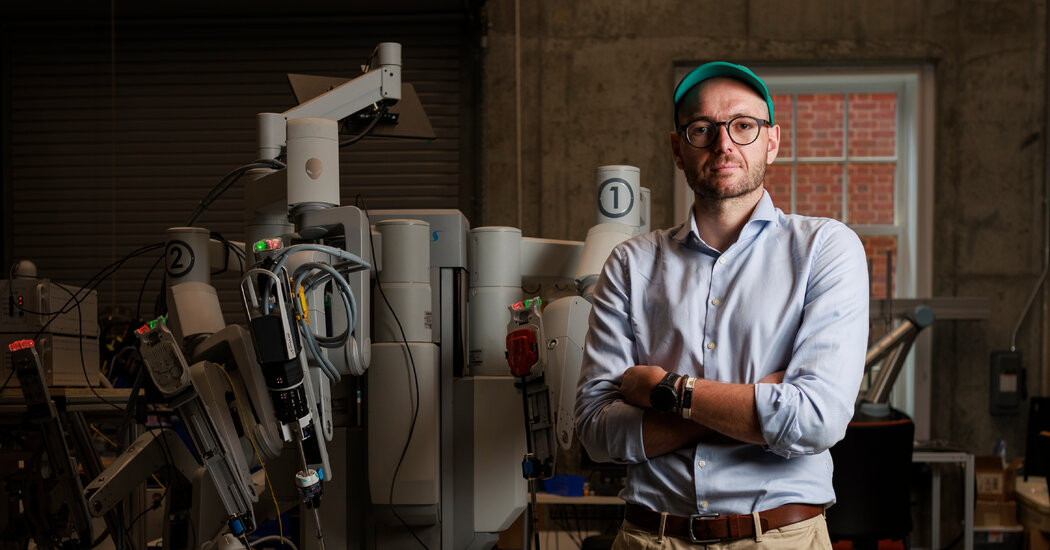
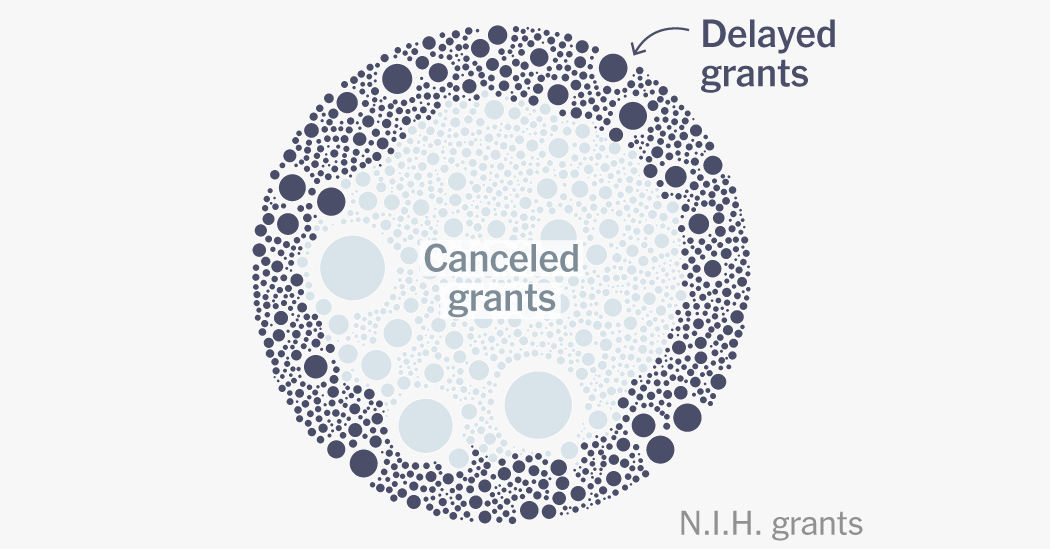
Ardem Patapoutian’s story is not just the American dream, it is the dream of American science.He arrived in Los Angeles in 1986 at age 18 after fleeing war-torn Lebanon. He spent a year writing for an Armenian newspaper and delivering Domino’s at night to become eligible for the University of California, where he earned his undergraduate degree and a postdoctoral fellowship in neuroscience.Listen to our reporter’s commentaryScientists told Kate Zernike that a whole system of science that the United States has built since World War II is at risk.He started a lab at Scripps Research in San Diego with a grant from the National Institutes of Health, discovered the way humans sense touch, and in 2021 won the Nobel Prize.But with the Trump administration slashing spending on science, Dr. Patapoutian’s federal grant to develop new approaches to treating pain has been frozen. In late February, he posted on Bluesky that such cuts would damage biomedical research and prompt an exodus of talent from the United States. Within hours, he had an email from China, offering to move his lab to “any city, any university I want,” he said, with a guarantee of funding for the next 20 years.Dr. Patapoutian declined, because he loves his adopted country. Many scientists just setting out on their careers, however, fear there is no other option but to leave.Scientific leaders say that’s risking the way American science has been done for years, and the pre-eminence of the United States in their fields.We are having trouble retrieving the article content.Please enable JavaScript in your browser settings.Thank you for your patience while we verify access. If you are in Reader mode please exit and log into your Times account, or subscribe for all of The Times.Thank you for your patience while we verify access.Already a subscriber? Log in.Want all of The Times? Subscribe.

Read more →