What to Put in a Travel First-Aid Kit: Key Items to Include
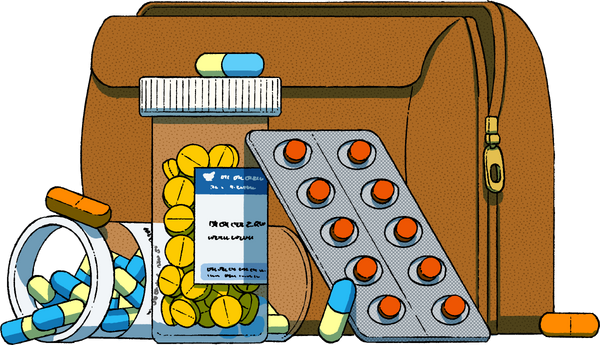
Experts weigh in on what to bring for a healthy, stress-free trip.As anyone who’s ever visited an emergency room far from home knows, an illness or accident can instantly undo the benefits of even the most relaxing vacation. In a foreign hospital, especially if you don’t speak the language, an unpleasant situation can evolve into a confusing — and sometimes expensive — nightmare. But while travel inevitably includes exposure to new germs and environmental elements, there are ways to mitigate the risk. Here, experts share their best advice on what to pack to minimize the chance of an on-the-road medical drama.First, talk to your doctor — and your insurance companyEven if your destination doesn’t warrant typhoid vaccinations or anti-malaria medication, your health care provider may have some pre-travel recommendations. For example, if you’re traveling to an area experiencing a measles outbreak — which currently includes parts of the U.S. — you’ll want to make sure your shots are up to date, says Kawsar Talaat, an infectious disease specialist at Johns Hopkins in Baltimore. Your physician may also prescribe an extra supply of your daily medications as well as some just-in-case antibiotics. Note that levels of antibiotic resistance around the world vary and are always changing, so your itinerary will have an impact on which drugs will be most effective, says the physician Stuart Harris, the founder and chief of the Massachusetts General Hospital’s Division of Wilderness Medicine.It’s also a good idea to contact your health insurance company to determine your level of coverage away from home, says Robert Hoke, an emergency medicine doctor at New York’s Mount Sinai Health System. While the country you’re visiting may provide free medical care, that doesn’t always apply to nonresidents. Finally, if you’re going somewhere very remote, consider buying evacuation insurance in case of serious injury or illness. “It’s an extra expense, but this is maybe not the place to skimp,” says Hoke, noting that emergency medical flights can cost tens of thousands of dollars out of pocket.Ilya MilsteinConsider any chronic conditionsIt’s best to carry daily prescription medications in their original containers. “If you’re a customs person looking at a bunch of pills and you don’t know what they are, it can cause problems,” says Talaat, who also recommends bringing more than you need, in case of travel delays. If you’ve ever been prescribed an asthma inhaler or EpiPen, make sure to bring it — even if you’ve never used it at home. “You’re going to be trying different foods and using different soaps,” says Hoke. “This isn’t the time not to have it.”We are having trouble retrieving the article content.Please enable JavaScript in your browser settings.Thank you for your patience while we verify access. If you are in Reader mode please exit and log into your Times account, or subscribe for all of The Times.Thank you for your patience while we verify access.Already a subscriber? Log in.Want all of The Times? Subscribe.

Read more →


Heatwave likely as yellow heat health alerts issued in England

4 hours agoShareSaveAdam HaleBBC NewsTomasz SchafernakerBBC weather presenterShareSaveBBC Weather Watchers/JuniperbeddyYellow heat health alerts have been issued for most of England with temperatures set to climb as high as 33C by the weekend.Yorkshire and The Humber, East Midlands, West Midlands, East England, the South East, the South West and London are all covered by the alert which comes into force at 12:00 BST on Wednesday and lasts until 18:00 BST on Sunday.Temperatures are set to be as high as 28C in London on Tuesday, with an area of high pressure building across the UK likely to bring the first heatwave of 2025 later in the week.A yellow alert is the lowest behind amber and red on the UK Health Security Agency’s (UKHSA) system, but warns of possible impacts on health and social services. Temperatures across the UK will continue to climb with the weather becoming increasingly hot and sunny, meaning it is likely heatwave conditions are met in some parts at the end of the week and into the weekend – although there is a chance it could extend into next week.Many parts of the UK will see temperatures range between 25C and 30C, with some areas potentially reaching up to 33C, for example in London.While such heat is not unprecedented this early in the summer, it is still considered quite intense. The UK’s June temperature record stands at 35.6C, set in Southampton in 1976, and current forecasts suggest that this record is unlikely to be broken this time.The UKHSA said an increase in demand for health services by vulnerable people is likely, as well as an increase in risk to health for individuals aged over 65 years or those with pre-existing health conditions, including respiratory and cardiovascular diseases.Internal temperatures in hospitals, care homes and independent accommodation could also pose a risk to vulnerable people.The heat alerts are issued to give early warning to the health and social care sector, carers and government departments when high temperatures are likely to impact on people’s health and wellbeing.Dr Agostinho Sousa, head of extreme events and health protection at UKHSA, said: “Our findings shows that even moderate heat can result in serious health outcomes, especially for older adults, and it is therefore important that everyone takes sensible precautions while enjoying the sun.”Making a plea to people with vulnerable family, friends and neighbours, he said: “It is important to check in on them and ensure they are aware of the forecasts and are following the necessary advice.”All of the affected areas excluding Yorkshire and the Humber have been given a risk score of 10 out of a possible 16, meaning “significant impacts are possible” due to high temperatures.The UKHSA’s website says this includes a possible rise in deaths, particularly among those aged 65 and over or with health conditions.Yorkshire and the Humber’s score of seven means that only minor impacts are likely.Heatwave expectedLittle rain is forecast throughout the period, however the high temperatures may trigger a few isolated but intense thunderstorms on Saturday and Sunday, potentially occurring almost anywhere in the UK.The heatwave is expected to break down into next week, although southern areas of the UK may remain very warm. There are also signs that, after a brief period of relief, the heat may return soon after.The body representing the hospitality industry said the hotter weather is a “welcome lift” for the sector.Kate Nicholls, chief executive of UKHospitality, said: “Businesses will now be hoping for a strong summer to help counterbalance the significant cost pressures they’re contending with.”Getty ImagesKaty Alston, who runs an ice cream parlour near the beach in Bognor Regis, West Sussex, said: “We get so excited because this is what we wait for.”People who work in ice cream vans are risk takers because you never know when that big yellow ball is going to come out.”Meanwhile, the London Fire Brigade pointed to recent examples in California and South Korea in its warning over wildfires, following one of the driest springs on record in the UK and ahead of the possible heatwave.Charlie Pugsley, deputy commissioner for operational policy, prevention and protection, said long periods of hot and dry weather “can greatly increase the risk of a grass fire” and could spread rapidly.

Read more →

What are UV levels and how can you protect yourself?

17 June 2025ShareSaveShareSaveGetty ImagesWarm weather can often bring high levels of ultraviolet (UV) radiation. UV radiation is emitted by the Sun and penetrates the Earth’s atmosphere.Some exposure is essential for our wellbeing, but too much can cause skin damage. Is UV dangerous?UV is beneficial because it enables our skin to produce essential vitamin D.This is important for the function of bones, blood cells and our immune system. But we need to be careful about how much time we spend in the sunshine, warns Prof Dorothy Bennett, from St George’s, University of London.”Every exposure to UV, especially every sunburn, increases our risk of skin cancer.”Melanoma, the most dangerous skin cancer, is now the fifth commonest cancer in the UK, the ongoing rise being attributed to sunbathing.”UV radiation promotes skin cancer by damaging DNA in skin cells.It also plays a substantial role in skin ageing, contributing to wrinkles and loosened folds.UV exposure has also been linked to eye problems, including cataracts.What is the UV index? Levels of UV radiation vary throughout the day.The highest readings occur in the four-hour period around “solar noon”, when the sun is at its highest – usually from late morning to early afternoon.The UV Index (or UVI) is a standard, international measure of ultraviolet radiation.Values start at zero and can rise above 10.The higher the number, the greater the potential for damage to the skin and eyes – and the less time it takes for harm to occur.What are the different UV levels?Countries close to the equator can experience very high UV levels in the middle of the day, throughout the year.Nairobi in Kenya can have UV levels above 10 all year, according to the World Health Organization (WHO).Majorca in Spain normally hits nine in June and July.But the Falkland Islands in the South Atlantic never usually get above five, even in summer.What do the different UV levels mean for people?According to the WHO, no sun protection is required when levels are: Some sun protection is required when levels are: 6-7 (high) 3-5 (medium)Extra sun protection is required when UV levels are: 11+ (extremely high) 8-10 (very high) Children are more sensitive to UV radiation than adults, and therefore require additional protection at lower levels. How can you avoid UV damage?The NHS advises:spending time in the shade when the sun is strongest – between 11:00 and 15:00 from March to October in the UKcovering up with suitable clothing and wearing sunglassesusing sunscreen which is factor 30 or above and offers at least 4-star UVA protection on your face, neck and other areas of exposed skinreapplying sunscreen regularly – check the instructions on the bottlemaking sure babies and children are protectedGlobal research shows people often miss parts of their bodies when putting on sunscreen, according to Dr Bav Shergill from the British Association of Dermatologists. “People often forget the side of their nose – where I have seen a lot of skin cancer,” he says. Other areas which need to be covered include the temples and the upper chest.As a guide, adults should aim to apply about six to eight teaspoons of sunscreen if covering the entire body.Can you tan safely?There is no safe or healthy way to get a tan, according to the NHS. Dr Shergill recommends using self-tan products instead. “When you tan, ultraviolet light stimulates your skin cells to produce pigment to try and protect the DNA of skin cells – but that protection is minimal – the equivalent of SP4. “That is not much protection at all – so you can still burn very early,” he warns.Can you burn even when it is cloudy and windy?The amount of UV reaching your skin is not driven by the daily temperature, says Dr Michaela Hegglin, from the University of Reading. “UV levels on a bright and breezy late April day in the UK will be about the same as a warm sunny day in August.””Your skin can burn just as quickly whether it’s 30C or 20C,” warns BBC Weather’s BBC Weather’s Helen Willetts. “Don’t be caught out on cloudy days. UV will still penetrate thin clouds – so even if you don’t think it’s that sunny, you can still burn.”I have brown skin. Do I need to worry? Yes, according to Dr Shergill. “The skin may look darker, but it doesn’t always behave that way from a protection point of view – because there are more genes at play than we think about,” he says.”I have, for example, seen South Asian people with skin cancer and I have seen people with dual-heritage get skin cancer.”The broader risks of eye damage and harmful effects on the immune system from too much UV radiation affect people of all skin colour.

Read more →

Why are pollen levels making hay fever so bad this year?

17 June 2025ShareSavePhilippa Roxby and Smitha MundasadHealth reportersShareSaveGetty ImagesPollen levels are forecast to be high or very high in many parts of the UK over the coming days.The fine powder released by certain grasses, trees and plants can cause chaos for those who are allergic to pollen.What are the main symptoms of hay fever?Itchy eyes, sneezing, dripping noses, scratchy throats, disrupted sleep and headaches are all signs of hay fever.Around one in five people are allergic to pollen and the main culprit is usually grass, although trees can also trigger symptoms. Early summer is often peak pollen season, when the number of grains of pollen in the air multiplies.The warm weather seen in the UK in 2024 and in the first half of 2025 means conditions have been ideal for birch tree pollen – a major hay fever trigger. Warm, dry days help spread pollen through the air, creating what’s been dubbed a “pollen bomb”.Cities often have lower pollen counts than in the countryside, but the pollution in urban areas can actually make symptoms worse.In the long term, it’s likely that the changing climate will also have an impact on hay fever.Changing temperatures and rainfall could make the pollen season longer and increase the concentration of pollen in the air.What are the best hay fever treatments?Getty ImagesThere’s no cure for hay fever, but there are medicines which can help you feel a bit better.Allergy expert Professor Stephen Till, from Guy’s and St Thomas’ Hospitals in London, recommends “a cocktail approach”, which means taking: antihistamine tablets or drops that don’t tend to make you feel sleepy and are long actinga steroid nasal spray, and eye drops”They all work in different ways and are all very safe for most people – just go to a pharmacy for advice,” Prof Till says. These products can all be bought over the counter in your local chemist. Some types work better for some people than others, and prices vary, so it’s important to find the one that’s best for you.Antihistamine medicines help dampen down your body’s allergic reaction to pollen. You can start taking them three or four days before pollen counts start to rise.One idea is to keep a diary of symptoms and medicines, so you can tell the pharmacist what you’ve already tested out.What else can I do to reduce hay fever symptoms?Avoiding hay fever triggers is essential too, says pharmacist Ashley Cohen from Leeds.”I always say it’s about good hygiene – pollen sits on your face and arms when you go outside, so have a shower and change your clothes when you come in.”And he warns that pets are “brilliant vehicles” for bringing pollen into your house.The NHS also recommends: putting nasal balm or petroleum jelly around your nostrils to trap pollenwearing sunglasses, a mask or a wide-brimmed sun hat to stop pollen getting into your nose and eyesvacuuming and dusting your home regularlytrying out a pollen filter in the air vents of your carAlso, try to avoid:cut grass or walking on grasskeeping fresh flowers in the housesmoking or being around smokersdrying clothes outsideGetty ImagesWhat if my hay fever gets really bad?”Ninety percent of people with hay fever can be managed with over-the-counter medication,” says pharmacist Ashley Cohen.If your hay fever becomes really debilitating, your GP can refer you to a specialist – but that will take a while.Immunotherapy treatment might be available for the worst affected. That’s when tiny amounts of pollen are injected into the body over time to get it used to the substance, so that it no longer overreacts.The NHS stopped offering the steroid injection Kenalog years ago for hay fever because of the risk of serious side-effects. The charity Allergy UK does not recommend anyone use it either, and private clinics are no longer allowed to advertise the drug.Does local honey help hay fever?Most people with hay fever are allergic to grass pollen, whereas bees pollinate flowers and some flowering trees so the pollen in honey is a different type.Whether local honey made from local bees can reduce hay fever symptoms has been tested – but there’s no evidence to show it has any effect.Clarification 27 June 2025: This article has been amended to clarify that bees pollinate some flowering trees. It had previously stated that they don’t pollinate trees.

Read more →

This tiny patch could replace biopsies—and revolutionize how we detect cancer

A patch containing tens of millions of microscopic nanoneedles could soon replace traditional biopsies, scientists have found.
The patch offers a painless and less invasive alternative for millions of patients worldwide who undergo biopsies each year to detect and monitor diseases like cancer and Alzheimer’s.
Biopsies are among the most common diagnostic procedures worldwide, performed millions of times every year to detect diseases. However, they are invasive, can cause pain and complications, and can deter patients from seeking early diagnosis or follow-up tests. Traditional biopsies also remove small pieces of tissue, limiting how often and how comprehensively doctors can analyse diseased organs like the brain.
Now, scientists at King’s College London have developed a nanoneedle patch that painlessly collects molecular information from tissues without removing or damaging them. This could allow healthcare teams to monitor disease in real time and perform multiple, repeatable tests from the same area – something impossible with standard biopsies.
Because the nanoneedles are 1,000 times thinner than a human hair and do not remove tissue, they cause no pain or damage, making the process less painful for patients compared to standard biopsies. For many, this could mean earlier diagnosis and more regular monitoring, transforming how diseases are tracked and treated.
Dr Ciro Chiappini, who led the research published today in Nature Nanotechnology, said: “We have been working on nanoneedles for twelve years, but this is our most exciting development yet. It opens a world of possibilities for people with brain cancer, Alzheimer’s, and for advancing personalised medicine. It will allow scientists – and eventually clinicians – to study disease in real time like never before.”
The patch is covered in tens of millions of nanoneedles. In preclinical studies, the team applied the patch to brain cancer tissue taken from human biopsies and mouse models. The nanoneedles extracted molecular ‘fingerprints’ — including lipids, proteins, and mRNAs — from cells, without removing or harming the tissue.

The tissue imprint is then analysed using mass spectrometry and artificial intelligence, giving healthcare teams detailed insights into whether a tumour is present, how it is responding to treatment, and how disease is progressing at the cellular level.
Dr Chiappini said: “This approach provides multidimensional molecular information from different types of cells within the same tissue. Traditional biopsies simply cannot do that. And because the process does not destroy the tissue, we can sample the same tissue multiple times, which was previously impossible.”
This technology could be used during brain surgery to help surgeons make faster, more precise decisions. For example, by applying the patch to a suspicious area, results could be obtained within 20 minutes and guide real-time decisions about removing cancerous tissue.
Made using the same manufacturing techniques as computer chips, the nanoneedles can be integrated into common medical devices such as bandages, endoscopes and contact lenses.
Dr Chippani added: “This could be the beginning of the end for painful biopsies. Our technology opens up new ways to diagnose and monitor disease safely and painlessly – helping doctors and patients make better, faster decisions.”
The breakthrough was possible through close collaboration across nanoengineering, clinical oncology, cell biology, and artificial intelligence — each field bringing essential tools and perspectives that, together, unlocked a new approach to non-invasive diagnostics.
The study was supported by the European Research Council through its flagship Starting Grant programme, Wellcome Leap, and UKRI’s EPSRC and MRC, which enabled acquisition of key analytical instrumentation.

Read more →

Black coffee, longer life: The science behind your morning perk

While you’re probably not pouring your morning cup for the long-term health benefits, coffee consumption has been linked to lower risk of mortality. In a new observational study, researchers from the Gerald J. and Dorothy R. Friedman School of Nutrition Science and Policy at Tufts University found the association between coffee consumption and mortality risk changes with the amount of sweeteners and saturated fat added to the beverage.
The study, published online in The Journal of Nutrition, found that consumption of 1-2 cups of caffeinated coffee per day was linked to a lower risk of death from all causes and death from cardiovascular disease. Black coffee and coffee with low levels of added sugar and saturated fat were associated with a 14% lower risk of all-cause mortality as compared to no coffee consumption. The same link was not observed for coffee with high amounts of added sugar and saturated fat.
“Coffee is among the most-consumed beverages in the world, and with nearly half of American adults reporting drinking at least one cup per day, it’s important for us to know what it might mean for health,” said Fang Fang Zhang, senior author of the study and the Neely Family Professor at the Friedman School. “The health benefits of coffee might be attributable to its bioactive compounds, but our results suggest that the addition of sugar and saturated fat may reduce the mortality benefits.”
The study analyzed data from nine consecutive cycles of the National Health and Nutrition Examination Survey (NHANES) from 1999 to 2018, linked to National Death Index Mortality Data. The study included a nationally representative sample of 46,000 adults aged 20 years and older who completed valid first-day 24-hour dietary recalls. Coffee consumption was categorized by type (caffeinated or decaffeinated), sugar, and saturated fat content. Mortality outcomes included all-cause, cancer, and cardiovascular disease. Low added sugar (from granulated sugar, honey, and syrup) was defined as under 5% of the Daily Value, which is 2.5 grams per 8-ounce cup or approximately half a teaspoon of sugar. Low saturated fat (from milk, cream, and half-and-half) was defined as 5% of the Daily Value, or 1 gram per 8-ounce cup or the equivalent of 5 tablespoons of 2% milk, 1 tablespoon of light cream, or 1 tablespoon of half-and-half.
In the study, consumption of at least one cup per day was associated with a 16% lower risk of all-cause mortality. At 2-3 cups per day, the link rose to 17%. Consumption beyond three cups per day was not associated with additional reductions, and the link between coffee and a lower risk of death by cardiovascular disease weakened when coffee consumption was more than three cups per day. No significant associations were seen between coffee consumption and cancer mortality.
“Few studies have examined how coffee additives could impact the link between coffee consumption and mortality risk, and our study is among the first to quantify how much sweetener and saturated fat are being added,” said first author Bingjie Zhou, a recent Ph.D. graduate from the nutrition epidemiology and data science program at the Friedman School. “Our results align with the Dietary Guidelines for Americans which recommend limiting added sugar and saturated fat.”
Limitations of the study include the fact that self-reported recall data is subject to measurement error due to day-to-day variations in food intake. The lack of significant associations between decaffeinated coffee and all-cause mortality could be due to the low consumption among the population studied.
Additional authors are Yongyi Pan and Lu Wang, both of the Friedman School, and Mengyuan Ruan, a graduate of the Friedman School.
The study was supported by the National Institutes of Health’s National Institute on Minority Health and Health Disparities under award number R01MD011501. Complete information on methodology is available in the published paper. The content is the sole responsibility of the authors and does not necessarily represent the official views the National Institutes of Health.

Read more →

South Africa Built a Medical Research Powerhouse. Trump Cuts Have Demolished It.

In Cape Town, South Africa, one of the world’s foremost H.I.V. researchers has been spending a chunk of each day gently telling longtime workers and young doctoral students that the money is gone and so are their jobs. When the calls are done, she weeps in her empty office.In the heart of Johannesburg, the lobby of a building that once housed hundreds of scientists is empty of people but choked with discarded office furniture and heaps of files hastily gathered from shuttered research sites.South Africa has for decades been a medical research powerhouse, yet its stature has been little known to people outside the field. South Africa’s scientists have been responsible for key breakthroughs against major global killers, including heart disease, H.I.V. and respiratory viruses such as Covid-19. They have worked closely with American researchers and have been awarded more research funding from the United States than any other country has received.But a swift series of executive orders and budget cuts from the Trump administration have, in a matter of months, demolished this research ecosystem.There are grim ramifications for human health worldwide, and also for pharmaceutical companies, including American giants such as Pfizer, Merck, Abbott and Gilead Sciences, which rely heavily on South Africa’s research complex when they develop and test new drugs, vaccines and treatments.“South Africa is the beacon,” said Dr. Harold Varmus, a professor of medicine at Cornell University who was awarded the Nobel Prize in medicine for his work on cancer biology and who was a director of the National Institutes of Health.We are having trouble retrieving the article content.Please enable JavaScript in your browser settings.Thank you for your patience while we verify access. If you are in Reader mode please exit and log into your Times account, or subscribe for all of The Times.Thank you for your patience while we verify access.Already a subscriber? Log in.Want all of The Times? Subscribe.

Read more →
MPs to vote on decriminalising abortion – how the law could change

7 hours agoShareSaveShareSaveGetty ImagesA law change aimed at decriminalising abortion will be debated in the House of Commons on Tuesday.Two Labour MPs, Tonia Antoniazzi and Stella Creasy, have tabled rival amendments to the Crime and Policing Bill.Speaker Sir Lindsay Hoyle could pick one or both amendments to be debated by MPs, but is likely to only pick one to go to a vote. MPs are usually given a free vote on abortion, meaning they do not have to follow any party line on the subject.What does the current law say? The current law in England and Wales states that abortion is illegal but allowed up to the first 24 weeks of pregnancy and beyond that in certain circumstances such as if the woman’s life is in danger.Abortions have to be approved by two doctors, who check if one of a list of criteria have been met – for example, if the pregnancy poses a risk to the physical or mental health of the woman. Recent law changes have allowed women to access pills to be taken at home to terminate their pregnancies under 10 weeks.In 2022, the most recent data available, 252,122 abortions were reported in England and Wales – the highest number since records began. Abortion providers have reported receiving 100 requests for medical records from police officers in relation to suspected abortion offences in the last five years. Last year, abortion provider MSI told the BBC, it was aware of 60 criminal inquiries in England and Wales since 2018, compared to almost zero before.Six women have appeared in court in England charged with ending or attempting to end their own pregnancy outside abortion law, in the past three years.Dr Jonathan Lord, medical director at MSI, said the organisation believes the “unprecedented” number of women being investigated could be linked to the police’s increased awareness of the availability of the “pills by post scheme”. What would Tonia Antoniazzi’s amendment do?Tonia Antoniazzi’s amendment aims to prevent women from being investigated, arrested, prosecuted or imprisoned for terminating their own pregnancies. She has argued that the investigations are “dehumanising and prolonged and the women forced to endure them are often extraordinarily vulnerable”.She said those investigated can be victims of domestic abuse and violence, human trafficking and sexual exploitation or women who have given birth prematurely. “The reality is that no woman wakes up 24 weeks pregnant or more and suddenly decides to end their own pregnancy outside a hospital or clinic. “But some women, in desperate circumstances, make choices that many of us would struggle to understand. What they need is compassion and care, not the threat of criminal prosecution.”Her amendment would maintain punishments for medical professionals and violent partners who end a pregnancy outside of the existing law. It has received the backing from 176 MPs and the main abortion providers. The Society for the Protection of Unborn Children has said the amendment is an “extreme and dangerous proposal” that would “effectively decriminalise abortions”.How is Stella Creasy’s amendment different? Stella Creasy has put forward a rival amendment which would enshrine abortion access as a human right and also aims to prevent women who have terminated their own pregnancies from being investigated.Creasy has said her amendment goes further than her Labour colleague’s proposal, by offering “protection to all those involved in ensuring that women can access safe and legal abortions”.Creasy has argued that Antoniazzi’s amendment would not stop the authorities investigating “the partners of people who had an abortion or the medics who provided the abortions and it would not prevent demands for women to give evidence as part of that process”. It is backed by 108 MPs but not abortion providers. Rachael Clarke from the British Pregnancy Advisory Service has said Creasy’s amendment is not the right way to achieve “generational change”. Speaking to the Radio 4’s Today programme last week, Ms Clarke said abortion law is “incredibly complex”, adding: “It is essential that any huge changes to abortion law is properly considered.” The Society for the Protection of Unborn Children has described Creasy’s amendment as “even more extreme” than that of Antoniazzi’s adding: “There’s no way to bring an abusive partner who causes the death of an unborn baby to justice.”

Read more →

Rise in awareness of nicotine pouches among children, survey suggests

7 hours agoShareSaveAlys DaviesBBC NewsShareSaveGetty ImagesYoung people under the age of 18 are more aware of nicotine pouches, new data suggests.According to a survey commissioned by charity Action on Smoking and Health (Ash), the percentage of 11-17 year olds who said they knew of the pouches grew from 38% in 2024 to 43% this year.The survey indicates nearly 4% of children in this age group have tried a nicotine pouch, equivalent to 210,000 young people.Ash is calling on the government to prioritise the passing of the Tobacco and Vapes Bill, which will ban the marketing of nicotine pouches and their sale to under 18s.The Department of Health and Social Care said the bill “will stop the next generation from getting hooked on nicotine”.The bill is making its way through Parliament and is currently in the House of Lords.Ash CEO Hazel Cheeseman said: “There is currently no date for the next phase of the legislation and therefore no clear timeframe for when it will become illegal to sell a 9-year-old a nicotine pouch. “The government must make passing this bill a priority.”Nicotine pouches, often sold in cans, are small tea-bag-like rectangles that contain white powder that releases nicotine into the bloodstream when placed between a person’s upper lip and gum. They do not contain tobacco.They are less harmful than smoking and some people use them as a way to quit smoking, though they are not recommended by the NHS.Ash warns that the lack of limits on the strength of the nicotine put into pouches, along with the absence of age restrictions on their sales, make them a highly addictive nicotine product that anyone can buy, including children.It’s ‘terrifying’Jasmine Primrose, a teacher at a high school in north London, started a petition calling for greater regulation of nicotine pouches after seeing a 17-year-old pupil being offered a free can of pouches at a corner shop next to their school.”They’re literally giving nicotine addiction out for free to children and I think that’s terrifying. I think there should definitely be an age range on that,” she told the BBC.She said while vapes were still the bigger offender at schools, she had confiscated a number of nicotine pouches from students.”A lot of parents aren’t aware of the issue, parents don’t even know that it’s happening most of the time,” she said.Ash’s survey of 13,000 adults and 2,700 11 to 17-year-olds was carried out by YouGov. It suggests there has been an increase in the number of adults aged between 18 and 34 using the pouches since 2023 – though the overall percentage of the population who uses them remains small.The survey indicates 2.6% of 18-34 year olds reported using pouches in 2025, up from 1.2% in 2023.It also suggests there is a strong gender divide among nicotine pouch users, with men under 40 three times more likely to use pouches than women of the same age.One 24-year-old man who has recently quit using nicotine pouches is Kofi Bernson.”I had them every single day in every social situation, while driving, whilst at work, in a meeting… you could have them anywhere and no-one will know, and that is one of… the most addictive aspects of it”, he told the BBC.Kofi BernsonHe said while he found them effective in helping him to quit smoking, quitting nicotine pouches was much harder, and it took him three or four attempts to do so.He said he also experienced side-effects like headaches, heart flutters, sore gums, a decrease in his appetite and feeling irritable.There is relatively little research into the potential health implications associated with nicotine pouches, but a 2023 review carried out by the British Dental Journal said mouth and throat soreness, mouth ulcers, hiccups and coughing were well-documented side-effects. A study published in 2024 in Germany also found their use can have cardiovascular effects, such as an increased heart rate.A research paper co-published by Ash in 2024 said that for people who smoke, switching to nicotine pouches could have positive health effects. While pouches are less harmful than smoking, they are highly addictive and not recommended for teenagers or non-smokers.Ash CEO, Ms Cheeseman said “the surge in teen awareness and growing levels of use in young adults over the last two years indicates that the industry’s marketing strategies are working.”Products are highly promoted in shops and on social media with football stars and male influencers used to further raise their profile,” she said.A Department of Health and Social Care spokesperson said the proposed bill would stop nicotine products from being advertised to children.”The Bill will place nicotine pouches under the same advertising restrictions as tobacco and provides powers to regulate their nicotine limits, flavours, packaging and how they are displayed.”But the Chartered Trading Standards Institute, a professional association which represents trading standards professionals, said there is little that can be done to stop the sale of nicotine pouches to children until the law is changed. “I hear from trading standards teams across the country who are getting reports from concerned citizens who have seen teenagers being sold these products,” Tobacco and vapes lead Katie Pike said.”However, there is no action we can take until the law is changed as no offence is being committed.”Additional reporting by Kris Bramwell.

Read more →

Warning over TikTok filming by hospital patients

6 hours agoShareSaveShareSaveGetty ImagesPatients who film their own medical treatment for TikTok or Instagram could be putting themselves and NHS staff at risk, the Society of Radiographers (SoR) has warned. The trade union’s annual conference heard that more patients were videoing their procedures on mobile phones, often without asking permission. This could distract staff or make them feel uncomfortable and anxious, the society said.Sharing material on social media also risks publicising the private medical data of other people who may be in the same room or area of the hospital.”I had one patient whose relative started filming while I was trying to set up,” said Ashley d’Aquino, a therapeutic radiographer from London. “It wasn’t the right time – I was trying to focus on delivering the treatment.”Ms d’Aquino, who is also a local union representative, said she had recently been contacted by other colleagues in a similar situation. “We had a member of staff who agreed to take photos for a patient,” she said. “When the patient handed over her phone, the member of staff saw that the patient had also been covertly recording her, to publish on her cancer blog.”Most NHS staff wear identity badges and their names and job titles may be visible on videos posted online. The union said another of its members, a department assistant from the south coast of England, was inserting a cannula as part of a cancer procedure, when the patient’s 19-year old daughter started filming on her phone. “She thought it would be entertaining on social media but she didn’t ask permission,” said the member of staff. “I spent the weekend afterwards worrying: did I do my job properly? I know I did, but no-one’s perfect all of the time,” she added.”I don’t think I slept for the whole weekend.”NHS ‘needs policies’Ms d’Aquino said there were valid reasons for patients to record the audio of medical consultations – so they could listen back to the detail, for example. “The difficulty is that our phones have become so much a part of our day-to-day life that recording and sharing has become second nature,” she added. Dean Rogers, the director of strategy at the SoR, is calling for NHS trusts to have clear policies in place that stop patients from filming without permission.”As healthcare professionals, we need to think: does that recording breach the confidentiality of other patients? Does it breach our ability to deliver care?” he said.”There are hospital trusts that have very good policies around patients taking photos and filming procedures but this is something all trusts need to have in place.”Prof Meghana Pandit, co-national medical director at NHS England, said it was vital that, if patients want to record any part of NHS care, they discuss it with staff first and it remains for their personal use only.”Recording other patients inadvertently and without their permission risks breaching patient confidentiality – the information and treatment provided to other patients on NHS premises should never be recorded, let alone posted to social media,” she added.

Read more →