Chess players face a tough foe: Air pollution

Here’s something else chess players need to keep in check: air pollution.
That’s the bottom line of a newly published study co-authored by an MIT researcher, showing that chess players perform objectively worse and make more suboptimal moves, as measured by a computerized analysis of their games, when there is more fine particulate matter in the air.
More specifically, given a modest increase in fine particulate matter, the probability that chess players will make an error increases by 2.1 percentage points, and the magnitude of those errors increases by 10.8 percent. In this setting, at least, cleaner air leads to clearer heads and sharper thinking.
“We find that when individuals are exposed to higher levels of air pollution, they make more more mistakes, and they make larger mistakes,” says Juan Palacios, an economist in MIT’s Sustainable Urbanization Lab, and co-author of a newly published paper detailing the study’s findings.
The paper, “Indoor Air Quality and Strategic Decision-Making,” appears in advance online form in the journal Management Science. The authors are Steffen Künn, an associate professor in the School of Business and Economics at Maastricht University, the Netherlands; Palacios, who is head of research in the Sustainable Urbanization Lab, in MIT’s Department of Urban Studies and Planning (DUSP); and Nico Pestel, an associate professor in the School of Business and Economics at Maastricht University.
The toughest foe yet?
Fine particulate matter refers to tiny particles 2.5 microns or less in diameter, notated as PM2.5. They are often associated with burning matter — whether through internal combustion engines in autos, coal-fired power plants, forest fires, indoor cooking through open fires, and more. The World Health Organization estimates that air pollution leads to over 4 million premature deaths worldwide every year, due to cancer, cardiovascular problems, and other illnesses.

Scholars have produced many studies exploring the effects of air pollution on cognition. The current study adds to that literature by analyzing the subject in a particularly controlled setting. The researchers studied the performance of 121 chess players in three seven-round tournaments in Germany in 2017, 2018, and 2019, comprising more than 30,000 chess moves. The scholars used three web-connected sensors inside the tournament venue to measure carbon dioxide, PM2.5 concentrations, and temperature, all of which can be affected by external conditions, even in an indoor setting. Because each tournament lasted eight weeks, it was possible to examine how air-quality changes related to changes in player performance.
In a replication exercise, the authors found the same impacts of air pollution on some of the strongest players in the history of chess using data from 20 years of games from the first division of the German chess league.
To evaluate the matter of performance of players, meanwhile, the scholars used software programs that assess each move made in each chess match, identify optimal decisions, and flag significant errors.
During the tournaments, PM2.5 concentrations ranged from 14 to 70 micrograms per cubic meter of air, levels of exposure commonly found in cities in the U.S. and elsewhere. The researchers examined and ruled out alternate potential explanations for the dip in player performance, such as increased noise. They also found that carbon dioxide and temperature changes did not correspond to performance changes. Using the standardized ratings chess players earn, the scholars also accounted for the quality of opponents each player faced. Ultimately, the analysis using the plausibly random variation in pollution driven by changes in wind direction confirms that the findings are driven by the direct exposure to air particles.
“It’s pure random exposure to air pollution that is driving these people’s performance,” Palacios says. “Against comparable opponents in the same tournament round, being exposed to different levels of air quality makes a difference for move quality and decision quality.”
The researchers also found that when air pollution was worse, the chess players performed even more poorly when under time constraints. The tournament rules mandated that 40 moves had to be made within 110 minutes; for moves 31-40 in all the matches, an air pollution increase of 10 micrograms per cubic meter led to an increased probability of error of 3.2 percent, with the magnitude of those errors increasing by 17.3 percent.

“We find it interesting that those mistakes especially occur in the phase of the game where players are facing time pressure,” Palacios says. “When these players do not have the ability to compensate [for] lower cognitive performance with greater deliberation, [that] is where we are observing the largest impacts.”
“You can live miles away and be affected”
Palacios emphasizes that, as the study indicates, air pollution may affect people in settings where they might not think it makes a difference.
“It’s not like you have to live next to a power plant,” Palacios says. “You can live miles away and be affected.”
And while the focus of this particular study is tightly focused on chess players, the authors write in the paper that the findings have “strong implications for high-skilled office workers,” who might also be faced with tricky cognitive tasks in conditions of variable air pollution. In this sense, Palacios says, “The idea is to provide accurate estimates to policymakers who are making difficult decisions about cleaning up the environment.”
Indeed, Palacios observes, the fact that even chess players — who spend untold hours preparing themselves for all kinds of scenarios they may face in matches — can perform worse when air pollution rises suggests that a similar problem could affect people cognitively in many other settings.
“There are more and more papers showing that there is a cost with air pollution, and there is a cost for more and more people,” Palacios says. “And this is just one example showing that even for these very [excellent] chess players, who think they can beat everything — well, it seems that with air pollution, they have an enemy who harms them.”
Support for the study was provided, in part, by the Graduate School of Business and Economics at Maastricht, and the Institute for Labor Economics in Bonn, Germany.

Read more →

GoodRx Leaked User Health Data to Facebook and Google, F.T.C. Says

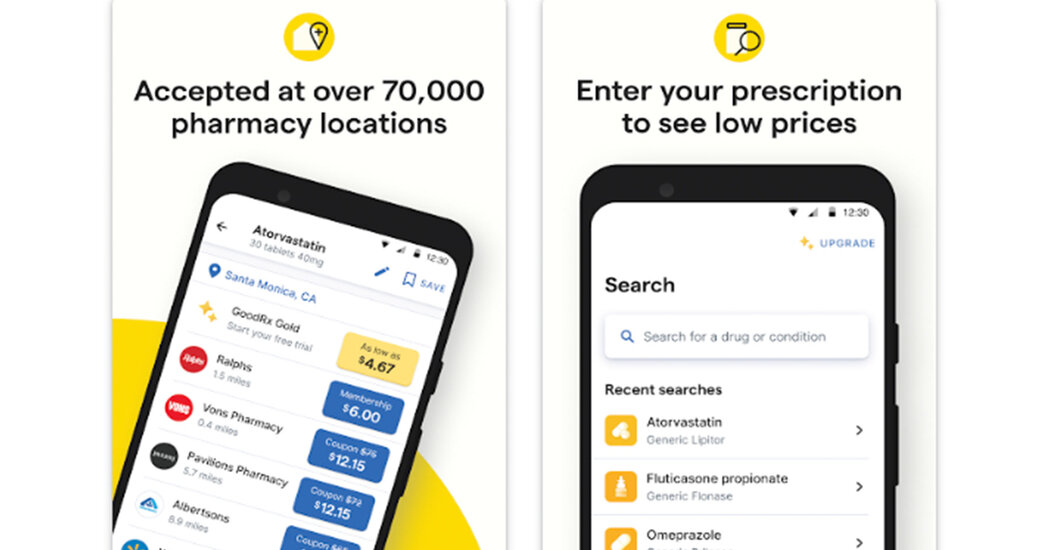
The popular drug discount app deceptively shared details on users’ illnesses and medicines with ad firms, regulators said in a legal complaint.Millions of Americans have used GoodRx, a drug discount app, to search for lower prices on prescriptions like antidepressants, H.I.V. medications and treatments for sexually transmitted diseases at their local drugstores. But U.S. regulators say the app’s coupons and convenience came at a high cost for users: wrongful disclosure of their intimate health information.On Wednesday, the Federal Trade Commission accused the app’s developer, GoodRx Holdings, of sharing sensitive personal data about users’ prescription medications and illnesses with companies like Facebook and Google without authorization.The company’s information-sharing practices, the agency said, violated a federal rule requiring health apps and fitness trackers that collect personal health details to notify consumers of data breaches.While GoodRx agreed to settle the case, it said it disagreed with the agency’s allegations and admitted no wrongdoing.The crackdown on GoodRx comes at a moment of heightened concern over the leaking of sensitive health information, particularly in states that have banned or severely limited abortions. And it underscores the F.T.C.’s intensifying efforts to push digital health services to beef up their user privacy and security protections.More on Big TechMeta: The owner of Facebook and Instagram said that it would reinstate former President Donald J. Trump’s accounts, which have been suspended since the day after the Jan. 6 Capitol attack.Google Antitrust Lawsuit: The Justice Department and a group of eight states sued Google, accusing the company of illegally abusing a monopoly over the technology that powers online advertising.Layoffs: Some of the biggest tech companies, including Alphabet and Microsoft, recently announced tens of thousands of job cuts. But even after the layoffs, their work forces are still behemoths.Climate Start-ups: As big tech companies slash perks and cut jobs, workers and investors are flocking to start-ups that aim to combat climate change.The F.T.C.’s case against GoodRx could upend widespread user-profiling and ad-targeting practices in the multibillion dollar digital health industry, and it puts companies on notice that regulators intend to curb the nearly unfettered trade in consumers’ health details.Over the last two decades, start-ups and giant tech companies have introduced a range of fitness devices, smartwatches and fertility apps. But unlike a person’s blood test results and other patient information collected by doctors and hospitals — which is protected by a federal law, the Health Insurance Portability and Accountability Act, known as HIPAA — there are few legal protections that specifically cover personal health details, like the names of drugs or diseases, that tens of millions of consumers enter into apps or search for online.In 2019, GoodRx uploaded the contact information of users who had bought certain medications, like blood pressure pills, to Facebook so that the drug discount app could identify its users’ social media profiles, the F.T.C. said in a legal complaint. GoodRx then employed the personal information to target users with ads for medications on Facebook and Instagram, the agency said.Those data disclosures, the agency said, flouted public promises the company had made to “never provide advertisers any information that reveals a personal health condition.”If a judge approves the proposed federal settlement order, GoodRx would be permanently barred from sharing users’ health information for advertising purposes. To settle the case, the company also agreed to pay a $1.5 million civil penalty for violating the health breach notification rule.The F.T.C. is employing new legal approaches and remedies in the GoodRx case as part of its effort to bolster safeguards for the personal information collected by health apps, trackers and sites.This is the first time that agency has brought an enforcement action using its Health Breach Notification Rule. That rule requires health apps and connected devices that collect or use personal health information, like an individual’s heart rate or menstruation history, to notify users of breaches like cyberattacks or the unauthorized sharing of their health data. This is also the first time that a proposed F.T.C. consent order is seeking to prohibit a company from sharing users’ health data for advertising purposes.“Digital health companies and mobile apps should not cash in on consumers’ extremely sensitive and personally identifiable health information,” Samuel Levine, director of the F.T.C.’s bureau of consumer protection, said in a statement. “The F.T.C. is serving notice that it will use all of its legal authority to protect American consumers’ sensitive data from misuse and illegal exploitation.”GoodRx, based in Santa Monica, Calif., said in a statement that user privacy was one of its most important priorities. The company added that the settlement with the agency focused on issues that GoodRx resolved three years ago, before the F.T.C. inquiry began.“While we had used vendor technologies to advertise in a way that we believe was compliant with all applicable regulations and that remains common practice among many health, consumer and government websites, we are proud that we took action to be an industry leader on privacy practices,” the GoodRx statement said.This is a developing story. Check back for updates.

Read more →

Using CRISPR to detect cancer biomarkers

Most cancer diagnostic techniques rely on uncomfortable and invasive procedures, such as biopsies, endoscopies or mammograms. Blood samples could be a less unpleasant option, though only a few forms of the disease can currently be diagnosed this way. But now, researchers reporting in ACS Sensors have developed an easy-to-use method that can detect small amounts of cancer-related molecules in exosomes in plasma and effectively distinguish between malignant and benign samples.
Exosomes are small vesicles that pinch off from a host cell, carrying cargo, such as nucleic acids, lipids and proteins, inside. This means that they provide a window into the condition of the cell they originated from. Accordingly, the unique intracellular environment of cancerous cells will be reflected in their exosomes through biomarkers such as micro RNAs (miRNAs). These are very small nucleic acids, only a few nucleotides in length, that regulate protein expression in cells and can become dysregulated in tumors. Therefore, it’s possible that a blood test could someday detect cancerous cells simply by targeting these exosomal miRNAs.
But quantifying miRNAs has been difficult because they are present at very low levels in exosomes, requiring laborious processes that can introduce contamination and report unreliable results. So, some researchers have analyzed RNA and proteins in vesicles with the gene-editing tool CRISPR. But Hua Gao, Kaixiang Zhang and colleagues wanted to develop a way to detect the small numbers of cancer-related exosomal miRNAs using a different CRISPR system with a unique RNase activity that was sensitive, reliable and effective.
To create the detection method, the team designed a CRISPR/Cas13a system to cut apart a fluorophore and quencher-labeled reporter molecule, then packed it into a liposome — essentially a manufactured version of an exosome. When the two types of compartments fused together, the CRISPR cargo would then interact with the exosomal genetic material. If the target miRNA sequence was present, the Cas13a protein became activated and cut apart the reporter molecule, producing a fluorescent signal. In these experiments, the team targeted miRNA-21, which is involved in the development of several diseases, including breast cancer. The method successfully detected this miRNA within a mixture of similar sequences with high sensitivity. In other experiments, the researchers tested the method on a group of exosomes from healthy human cells and groups derived from breast cancer cells. The system consistently differentiated the cancer-related exosomes from those derived from healthy cells, showing it could be useful as a cancer diagnostic. The researchers say that this method has the potential to make cancer diagnosis and monitoring quicker and easier by analyzing blood samples.
The authors acknowledge funding from the National Natural Science Foundation of China, the Postdoctoral Science Foundation of China, the Programs for Science & Technology Innovation Talents in Universities of Henan Province, and Outstanding Young Talents in Henan Province.

Read more →

Genomic methods aid study of Seattle 2017-2022 Shigella outbreak

A genomic study of a sustained, multidrug-resistant Shigellosis outbreak in Seattle enabled scientists to retrace its origin and spread. Additional analysis of the gut pathogen and its transmission patterns helped direct approaches to testing, treatment, and public health responses.
The genomic reconstruction of the 2017-2022 outbreak and a review of the patient care and public health interventions used are reported Jan 30 in The Lancet Infectious Diseases.
“The aim of the study,” the Seattle researchers noted, “was to better understand the community transmission of Shigella and spread of antimicrobial resistance in our population, and to treat these multi-drug resistant infections more effectively.”
Shigella outbreaks are more frequent in countries without sufficient public health and sanitation resources. But the researchers called Shigella an opportunistic pathogen that can also emerge in regions of high-income countries when conditions allow.
They explained that sustained Shigella outbreaks in urban areas pose a substantial public health challenge for populations trying to cope with harsh living conditions and lack of hygiene facilities.
The lead authors on the paper are Dr. Giannoula S. Tansarli of the Department of Laboratory Medicine and Pathology, and Dr. Dustin R. Long, of the Division of Critical Care Medicine, Department of Anesthesiology, both at the University of Washington School of Medicine.

The senior and corresponding author is Dr. Ferric C. Fang, professor of laboratory medicine and pathology and of microbiology at the UW medical school. He oversees the clinical microbiology lab at Harborview Medical Center and conducts basic science research on how bacteria cause disease. He was assisted by his UW Medicine colleague Dr. Stephen J. Salipante, a molecular genetics pathologist and an expert on next-generation DNA sequencing technologies.
Shigellosis is caused by Shigella bacteria, which can produce inflammation in the lining of the intestine. Its symptoms include fever, stomach cramps and diarrhea, and, in the worse cases, dysentery and dehydration. Some people with Shigellosis become severely ill and require hospitalization. Shigellosis is highly contagious. The transmission of just a few bacteria is sufficient to cause disease.
From 2017 to 2022, all 178 cases of Shigella identified by the clinical labs at Harborview Medical Center and UW Medical Center were characterized by species identification, susceptibility testing, and whole genome sequencing. For the study, the researchers retrospectively examined the demographics and the clinical outcomes of the infected patients.
Of the 178 cases, 78, or 45.6%, were in men who have sex with men, and 88, or 51.5% were in persons experiencing homelessness. About half of the Shigella isolates were resistant to multiple antibiotics.
The researchers also had data on 143 patients who received antimicrobial therapy. Despite the high presence of drug resistant Shigella, nearly 70 percent of patients were found to have received suitable antimicrobial therapy for their Shigella infection. The researchers added that rapid diagnostics and culturing of the bacteria for patients seeking care for severe diarrhea, along with assessment of risk factors and detailed local understanding of the populations affected, led to high rates of appropriate treatment. The approach to care improved over time, as clinicians gained more experience with the disease.

The genomic analysis portion of the study revealed sequential outbreaks of several distinct lineages of two species of Shigella, S. flexneri and S. sonnei. The various at-risk populations were found to carry Shigella of different lineages with different drug-resistance traits. This information helped clinicians develop effective treatment guidelines.
How did this Shigella outbreak appear in Seattle? The researchers’ genomic findings suggest that it came originally from international travelers from areas where Shigella was common. It then spread locally and quickly among at-risk groups.
The researchers explained that multi-drug resistant Shigella has become a growing global health concern with many outbreaks worldwide. Most of these have affected men who have sex with men. A variety of gut pathogens can be transmitted between men in this way.
However, in the past few years Shigellosis outbreaks also have occurred among people experiencing homelessness in West Coast cities of the United States and Canada.
Whole-genome sequencing enabled the researchers to determine that new S. sonnei and S. flexneri strains first appeared in Seattle among men who have sex with men. This was quickly followed by transmission within the local population of people experiencing homelessness. This was evidenced by the significant increase in Shigellosis after 2020 in the Seattle-King County area among this population.
The outbreaks were worse in winter, a seasonal characteristic of Shigella which might be due to greater overcrowding in shelters and other locations during cold weather. Dr. Fang noted that Shigellosis cases caused by a different S. sonnei strain are now being encountered in Seattle this winter.
The Seattle outbreaks followed patterns characteristic of those reported earlier in other countries.
Several public health measures were instituted to limit the spread of Shigella. The first was to check for possible sources for contracting Shigella. Signs were placed to discourage people from drinking water from decorative fountains in downtown Seattle. Local homeless service providers received prevention resources and guidance. Outreach teams visited encampments and overnight shelters to offer health education and improve the availability of clean water, toilets, handwashing stations, and other sanitation measures.
Many public facilities, such as restrooms, sinks, and drinking fountains, had been closed as part of the COVID-19 pandemic response. Public health officials requested early re-opening of these facilities near encampments and districts where people lived on the streets. They also increased environmental cleaning of alleyways in downtown Seattle that had been used in lieu of restrooms.
The authors noted that the study of the Shigella outbreak in Seattle represented the collaborative efforts of local health-care facilities, clinical and academic laboratories, antimicrobial stewardship, infection control, and public health teams.
The study received no outside funding, and the researchers declared no competing interests.

Read more →