
Genes responsible for coronary artery disease, world's No. 1 killer, identified


Published8 hours agoShareclose panelShare pageCopy linkAbout sharingImage source, Sean CrawfordBy Angie BrownBBC Scotland, Edinburgh and East reporterSean Crawford cried when he saw the trailer for new Hollywood film The Whale.He says the movie about a reclusive English teacher with severe obesity, played by Brendan Fraser, resonated with his life.Mirroring the plot of the film, Sean rapidly gained weight after someone close to him died. He now weighs 30 stone (190kg).The father-of-one from Athelstaneford in East Lothian says the film has given a voice to people in his situation.And he says there are many similarities between his life and that of the film’s lead character, Charlie.”He instructs a class from behind a computer because he is ashamed of his weight, I hid away from things because I was ashamed of mine,” said Sean.Brendan Fraser caps comeback with Oscar nominationThe Whale review- ‘Brendan Fraser deserves an Oscar'”The main focus is making sure our daughters turn out to be good human beings just in case we aren’t there to see them grow up.”I think people need to realise big people are human beings.”Image source, AlamySean says health and depression are among the issues that can lead to weight gain.He said: “I often get adults looking at me in disgust, kids stare and make comments – but I understand this is the innocence of youth.”I so often hear people talk about the likes of anorexia and bulimia with a degree of sympathy, whereas obesity is frowned upon.”Both are illnesses at the end of the day.”Sean said he had been a confident person before he started gaining weight.One of his best friends passed away in 2019, then two months later he took voluntary redundancy from his role as a maintenance supervisor after 12 years in the job.This was followed by the Covid lockdown, and he ended up out of work for a few years.In this time he became a bit of a hermit – and put on 12 stones (76kg) in 18 months.Image source, Sean Crawford”My doctor said if there was an award for putting on weight in the shortest space of time then he would give it to me,” said Sean.”I neglected my life and spent 99.9% of my time watching TV, eating and drinking fizzy juice.”I don’t sleep much so I have 18 to 19 hours a day to do this.”He went from working with 200 people every day to sitting on his own in his house.Sean said he gave up – particularly during lockdown, when he found the isolation very stressful.He started getting back pains and it became too painful to walk.He tried to find out how much he weighed, but there were no scales big enough at his doctor’s surgery.Image source, Sean CrawfordHe eventually got weighed at the hospital, and found that he weighed 30 stone (190kg).”It was soul destroying and I lost all my confidence,” he said.At the end of 2020, when his vacuum cleaner broke and he did not have enough money to replace it, a friend gave him a number for the charity DadsWork, which is funded by the National Lottery Community Fund.The community project in East Lothian provides support groups, positive parenting classes, workshops on the role of fathers, home visits, trips and outings for fathers and their children.They gave him a vacuum cleaner and told him about drop-in groups and workshops he could attend with his daughter.Sean, who is 5ft 11ins , said: “I didn’t know what they did but after meeting them I’ve seen them just about every week since.”I started going to their drop-in groups and it was great to meet other dads and hear their stories and what they were struggling with.”These sessions helped normalise struggles of fatherhood to me and now I realise that I’m not alone – and not the only one who may feel that they don’t know what they’re doing all of the time.”Image source, Sean CrawfordSean said this had made him a better dad.He also now has a job volunteering as a supervisor in a food bank.”DadsWork have really helped me be more productive with the time I spend with my daughter too,” he added.He said they now do “all sorts of things together” and had been supported with swimming passes.”My daughter loves it and it’s helping me get into shape and get my confidence back,” he said.Kevin Young, project manager of DadsWork, said the organisation was there to offer support.He said: “Sean has made a remarkable turnaround. When we first met him he was low in confidence and self esteem and wouldn’t go out.”We have spent a lot of time building our relationship with him to establish trust.”He has gone from the vacuum cleaner, which was a small thing but huge thing for his family, to engaging with us hugely.”Image source, Sean CrawfordNow Sean feels in a better place and hopes to lose weight so he can meet a new partner.”I hate being on my own and I hate being lonely,” he said. “I’m in a terrible place with my weight and hate having my picture taken or looking at myself.”But now I’m working again I feel ready to lose weight.”He also wants to see The Whale at the cinema.”I’m desperate to see it,” he added. “I ended up in tears when I watched the trailer, I related to it so much. “I couldn’t tell you the last time I wanted to see a film at the cinema but this one massively ties into my situation.”I empathise with him and it also gives a voice to people in my position.”He is a teacher and is helping society. It shows people benefitting from his life, as normally overweight people are hidden away and are not given the credit they are due.”Related Internet LinksDadsWorkThe BBC is not responsible for the content of external sites.
Read more →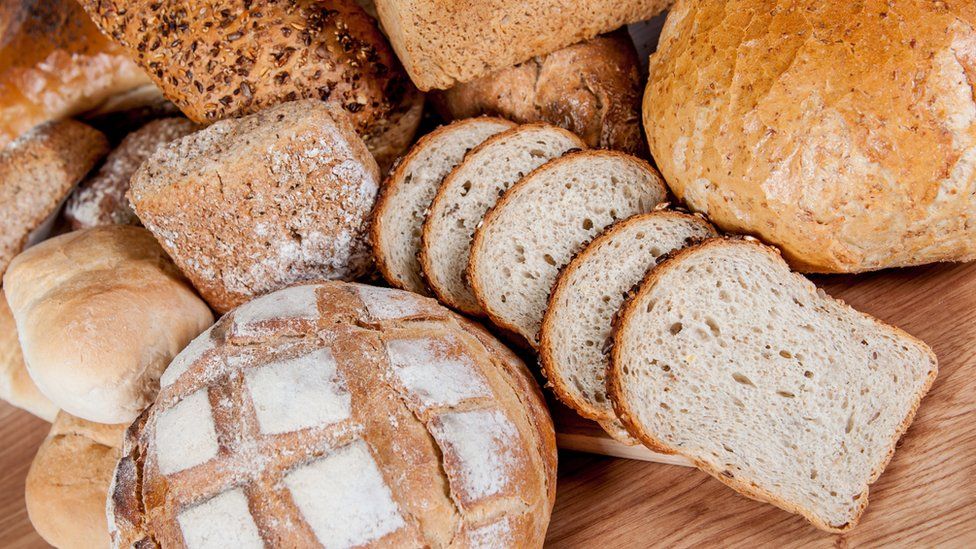
Published11 hours agocommentsCommentsShareclose panelShare pageCopy linkAbout sharingImage source, Getty ImagesBy Philippa RoxbyHealth reporterLeading scientists say adding higher levels of folic acid to all flour and rice would stop hundreds more UK babies being born with lifelong disabilities.They say current levels being proposed are too low and will not help some groups of women, while any concerns over potential harms are unjustified.The government says mandatory fortification of one type of white flour allows an element of choice.The Food Standards Agency says it will still offer big public health benefits.Last year, governments across the UK decided to introduce new laws making it compulsory for the food industry to add a vitamin called folic acid, also known as B9, to non-wholemeal wheat flour. That means everyone who eats white bread would get more folic acid in their diets.The vitamin is particularly important in the early stages of pregnancy, helping a baby’s brain, skull and spinal cord develop properly. Women are advised to take a daily folic supplement before becoming pregnant but many do not – mostly the least well-off – and about half of pregnancies are also unplanned.This means they run the risk of giving birth to babies with severe abnormalities called neural tube defects, such as spina bifida. These conditions affect about one in 1,000 pregnancies in the UK.’Lifelong complications’But a group of scientists says the new proposals will not help women who eat gluten-free foods, wholemeal flour or any kind of rice in preference to bread.They also say the proposed level of folic acid added is too low and will only prevent 20% of birth defects, instead of about 80% (equivalent to 800 babies with neural tube defects) which could be achieved with higher doses.One of those scientists, Neena Modi, professor of neonatal medicine at Imperial College London, said: “In the UK we have a neural tube defect rate that is one of the highest in Europe.”This is not a trivial condition,” she said. “It leads to major lifelong complications for baby and family.””Each neural tube defect is a tragedy – I see no reason not to move to a higher level of fortification.”Image source, Getty ImagesThe UK government proposes to add 0.25mg of folic acid per 100g of non-wholemeal wheat flour, but Prof Modi and others are calling for four times that amount to be added – 1mg per 100g of all flour and rice.Prof Dame Lesley Regan, professor of obstetrics and gynaecology at St Mary’s Hospital, Paddington in London, said there were medical, ethical and economic reasons for much higher doses.”I’m the one who has to pick up the pieces,” she said, when families choose to have late terminations of affected babies after a diagnosis is discovered.The cost of caring for babies born with the defects for the rest of their lives often runs into the tens of millions of pounds, Prof Regan said, adding that 800 families “have to deal with those problems.”‘Benefit all mothers’Ingesting folic acid direct from fortified foods is thought to be twice as effective at raising levels of the crucial vitamin as taking the same dose via a supplement.Some experts have previously voiced concern that adding too much folic acid to everyone’s diets could mask other health issues, such as anaemia. However, University of Oxford neurologist Prof Peter M Rothwell rejects that notion, saying: “There isn’t an issue. The idea just doesn’t fit with evidence or with modern practice.”It was important to be aware of unintended consequences but “they seem to very small indeed”, he added.A study in the Lancet in 1991 showed that taking a daily 4mg folic acid supplement reduced neural tube defects in babies by about 80% in a UK trial.University College London professor of preventive medicine Sir Nicholas Wald, who led that study, said higher levels of fortification “would be safe and prevent many more birth defects” and “benefit all mothers – rich and poor alike”.The Department of Health and Social Care in England said the proposed level of folic acid in flour was the result of modelling by Food Standards Scotland.It looked at the safety of different options, ensuring no increase in people at risk of consuming too much folic acid, as well as no decrease in current average intakes.”Choosing to fortify non-wholemeal wheat flour only… allows an element of consumer choice as wholemeal flour and other milled grains and flours including those that are ‘gluten free’ are not currently subject to other fortification,” it said.A consultation on the issue closed in November and responses are currently being analysed. A spokesperson for the Department said an agreed level of folic acid would be confirmed “in due course”,What is folic acid?the synthetic version of the vitamin folate, or vitamin B9it is essential in the formation of spine and nerve cells during the first few weeks of pregnancyanyone trying to get pregnant is advised to take 400 micrograms, once a dayyou should take it for the first 12 weeks of pregnancyfor families where there is a history of spina bifida, a higher dose – 5mg – is neededfolate is the natural form of it, and is found in food such as spinach, cabbage, oranges, wholegrain foodsif you are not pregnant, you should be able to get enough in your diet from these sources.The charity Shine, which supports those living with spina bifida, say it is keen to see mandatory fortification of flour with folic acid implemented as soon as possible.”We would hope that whatever the decision on the amount of folic acid to be added, the levels of mandatory fortification are kept under review, its impact monitored, and adjustments made as evidence of the impact becomes apparent,” said its chief executive Kate Steele. Shine said all women who might become pregnant should take a daily supplement of folic acid, whether or not they are trying for a baby. Folic acid is added to flour in more than 80 countries – and when it was added to bread in Australia, neural tube defects fell by 14%.More on this storyFlour to have folic acid to prevent birth defects20 September 2021New plan to add folic acid to UK flour13 June 2019Related Internet LinksAbout folic acid – NHSShine – Spina Bifida & HydrocephalusFolic Acid Food Fact Sheet – British Dietetic Association (BDA)The BBC is not responsible for the content of external sites.
Read more →