A Patient Declared Dead Is Found in a Body Bag Gasping for Air

A 66-year-old woman was taken to a funeral home, where workers discovered her chest moving, a report said. An Alzheimer’s care center in Iowa that declared her dead was fined $10,000.An Alzheimer’s care center in Iowa was fined $10,000 after mistakenly declaring a patient dead, according to a report from the state’s Health Department.The patient, a 66-year-old woman who was not named in the report, was declared dead by staff members of the Glen Oaks Alzheimer’s Special Care Center in Urbandale, Iowa, on Jan. 3, and transported to a funeral home, according to the report.But when staff members at the funeral home unzipped the body bag, she was alive and gasping for air, according to a citation from the Iowa Department of Inspections and Appeals.The woman was admitted to the special care center in December 2021 with early onset dementia, anxiety and depression. She entered hospice care in late December 2022 with senile degeneration of the brain and was treated with the anxiety drug lorazepam and morphine, a painkiller, according to the report.Starting around last month, her vital signs and responsiveness worsened. She refused meals and had seizures. A doctor ordered an increase in morphine and lorazepam “due to active decline,” the report said.Early on Jan. 3, a care center employee at the end of a 12-hour shift found the woman unresponsive and conferred with a nurse, who declared the woman dead. The nurse informed the woman’s daughter and secured orders from a doctor to release her to a funeral home.Funeral home workers unzipped the body bag and noticed that the woman’s chest was moving and watched as “she gasped for air,” the report said. They called 911 and the hospice.An ambulance transported the woman to an emergency room with a low temperature and shallow breathing. The woman had a do-not-resuscitate directive, so she was brought back to the hospice at the Alzheimer’s care center, where she died two days later.Iowa’s Health Department fined the center $10,000 for two violations, which included a rule that says care homes must preserve the dignity of residents. The report did not address what, if any, actions were taken regarding the nurse.On Sunday, an employee at Glen Oaks Alzheimer’s Special Care Center said she was not able to comment. The center’s executive director, Lisa Eastman, did not immediately respond to an email seeking comment.Ms. Eastman sent a statement to the local television station KCCI, which reported on the case.“We care deeply for our residents and remain fully committed to supporting their end-of-life care,” Ms. Eastman said in the statement. “All employees undergo regular training so they can best support end-of-life care and the death of our residents.”The center did not dispute the Health Department’s findings, according to the report. It has 30 days from Feb. 1, the date of the citation, to request a formal hearing or pay the penalty.The center is a 66-bed residential facility run by Dallas-based Frontier Management, one of the largest senior housing managers in the United States.The center or its administrator has been fined more than a dozen times since opening in 2001, according to Iowa Health Department records, for violations that include a lack of specialized staff training in memory care and a lack of infection control during the pandemic, when patients who tested positive for Covid-19 were roomed with other residents.It is not unheard-of for people to be declared dead only to be found alive hours later.In 2020, a woman in Michigan with cerebral palsy was declared dead by paramedics but was discovered to be breathing hours later by a funeral home worker who was preparing to embalm her body.In 2018, a South African woman was pronounced dead at the scene of a car wreck but hours later was found alive in a mortuary.

Read more →

Accepting anxiety for peace of mind

Sadly, many family members, friends, and celebrities have suffered from anorexia nervosa, or AN, a severe psychiatric illness associated with intense anxieties concerning weight, shape, and self-esteem. AN is characterized by an eating disorder, food restriction, voluntary vomiting, and extreme emaciation.
Mindfulness meditation has already become a globally recognized method for addressing AN. Its effectiveness in clinically treating neurogenic emaciation, however, was not previously studied.
A team of researchers at Kyoto University’s Graduate School of Medicine has now found that mindfulness meditation does reduce such anxieties. Results from the study show changes in the activity of brain regions involved in anxiety.
The team’s mindfulness meditation program has seen a significant decrease in obsessive thoughts about test subject’s self-image and brain activity associated with related emotions.
“Our results suggest that the participants in the study became better at accepting their anxiety as it is,” says lead author Tomomi Noda.
Mindfulness and meditation work hand-in-hand. The former teaches practitioners to hone their awareness of their present experience and their ability to not judge and rather accept their circumstances. The latter is the medium by which mindfulness can be approached.
“We focused on the possibility that patients with AN try to avoid their crippling anxiety about weight gain and self-image by restricting food or vomiting,” adds co-author Masanori Isobe.
A 4-week mindfulness intervention program examined neural changes using tasks designed to induce weight-related anxiety. The researchers then regulated this anxiety by helping patients accept their current situations and experiences at face value, instead of avoiding them.
The researchers used functional magnetic resonance imaging — or fMRI — to analyze attention regulation in relation to eating disorders. The study’s results support the subjective experiences of the researchers, although it was unexpected to them that several global events, such as the Covid-19 pandemic and the Russo-Ukrainian war, were significant factors in patients’ anxieties.
“We anticipate practical implications of our results in clinical psychiatry and psychology and broader research into mitigating suffering through mindfulness, using the strategy of self-acceptance to regulate attention,” concludes group leader Toshiya Murai.

Read more →

How age and sex influence our body clocks

The human body runs on a finely tuned clock synchronized to the 24-hour cycle of Earth’s rotation, known as the circadian clock, which controls various physiological processes such as the sleep-wake cycle, hormone production, and metabolism.
In a new study, researchers led by Felix Naef at EPFL were able to uncover the organization of tissue-specific gene expression rhythms in humans, and shed light on how our body clocks depend on sex and age.
In model organisms, analyzing molecular rhythms is usually done using time-stamped measurements — but such data are not readily available in humans. To work around this, the researchers used existing measurements from a large cohort of post-mortem donors, combined with a novel computer algorithm that was designed to assign internal clock times to nearly one thousand donors.
“Interestingly, the data-science algorithm we developed turned out to resemble models from magnetic systems, which are well studied in statistical physics,” says Felix Naef. Using this innovative approach, the researchers obtained the first comprehensive and accurate whole-organism view of 24-hour gene expression rhythms in 46 human tissues.
The study found that the core clock machinery properties are conserved across the body and do not change significantly with sex and age. On the other hand, the analysis revealed extensive programs of gene expression rhythms across major compartments of metabolism, stress response pathways and immune function, and these programs peaked twice a day.
In fact, the emerging whole-body organization of circadian timing shows that rhythmic gene expression occurs as morning and evening waves, with the timing in the adrenal gland peaking first, while brain regions displayed much lower rhythmicity compared to metabolic tissues.
Dividing the donors by sex and age revealed a previously unknown richness of sex- and age- specific gene expression rhythms spread across biological functions. Strikingly, gene expression rhythms were sex-dimorphic (different in males and females) and more sustained in females, while rhythmic programs were generally reduced with age across the body.
Sex-dimorphic rhythms — referring to the differences between males and females — were particularly noticeable in the liver’s “xenobiotic detoxification,” the process by which liver breaks down harmful substances. Additionally, the study found that as people grow older, the rhythm of gene expression decreases in the heart’s arteries, which may explain why older people are more susceptible to heart disease. This information could be useful in the field of “chronopharmacology,” which is the study of how a person’s internal clock affects the effectiveness and side effects of medication.
This study provides new insights into the complex interplay between our body clock, sex, and age. By understanding these rhythms, we might find new ways of diagnosing and treating pathologies such as sleep disorders and metabolic diseases.

Read more →

Infected blood inquiry: Five things we have learned

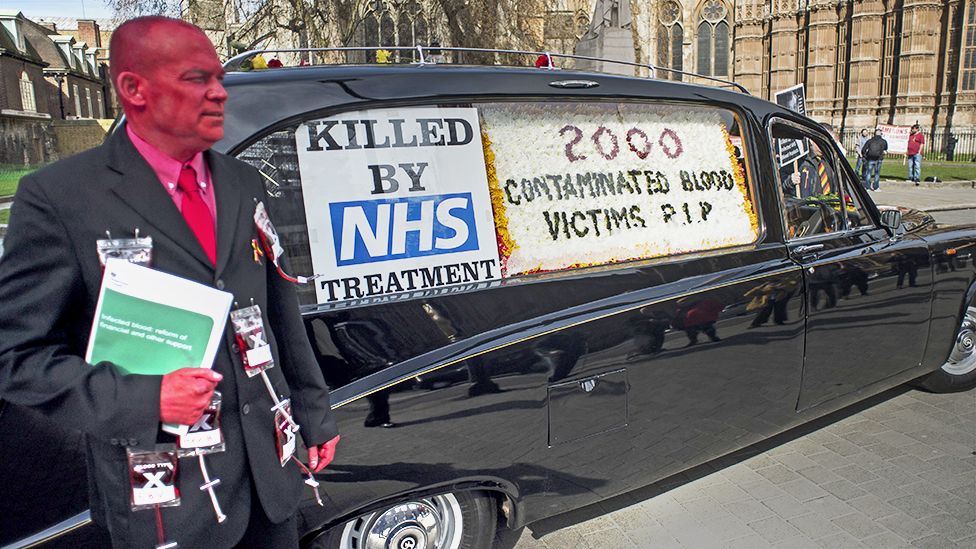
Published3 February 2023Shareclose panelShare pageCopy linkAbout sharingImage source, ShutterstockBy Jim ReedHealth reporterA long-running public inquiry into what has been called the worst treatment disaster in the history of the NHS has heard its final evidence. It is thought tens of thousands were infected with HIV and hepatitis between 1970 and 1991 after being given a contaminated drug or blood transfusion. The inquiry, which started in 2018, has reviewed thousands of documents and heard testimony from 370 witnesses.It now plans to publish its formal conclusions and recommendations in the autumn.Here are five important things that have been revealed by the inquiry over the past five years. 1. How big the contaminated blood scandal isA group of academics hired by the inquiry produced detailed estimates of the numbers infected in the 1970s and 80s. A total of 1,250 people with haemophilia and other bleeding disorders contracted HIV after being given a protein made from blood plasma known as Factor VIII or, less commonly, Factor IX.About half of that group later died of an Aids-related illness.At the time, the UK was not self-sufficient in factor concentrate, so it was often imported from the United States – where prisoners and other at-risk groups were paid to donate. Another 30,000 NHS patients probably contracted a different virus – hepatitis C – through the same contaminated treatment, or a blood transfusion after surgery or childbirth.It is thought about 2,050 of that group later died of liver failure or cancer caused by hepatitis C, before an effective treatment became widely available.Image source, Richard Warwick2. How many children were infectedResearchers found that 380 of those infected with HIV – about one in three – were children, including some very young toddlers.When that figure was read out at the public inquiry, there was an audible gasp from survivors and relatives in the room.At Treloar’s College, a state-run boarding school in Hampshire, 72 pupils – all haemophiliacs – later died after being given the contaminated treatment.The inquiry heard devastating testimony from survivors in a week of special hearings about the school.”I often just think, why me? Why am I still here?” said Richard Warwick, a former pupil who was infected with HIV as a young boy in 1978. “It’s just the guilt of losing all those friends. I can name 10 that I know who are just gone. It’s horrific.”Parents and pupils kept in dark at infected blood schoolI lost baby after contaminated blood transfusion’I’ll keep fighting until everyone is compensated’3. Who knew what and when?One of the key questions the inquiry will now have to answer is whether more could and should have been done to prevent those infections and deaths.Former Prime Minister Sir John Major drew more gasps from families watching his testimony when he described the scandal as “bad luck”.He later apologised for his choice of language.The inquiry was shown a letter written in May 1983 by Dr Spence Galbraith, then director of the UK’s Communicable Disease Surveillance Centre, to the Department of Health. It warned that haemophiliacs were being infected with an ‘Aids agent’, as HIV was then called, and concluded that “all products made from blood donated in the USA… should be withdrawn”.There was no evidence the letter was acted on at the time. In his testimony, Lord John Patten, a junior health minister from 1983 to 1985, said he “unequivocally” believed ministers should have been told about the warning and said – if he had – he “would have pressed the panic button”.4. A ‘failure of democracy’There was detailed questioning of ministers and civil servants about the internal workings of government.Former Conservative health secretary Jeremy Hunt – now chancellor – was asked about official briefings he received as recently as 2012 suggesting the scandal had been an “unavoidable problem”. He described how state institutions can “close ranks around a lie” and said it was a “huge failure of democracy” that it has taken so long to get to the truth. Another ex-health secretary Andy Burnham, now the Labour mayor of Manchester, said successive governments had “comprehensively failed” the victims over five decades and suggested there may be a case for charges of corporate manslaughter in the future.This video can not be playedTo play this video you need to enable JavaScript in your browser.5. How people will be compensatedHundreds of victims of the scandal have received annual support payments but – before this inquiry – no formal compensation had ever been awarded for loss of earnings, care costs and other lifetime losses.Many of those infected had had to give up jobs and live on benefits because of a series of health problems. In July 2022, inquiry chairman Sir Brian Langstaff made his first formal recommendation – an unusual move in the middle of a public inquiry. He said there was a “compelling case” to quickly make some interim compensation payments of £100,000 each. The government agreed and – in October 2022 – the first payments were made to about 4,000 surviving victims and widows. But many children, siblings and parents of those who had died have missed out. That included Laura Palmer, 39, who lost both her parents to HIV/Aids in August 1993, when she was nine years old. “There are still a lot of bereaved families excluded, so there is more work for us to do,” she told the BBC.In his final comments to the inquiry, Sir Brian said he plans to publish a second interim report dealing with the question of compensation “before Easter”. The inquiry team is then expected to produce a final report into the scandal, with a list of recommendations, at some point in the autumn.More on this storyBlood scandal: 1 in 3 infected with HIV was a childPublished9 November 2022Blood scandal victims to get £100k this weekPublished22 October 2022Black and Asian infected blood victims ‘let down’Published30 September 2022

Read more →