Bird flu: UK health officials make contingency plans
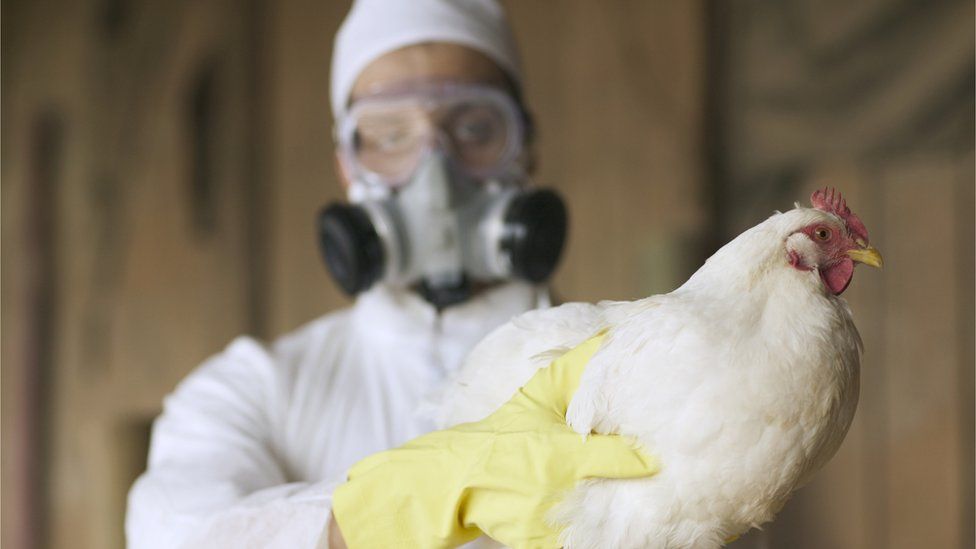
Published34 minutes agoShareclose panelShare pageCopy linkAbout sharingImage source, Getty ImagesBy Michelle RobertsDigital health editorUK health experts are sharing details of their Covid-style plans against bird flu, including modelling for the unlikely scenario that it could mutate and cause a pandemic in people.The UK Health Security Agency (UKHSA) says there is no evidence H5N1 virus is an imminent threat or can spread between people, despite some getting sick after contact with infected birds. But there is no room for complacency. One expert told the BBC “we must prepare for the worst” just in case.The World Health Organization (WHO) is urging heightened vigilance from all countries, following the death of an 11-year-old girl in Cambodia from H5N1.The girl’s father has also tested positive, according to Cambodia’s health minister. Investigators are working to establish if infected birds were the cause, rather than a case of human-to-human transmission.Humans rarely get bird flu, but when they do it is usually from coming into direct contact with infected birds.Since late 2021, the world has been experiencing one of the worst global avian influenza outbreaks on record, with tens of millions of poultry culled and mass wild bird die-offs.And there have been a few infections in some mammals, including foxes and otters in the UK. Dr Meera Chand, from the UKHSA, said all of the latest evidence suggested H5N1 could not currently spread easily to people. “However, viruses constantly evolve, and we remain vigilant for any evidence of changing risk to the population, as well as working with partners to address gaps in the scientific evidence.”In preparation for a worst-case scenario of human-to-human spread, the UKHSA is modelling:How many might become infected and get very sickWhether lateral flow tests and blood tests would be helpfulWhat genetic mutations might signal an increased risk to human healthWhen the Covid pandemic hit, there were no suitable vaccines available to fight that virus. But for bird flu, there are already several good candidates that might help. WHO-affiliated labs already hold two flu virus strains that are closely related to the circulating H5N1 virus, that manufacturers can use to develop new shots if needed, experts said at a meeting on Friday.Prof Peter Openshaw, from Imperial College London, is a member of Nervtag – the group that advises the British government on new and emerging threats from respiratory viruses.He told the BBC that the fact that we are still in a Covid pandemic in no way lessened the possibility of another pandemic coming from elsewhere.”We absolutely need to watch this one,” he said.”The good news at the moment is that there’s no evidence of human-to-human spread.”We need to prepare for the worst but obviously hope for the best, to use the old phrase.””Not another pandemic” might well be the exasperated response of many to talk of the risks from bird flu. Covid fatigue is understandable but the H5N1 virus is a real concern to many scientists who monitor global disease threats. Thankfully, the virus does not spread easily from birds to humans, requiring close contact. That would need to change if the threat of a human pandemic was to be realised, which would require the virus to mutate. Since 2003 the WHO has recorded 868 cases in humans, of which 457 were fatal, so the mortality rate is more than 50%. Scientists want to see better surveillance, more investment in vaccines and antivirals – so that should the worst ever happen, the world will be better prepared than it was when Covid emerged.More on this storyBird flu ‘spills over’ to otters and foxes in UK2 FebruaryRelated Internet LinksUKHSA technical briefing on H5N1The BBC is not responsible for the content of external sites.

Read more →

H5N1: Cambodian girl dies in rare bird flu case

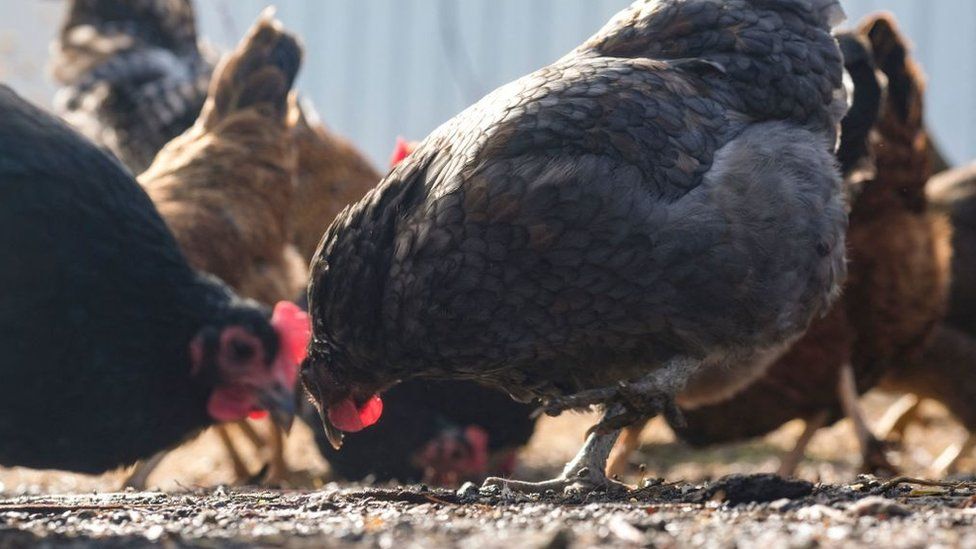
Published3 hours agoShareclose panelShare pageCopy linkAbout sharingImage source, Getty ImagesBy Kelly NgBBC NewsAn 11-year-old girl in Cambodia has died from the country’s first known human case of bird flu in nine years, health authorities have confirmed.The girl from the rural Prey Veng province was diagnosed with the H5N1 virus on Wednesday.She had fallen ill a week earlier with a high fever, cough and sore throat.Cambodia’s health ministry said her father had also tested positive and 11 others had been tested. On Thursday, Health Minister Mam Bunheng said it was the first known human infection of the H5N1 strain in Cambodia since 2014. The girl had been taken from her village to the children’s hospital in capital Phnom Penh – but died shortly after her diagnosis.Officials have collected samples of several dead birds from near the girl’s village. Health officials have also warned residents against touching dead or sick birds.Cambodia last recorded a bird flu case in 2014. In the decade before, it recorded 56 human cases of H5N1 infection, 37 of which were fatal.Human cases of bird flu are rare, as humans do not have the receptors in their throats, noses, and upper respiratory tracts that are susceptible to the current virus strain. People who work with infected poultry are at higher risk of being infected. WHO has recorded eight cases human H5N1 infections since 2021, including in China, India, Spain, the UK and US.A new, highly contagious strain of the virus is infecting birds around the world.The recent bird flu outbreak has been circling the globe since October 2021.The World Organisation for Animal Health told the BBC earlier this month that it had recorded almost 42 million individual cases in domestic and wild birds.Almost 15 million domestic birds, including poultry, have died from the disease, and more than 193 million more have been culled.The strain had also infected mammals, such as minks and otters. The World Health Organization said earlier this month that the virus will “need to be monitored closely” to see if it is mutating into a form which can spread among humans.More on this storyWhy is bird flu so bad this year?2 FebruaryBird flu ‘spills over’ to otters and foxes in UK2 February

Read more →

Researchers link supplement to reduced biomarkers of Alzheimer's in the brain

For the first time, a researcher at the University of Delaware College of Health Sciences in collaboration with a team at the National Institute on Aging, a division of the National Institutes of Health, has determined that the naturally occurring dietary supplement, nicotinamide riboside (NR), can enter the brain.
The discovery was made by Christopher Martens, assistant professor of kinesiology and applied physiology and director of the Delaware Center for Cognitive Aging Research, and Dr. Dimitrios Kapogiannis, a senior investigator at the National Institute on Aging. The finding is significant because it supports the idea that NR, upon reaching the brain, can alter the metabolism of relevant biological pathways involved in neurodegenerative diseases like Alzheimer’s. Their work, supported by an NIH grant, and in part by the Intramural Research Program of the NIH National Institute on Aging, was recently published in the journal Aging Cell.
Upon consumption, NR is readily converted into nicotinamide adenine dinucleotide (NAD+), which is critical to cellular repair and the repair of damaged DNA.
“NAD+ is gradually lost as we get older or develop chronic diseases. Loss of NAD+ is linked to obesity and other negative lifestyle habits like smoking,” Martens said. “Because more NAD+ is needed to counteract those negative consequences, it’s more likely to be depleted in the face of negative lifestyle habits.”
Martens has been studying the compound since he was a postdoctoral fellow at the University of Colorado Boulder. In an initial study, he found that levels of NAD+ could be boosted in the blood if people ingested NR, but it was not clear if it could reach other tissues in the body.
“We had some preliminary signs of efficacy, including lower blood pressure in people who had high blood pressure to begin with,” he said. “But until now, it was unknown whether NR reached targeted organs like the brain to have a real therapeutic effect.”
Measuring the level of NAD+ in the brain in humans is challenging. There are emerging techniques involving MRI, but these only provide an indirect measure and are costly and difficult to perform. Instead, Martens and colleagues measured NAD+ directly in tiny particles called extracellular vesicles that originated from neurons and ended up in the blood. These extracellular vesicles can provide cutting-edge blood-based biomarkers for brain disorders and serve as a “liquid biopsy” of neurons, giving researchers a rare look at what’s inside them.

“Each vesicle has a unique molecular signature on its surface, including proteins that give you clues about its origin,” Martens said. “In our case, we selected vesicles that carry markers that are characteristic of neurons, and so we have confidence that the NAD+ we measured in them reflects what happens in the neurons, and by extension the brain.”
Using samples from their first initial clinical trial, the researchers determined, first, that NAD+ levels went up in these vesicles after six weeks.
“When NAD+ goes up in these vesicles, we see an association with some of the biomarkers of neurodegenerative disease,” Martens said. “Particularly, in people where we saw an increase in NAD+, we also saw changes in biomarkers like amyloid beta and tau, which are both related to Alzheimer’s disease,” Martens said.
Martens and Kapogiannis also found a correlation between these neurodegenerative biomarkers and change in NAD+.
“If NAD+ went up a lot, there was typically a larger change in some of the disease biomarkers,” Martens said. “That tells us the NAD+ is not only getting into the brain but it’s likely also having some effect on its metabolism and multiple interrelated pathways.”
Some of these blood-based biomarkers could be used down the road to determine if NAD+ depletion is a cause of Alzheimer’s and other neurodegenerative diseases. It is even possible that these types of tests could become more accessible to the population for more routine testing.

Martens is leading a 12-week study involving NR in older adults with mild cognitive impairment. The study is supported by the Delaware Center for Cognitive Aging Research and the National Institute on Aging and is actively seeking more participants.
Through the study, Martens seeks to determine whether increased consumption of NR has an even larger effect in people with cognitive impairment.
“They’re coming in with cognitive deficits, and as a result, are more likely to have an accumulation of some of these biomarkers in their brain, so there’s a chance we’ll see bigger reductions in these biomarkers because they have more of them in their cells,” Martens said.
Nearly all drugs on the market for patients with Alzheimer’s have only a modest effect on the symptoms but do not significantly stop the underlying progression of the disease.
“In our ongoing trial, we’re measuring markers of cognitive function and other things related to functional independence and quality of life, but we’re also hoping to gain some insight on the underlying disease process,” Martens said. “We’re hoping that the people who take the NR might have preserved function.”
After proving its efficacy, Martens and Kapogiannis will test whether increased use of NR improves cognition, and ultimately, whether it can be used to slow neurodegenerative disease progression.
“We were among the first to do a chronic dosing study in humans, and as a result, we’ve been at the forefront of this field for a few years,” Martens said. “Now, we’re at a turning point, where we can start to determine whether NAD+ increases in other tissues as well, and that’s likely where the more important signal will be in terms of resolving disease.”

Read more →

Soy, Oat and Almond Drinks Can be Called Milk: FDA

Plant-based beverage makers hailed the agency’s decision but objected to the recommendation for labels to specify the nutritional differences with cow’s milk.Oat, soy and almond drinks can keep the word milk in their names, the Food and Drug Administration proposed this week, in an effort to end a long-running battle between the powerful dairy industry and the plant-based upstarts that have been changing the way Americans consume cereal and flavor their coffee.Most consumers, the agency noted in its draft proposal, are aware that liquid extracts from plants have no relationship to the udder of a cow.But in a concession to the nation’s traditional milk producers, the F.D.A. also recommended that the packaging for plant-based drinks make clear the key nutritional differences between their products and cow’s milk. If a carton of rice milk contains less vitamin D or calcium than dairy milk does, for example, the label should provide that information to consumers, the agency said.Although the new labeling recommendations are described as voluntary, industry experts predicted that most companies would comply. The agency plans to issue a final decision after another period of public comment.“Today’s draft guidance was developed to help address the significant increase in plant-based milk alternative products that we have seen become available in the marketplace over the past decade,” Dr. Robert M. Califf, the F.D.A. commissioner, said in a statement. “The draft recommendations issued today should lead to providing consumers with clear labeling to give them the information they need to make informed nutrition and purchasing decisions on the products they buy for themselves and their families.”The F.D.A.’s guidance had been eagerly anticipated by dairy producers and the expansive plant-based food sector, which have been at loggerheads over whether the word “milk” on products that are derived from nuts and grains confuses consumers. The debate, which was kicked off four decades ago by the introduction of soy-based beverages, has taken on greater urgency amid a seismic shift in dietary habits. Products like oat milk continue to enjoy robust growth, while milk consumption has been on a downward trajectory for decades. Americans on average drink nearly half as much milk as they did in 1970, according to the U.S. Department of Agriculture.The growing embrace of beverages made from cashews, quinoa or flaxseed has been fueled in part by health concerns; some people buy them because they are lactose intolerant. And an increasing number of Americans cite either the desire for a vegan diet or dairy production’s contribution to climate change through the manure and methane produced by cows. Animal rights activists have sought to portray dairy farming as inherently cruel, a claim that has been rejected by the industry. For some consumers, the turn toward plant-based products is simply a matter of taste.Executives in the plant-based food sector had been anticipating a less favorable ruling, given the skepticism expressed by one of Dr. Califf’s recent predecessors, Dr. Scott Gottlieb. In 2018, he famously declared that “an almond doesn’t lactate” — comments that suggested the agency might seek a ban on the word “milk” for nondairy beverages.Madeline Cohen, a regulatory lawyer with the Good Food Institute, which promotes plant-derived food products, said the F.D.A.’s guidance was a welcome acknowledgment that consumers were savvy enough to know that coconut milk was not produced by lactating animals. “We know that consumers are going out and purposely buying these products,” she said. “No one is purchasing them by accident.”But she expressed disappointment with the new labeling recommendations, saying they were unnecessary and potentially confusing, especially given that some nutritional components in milk, such as protein and magnesium, are not lacking in the typical adult’s diet. “If anything, some groups of Americans are consuming too much protein,” she said, adding that people who care about the nutritional content of a plant-based drink can read the product’s existing back-of-the-carton label.Dairy producers had a similarly mixed reaction to the F.D.A.’s proposals. Alan Bjerga, a spokesman for the National Milk Producers Federation, expressed disappointment that the word “milk” could remain on cartons of plant-derived beverages. However, he said he thought the new nutritional labeling recommendations might persuade some companies to switch to words like “beverage” or “drink” rather than have to acknowledge that their products have less protein and calcium than plain, old-fashioned milk.“The fact that the F.D.A. is finally doing something after 40 years is positive for us,” he said.

Read more →

Decades-long suffering from obstetric injuries

Bowel leakage, the need for anal incontinence protection and a restricted social life may cause severe, decades-long suffering among women with obstetric injuries to the anal opening, according to a study from the University of Gothenburg.
The study, published in the American Journal of Obstetrics and Gynecology, comprises a total of more than 11,000 women who had given birth vaginally in Sweden, twice, in the years 1987-2000.
The researchers have previously described how the risk of accidental bowel leakage increases after obstetric anal sphincter injuries (OASIs) during childbirth. The present study focuses on the severity of these problems and their potential impact on women’s lives two decades later.
Three groups were studied: women who had no anal sphincter injuries, those who incurred the OASI during one of the births, and those with an OASI both times they gave birth. The data analysed came from the Swedish National Birth Register and replies to a questionnaire concerning the women’s symptoms of bowel leakage and the psychological impact and effect on social life of the incontinence after 20 years.
Problems increase with number of injuries
Of the women with two OASIs, 10.5 percent report leakage of liquid feces two times or more monthly; this is categorized in the study as high-frequency anal incontinence. When the women with low-frequency incontinence are included as well, the proportion is 34.9 percent. Of all the women with two injuries, 29.6 percent state that leakage affects their everyday life.

The results thereafter follow a descending scale. Of the women with one anal sphincter injury, 6.4 percent report high-frequency leakage and 21.7 percent leakage of both high and low frequency. For 19.7 percent of the latter, the injury affects their everyday life. Of the women with no OASI, 2.7 percent report high-frequency leakage and 10.8 percent either high- or low-frequency leakage, while 8.6 percent report that the incontinence impacts everyday life.
In terms of the severity of these problems, going from no injury to one injury is roughly equivalent to the step from one to two injuries. Thus, the problems are cumulative, and this is also reflected in the women’s subjective perception of how their everyday lives are affected by fecal incontinence.
Incontinence pads for fecal leakage are used by 2.3 percent of the women with no OASI, 7.1 percent of those with one OASI and 8.4 percent of those with two OASIs. The study found no influence of OASIs on other pelvic floor disorders or symptoms in the lower urinary tract.
Major impact on quality of life
Attitudes vary, too. In women with no OASI, fecal incontinence is found “bothersome” by 28.2 percent. The corresponding share in the group with one injury is 43.9 percent, against 46.0 percent among those with two injuries.
The first and corresponding author of the study is Ida Nilsson, a researcher affiliated with Sahlgrenska Academy, University of Gothenburg, in obstetrics and gynecology. She is also a resident obstetrician at Södra Älvsborg Hospital Women’s Clinic in Borås.
“An anal sphincter injury considerably raises the risk of accidental bowel leakage later in life. With repetition of the injury, the risk of persistent fecal incontinence is doubled. The degree of severity also rises, with a higher frequency of leakage occasions, more severe incontinence, and a greater impact on quality of life,” Nilsson states.

Read more →

Trained brains rapidly suppress visual distractions

Have you ever found yourself searching for your keys or phone only to end up getting distracted by a brightly colored object that grabs your attention? This type of attentional capture by objects that stand out from their surroundings is known as ‘pop-out’. Pop-out is often functional, for instance when we want people to pay attention to bright red road signs. It can however also distract us from our goals, for instance when a brightly colored binder prevents us from finding our keys on a cluttered desk. Would it not be nice if pop-out for distracting items could somehow be blocked or suppressed to avoid distractions and help us find whatever we are looking for faster?
New research from the Vision and Cognition group at the Netherlands Institute for Neuroscience, published in PNAS, demonstrates that this is indeed possible. After training, the visual brain can suppress neuronal responses to pop-out distractors that are usually enhanced compared to responses to other, non-distracting, items. The researchers trained monkeys to play a video game in which they searched for a unique shape among multiple items, while a uniquely colored item tried to distract them. As soon as the monkeys found the unique shape, they made an eye movement to it to indicate their choice. After some training, monkeys became very good at this game and almost never made eye movements to the distractor.
Neurons in area V4 of the visual cortex, a brain area that processes visual information relatively early after is is captured by the eyes, showed consistently enhanced responses to the shape target stimuli. Responses to the distracting color stimuli on the other hand were only very briefly enhanced but became rapidly suppressed. It appears that the brain first briefly detects the presence of the distracting stimulus, and then quickly suppresses it to avoid that it will interfere with the search for the shape target. The color pop-out signal that might cause distraction is thus essentially inverted into a kind of negative pop-out, or “pop-in,” to avoids distraction.
Researcher Chris Klink: “Choosing what to attend to is very important for visual perception, and behavior in general. Even though the brain has impressive processing power, it simply cannot handle all available information at once. Attention needs to strike a balance between our own internally generated goals and whatever appears to be important in the environment. Dealing with distraction in an efficient way is a crucial aspect of that process, that we now understand a little bit better.”

Read more →

Novel air filter captures wide variety of pollutants

An air filter made out of corn protein instead of petroleum products can concurrently capture small particulates as well as toxic chemicals like formaldehyde that current air filters can’t.
The research could lead to better air purifiers, particularly in regions of the world that suffer from very poor air quality. Washington State University engineers report on the design and tests of materials for this bio-based filter in the journal Separation and Purification Technology.
“Particulate matter is not that challenging to filter but to simultaneously capture various kinds of chemical gas molecules, that’s more significant,” said Katie Zhong, professor in WSU’s School of Mechanical and Materials Engineering and a corresponding author on the paper. “These protein-based air filtering materials should be very promising to capture multiple species of air pollutants.”
Poor air quality is a factor in diseases such as asthma, heart disease and lung cancer. Commercial air purifiers remove tiny particles in soot, smoke or car exhaust, which could be inhaled directly into the lungs, but air pollution also often contains other hazardous gaseous molecules, such as carbon monoxide, formaldehyde and other volatile organic compounds.
With micron-sized pores, typical high efficiency particulate air filters, also known as HEPA filters, can capture the small particles but aren’t able to capture gaseous molecules. They are most often made of petroleum products and glass, which leads to secondary pollution when old filters are thrown away, Zhong said.
The WSU researchers developed a more environmentally friendly air filter made from corn protein fibers that was able to simultaneously capture 99.5% of small particulate matter, similar to commercial HEPA filters, and 87% of formaldehyde, which is higher than specially designed air filters for those types of toxics.
The researchers chose corn to study because of its abundance as an agricultural product in the U.S. The corn protein is also hydrophobic, which means that the protein repels water and could work well in a moist environment such as in a mask.
The amino acids in the corn protein are known as functional groups. When exposed at the protein’s surface, these functional groups act like multiple hands, grabbing the toxic chemical molecules. The researchers demonstrated this by exposing a functional group at the protein surface, where it grabbed formaldehyde. They theorize that further rearrangement of the proteins could develop a tentacle-like set of functional groups that could grab a variety of chemicals from the air.
“From the mechanism, it’s very reasonable to expect that this protein-based air filter could capture more species of toxic chemical molecules,” Zhong said.
The three-dimensional structure that they developed also offers more promise for a simple manufacturing method than thin films of proteins that the research team developed previously. They used a small amount of a chemical, polyvinyl alcohol, to glue the nanofibers together into a lightweight foam-like material.
“This work provides a new route to fabricating environmentally friendly and multi-functional air filters made from abundant natural biomass,” Zhong said. “I believe this technology is very important for people’s health and our environment, and it should be commercialized.”
The researchers would like to do more testing, including using a variety of functional group structures and other toxic chemical molecules. In addition to Zhong, the work was conducted by graduate student Shengnan Lin, Ming Luo, Flaherty assistant professor in the WSU School of Mechanical and Materials Engineering, and post-doctoral fellow Xuewei Fu. The work was funded by a U.S. Department of Agriculture Sun Grant.

Read more →