
Genomic study of indigenous Africans paints complex picture of human origins and local adaptation

One family of RECOVER research participants helping to answer questions about Long COVID. Credit: RECOVER
“I connected with RECOVER to be a part of the answers that I was looking for when I was at my worst.” Long COVID patient and RECOVER representative, Nitza Rochez (Bronx, NY)
People, like Nitza Rochez, who are living with Long COVID—the wide-ranging health issues that can follow an infection with SARS-CoV-2, the coronavirus that causes COVID-19—experience disabling symptoms with significant physical, emotional and financial consequences.
The NIH has been engaging and listening to Nitza and others living with Long COVID even before the start of its Researching COVID to Enhance Recovery (RECOVER) Initiative. But now, with the launch of RECOVER, patients and those with affected family or community members have joined researchers, clinicians, and experts in their efforts to unlock the mysteries of Long COVID. All have come together to understand what causes the condition, identify who is most at risk, and determine how to prevent and treat it.
RECOVER is unprecedented in its size and scope as the most-diverse, deeply characterized cohort of Long COVID patients. We’ve enlisted the help of many patient volunteers, who have enrolled in observational studies designed to help researchers learn as much as possible about people who have Long COVID.
Indeed, thousands of research participants are now providing health information and undergoing in-depth medical evaluations and tests, enabling investigators to look for trends. Additionally, studies of millions of electronic medical records are providing insights about those who have received care during the pandemic. More than 40 studies are being conducted to identify the causes of disease, potential biomarkers of Long COVID, and new therapeutic targets.
In all, RECOVER’s research assets are voluminous. They involve invaluable contributions from many people and communities, including research volunteers, research investigators, and clinical specialists. In addition, millions of health records and numerous related tissues and specimens are being analyzed for possible leads.
At the center of it all is the National Community Engagement Group (NCEG). The NCEG is comprised of people living with Long COVID and those representing others living with the condition, and it is truly instrumental to the initiative’s progress in understanding how and why SARS-CoV-2 impacts people in different ways. It’s also helping researchers learn why some people recover while others do not.
So far, we’ve learned that people hospitalized with COVID-19 are twice as likely to have Long COVID than those who were not hospitalized for infection. We’ve also learned that members of racial and ethnic minority groups with Long COVID were more likely to have been hospitalized with COVID-19.
Similarly, disparities in Long COVID exist within those living in areas with particular environmental exposures [1], and those who were already burdened by other diseases and conditions—such as diabetes and chronic pulmonary disease [2]. We’ve also discovered that the certain types of symptoms of Long COVID are consistent among patients regardless of which SARS-CoV-2 variant caused their initial infection. Yet, people infected with the earlier variants have a higher number of symptoms than those infected with more recent variants.
Patient experiences have guided and will continue to guide the study designs and trajectory of RECOVER. Now, fueled by the knowledge that we have gained, RECOVER is preparing to advance to the next phase of discovery—testing interventions in clinical trials to see if they can help people with Long COVID.
To prepare, we are beginning to identify potential clinical trial sites. This important step will help us to find the right places with the right staff and capabilities for enrolling the appropriate patient populations needed to implement the studies. We’ll ensure that the public knows when these upcoming clinical trials are ready to enroll.
Of course, the design of these RECOVER clinical trials will be critical, and insights gained from patients have been key in this process. Results from RECOVER study questionnaires, surveys, and discussions with people experiencing Long COVID identified symptom clusters considered to be the most significant and burdensome to patients. These include sleep disorders, “brain fog” (trouble thinking clearly), exercise intolerance and fatigue, and nervous system dysfunction affecting people’s ability to regulate normal body functions like heart rate and body temperature.
These patient observations have effectively guided the design of the clinical trials that will evaluate whether certain interventions and therapies can help alleviate symptoms that are part of these specific clusters. We’re excited to be advancing toward this phase of the initiative and, again, are very grateful to patient representatives like Nitza, quoted above, for getting us to this phase.
Effective evaluation of those treatments will be important, too. Early in the pandemic, while many clinical trials were launching, most were not large enough or did not have the appropriate objectives to define effective treatments for acute COVID-19. This left clinicians with few clear options when faced with patients needing help.
Learning from this experience, the RECOVER trials will be harmonized to ensure coordinated and efficient evaluation of interventions—in other words, all potential therapies will be using the same protocols platforms and the same data elements. This consistency accelerates our understanding and strengthens the certainty of findings.
Given the widespread and diverse impact that the virus has on the body, it is highly likely that more than one treatment will be needed for each kind of patient experience. Finding solutions for everyone—people of all races, ethnicities, genders, ages, and geographic locations—is paramount.
RECOVER patient representative, Juan Lewis, of San Antonio shared with us, “In April 2020, I was fighting for my life, and today I fight for my quality of life. COVID impacted me physically, mentally, socially, and financially.”
For people like Juan who are experiencing debilitating Long COVID symptoms, we know that finding answers as quickly as possible is critical. As we look ahead to the next 12 months, we’ll continue the studies evaluating the underlying causes, risk factors, and outcomes of Long Covid, and we anticipate significant scientific progress on research leading to Long COVID treatments.
Keep an eye on the RECOVER website for updates on our progress, and published findings.
References:
[1] Identifying environmental risk factors for post-acute sequelae of SARS-CoV-2 infection: An EHR-based cohort study from the recover program. Zhang Y, Hu H, Fokaidis V, V CL, Xu J, Zang C, Xu Z, Wang F, Koropsak M, Bian J, Hall J, Rothman RL, Shenkman EA, Wei WQ, Weiner MG, Carton TW, Kaushal R. Environ Adv. 2023 Apr;11:100352.
[2] Identifying who has long COVID in the USA: a machine learning approach using N3C data. Pfaff ER, Girvin AT, Bennett TD, Bhatia A, Brooks IM, Deer RR, Dekermanjian JP, Jolley SE, Kahn MG, Kostka K, McMurry JA, Moffitt R, Walden A, Chute CG, Haendel MA; N3C Consortium. Lancet Digit Health. 2022 Jul;4(7):e532-e541.
Links:
RECOVER: Researching COVID to Enhance Recovery
Long COVID: Ask NIH Leader about Latest Research (YouTube)
Find RECOVER Publications
NIH Builds Large Nationwide Study Population of Tens of Thousands to Support Research on Long-Term Effects of COVID-19, NIH News Release, September 15, 2021
Understanding Long-Term COVID-19 Symptoms and Enhancing Recovery, NIH Director’s Blog, October 4, 2022.
NIH RECOVER Research Identifies Potential Long COVID Disparities. NIH News Release, February 16, 2023.
NIH RECOVER Listening Session, June 2021 (NIH Videocast)
NIH RECOVER Listening Session: Understanding Long COVID Across Communities of Color and Those Hardest Hit by COVID, January 21, 2022 (NIH Videocast)
Read more →
Published18 hours agoShareclose panelShare pageCopy linkAbout sharingImage source, EPABy John SudworthNorth America correspondent, New YorkThere have long been two competing theories for how the pandemic started. Now, with the FBI adding its voice, the politics and division behind the hunt for the truth are being laid bare.There are few scientific debates as divisive and toxic as the question of Covid’s origin. While researching for the upcoming podcast I’m making for the BBC about it, I’ve heard virologists question the motives and professionalism of colleagues with whom they disagree over two alternative possibilities.They are whether the virus infected its first human in a Wuhan market, or in a Chinese government-controlled lab. “I wouldn’t want [him] to be doing that experiment,” one eminent virologist said dismissively of another who had raised questions about the risks of the Wuhan scientists’ work. Professional relationships have been damaged and friendships lost. Some have simply had enough. “Nothing personal, but I’m not prepared to take part in anything that gives air time to the lab leak conspiracy horseshit,” one virologist said to me when I invited him to take part in our series. It should be no surprise then that US intelligence agencies and government departments have also struggled to reach a consensus on Covid’s origins.The recent news that the US Department of Energy has changed its intelligence assessment to conclude – apparently with low confidence – that the virus came from a lab, brings the number of agencies supporting that view to two. Why Covid lab-leak theory is so disputedLooking for answers in Wuhan where it all beganIt had already been reported that the FBI had come to the same conclusion – with a “moderate” level of confidence – and now FBI Director Christopher Wray has spelled out in public that the bureau believes “a potential lab incident” was to blame.Four US intelligence agencies are said to still believe the evidence points to the virus coming from nature, and two remain undecided. Image source, Getty ImagesThe intelligence assessments are based, of course, on classified information. The different agencies are part of what’s known in the US as the “intelligence community”, with each one drawing on different expertise and sources of information, from human intelligence to the work of government scientists.The Department of Energy’s Office of Intelligence and Counterintelligence, for example, can call on scientific and technological know-how from the 17 national laboratories that are overseen by the department.The agencies’ work can overlap but it’s unclear how much they’ve collaborated on the question of the origin of Covid.There were claims during the days of the Trump administration that several researchers at the Wuhan Institute of Virology, a national-level research facility known to have been studying and experimenting with coronaviruses, had become sick in November 2019, leading them to seek hospital treatment. But no details have been released about the sourcing of that intelligence. And the US government has said the symptoms were consistent with both Covid-19 and common seasonal illnesses – making it difficult for anyone to independently assess the true relevance of the claim. In early 2020, the lab-leak theory’s association with President Donald Trump led some to treat it as disinformation: a deliberate, even xenophobic attempt to deflect blame for his administration’s own handling of the pandemic. But there were scientific arguments too – with claims that an examination of the genetic structure of Sars-CoV-2 proved conclusively that it couldn’t have come from a lab. Later, others would argue that analysis of the early patient data around that Wuhan market where the disease first emerged went even further to prove a natural origin beyond all doubt – and we will hear from some of those scientists in our podcast. These scientists may wonder whether politics are once again at play in the timing of the comments from the FBI director, a Trump appointee, just as the Republican Party, now in control of the US House of Representatives, begins to turn its attention to the lab-leak once again.On the other hand, under President Biden the lab-leak theory has been largely freed of its associations with his predecessor.Which is perhaps why other scientists are increasingly willing to speak out about their concern that the theory may have been too swiftly dismissed. Image source, Getty ImagesProfessor Larry Gostin, from Georgetown University and an advisor to the World Health Organization – although himself favouring a natural origin – does not believe there is yet enough evidence to definitively rule out a lab-leak and thinks it was a mistake to try to do so. “Science shouldn’t discount the public interest like that,” he told me. He suggests that Donald Trump, who has indulged in conspiracy theories across a range of other issues, may in fact have been right to question this narrative. “I mean, yes, you do have conspiracy theories. But was he, you know, wrong in wanting that information about the lab? No.”Some experts hope that Congress may now be able to uncover new information. US scientists have collaborated closely with the Wuhan Institute of Virology and there may yet be data held by government agencies or research archives that could prove useful. Covid origin studies say evidence points to marketMeanwhile the Chinese government of course pushes back at any and all suggestions that the virus came from China – via a market or a lab. My own attempts to examine those possibilities led, at least in part, to my forcible departure from the country, under threat of legal action by the authorities in 2021. State media accused me of “stigmatising China as being the origin of the novel coronavirus” and of having “maliciously incited hostility from the international community to China.” The question of Covid’s origin is likely to remain shrouded in bitterness, acrimony and politics in both Washington and Beijing.The lack of information is both why President Biden ordered his intelligence agencies in 2021 to use “every tool” to look again for answers, and also why they’re finding them so hard to come by. John’s podcast on the hunt for the origin of Covid is coming soon on BBC Sounds and BBC Radio 4More on this storyCovid origin likely China lab incident – FBI chief1 day agoCovid origin studies say evidence points to market26 July 2022
Read more →
Adding evidence to the importance of early development, a new study links neutral maternal behavior toward infants with an epigenetic change in children related to stress response.
Epigenetics are molecular processes independent of DNA that influence gene behavior. In this study, researchers found that neutral or awkward behavior of mothers with their babies at 12 months correlated with an epigenetic change called methylation, or the addition of methane and carbon molecules, on a gene called NR3C1 when the children were 7 years old. This gene has been associated with regulating the body’s response to stress.
“There is evidence of a relationship between the quality of maternal-infant interaction and methylation of this gene though these are small effects in response to a relatively small variation in interaction,” said Elizabeth Holdsworth, a Washington State University biological anthropologist and lead author of the study published in the American Journal of Human Biology.
Other studies have connected extreme stress in early life, like neglect and abuse, to more dramatic methylation on this particular gene in adults. However, Holdsworth emphasized that the small difference indicated by this study may be an indication of normal human variation and it’s hard to determine if there are any long-term effects.
For this study, Holdsworth and her co-authors analyzed a subsample of 114 mother-infant pairs from the Avon Longitudinal Study of Parents and Children, a project that tracks a cohort of children born in 1991 and 1992 in Avon, UK.
The researchers first analyzed data from an observational study of the mothers sharing a picture book with their children at 12 months, in which their interactions were coded on warmth. The study focused on mothers because they are often infants’ primary caregivers. The vast majority of the women in this sample were white, college-educated and from middle-income households. The range of warmth they displayed only varied slightly with the “coldest” behavior classified as awkward or neutral, but this is exactly what the researchers hoped to test: that if even small differences in social interaction could be linked to an epigenetic change.
The observed behavior was then compared against data from an epigenetic analysis of the children’s blood samples taken at age seven. The researchers found that the mothers showing awkward or neutral behavior toward their infant correlated with a small increase of methylation on the NR3C1 gene. This gene encodes a receptor involved in the regulation of the HPA axis — the interaction between the body’s hypothalamus, pituitary and adrenal glands. This axis plays a role in stress response, including production of the body’s primary “stress” hormone, cortisol.
The HPA axis can be activated by almost anything that requires a quick release of energy from reacting to a real threat to watching a scary movie to simply exercising. The NR3C1 gene is known to be involved in activating this axis, but more research is needed to understand how methylation of that gene is associated with stress response, Holdsworth said, as some studies have shown increased methylation linked to hypo-reactivity, or blunted response while others have shown hyper-reactivity.
Researchers are working to uncover how these changes happen, particularly during infancy when the body is developing rapidly — as well as what they might mean.
“Within developmental biology, we know humans grow to fit the environment that they’re in, which contributes to normal human biological variation. It’s not necessarily good or bad,” she said.
In addition to Holdsworth, co-authors on this study include Lawrence Schell and Allison Appleton from University at Albany, State University of New York. This research received support from the Biotechnology and Biological Sciences Research Council, the National Institutes of Health, the National Science Foundation and the Wellcome Trust.
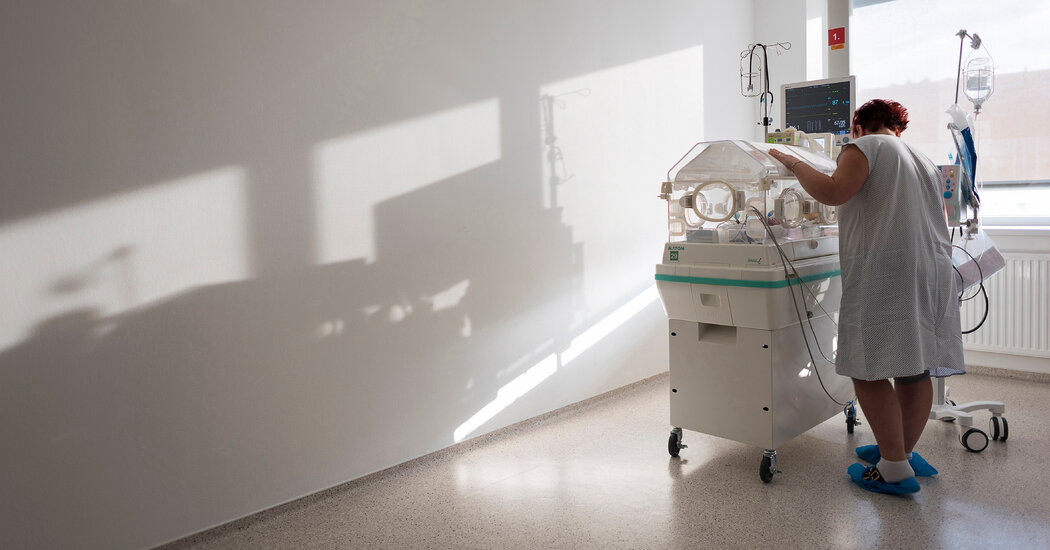
Nearly 50,000 preterm births may have been averted across a group of mostly high-income countries in one month alone.Elizabeth Decker had a stressful second pregnancy, plagued by daily vomiting and the worry that this baby, like her first, would drive her blood pressure dangerously high and need to be delivered preterm. Oddly, the most relaxing part was her final trimester, which overlapped with the world’s descent into Covid lockdown in spring 2020.Ms. Decker, who is 36 and lives in North Reading, Mass., decided to leave her high-pressure job as a lawyer and stay home. Her husband, a teacher, started working from home at that time, teaching online. He cared for their toddler and handled meals while Ms. Decker rested and slept. “I was able to really not do anything for the last three months of my pregnancy,” she said. The blood pressure spike that her doctor had expected didn’t arrive until late June, a week past Ms. Decker’s due date, at which point she delivered a healthy baby.An ambitious worldwide study of births suggests that Ms. Decker was not the only expectant parent who avoided the experience of a preterm delivery during the earliest months of lockdown. The study, published Monday in the journal Nature Human Behavior, showed that across a group of mostly high-income countries — such as the United States, Belgium, Canada, Chile, Denmark and Switzerland — in spring 2020, there were about 4 percent fewer preterm births than expected. At a global level, the study’s authors estimated, the change most likely added up to nearly 50,000 premature births averted in the first month of lockdown alone.The finding could help researchers better understand the causes of preterm birth, which remain frustratingly elusive to medical science.“This is a unique natural experiment, where the whole world experienced this pretty drastic lockdown at the same time,” said Meghan Azad, an associate professor of pediatrics and child health at the University of Manitoba and one of the study’s leaders. “So it was a neat opportunity to look at what that might mean for maternal-child health.”Around the time Ms. Decker was caring for her full-term infant, doctors in a variety of countries were also seeing fewer premature babies than they had expected. Some of their observations, shared before peer review but since formally published, were striking: Across Denmark, for instance, numbers of the smallest preemies were down by 90 percent. At a hospital in Ireland, very early births dropped by three-quarters or more.The Irish authors speculated that pregnant people who were locked down at home might be experiencing lower stress, less air pollution or fewer viral or bacterial infections, all of which might reduce their odds of delivering early.More on the Coronavirus PandemicLab Leak: New intelligence has prompted the Energy Department to conclude that an accidental laboratory leak in China most likely caused the pandemic, though U.S. spy agencies remain divided over Covid’s origins.New Drug’s Long Odds: A promising new treatment quashes all Covid variants, but regulatory hurdles and a lack of funding make it unlikely to reach the United States market anytime soon.Dangers Remain for Seniors: For older Americans, the Covid pandemic still poses significant threats. But they are increasingly left to protect themselves as the rest of the country abandons precautions.N.Y.C.’s Mandate: New York City will end its aggressive but contentious vaccine mandate for municipal workers, Mayor Eric Adams announced, signaling a key moment in the city’s long battle against the pandemic.Responding to the Irish study on Twitter, Dr. Azad wondered aloud — morbidly, she admitted — if doctors were seeing drops in premature births that spring because some of those babies had been lost to stillbirth or miscarriage.Within two days, Dr. Azad was teaming up with other scientists to study this very question. “It was this kind of crazy time,” she said. “A bunch of researchers had a lot of time on their hands, because their projects were slowed down or their conferences were canceled.” They were free to dive into a large-scale side project.The collaboration ultimately grew to include over 100 scientists from across the world, and 52 million births. Using data from 2015 to 2020, the scientists modeled the expected numbers of preterm births and stillbirths in the first months of each country’s strict lockdown period.A pregnant woman in Lima, Peru, received an ultrasound in the first summer of the pandemic. The findings highlighted how much is still unknown about what causes preterm birth. “Even if there are 52 million births in the study, it is not going to immediately answer all the questions,” said one of its authors.Paolo Aguilar/EPA, via ShutterstockThey realized that data from smaller samples, such as a single hospital, might not tell a full story. For example, Dr. Azad said, what if that hospital had become a dedicated site for Covid treatment and had simply diverted its pregnant patients elsewhere?For that reason, the researchers focused their main analysis on high-quality data sets that covered an entire country, or a large region of a country. That included 18 high-income and upper-middle-income nations, as defined by the World Bank. Although the results varied across sites, the researchers concluded that preterm births had dropped by an average of 4 percent during both the first and second months of lockdown.In the third month, the statistical signal was weaker. By the fourth month of lockdown — as countries were most likely diverging in their guidelines and in how strictly people adhered to them, Dr. Azad said — the drop in preterm births was gone.The authors did find a slight uptick in stillbirths in Brazil during the second and third months, and in Canada during the first month. “But that certainly didn’t seem to explain the overall decrease in preterm births” across the data set, Dr. Azad said.The authors noted that Covid itself raises a person’s risk of both premature birth and stillbirth. But because infection with the virus was less widespread in spring 2020 than later periods, this probably didn’t affect the study’s results.“The causes of preterm birth have been so elusive, despite considerable efforts,” said Dr. Denise Jamieson, an obstetrician at Emory University’s School of Medicine in Atlanta who was not involved in the new study. Even though the global study found a dip of only about 4 percent, “I think any reduction in preterm birth is noteworthy and important,” she said.“The next step is to really look at the why,” Dr. Jamieson added.Dr. Azad and Dr. Roy Philip, a co-author of the new paper and also the Irish neonatologist at University Maternity Hospital Limerick who in 2020 found a striking drop in very early births at his hospital, both said it was possible that lockdowns had quite different effects on different groups of people. A pregnant person like Ms. Becker who was able to stay home in a low-stress environment, with good support, might have benefited. A frontline worker without health insurance might have had a different experience.In this way, the findings highlighted how much is still unknown about what causes preterm birth. “Even if there are 52 million births in the study, it is not going to immediately answer all the questions,” Dr. Philip said. “But at least this should trigger people to look more closely at what is ideal during pregnancy.”The study also highlighted the uneven preterm birthrates across different countries. Across the five years of data, the United States had the highest preterm birthrate of any high-income nation included — just shy of 10 percent. Finland’s rate, by contrast, was below 6 percent.The disparity isn’t surprising, Dr. Jamieson said. “Unfortunately, the United States is an outlier for a lot of important maternal and infant health outcomes when you compare it to other high-income countries.”Future research could use this global data set to investigate such variations in maternal health. Dr. Azad said she had originally hoped to dig into the drivers of preterm birth during lockdown, not just its frequency: Were changes in air pollution correlated with changes in early births? What about hygiene, or income, or access to health care? But she lacked funding to investigate further, Dr. Azad said, and now those other projects that were deferred early in the pandemic have caught up with her and her colleagues.Dr. Azad doubts one of her tweets today could launch a huge international research effort. People in spring 2020 had “this burning desire to do something, to either help the pandemic or make something of it,” she said. Some researchers even worked on the project without pay. “I’m a scientist; I don’t like using the word ‘magical,’” she said. “But it was kind of magical.”Now the mysteries of preterm birth will have to wait for other investigators, Dr. Azad said, adding, “We don’t all have that extra time anymore.”
Read more →