Paradoxical quantum phenomenon measured

Some things are related, others are not. Suppose you randomly select a person from a crowd who is significantly taller than the average. In that case, there is a good chance that they will also weigh more than the average. Statistically, one quantity also contains some information about the other.
Quantum physics allows for even stronger links between different quantities: different particles or parts of an extensive quantum system can “share” a certain amount of information. There are curious theoretical predictions about this: surprisingly, the measure of this “mutual information” does not depend on the size of the system but only on its surface. This surprising result has been confirmed experimentally at the TU Wien and published in Nature Physics. Theoretical input to the experiment and its interpretation came from the Max-Planck-Institut für Quantenoptik in Garching, FU Berlin, ETH Zürich and New York University.
Quantum information: More strongly connected than classical physics allows
“Let’s imagine a gas container in which small particles fly around and behave in a very classical way like small spheres,” says Mohammadamin Tajik of the Vienna Center for Quantum Science and Technology (VCQ) — Atominstitut of TU Wien, first author of the current publication. “If the system is in equilibrium, then particles in different areas of the container know nothing about each other. One can consider them completely independent of each other. Therefore, one can say that the mutual information these two particles share is zero.”
In the quantum world, however, things are different: If particles behave quantumly, then it may happen that you can no longer consider them independently of each other. They are mathematically connected — you can’t meaningfully describe one particle without saying something about the other.
“For such cases, there has long been a prediction about the mutual information shared between different subsystems of a many-body quantum system,” explains Mohammadamin Tajik. “In such a quantum gas, the shared mutual information is larger than zero, and it does not depend on the size of the subsystems — but only on the outer bounding surface of the subsystem.”
This prediction seems intuitively strange: In the classical world, it is different. For example, the information contained in a book depends on its volume — not merely on the area of the book’s cover. In the quantum world, however, information is often closely linked to surface area.
Measurements with ultracold atoms
An international research team led by Prof. Jörg Schmiedmayer has now confirmed for the first time that the mutual information in a many body quantum system scales with the surface area rather than with the volume. For this purpose, they studied a cloud of ultracold atoms. The particles were cooled to just above absolute zero temperature and held in place by an atom chip. At extremely low temperatures, the quantum properties of the particles become increasingly important. The information spreads out more and more in the system, and the connection between the individual parts of the overall system becomes more and more significant. In this case, the system can be described with a quantum field theory.
“The experiment is very challenging,” says Jörg Schmiedmayer. “We need complete information about our quantum system, as best as quantum physics allows. For this, we have developed a special tomography technique. We get the information we need by perturbing the atoms just a bit and then observing the resulting dynamics. It’s like throwing a rock into a pond and then getting information about the state of the liquid and the pond from the consequent waves.”
As long as the system’s temperature does not reach absolute zero (which is impossible), this “shared information” has a limited range. In quantum physics, this is related to the “coherence length” — it indicates the distance to which particles quantumly behave similar, and thereby know from each other. “This also explains why shared information doesn’t matter in a classical gas,” says Mohammadamin Tajik. “In a classical many-body system, coherence disappears; you can say the particles no longer know anything about their neighboring particles.” The effect of temperature and coherence length on mutual information was also confirmed in the experiment.
Quantum information plays an essential role in many technical applications of quantum physics today. Thus, the experiment results are relevant to various research areas — from solid-state physics to the quantum physical study of gravity.

Read more →

Neuronal activity shapes the development of astrocytes

Researchers at Baylor College of Medicine have unraveled the processes that give astrocytes, the most abundant glial cell in the brain, their special bushy shape, which is fundamental for brain function. They report in the journal Nature that neuronal activity is necessary and sufficient for astrocytes to develop their complex shape, and interrupting this developmental process results in disrupted brain function.
“Astrocytes play diverse roles that are vital for proper brain function,” said first author Yi-Ting Cheng, a graduate student in Dr. Benjamin Deneen’s lab at Baylor. “For instance, they support the activity of other essential brain cells, neurons; participate in the formation and function of synapses, or neuron-to-neuron connections; release neurotransmitters, chemicals that mediate neuronal communication; and make the blood-brain barrier.”
In the adult brain, the bushy shape of astrocytes is fundamentally linked to effective brain function. The ends of the branched-out astrocyte structure interact with neurons and regulate synaptic activity. “If astrocytes lose their structure, then synapses do not behave properly and brain function goes awry,” said Deneen, professor and Dr. Russell J. and Marian K. Blattner Chair in the Department of Neurosurgery and director of the Center for Cancer Neuroscience at Baylor. He also is the corresponding author of the work. “Figuring out how astrocytes acquire their complex, bushy structure is essential to understanding how the brain develops and functions and may bring new insight into how neurodevelopmental conditions emerge. In this study, we investigated the cells and processes that direct the development of astrocyte structure.”
Neurons lead the way
When astrocytes develop, neurons are already present and active, so do neurons influence how astrocytes acquire their complex shape?
“We artificially activated or silenced neurons and determined whether this would speed up or slow down astrocyte maturation,” Cheng said. “We found that neuronal activity is both necessary and sufficient to drive full astrocyte maturation into a bushy-shaped cell.”
So how are astrocytes receiving the signals that direct them down to the proper maturation path? Through several experimental approaches the team discovered that neurons produce a neurotransmitter called GABA that binds to astrocytes via a molecule on their surface named GABAB receptor. “We knocked out the GABAB receptor in astrocytes and activated the neurons. In this situation, the neurons did not promote the development of a typical astrocyte shape, supporting the idea that neurons communicate with astrocytes via the GABAB receptor to promote their maturation.”

“This finding was surprising and very interesting,” Deneen said. “Neurotransmitters such as GABA are known to signal between neurons at synapses, but we discovered that neurotransmitters also signal astrocytes, influencing their development by triggering changes in their structure.”
Other experiments revealed more pieces of the puzzle of how neurons lead astrocytes to develop their bushy shape. “Neurons produce GABA, which binds to astrocytes via the GABAB receptor. In turn, this activates a series of events, including triggering the expression of another receptor called Ednrb, which drives pathways that remodel cellular architecture inside the cells associated with cell shape,” Cheng said.
The researchers also investigated another mystery related to astrocyte development. They found that regulation of the expression of GABAB receptor in astrocytes does not occur in the same way in different brain regions. “This result was totally unexpected,” Deneen said. “The GABAB receptor is universally required for astrocytes to develop their bushy shape in all brain regions. How is it regulated differently in different areas of the brain?”
Through bioinformatics analyses the researchers discovered that this regional regulation is conferred by two proteins, LHX2 in the brain cortex and NPAS3 in the olfactory bulb through their region-specific interactions with proteins SOX9 and NFIA, which are present in all astrocytes where they regulate GABAB receptor expression. In the cortex, LHX2 only binds to NFIA, while in the olfactory bulb NPS3 only binds to SOX9, enabling each one to regulate GABAB receptor expression in a specific brain region.
Altogether, the findings suggest that astrocyte development and function involve a complex pattern of events and proteins triggered by the activity of neurons and that operate in a region-specific manner.
Estefania Luna-Figueroa, Junsung Woo, Hsiao-Chi Chen, Zhung-Fu Lee1 and Akdes Serin Harmanci, all at Baylor College of Medicine, also contributed to this work.
This work was supported by National Institutes of Health (NIH) grants NS071153, AG071687 and NS096096, the David and Eula Wintermann Foundation, NIH shared instrument grants S10OD023469, S10OD025240 and P30EY002520, the Cytometry and Cell Sorting Core at Baylor College of Medicine with funding from the CPRIT Core Facility Support Award (CPRIT-RP180672), the NIH (CA125123 and RR024574) and the NIH Eunice Kennedy Shriver National Institute of Child Health & Human Development under Award Number P50HD103555.

Read more →

New research sheds light on how circadian rhythms work

New research from a multidisciplinary team helps to illuminate the mechanisms behind circadian rhythms, offering new hope for dealing with jet lag, insomnia and other sleep disorders.
Using innovative cryo-electron microscopy techniques, the researchers have identified the structure of the circadian rhythm photosensor and its target in fruit flies (Drosophila melanogaster), one of the major organisms used to study circadian rhythms. The research, “Cryptochrome-Timeless Structure Reveals Circadian Clock Timing Mechanisms” published April 26 in Nature.
The research focused on fruit fly cryptochromes, key components of the circadian clocks of plants and animals, including humans. In flies and other insects, cryptochromes, activated by blue light, serve as the primary light sensors for setting circadian rhythms. The target of the cryptochrome photosensor, known as “Timeless” (TIM), is a large, complex protein that could not previously be imaged and thus its interactions with the cryptochrome are not well understood.
Circadian rhythms work via what are basically genetic feedback loops. The researchers found that the TIM protein, along with its partner, the Period (PER) protein, act together to inhibit the genes that are responsible for their own production. With suitable delays between the events of gene expression and repression, an oscillation in protein levels is established.
This oscillation represents the “the ticking of the clock and seems to be fairly unique to the circadian rhythm,” said senior author Brian Crane, the George W. and Grace L. Todd Professor and chair of chemistry and chemical biology in the College of Arts and Sciences.
Blue light, Crane said, changes the chemistry and structure of cryptochrome’s flavin cofactor, which allows the protein to bind the TIM protein and inhibit TIM’s ability to repress gene expression and thereby reset the oscillation.

Much of the hard work of the study went into figuring out how to produce the complex of cryptochrome-TIM so it could be studied, because TIM is such a large, unwieldy protein, Crane said. To achieve their results, first author Changfan Lin, M.S. ’17, Ph.D. ’21, modified the cryptochrome protein to improve the stability of the cryptochrome-TIM complex and used innovative techniques to purify the samples, making them suitable for high-resolution imaging.
“These new methods allowed us to obtain detailed images of the protein structures and gain valuable insights into their function, said Lin, a Friedrich’s Ataxia Research Alliance Postdoctoral Fellow at the California Institute of Technology. “This research not only deepens our understanding of circadian rhythm regulation but also opens up new possibilities for developing therapies targeting related processes.”
Co-author Shi Feng, a doctoral student in the field of biophysics, did much of the cryo-electron microscopy work. Cristina C. DeOliveira, a doctoral student in the field of biochemistry and molecular and cell biology, was also a co-author.
One unexpected result from the study sheds light on how DNA damage is repaired in a cell. Cryptochromes are closely related to a family of enzymes involved in repairing damage to DNA, called photolyases. Crane said the research “explains why these families of proteins are closely related to each other, even though they’re doing quite different things — they’re making use of the same molecular recognition in different contexts.”
The study also offers an explanation for the genetic variation of flies that allows them to adapt to higher latitudes, where days are shorter in the winter and it’s cooler. These flies have more of a certain genetic variant that involves a change in the TIM protein, and it wasn’t clear why the variation could help them. The researchers found that because of how the cryptochrome binds TIM, the variation reduces the affinity of TIM for the cryptochrome. The interaction between the proteins is then modulated and the ability of light to reset the oscillation is changed, thus altering the circadian clock and extending the period of the fly’s dormancy, which helps it survive the winter.
“Some of the interactions that we see here in the fruit fly can be mapped onto human proteins,” Crane said. “This study may help us understand key interactions between components that regulate sleep behavior in people, such as how the critical delays in the basic timing mechanism get built into the system.”
Another exciting finding, said Lin, was the discovery of an important structural area in TIM, called the “groove,” which helps explain how TIM enters the cell nucleus. Previous studies had identified some factors involved in this process, but the exact mechanism remained unclear. “Our research provided a clearer understanding of this phenomenon,” Lin said.

Read more →

Tree diversity increases storage of carbon and nitrogen in forest soils, mitigating climate change

Preserving the diversity of forests assures their productivity and potentially increases the accumulation of carbon and nitrogen in the soil, which helps to sustain soil fertility and mitigate global climate change.
That’s the main takeaway from a new study that analyzed data from hundreds of plots in Canada’s National Forest Inventory to investigate the relationship between tree diversity and changes in soil carbon and nitrogen in natural forests.
Numerous biodiversity-manipulation experiments have collectively suggested that higher tree diversity can lead to greater accumulation of carbon and nitrogen in forest soils. But the new study, published online April 26 in the journal Nature, is the first to show a similar outcome in natural forests, according to the authors.
The researchers used a statistical method called structural equation modeling to assess relationships between tree diversity and soil carbon and nitrogen accumulation. They found that increased tree diversity enhanced soil carbon storage by 30% to 32% and enhanced nitrogen storage by 42% to 50% on a decadal timescale.
“Our study, for the first time, shows the sustained benefits of tree diversity in storing soil carbon and nitrogen in natural forests,” said study lead author Xinli Chen, a postdoctoral exchange fellow at U-M’s Institute for Global Change Biology and a postdoctoral fellow at the University of Alberta.
“Our results highlight that promoting tree diversity not only increases productivity but also mitigates global climate change and reduces soil degradation. And the size of the diversity dividend is large. It reinforces the importance of biodiversity conservation in forests and will guide the growing efforts to use forests for carbon and nitrogen sequestration.”
The researchers calculated changes in soil carbon and nitrogen storage over time by comparing data from two National Forest Inventory sample-plot censuses, one from 2000-2006 and the other from 2008-2017.

They quantified tree diversity as species richness, species evenness, and — on the basis of trees’ functional traits — functional diversity.
Species richness is the number of tree species in a sample plot, while species evenness is a measure of the relative abundances of tree species. Functional diversity is the variety of functional traits — such as leaf nitrogen content and adult tree height — of tree species within a community.
The research team found that increasing species evenness from its minimum to its maximum value enhanced carbon storage in the organic soil layer by 30% and nitrogen storage by 42%. Increasing the functional diversity of trees to its maximum value enhanced carbon storage in the soil mineral layer by 32% and nitrogen storage by 50%.
“We find that greater tree diversity is associated with higher soil carbon and nitrogen accumulation, validating inferences from biodiversity-manipulation experiments,” said study co-author Peter Reich, a forest ecologist and director of the Institute for Global Change Biology, which is part of U-M’s School for Environment and Sustainability.
“A greater diversity of species translates into a mixture of different types of trees with different ways of acquiring and storing biomass — both in live trunks, roots, branches and leaves and in newly dead and decaying plant detritus on and in the soil.”
Canada’s National Forest Inventory database is based on a network of plots covering much of the country’s landmass. The new study analyzed organic soil horizon samples from 361 plots and mineral soil horizon samples from 245 plots.

Those plots are home to various species of fir, maple, birch, spruce, pine, poplar, cedar and hemlock, among other tree types.
Forest soils play an important role in sequestering carbon extracted from planet-warming carbon dioxide gas during photosynthesis. Those soils store at least three times as much carbon as living plants do.
Nitrogen is an essential nutrient that drives carbon assimilation and plant growth in forest ecosystems. Plant diversity is rapidly declining globally, leading to the degradation of ecosystem function, including the function of soils.
The other authors of the Nature study are Anthony Taylor of the University of New Brunswick, Masumi Hisano of the University of Tokyo, Han Chen of Lakehead University, and Scott Chang of the University of Alberta and Zhejiang A&F University.
The research was supported by the Discovery Grants program of the Natural Sciences and Engineering Research Council of Canada, the Canada Foundation for Innovation, the Ontario Research Fund, the Banting Postdoctoral Fellowship, and a grant from the U.S. National Science Foundation’s Biological Integration Institutes.

Read more →

Ingestible 'electroceutical' capsule stimulates hunger-regulating hormone

Hormones released by the stomach, such as ghrelin, play a key role in stimulating appetite. These hormones are produced by endocrine cells that are part of the enteric nervous system, which controls hunger, nausea, and feelings of fullness.
MIT engineers have now shown that they can stimulate these endocrine cells to produce ghrelin, using an ingestible capsule that delivers an electrical current to the cells. This approach could prove useful for treating diseases that involve nausea or loss of appetite, such as cachexia (loss of body mass that can occur in patients with cancer or other chronic diseases).
In tests in animals, the researchers showed that this “electroceutical” capsule could significantly boost ghrelin production in the stomach. They believe this approach could also be adapted to deliver electrical stimulation to other parts of the GI tract.
“This study helps establish electrical stimulation by ingestible electroceuticals as a mode of triggering hormone release via the GI tract,” says Giovanni Traverso, an associate professor of mechanical engineering at MIT, a gastroenterologist at Brigham and Women’s Hospital, and the senior author of the study. “We show one example of how we’re able to engage with the stomach mucosa and release hormones, and we anticipate that this could be used in other sites in the GI tract that we haven’t explored here.”
Khalil Ramadi SM ’16, PhD ’19, a graduate of the Department of Mechanical Engineering and the Harvard-MIT Program in Health Sciences and Technology, who is now an assistant professor of bioengineering at the NYU Tandon School of Engineering and Director of the Laboratory for Advanced Neuroengineering and Translational Medicine at NYU Abu Dhabi, and James McRae, an MIT graduate student, are the lead authors of the paper, which appears today in Science Robotics.
Electrical stimulation
The enteric nervous system controls all aspects of digestion, including the movement of food through the GI tract. Some patients with gastroparesis, a disorder of the stomach nerves that leads to very slow movement of food, have shown symptomatic improvement after electrical stimulation generated by a pacemaker-like device that can be surgically implanted in the stomach.

Doctors had theorized that the electrical stimulation would provoke the stomach into contracting, which would help push food along. However, it was later found that while the treatment does help patients feel better, it affected motility to a lesser degree. The MIT team hypothesized that the electrical stimulation of the stomach might be leading to the release of ghrelin, which is known to promote hunger and reduce feelings of nausea.
To test that hypothesis, the researchers used an electrical probe to deliver electrical stimulation in the stomachs of animals. They found that after 20 minutes of stimulation, ghrelin levels in the bloodstream were considerably elevated. They also found that electrical stimulation did not lead to any significant inflammation or other adverse effects.
Once they established that electrical stimulation was provoking ghrelin release, the researchers set out to see if they could achieve the same thing using a device that could be swallowed and temporarily reside in the stomach. One of the main challenges in designing such a device is ensuring that the electrodes on the capsule can contact the stomach tissue, which are coated with fluid.
To create a drier surface that electrodes can interact with, the researchers gave their capsule a grooved surface that wicks fluid away from the electrodes. The surface they designed is inspired by the skin of the Australian thorny devil lizard, which uses ridged scales to collect water. When the lizard touches water with any part of its skin, water is transported by capillary action along the channels to the lizard’s mouth.
“We were inspired by that to incorporate surface textures and patterns onto the outside of this capsule,” McRae says. “That surface can manage the fluid that could potentially prevent the electrodes from touching the tissue in the stomach, so it can reliably deliver electrical stimulation.”
The capsule surface consists of grooves with a hydrophilic coating. These grooves function as channels that draw fluid away from the stomach tissue. Inside the device are battery-powered electronics that produce an electric current that flows across electrodes on the surface of the capsule. In the prototype used in this study, the current runs constantly, but future versions could be designed so that the current can be wirelessly turned on and off, according to the researchers.

Hormone boost
The researchers tested their capsule by administering it into the stomachs of large animals, and they found that the capsule produced a substantial spike in ghrelin levels in the bloodstream.
“As far as we know, this is the first example of using electrical stimuli through an ingestible device to increase endogenous levels of hormones in the body, like ghrelin. And so, it has this effect of utilizing the body’s own systems rather than introducing external agents,” Ramadi says.
The researchers found that in order for this stimulation to work, the vagus nerve, which controls digestion, must be intact. They theorize that the electrical pulses transmit to the brain via the vagus nerve, which then stimulates endocrine cells in the stomach to produce ghrelin.
Traverso’s lab now plans to explore using this approach in other parts of the GI tract, and the researchers hope to test the device in human patients within the next three years. If developed for use in human patients, this type of treatment could potentially replace or complement some of the existing drugs used to prevent nausea and stimulate appetite in people with cachexia or anorexia, the researchers say.
“It’s a relatively simple device, so we believe it’s something that we can get into humans on a relatively quick time scale,” Traverso says.
The research was funded by the Koch Institute Support (core) Grant from the National Cancer Institute, the National Institute for Diabetes and Digestive and Kidney Diseases, the Division of Engineering at New York University Abu Dhabi, a National Science Foundation graduate research fellowship, Novo Nordisk, and the Department of Mechanical Engineering at MIT.

Read more →

Humidity may increase heat risk in urban climates

As temperatures across the globe reach record-level highs, urban areas are facing increased heat stress. Cities are generally warmer and dryer than adjacent rural land. But in the Global South, there is an additional complicating factor — urban humid heat.
A new study, led by Yale School of the Environment scientists and published in Nature, investigated the combined effect of temperature and humidity on urban heat stress using observational data and an urban climate model calculation. Researchers found that the heat stress burden is dependent on local climate and a humidifying effect can erase the cooling benefits that would come from trees and vegetation.
“A widely held view is that urban residents suffer more heat burden than the general population owing to the urban heat island phenomenon. This view is incomplete because it omits another ubiquitous urban microclimate phenomenon called the urban dry island — that urban land tends to be less humid than the surrounding rural land,” says Xuhui Lee, Sara Shallenberger Brown Professor of Meteorology, who directed the study. “In dry, temperate, and boreal climates, urban residents are actually less heat-stressed than rural residents. But in the humid Global South, the urban heat island is dominant over the urban dry island, resulting in two to six extra dangerous heat stress days per summer.”
Lee and YSE doctoral student Keer Zhang, lead author of the study, say they were motivated to investigate the issue for several reasons: a large percentage of the global population lives in urban areas; many people in informal urban settlements do not have access to air conditioning; and the problem is going to get worse as temperatures rise and more people move to cities. About 4.3 billion people, or 55% of the world’s population, live in urban settings, and the number is expected to rise to 80% by 2050, according to the World Economic Forum.
The researchers developed a theoretical framework on how urban land modifies both air temperature and air humidity and showed that these two effects have equal weight in heat stress as measured by the wet-bulb temperature, in contrary to other heat indexes, which weigh temperature more heavily than humidity. Wet-bulb temperature combines dry air temperature with humidity to measure humid heat. The results of the study, the authors note, raise important questions.
“Green vegetation can lower air temperature via water evaporation, but it can also increase heat burden because of air humidity. The question then is to what extent this humidifying effect erases the cooling benefit arising from temperature reduction. We hope to answer this question in a follow-up study, where we are comparing observations of the wet-bulb temperature in urban greenspaces (with dense tree cover) and those in built-up neighborhoods,” Lee says.
Zhang says she hopes the study can lead to further research on how cities can mitigate heat stress.
“Our diagnostic analysis on the urban wet-bulb island found that enhancing urban convection efficiency (the efficiency in dissipating heat and water) and reducing heat storage at night can reduce daytime and nighttime urban humid heat, respectively. We hope that our work will promote more research on optimizing urban shapes and materials for better thermal comforts,” she says.

Read more →

Kaiser Permanente to Acquire Geisinger

The California health care organization will create a new nonprofit that aims to acquire a half-dozen additional community health systems.The NewsKaiser Permanente, a large California-based health care group with 39 hospitals and 24,000 doctors, said on Wednesday that it expected to acquire Geisinger Health, a smaller East Coast group, in an effort to develop a new company that would operate nonprofit community health systems.“If we can take much of what is in our value-based care platform and extend that to these leading community health systems, then we extend our mission,” Greg A. Adams, Kaiser’s chairman and chief executive, said in an interview. “We reach more people, we drive greater affordability for health care in this country.” Both organizations are nonprofit.Kaiser will not absorb Geisinger, which will keep its name. Instead, Geisinger, which is headquartered in Danville, Pa., will be folded into Risant Health, a new nonprofit group that will operate independently. Geisinger’s chief executive, Dr. Jaewon Ryu, will serve as Risant’s chief executive when the deal is closed.Mike Blake/ReutersWhat’s Next: Regulatory ReviewFederal and state regulators must approve the deal. While Mr. Adams did not say what other health systems he might be talking to regarding acquisitions, Kaiser said it hoped to invest $5 billion in Risant over the next five years, in addition to its spending on Kaiser’s core operations. The company expects to add five or six health systems to Risant in that time.Why It Matters: Increasing ConsolidationKaiser, which serves 13 million people in eight states and the District of Columbia, has built a reputation for delivering high-quality care at low costs. The organization operates like a health maintenance organization, in which it is paid a fixed sum to care for someone through a closed network of hospitals and doctors. But it has not succeeded in offering its model broadly across the country.The creation of Risant Health represents an opportunity for Kaiser, which had $95 billion in revenue last year, to become an even bigger and more influential organization by working with other hospital groups and health plans.The formation of the company is also a response to the rapid changes taking place in the health care industry. Large for-profit companies like health insurers, pharmacy chains and other corporations are scooping up physician practices and urgent care centers and devouring more of the country’s health care dollars.In keeping with Kaiser’s model, the community health systems under Risant would invest in technology and preventive care to keep patients healthy, so they would need less expensive specialty and hospital care, Mr. Adams said.As national systems and new players grow larger, “they are pulling away in some respects from our communities and from our community health systems,” he said.The new venture “is a way to really ensure that not-for-profit, value-based community health is not only alive but is thriving in this country,” Mr. Adams added.Background: A Tough EnvironmentAs hospital groups emerge from the pandemic, many are struggling with higher expenses for supplies and labor. Both Kaiser and Geisinger reported operating losses in 2022.“Covid has really shown not having integrated, value-based relationships puts our health systems and our communities at risk,” Mr. Adams said.While Geisinger has long focused on improving care, Dr. Ryu said the health system would benefit from Kaiser’s ability to invest in the kind of technology and preventive care necessary to keep people healthier. “This model made sense to us as a way to accelerate and further bolster those capabilities and bring better health into our communities,” he said.Because it has specialized in providing care under arrangements where it is paid a fixed amount, Kaiser has become one of the largest insurers in the profitable Medicare Advantage market, where its private plans are sold as an alternative to traditional Medicare.But Kaiser has not been immune to criticism for overbilling the federal government, and some people say its financial model means it can be slow to refer patients for costly services. Kaiser has defended its billing practices and says its doctors work with patients to provide the most appropriate care.

Read more →

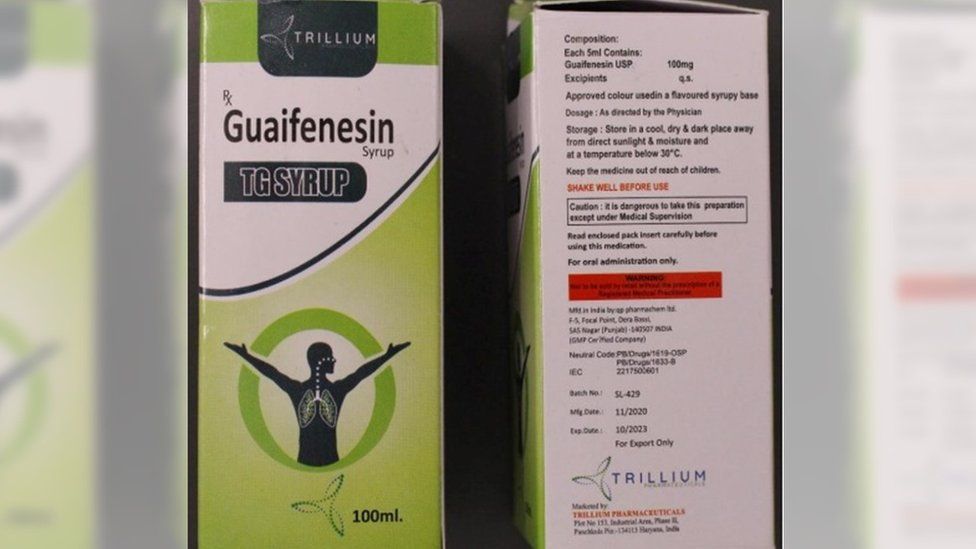
Guaifenesin: WHO issues alert over another India-made cough syrup

Published2 hours agoShareclose panelShare pageCopy linkAbout sharingImage source, WHOThe World Health Organization has said that a batch of contaminated India-made cough syrup has been found in the Marshall Islands and Micronesia.The WHO said that the tested samples of Guaifenesin TG syrup, made by Punjab-based QP Pharmachem Ltd, showed “unacceptable amounts of diethylene glycol and ethylene glycol”.Both compounds are toxic to humans and could be fatal if consumed.The WHO statement did not specify if anyone had fallen ill.The latest alert comes months after the WHO linked other cough syrups made in India to child deaths in The Gambia and Uzbekistan.Sudhir Pathak, managing director of QP Pharmachem, told the BBC that the company had exported the batch of 18,346 bottles to Cambodia after getting all due regulatory permissions. He said he didn’t know how the product had reached the Marshall Islands and Micronesia.”We did not send these bottles to the Pacific region, and they were not certified for use there. We don’t know under what circumstances and conditions these bottles reached the Marshall Islands and Micronesia,” he said, adding that his company has sent a legal notice to the firm that exported the batch of medicines to Cambodia.The WHO statement said that the product, which is used to relieve chest congestion and cough symptoms, was tested by Australia’s drug regulator, the Therapeutic Goods Administration. The syrup was marketed by Trillium Pharma, based in Haryana state. The BBC couldn’t reach a Trillium representative on the phone. The Indian government has not reacted to the latest alert. The statement added that “neither the stated manufacturer nor the marketer have provided guarantees to WHO on the safety and quality of these products”.Why drugs made in India are sparking safety concernsIndia is the world’s largest exporter of generic drugs, meeting much of the medical needs of developing countries.But in recent months, many Indian firms have come under scrutiny for the quality of their drugs, with experts raising concerns about the manufacturing practices used to make these medicines.In October, WHO had sounded a global alert and linked four cough syrups made by Maiden Pharmaceuticals to the deaths of 66 children from kidney injuries in The Gambia.Both the Indian government and the company, Maiden Pharmaceuticals, had denied the allegations.In March, India cancelled the manufacturing licence of a firm whose cough syrups were linked to 18 child deaths in Uzbekistan. Earlier this month, the FDA said it had found that the Indian manufacturer of eye drops linked to three deaths and serious infections in the US had violated several safety norms.BBC News India is now on YouTube. Click here to subscribe and watch our documentaries, explainers and features.Read more India stories from the BBC:The Gemini Circus legend who wowed Indians for decadesHow the fight to ban burning of widows in India was wonSikh separatist arrested after weeks on the runIndia history debate after chapter on Mughals droppedIs India ready to deal with extreme temperatures?More on this storyWHO stands by ‘dangerous’ India cough syrup claim16 December 2022WHO asks Uzbekistan to drop two Indian cough syrups13 January

Read more →

Livvy Haydock: 'Disabled gangsters supported me with my MS diagnosis'

Published12 minutes agoShareclose panelShare pageCopy linkAbout sharingBy Beth RoseBBC Access AllKnown for making documentaries with some of the most notorious criminals in the world, investigative journalist Livvy Haydock had a shock closer to home when she was diagnosed with multiple sclerosis (MS). But she found support from the most unlikely people – the criminals she interviews. “I’ve always been told I’m not scared of anything, but this MS terrifies me,” Livvy admits. “I feel so small.”The 38-year-old has lived an edgy life, producing and presenting documentaries on topics from girl gangs to child soldiers in the Congo. Her latest hit is Gangster: The story of John Palmer for BBC Sounds, which investigates his involvement in the 1983 Brink’s-Mat gold bullion robbery – the largest armed robbery in British history.It was her love of American rap music as a teenager that formed her fascination with the criminal underground, gangs and violence.”I wanted to understand it,” she says. “A lot of the time, people who are committing crimes don’t get to talk about it from their perspective.”It has helped her understand what motivates them to take such risks – and how sometimes the choices can appear “logical” to them.It was while Livvy was investigating the war on drugs in the Philippines in 2016 that a plot twist in her own life began to unfold.”There was something really wrong with my legs,” she tells BBC Access All. “I was sure it was dodgy food.”Livvy finished her film and returned to the UK, but the symptoms persisted. Over the next four years she made several trips to the doctor but never got a diagnosis. In 2020 it was suggested she undergo a lumbar puncture – a test of her spinal fluid – to “rule out MS”. But the result confirmed the very opposite. MS occurs when the protective layer surrounding nerve fibres – myelin – becomes damaged and stops messages flowing between the brain and body. It can affect the spinal cord and impact vision, movement and balance. After a call from a neurologist confirming Livvy did have MS, she was told she would receive another phone call, within the week, to plan her treatment. But weeks passed and no phone call came, all while she was trying to hold it together. “It was like I’d been given a grenade,” she says.She distracted herself by focusing on the documentary she was working on about kidnap gangs – “It was easier to think about,” she says.But by Christmas, “the grenade exploded”, and a minor family disagreement turned into “something out of EastEnders”.LISTEN: You can hear more from Livvy on the BBC Access All podcast.And Claire, a wheelchair-user, reveals she has been waiting for her social housing property to be adapted for more than three years, despite the council signing off the work in 2019.The nurse did eventually call, and when Livvy started to process the diagnosis she knew she would have to consider her future very carefully, especially when it came to her dangerous investigations. She’s lost count of the number of freezing nights she’s waited outside for dealers to appear for interviews. “They’re the most unreliable people in the world,” she jokes. She often tells late-comers off for the pain they have caused her. But her work has also been her salvation – not just as something she can lose herself in, but as an unlikely source of support and empathy. “I come across lots of disability within the world of crime,” she says. “At one point the majority of the gang members I interviewed were either in wheelchairs or had ongoing medical issues from gunshot wounds.”Sickle-cell disease is one disabling condition she comes across frequently. It causes red blood cells to distort and become sticky, blocking vessels and restricting oxygen supply, which triggers excruciating pain.One of her contacts was receiving treatment for it in hospital when he became the victim of a honey trap. A rival gang sent him Instagram messages, pretending to be a woman and saying how “hot” he was.”He’s in the hospital and says ‘Come see me,’ so the rival gang went to see him in hospital and attacked him. It was outrageous,” she says.Another of her favourite contacts to talk to about life with a disability is a reformed gang member based in the US. At the height of his notoriety he ran 30 drug-houses in Dallas. Then his gang turned on him.”They shot him in the head – that bullet went straight through both optic nerves and they left him to die. He somehow managed to get up, and he’s now completely blind,” she says.Some of the criminals Livvy speaks to are also carers for their disabled friends and family. “So many youngsters are looking after their parents. I won’t justify their crimes with it, but it’s having that insight into what is pushing them into needing money,” she says. Livvy’s MS affects her legs, vision and she gets shooting pains down her sides like “electric shocks” – a well-known MS symptom.She can also struggle with finding the right words – “I end up saying bizarre sentences because the messages in my brain don’t work.”Her treatment involves an infusion every six weeks to help reduce the amount of damage and scarring to the myelin sheath.The condition has also raised other issues she wasn’t expecting to confront, like whether to tell prospective partners about her MS. “It’s hard enough trying to date,” she says. “I want to meet someone and settle down, but this feels against me.”As a freelancer, she’s now having to rethink her life-plan and career, to ensure she manages her money, health and safety in her unusual job.”It’s a tough industry and I’m always scared to take time off,” she says. “You don’t say no to jobs because you worry they won’t ask again.”But even if her career does take a different turn, she plans to continue confiding in her contacts who understand what she’s going through.”There’s a gentleman I know who spent an awful lot of time in prison and actually fell off his bunk which caused horrendous injuries to his back. We talk quite a lot because we can relate so much. “It’s quite funny, we go from talking about robberies to ‘How’s your health?'” You can listen to the podcast and find information and support on the Access All page.

Read more →

Study links nutrients, brain structure, cognition in healthy aging

In a new study, scientists explored the links between three measures known to independently predict healthy aging: nutrient intake, brain structure and cognitive function. Their analysis adds to the evidence that these factors jointly contribute to brain health in older adults.
Reported in the Journal of Nutrition, the study found that blood markers of two saturated fatty acids, along with certain omega-6, -7 and -9 fatty acids, correlated with better scores on tests of memory and with larger brain structures in the frontal, temporal, parietal and insular cortices. Watch a video about the research.
While other studies have found one-to-one associations between individual nutrients or classes of nutrients and specific brain regions or functions, very little research takes a comprehensive look at brain health, cognition and broad dietary patterns overall, said Aron Barbey, a professor of psychology, bioengineering and neuroscience at the University of Illinois Urbana-Champaign who led the study with postdoctoral researcher Tanveer Talukdar and psychology research scientist Chris Zwilling. The three co-authors all are affiliated with the Beckman Institute for Advanced Science and Technology at the U. of I.
“Our findings reveal that we can use nutrient biomarkers, cognitive tests and MRI measures of brain structure to account for much of the variation in healthy aging,” Barbey said. “This allows us to better understand how nutrition contributes to health, aging and disease,”
The researchers collected data from 111 healthy older adults with MRI structural scans, blood-based biomarkers of 52 dietary nutrients and cognitive performance on tests of memory and intelligence. By combining these measures using a data-fusion approach, the team found associations between dozens of features that appear to work in tandem to promote brain and cognitive health in older adults.
Data-fusion allows researchers to look across multiple data sets to map traits or features that have common patterns of variability, said Talukdar, who tailored this method to incorporate the nutrition, cognition and brain volumetric data.

“We’re looking at relationships among all of these together,” he said. “This allows us to identify certain features that cluster together.”
This overcomes some of the limitations of analyzing individual factors, Barbey said.
“If we just look at nutrition as it relates to brain structures and we don’t study cognition, or if we look at nutrition as it relates to cognition and we don’t study the brain, then we’re actually missing really important pieces of information.”
The most obvious features that clustered together in the new analysis involved the size of gray-matter volumes in the frontal, temporal and parietal cortices; performance on tests of auditory memory and short- and long-term memory; and blood markers related to consumption of monounsaturated and polyunsaturated fatty acids. Study participants who scored higher on the memory tests tended to have larger gray-matter volumes and higher levels of markers of omega-6, -7 and -9 fatty acids in their blood. Those who did more poorly on the cognitive tests also had smaller gray-matter volumes in those brain regions and lower levels of those dietary markers, the analysis revealed.
While the study only reveals associations between these factors and does not prove that dietary habits directly promote brain health, it adds to the evidence that nutrition is a key player in healthy aging, the researchers said.
“Our work motivates a more comprehensive picture of healthy aging,” Zwilling said. This gives insight into the importance of diet and nutrition and the value of data-fusion methods for studying their contributions to adult development and the neuroscience of aging.”
This work was supported by a grant from Abbott Nutrition through the Center for Nutrition, Learning, and Memory at the U. of I.

Read more →